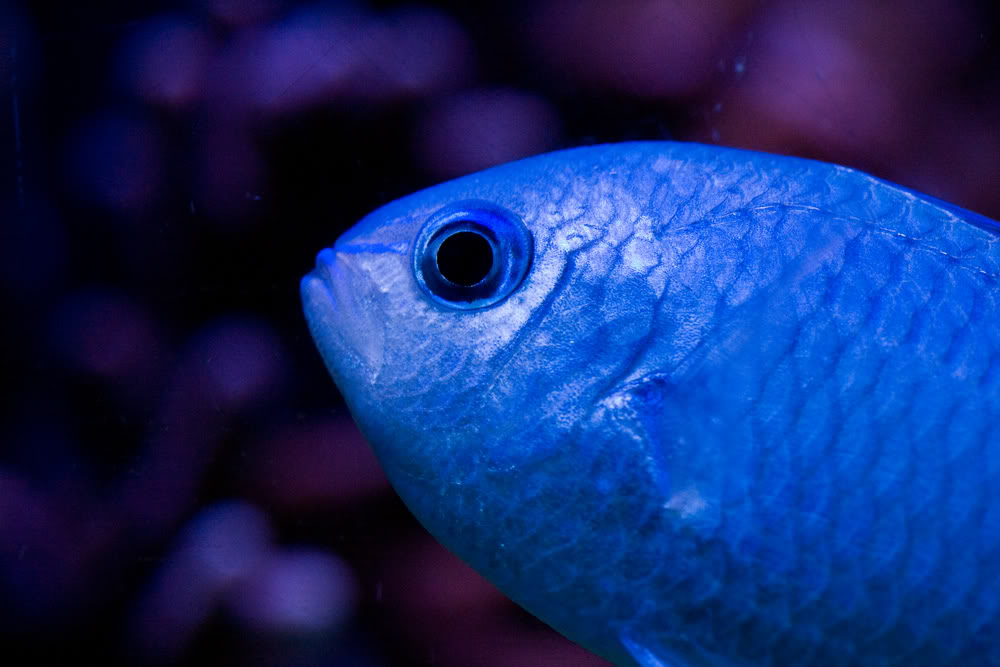


Blue Green Chromis / Chromis viridis

  • Thread starter Thread starter skinz78
  • Start date Start date
  • Tagged users Tagged users None

skinz78

10K Club member
View Badges
Joined
May 8, 2009
Messages
21,938
Reaction score
639
Location
lovely rainy NW Washington
Rating - 0%
0   0   0
Blue Green Chromis / Chromis viridis

skinz78-albums-r2r-fish-database-damsels-picture16526-scan0005.jpg


Scientific Name - Chromis viridis

Common Name - Blue Green Chromis

Size - 3.5" ( 9 cm)

Min. Aquarium Size - 55 US Gal. ( 208 L)

Foods and Feeding - Feed a varied diet, fresh, frozen, live, marine fare for carnivores, herbivores, and omnivores. Feed min. 2 times a day.

Reef Compatibility - Excellent.

Captive Care - Keep in groups of odd numbers 5+, single specimens tend to be harassed by tank mates and do not fare as well as a small or large group. Aggression of the dominant specimen will be subdued in a group rather than just a couple specimens. Chromis tend to occupy the upper open water of a captive system and this is a plus for more recluse tank mates, in order to maintain the vibrant coloration offer enriched foods. Will readily acclimate to captivity, keep with less aggressive tank mates, provide adequate swimming space, and feed a varied enriched diet. (Lacks the black at the inner base of the pectoral fins as does the Blackaxll chromis).

 
If I may add... chromis are highly susceptible to a parasite called Uronema marinum. It's those little red sores they seem to get sometimes.
 
Ive been itching on getting a school of them, i got to wait until my move from San Diego, CA to Portland, OR.
 
I've tried schools of them three times. One time I got 13 of them.

Works great for a while, then they slowly dwindle over a year or two.

For whatever reason, many of us have found they do not actually do well long term in many cases, with hypothesis relating to poor collection, fighting between them, and other issues.

Anyway, I've given up trying to keep them.

Same experience here (over the last 5-10 years). It's gotten to the point where I don't even bother with these fish anymore.

The weird thing is 20+ years ago I used to keep large schools of these in my tanks (and clients' tanks) and never had this problem. I would love to know what's changed about them. For example, are they being collected from different areas nowadays?
 
I had three in my 40B, one of them got bigger than the other two and became quite aggressive, it would mercilessly chase the other two into hiding.
 
Same experience here (over the last 5-10 years). It's gotten to the point where I don't even bother with these fish anymore.

The weird thing is 20+ years ago I used to keep large schools of these in my tanks (and clients' tanks) and never had this problem. I would love to know what's changed about them. For example, are they being collected from different areas nowadays?

Is the tank size larger or smaller from the tanks from 20+ years ago? I wonder if it is tank size or stress from being around other types of fish in small confines?
 
Is the tank size larger or smaller from the tanks from 20+ years ago? I wonder if it is tank size or stress from being around other types of fish in small confines?

20+ years ago: Clients' tanks ranged from 75 - 400 or 500 gallons. My own personal tanks I kept them in ranged from 57-180 gallons. All were QT'd and treated with copper for 1 month.

Nowadays: I've tried schools in a 57, 120, and 150 gallon. All were QT'd, and some treated with copper; some with Chloroquine phosphate. Most died in QT before I ever got them into the DT. The only difference with the copper is back in the day I always used Coppersafe - now I use Cupramine.
 
He thinks he's hiding.

Chromis-Hiding-2.jpg


By the way, instead of C. virdis, I'll only go with C. atripectoralis or the Black Axil Chromis these days. They look almost identical. The axils however almost always arrive in better condition and they are far more peaceful.
 
IMG_2555.JPG
IMG_2558.JPG
Old post new question. I have these in pairs in two tanks no issues. One of them gets what we call his Halloween mask on at times. At first though it was trauma he stayed like the for a couple days. But eventually went back to normal. Now every once in awhile he will continue to do this some times for minutes some times for hours. My question is has any one ever seen this happen before? Not the best pics but let me know what you think.
same fish in both pictures.
Thanks in advance.
 

TOP 10 Trending Threads

WHAT’S USUALLY THE FIRST CLUE THAT SOMETHING IS OFF IN YOUR REEF?

  • A fish’s behavior or appetite changes

    Votes: 2 7.4%
  • A coral looks different or stops opening normally

    Votes: 17 63.0%
  • Water clarity or surface appearance changes

    Votes: 3 11.1%
  • Equipment sounds or flow seem different

    Votes: 3 11.1%
  • A test result catches my attention

    Votes: 6 22.2%
  • Algae or other growth starts changing

    Votes: 6 22.2%
  • I usually notice when the problem is already obvious

    Votes: 1 3.7%
  • It depends on what’s going on

    Votes: 5 18.5%
  • Other (Post in the comments)

    Votes: 1 3.7%
Back
Top
Home
Post thread…
Market
What's new