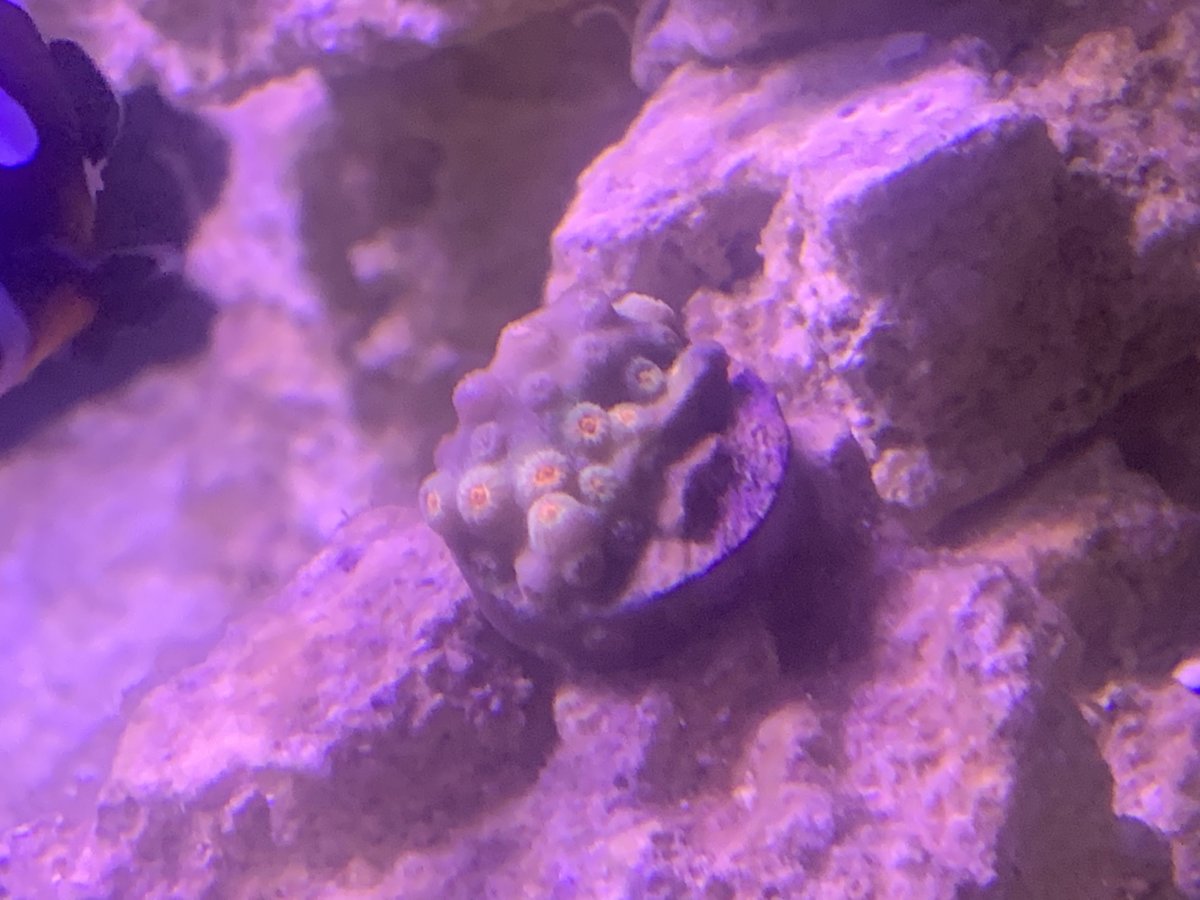
Any number of factors can affect their appearance such as changes in light, water chemistry, nutrition, or stressful events like shipping or being bagged and then not properly acclimated. If there is one coral you do not want to put in strong light or even moderate light to begin with it is a Cyphastrea because it takes a long time for them to adjust to high intensity light. We recommend lighting intensity under 100 PAR to start and if you want to move them into higher light conditions, do so very slowly. They require a moderate, indirect flow to ensure that no detritus builds up on their body. As they grow however their shape can become more of a detritus trap and you may have to change things up to keep them clean. If the detritus is allowed to build up it will over time kill the coral underneath and may be a reason you are experiencing fading.
If you want to feed them directly, you will want to be able to completely shut off the flow because any flow will wash away the food before the coral has a chance to grab and eat it. Speaking of feeding . . . . do not target feed Cyphastrea as it may be more effort than it is worth. If you turn off the flow and provide them with appropriately sized food, they do take in a fair amount and slough off the rest. If you do decide to target feed them, there are a couple sources of food that work well, amino acids and small zooplankton.
There are three major chemical parameters that are needed by Cyphastrea to build its stony skeleton. These are Calcium, Alkalinity, and Magnesium. Cyphastrea is adaptable and will survive in lower nutrient as well as higher nutrient situations BUT these levels will impact their appearance. Too much nutrient and the coral might turn an unattractive brown color. Too little nutrient and they might take on a pale emaciated appearance.
Shoot for Nitrate levels around 5-7ppm but don’t freak out if theyare slightly higher around 15 ppm. Similarly, try to keep Phosphates around 0.01 to 0.05 ppm. If those figures get too high, it may slow down their growth or cause them to take on poor coloration - again something to keep an eye on.
Quality test kits will assure your numbers are safe - NOT API test kits either which are very unreliable.