



revhtree
Owner Administrator
View Badges
Staff member
Super Moderator
Ultimate Member
Reef Squad
Partner Member 2026
Excellence Award
Platinum Sponsor
Photo of the Month
R2R App User
Article Contributor
Hospitality Award
Article Administrator
Industry Professional
My Aquarium Showcase
- Joined
- May 8, 2006
- Messages
- 54,823
- Reaction score
- 122,278
Beginner Corals You Won’t Regret
By Mallorie Gaughran
So, you’re tank is cycled and your water parameters are stable. What’s next? Adding coral of course! You may be asking yourself “What corals should I start with?†Because some of the easier to care for corals can grow quickly, they may become a nuisance farther down the road in your endeavors for a more advanced reef tank. This article will highlight some of the common corals that will be easier to grow and enjoyable for you as your tank matures.
Zoanthids:
These corals would be number one on my list for a beginner’s coral. They come in a variety of colors and patterns. Zoanthids grow in a mat and each polyp is connected to one another by coral tissue. These soft corals are not extremely picky about water parameters. They require medium lighting for best colors and polyp extension. Zoanthids seem to do best in medium flow.
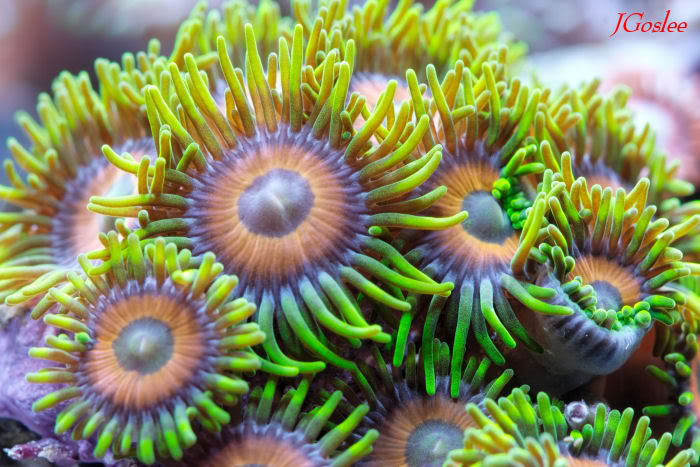
Eagle Eye Zoanthid Colony
Palythoas:
These are large relatives of zoanthids. They have similar requirements to zoanthids. Some palythoas can be kept in lower lighting than zoanthids making them ideal for low tech aquariums. However, most will do great in medium lighting. They grow well in low to medium flow.
WARNING: Zoanthids and Palythoas contain palytoxin- a neurotoxin that is secreted from the coral. Wear gloves and eye protection when handling or fragging these corals.

Nuclear Green Paly Colony
Ricordia yuma and Ricordia florida[/I]:
Ricordia are mushroom corals that come in many colors. These colors include vivid yellows, blues, oranges, pinks, purples, and even rainbow colors! Ricordia are great versus your traditional mushroom corals which can easily take over a tank. Both Ricordia yuma and florida grow nicely in low flow where they can fully open. They do great in lower light but can be acclimated to medium light. Ricordia yuma reproduces by putting off “babies†next to the adult coral. These “babies†aren’t attached to the adult in any way. Ricordia florida will reproduce by making multiple mouths on one polyp. The polyp will grow large and eventually split, producing new a new polyp. Neither Ricordia species make a skeleton; they are soft corals.

Florida Ricordia Single Mushroom
Chalice Corals:
Finally, a large-polyped stony (LPS) coral! Some may disagree with me but a hardy, aquacultured chalice is a great addition to a beginner’s tank. They come in an endless array of colors and patterns. As large show pieces, chalices form a cup shape (hence the name chalice- meaning cup or goblet). Unlike soft corals, chalices make a skeleton. This requires the water in your reef tank to have an adequate amount of elements for proper growth. Chalices like low to medium light depending on the chalice. As far as flow, some like medium and some like low. You will just have to find what is best for your chalice.

Chalice Colony
Montipora digitata:
If you want a beginner small-polyped stony (SPS) coral, this is a great one to start with. Montipora digitata comes in a few colors with the most common being green, orange, and red. This coral will encrust at its base onto a rock and form digit-like growths and branches. It makes a skeleton out of calcium carbonate, like all hard corals, and thus requires adequate elements for proper growth. This coral does great in medium to high flow. It also enjoys medium to high light.

Forest Fire Digitata in the foreground
As with anything in your tank, you should pick what you like. If you enjoy quick growing corals and don’t mind constant pruning, pulsating xenia and mushroom corals are nice additions and easy to grow under almost any conditions. However, most report they wish they never added these corals. If xenia can be kept to its own rock, it makes a beautiful, eye-catching addition to a reef tank. Make sure to do your research before putting corals in your tank. Also, as with any coral, make sure to dip in a coral dip to avoid transferring pests into your aquarium.
For further questions, check Reef 2 Reef
May your corals grow big and strong!
By Mallorie Gaughran
So, you’re tank is cycled and your water parameters are stable. What’s next? Adding coral of course! You may be asking yourself “What corals should I start with?†Because some of the easier to care for corals can grow quickly, they may become a nuisance farther down the road in your endeavors for a more advanced reef tank. This article will highlight some of the common corals that will be easier to grow and enjoyable for you as your tank matures.
Zoanthids:
These corals would be number one on my list for a beginner’s coral. They come in a variety of colors and patterns. Zoanthids grow in a mat and each polyp is connected to one another by coral tissue. These soft corals are not extremely picky about water parameters. They require medium lighting for best colors and polyp extension. Zoanthids seem to do best in medium flow.
Eagle Eye Zoanthid Colony
Palythoas:
These are large relatives of zoanthids. They have similar requirements to zoanthids. Some palythoas can be kept in lower lighting than zoanthids making them ideal for low tech aquariums. However, most will do great in medium lighting. They grow well in low to medium flow.
WARNING: Zoanthids and Palythoas contain palytoxin- a neurotoxin that is secreted from the coral. Wear gloves and eye protection when handling or fragging these corals.
Nuclear Green Paly Colony
Ricordia yuma and Ricordia florida[/I]:
Ricordia are mushroom corals that come in many colors. These colors include vivid yellows, blues, oranges, pinks, purples, and even rainbow colors! Ricordia are great versus your traditional mushroom corals which can easily take over a tank. Both Ricordia yuma and florida grow nicely in low flow where they can fully open. They do great in lower light but can be acclimated to medium light. Ricordia yuma reproduces by putting off “babies†next to the adult coral. These “babies†aren’t attached to the adult in any way. Ricordia florida will reproduce by making multiple mouths on one polyp. The polyp will grow large and eventually split, producing new a new polyp. Neither Ricordia species make a skeleton; they are soft corals.
Florida Ricordia Single Mushroom
Chalice Corals:
Finally, a large-polyped stony (LPS) coral! Some may disagree with me but a hardy, aquacultured chalice is a great addition to a beginner’s tank. They come in an endless array of colors and patterns. As large show pieces, chalices form a cup shape (hence the name chalice- meaning cup or goblet). Unlike soft corals, chalices make a skeleton. This requires the water in your reef tank to have an adequate amount of elements for proper growth. Chalices like low to medium light depending on the chalice. As far as flow, some like medium and some like low. You will just have to find what is best for your chalice.
Chalice Colony
Montipora digitata:
If you want a beginner small-polyped stony (SPS) coral, this is a great one to start with. Montipora digitata comes in a few colors with the most common being green, orange, and red. This coral will encrust at its base onto a rock and form digit-like growths and branches. It makes a skeleton out of calcium carbonate, like all hard corals, and thus requires adequate elements for proper growth. This coral does great in medium to high flow. It also enjoys medium to high light.
Forest Fire Digitata in the foreground
As with anything in your tank, you should pick what you like. If you enjoy quick growing corals and don’t mind constant pruning, pulsating xenia and mushroom corals are nice additions and easy to grow under almost any conditions. However, most report they wish they never added these corals. If xenia can be kept to its own rock, it makes a beautiful, eye-catching addition to a reef tank. Make sure to do your research before putting corals in your tank. Also, as with any coral, make sure to dip in a coral dip to avoid transferring pests into your aquarium.
For further questions, check Reef 2 Reef
May your corals grow big and strong!




















