


Another "are these toxic palys or not?" post

  • Thread starter Thread starter Texx
  • Start date Start date
  • Tagged users Tagged users None

Texx

Community Member
View Badges
Joined
Nov 12, 2023
Messages
28
Reaction score
33
Location
Houston
Rating - 0%
0   0   0
Hi everyone,
So I've tried to do as much research as possible but I'm still unsure if these are the toxic ones or not. They look nice and haven't become a problem (yet), so I might keep them either way. And I already take caution when I'm working on the tank, but I'd like to know for sure just in case I realize something after the fact, like maybe I didn't notice a cut on my hand until after I've already had my hand in the tank or something like that. Thanks for looking
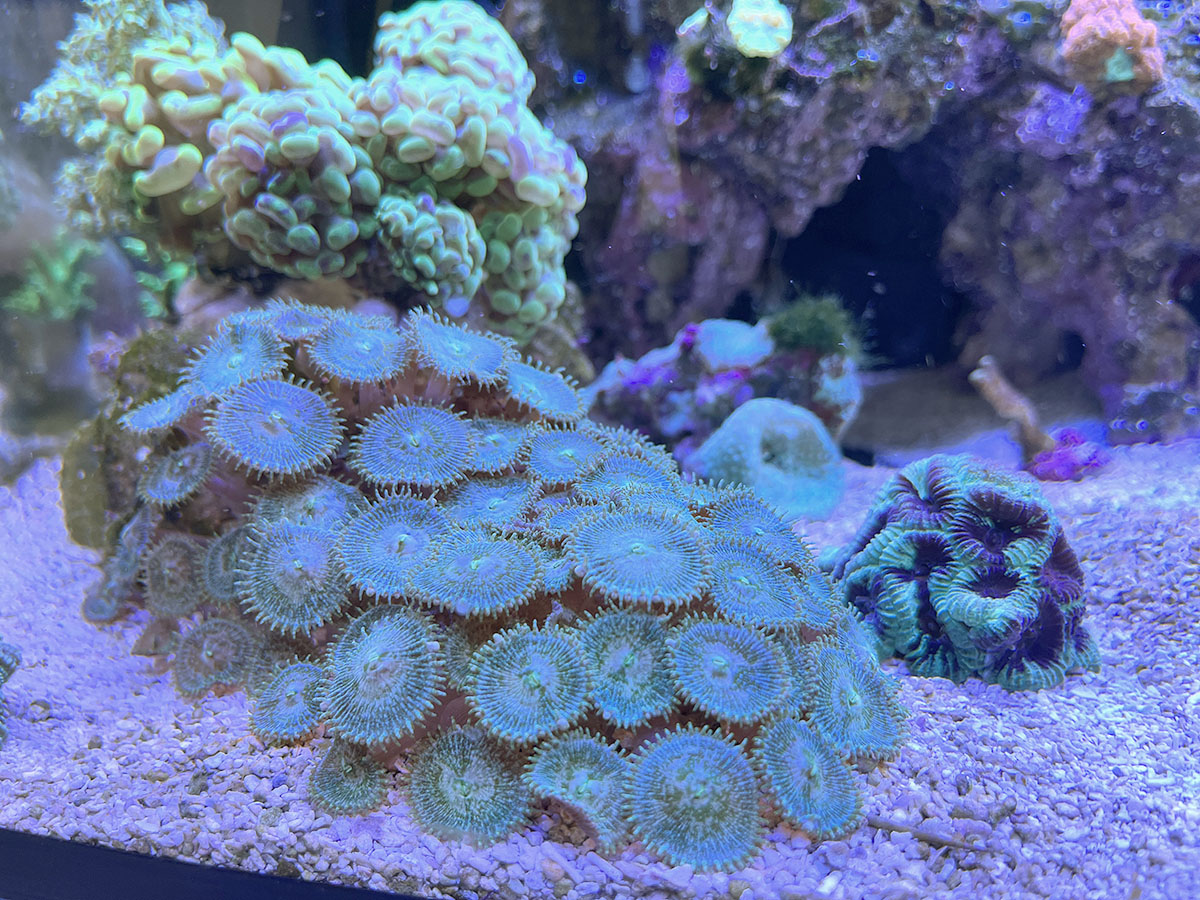
IMG_8544 copy.jpg
 
Don't handle outside of the tank without proper precautions (eye, gloves) and wash hands well after being in the tank. You'll be fine.

It's difficult to say as with anything whether an individual will have a reaction whereas another may not. Be smart and take as many precautions as you deem necessary.
 
The best thing to do is simply assume that ANY Zoa or Paly MIGHT contain palytoxin and take all basic precautions when handling or fragging.

Even if they don't produce it directly, they can still pick it up, so it's always a case of better safe than sorry.

Relying on a random dudebro from a forum telling you, "Nah, bruh, those are perfectly safe" is asking for trouble.
 
Only one way to know for sure Lick em!

No dont do that really. Just use caution when dealing with pretty much anything in your reef tank.
 
Back in the day we called them nuclear green palys. They were invasive and would sting other corals and even fish, if I remember correctly.

Yes, palytoxin poisoning is a real thing, and you need to use caution. Here's an article from the National Institute of Health on an incident in Anchorge, AK:
https://pubmed.ncbi.nlm.nih.gov/26270061/
 
That is an actual paly and if handled improperly it can cause harm.
  1. Don't try to dissolve them with vinegar/acid
  2. Don't try to manually remove them with a grinder
  3. Don't try to boil them off the rock.
Otherwise they pose no risk to you, your aquarium inhabitants, or your house hold during the course of regular aquarium activities.
 
Thanks, everyone!

Back in the day we called them nuclear green palys. They were invasive and would sting other corals and even fish, if I remember correctly.

Yes, palytoxin poisoning is a real thing, and you need to use caution. Here's an article from the National Institute of Health on an incident in Anchorge, AK:
https://pubmed.ncbi.nlm.nih.gov/26270061/
Great article, thanks for the link!
 

TOP 10 Trending Threads

WHAT’S YOUR MOST MEMORABLE EXPERIENCE WITH A CORAL THAT LOOKED LIKE IT MIGHT NOT MAKE IT?

  • I’ve seen a dramatic comeback. I would have sworn it was a goner

    Votes: 18 42.9%
  • A slow recovery, and it got back to looking healthy

    Votes: 7 16.7%
  • It came back some, but never looked as good as it used to

    Votes: 4 9.5%
  • I tried to save one, but it didn’t make it

    Votes: 7 16.7%
  • Mine is still struggling...no comeback yet

    Votes: 3 7.1%
  • I’ve never had a coral in serious trouble

    Votes: 0 0.0%
  • See, this is why I don’t keep corals

    Votes: 1 2.4%
  • Other (Post in the comments)

    Votes: 2 4.8%
Back
Top
Home
Post thread…
Market
What's new





