Cycle confusion.

Porsche

Community Member
View Badges
Joined
Jul 22, 2016
Messages
37
Reaction score
36
Rating - 0%
0   0   0
Hi all,

New here but not really new to the hobby had a reef tank a few years ago and am getting back to the hobby.

So i picked up a IM Fusion 20 G , and am using the BRS dry rock. with live sand, and Biospira.
I started the tank June 29th and also added a couple pounds of rock from my uncles reef tank the rock from what i can tell had no life on it at all other then Coraline algae which i wanted to seed my tank. At one point my ammonia got up to .50 and nitrites and nitrates in the same range of . 5- 1.00

Then they started to drop. Over the last few days my ammonia has been steady at .25. Nitrites and nitrates both at 0.
i'm seeing what i believe is Diatoms appear on my uncles live rock but nowhere else.

the thing that is confusing me is why the ammonia is staying steady at .25 and everything else is at 0 , shouldn't i be seeing nitrates as well since the Bacteria is breaking down the ammonia? ive been dosing pure ammonia about 1/2 m/L a day to feed the Bac. could this be the issue?

any help would be appreciative. just pretty confused. since my last reef i just used premium live rock and let the course go for a few weeks.
swsHhUR.jpg
 

GMay

Active Member
View Badges
Joined
Jan 22, 2016
Messages
160
Reaction score
161
Location
Houston
Rating - 0%
0   0   0
What test kit(s) are you using. The API ammonia test kit frequently gives a false positive at very low to zero ammonia.
 
OP
OP
Porsche

Porsche

Community Member
View Badges
Joined
Jul 22, 2016
Messages
37
Reaction score
36
Rating - 0%
0   0   0
using API and red sea

API giving me a reading of .25 while Red sea gave me a reading of .2

tried to find a Sailfert but my LFS does not keep them in stock ..probably should get one online.
 

GMay

Active Member
View Badges
Joined
Jan 22, 2016
Messages
160
Reaction score
161
Location
Houston
Rating - 0%
0   0   0
I would not sweet it too much. You likely at the end of your cycle now. I would begin introducing or feeding the system to maintain the nitrifying bacteria.
 

jsker

Reefing is all about the adventure
View Badges
Joined
Apr 11, 2015
Messages
25,093
Reaction score
77,773
Location
Saint Louis
Rating - 0%
0   0   0
Welcome to R2R, very nice setup. @GMay great advice, and I agree with Gmay let it ride. Your next step is adding your cleaning crew and feeding the tank.
 

Bob Escher

Welcome to Saltwater
View Badges
Joined
Aug 8, 2015
Messages
2,940
Reaction score
1,668
Location
Nashotah Wisconsin
Rating - 0%
0   0   0
I agree keep on watching it and feeding it maybe a little slower in adding the ammonia and watch for the diatoms to spread you may even see hair algae as well
 
OP
OP
Porsche

Porsche

Community Member
View Badges
Joined
Jul 22, 2016
Messages
37
Reaction score
36
Rating - 0%
0   0   0
Thanks for the advice. I'll let it ride for a week and keep testing see were I get.
 

dbl

It Takes Less Energy to be Nice
View Badges
Joined
Mar 13, 2014
Messages
15,944
Reaction score
83,682
Location
SW Florida
Rating - 0%
0   0   0
You've already received the advice I would have provided, so I will just say welcome to R2R. Thanks for joining.
 

KJ

Lone Wolf
View Badges
Joined
Dec 14, 2011
Messages
22,317
Reaction score
111,151
Location
Tennessee
Rating - 0%
0   0   0
Welcome to R2R;)
Section 5: The Cycle

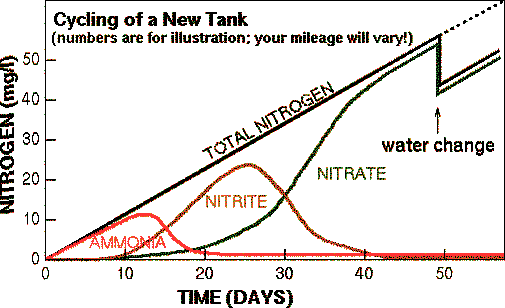
fish-tank-nitrogen-cycle.gif

image via rusticgirls

In a freshwater aquarium you can add some flake food, wait a couple weeks, and then you can add fish. In the ocean there is much more involved than mechanical filtration. In fact, 70% of your aquariums filtration relies on the maturity of the live rock. A combination of bacteria, algae, and various invertebrates compose the “live” part of the rock. It takes quite a while to establish an ecosystem, even on a microscopic level. Without a proper understanding of the Marine Cycle, you will be in for a long term battle with parameters and algae. There are six main stages to a properly cycled tank. Follow this guide and you cannot mess up. You will need your basic test kit to test the progress.

Stage 1: Ammonia Cycle

Ammonia is the first thing that forms when something rots. It is a waste product in nearly all creatures as well. Instead of using a fish to start the cycle just use some food. Anything that is all natural and uncooked works just fine. Table shrimp that is uncooked works great. Drop it on the sand so it is in view. The shrimp should begin to rot within a couple hours or more. Let this shrimp rot until it is completely gone. If you are curious what your ammonia levels are, go ahead and take some tests. Keep track of the results as the shrimp rots. The smaller the food gets the more ammonia should be present in your water column and pretty soon should be off the charts. This will stay high for a while, but then start to drop. As soon as the ammonia starts to drop you will see a rise in Nitrite, you are now on the next stage.

Stage 2: Nitrite Cycle

Ammonia when broken down by bacteria becomes Nitrite, which is still a toxin. As your Nitrites rise your Ammonia will drop, drop, and keep dropping as long as you haven’t added any animals. Keep up with testing to observe your progress. Eventually your Ammonia will be very low and your nitrites will peak out until it starts feeding a different type of bacteria that turns it into Nitrates. Once your first signs of Nitrates are seen you are on the next stage.

Stage 3: Nitrate Cycle

Nitrates are removed within the live rock deep inside in all of the deep pours. This hidden bacteria consumes the nitrate and creates nitrogen gas as a byproduct. The nitrogen gas rises in the water column and escapes into the air. When one gas leave, another enters. Oxygen is then infused into the water. After the Nitrates start to dissipate your oxygen will increase and you will be ready for the intermission:

Intermission:

You are not done yet! You may have cultivated a nice crop of groovy bacteria and your water may be clean as can be, but, there are still 3 more stages to the cycle process before you can start your stocking. Take this time to consume all of which you have already done. The next 3 stages often put fear into the eyes of many newcomers. These are perfectly natural and are partially a representation of how the earth became an oxygen rich planet. Before there was any oxygen breathing organisms, there was the evolution of Cyanobacteria. This is a photosynthetic bacteria that creates Oxygen as a byproduct. There are several colors, but the commonality is that it is like a slime. The Cyanobacteria spread over a vast area and the atmosphere became oxygen rich like we breath today, without the smog. Cyanobacteria is responsible for life as we know it. The same applies to the reef. Now that your mind has been blown you may move on to the next stage of the cycle.

Pre-Algae Cycle:

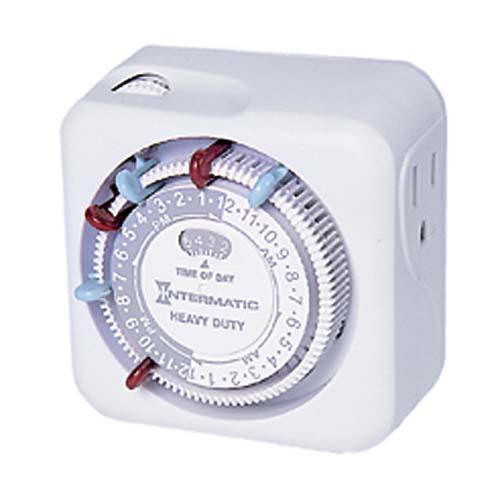
LTIM95.jpg


If your lights have not been setup yet do so now. Set your timers as you would for a reef tank. Anywhere from 6-12 hours is a good amount of time. Set the photoperiod to be on during the hours you will be viewing the tank most. If you work 2nd shift it is OK to have the lights come on after you get home from work or when you wake up in the morning. As long as there is not a supply of sunlight near the tank you wont have a long term battle with algae.

Stage 4: Diatoms

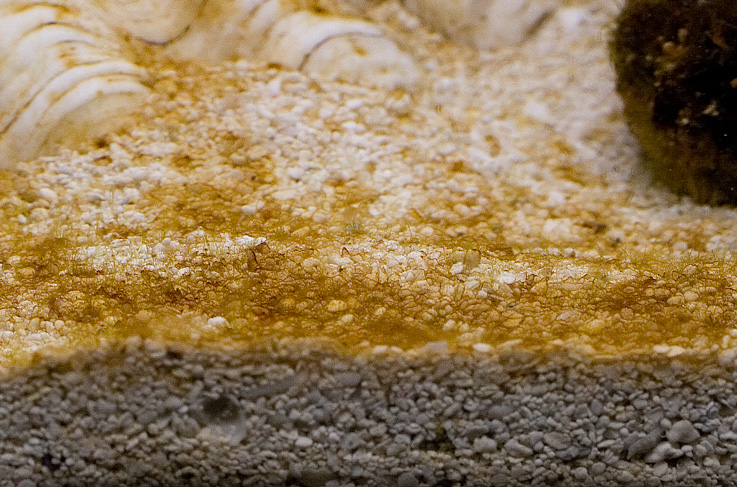
diatoms_03_zpsfbc5643d.jpg

diatom algae image via reef2reef member Steven R

Diatoms are a brown dusty life form that consumes silicates. There is no avoiding Diatoms during their initial bloom. Leave it be. Let it go crazy. Before you know it, the brown stuff will soon start to change colors. Generally red, this is the start of the next stage!

Stage 5: Cyanobacteria

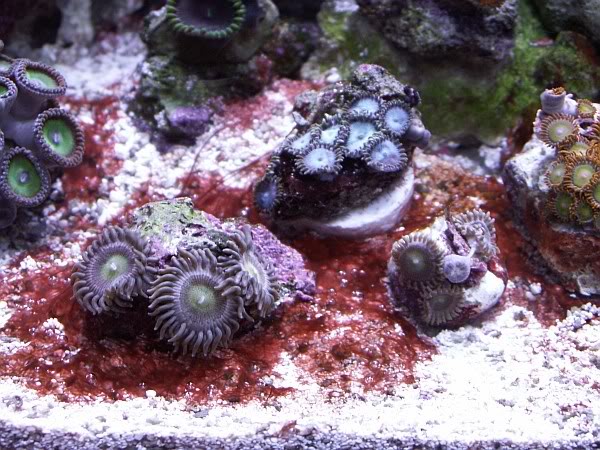
01-24-07Cyano_1.jpg

cyanobacteria image via reef2reef member murfman

Cyanobacteria will now begin its course. Again you will let the slime just do its thing. This will be the nastiest of the stages. Cyanobacteria can gross some people out, especially if they catch a whiff of it. It is best to leave it be. It will start to clear up eventually. The clearing of the slime makes way for yet another stage.

Stage 6: Green/Brown algae

DSC00232.jpg

hair algae image via reef2reef member johnmaloney

If you have made it this far, give yourself a round of applause. This is the final “battle” of the cycle process. When the slime is gone you will see your first signs of plant life, algae! Green Hair algae is usually the type that you see, but some other types have been known to occur. This stuff will grow like mad. At this point you are ready to move on to the next phase.

The cycle is a long process in terms of hobbies. Find yourself a good rhythm for testing. Get yourself in the habit of staring for long periods of time. Practice observation by watching as life forms start taking foot in the aquarium. You will see things from dust sized particles to worms that reach a foot long. There really is no telling what could form in your tank. This is a great time to prepare for the animals you will get. Knowing how to describe things and being able to correctly test the water will help you get the information you need. Your parameters are perfect now. You are now ready to move on to the next section. You should actually study the next section during your cycle, since you will have quite a bit of time on your hands with all that waiting.

Cycles can be artificially induced, but it is always preferred to use as little foreign liquids as possible. Another thing you can do during the cycle is preparing your clean up crew and first fish, but be prepared to keep them quarantined for a prolonged time since the cycle is unpredictable.
 
OP
OP
Porsche

Porsche

Community Member
View Badges
Joined
Jul 22, 2016
Messages
37
Reaction score
36
Rating - 0%
0   0   0
Thanks KJ cleared somethings up for me. Seems I have a ways to go.
 
OP
OP
Porsche

Porsche

Community Member
View Badges
Joined
Jul 22, 2016
Messages
37
Reaction score
36
Rating - 0%
0   0   0
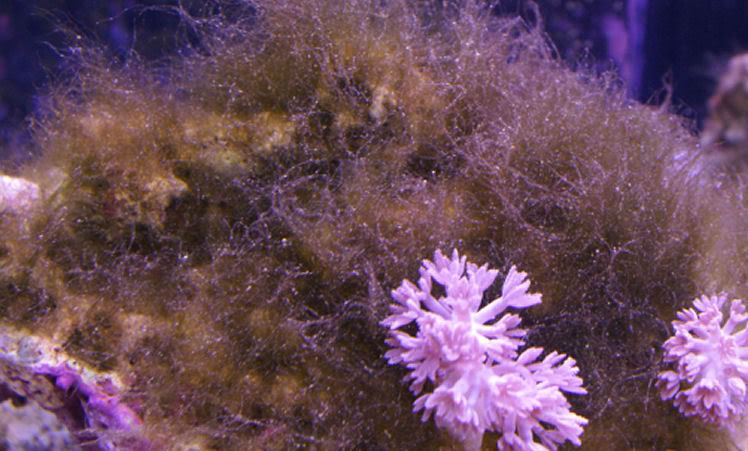
Algae is getting bubbles, and i am getting a lot of brown Diatom spots on my Dry rock.
sSirzTh.jpg
 

TOP 10 Trending Threads

WHAT AMOUNT OF LIVE ROCK AND SAND SHOULD BE PRIORITIZED FOR OPTIMAL BIODIVERSITY/FILTRATION?

  • 100% live rock + bagged sand

    Votes: 34 27.4%
  • 100% dry rock + 100% live sand

    Votes: 44 35.5%
  • 50/50 live/dry rock, 50/50 live/bagged sand

    Votes: 27 21.8%
  • 75% live rock, 25% live sand

    Votes: 11 8.9%
  • 25% live rock, 75% live sand

    Votes: 8 6.5%
Back
Top