



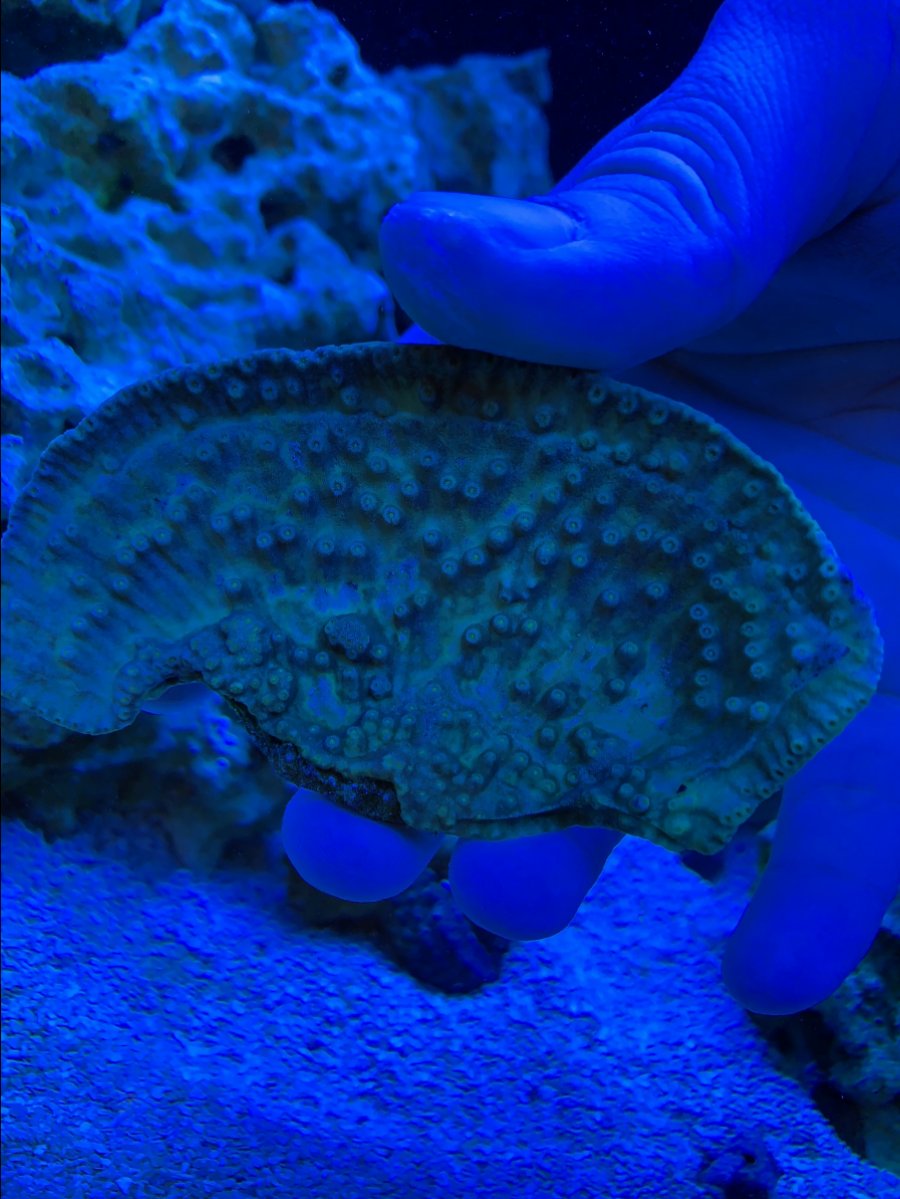
Dead or alive cup coral?

biggie4jets

Active Member
View Badges
Joined
Jan 10, 2019
Messages
313
Reaction score
206
Location
New York
What state or country do you live in
New York
Rating - 0%
0   0   0
Is this dead or no? I received this in a few days ago and this is my first cup coral so just double checking with everyone on here. Thanks!
2D83DEAB-19E3-48C8-9638-9C530122A9C2.jpeg


7D350F29-9926-4CE3-B278-30FD0329D1DE.jpeg
 
Ya, it looks like the tissue is still intact. Haven't seen the polyps yet though, keep my eye out on it.
 
If it died, it would have rotting or no tissue. My cup corals only extend their polyps out at night, so I could see how one might think its dead with no PE, but as long as there is tissue, it is alive.
 
If it died, it would have rotting or no tissue. My cup corals only extend their polyps out at night, so I could see how one might think its dead with no PE, but as long as there is tissue, it is alive.
This is a conundrum for me to understand. My cup coral extends polyps 24 hours a day (obviously more so during photoperiod hours), but a reefer buddy of mine never saw polyp extension on his. I wonder if there are different species of similar corals that often get confused with one another.

FWIW, here is a shot of mine:
IMG_20181130_224644.jpg
 
For instance, I see that liveaquaria advertises a Pagoda Cup Coral (https://www.liveaquaria.com/product/prod_display.cfm?c=597+321+475&pcatid=475) as Turbinaria peltata.

However, a quick search for pics of Turbinaria corals reveals great diversity in not only polyp extension but also spacing (https://duckduckgo.com/?t=palemoon&q=turbinaria+coral&iax=images&ia=images), not to mention colors. Wikipedia also lists at least 17 different species in the Turbinaria genus.

Of all the cup corals I've seen that look like yours, I would describe differences between those and mine as:
1. Polyp extension is either long or nearly nonexistent.
2. The plate of the coral on my specimen is thick (>0.25") while the plate on specimens with less polyp extension appears to be thinner (almost chalice-like).
3. Polyp density on my coral seems to be much higher than on those specimens with less polyp extension.
4. Diameter of polyp skeletons on corals with more extension seems to be larger than on those with less polyp extension.

Maybe none of these aspects are important, but these are the differences I've observed.
 
Perhaps a combo of flow/light/nutrient factors in polyp extension ?

2nd pic - original home since frag, high flow high nutrient, medium/high light.
1st pic - very little flow, low nutrient, low/medium light.

9FAAED10-0FA7-4E0B-9A4B-780902C1545D.jpeg 823C54D3-7732-4433-97D4-0B537F91CB8C.jpeg
 
Oh nice, I didn´t know about this coral and now I "need" to buy it... ;Shamefullyembarrased

Christmas threat, I´ll say to myself
 

WHEN YOU SEE A REEF2REEF POLL, WHAT’S YOUR USUAL MOVE?

  • Vote right away, then head to the comments

    Votes: 11 40.7%
  • Read the comments first...then decide what I think

    Votes: 1 3.7%
  • Vote and explain my choice in the comments

    Votes: 2 7.4%
  • Dude, I just vote...I don't care about the comments

    Votes: 12 44.4%
  • Vote, then come back later to see how it turned out

    Votes: 1 3.7%
  • Pick “Other” because my opinion is too nuanced to fit any of your simpleton boxes

    Votes: 1 3.7%
  • I usually read the comments but exercise my right not to vote

    Votes: 0 0.0%
  • I always get excited about Daniel’s daily polls, obviously 😎

    Votes: 3 11.1%
  • Other (Post in the comments)

    Votes: 3 11.1%
Back
Top
Home
Post thread…
Market
What's new







