Difficult to keep fish, should we even keep them?

Tank size may be more important than diet. Idols are very active fish, and when confined to a small tank with an abundance of food may become "Fish Couch Potatoes" and eventually began to have digestive issues that shorten their lifespans. The benefits of exercise are well documented in Humans so why could they not apply to certain species of Fish. The question is, if this were true what size Tank would meet their needs? 90000 Gallons is out of the question. 😆

I've kept idols long term (5+ years) in 500 gallon tanks. I've lost so MANY of them in smaller tanks though - they go through a comprehensive quarantine (for ich that they get so easily) and then get into a smaller display, but then don't do so well.

Years ago, on another forum, a person posted that the "best way" to keep these was to house them in groups of five or so. Many people referenced that post as the way to succeed with them, but eventual failures were most common - and then, the losses were of a greater magnitude due to the number of fish the people had acquired, based on this incorrect advice.

Getting good idols is important. In the old days, people would get large adults from Hawaii, and those just didn't thrive. Small ones from SE Asia just go through too long of a supply chain to be in good enough shape to do well. These medium sized, Australian hand caught ones, in larger tanks, are so much easier to keep.....
 
Last edited:

Had an idol for 8 years. Got it directly from Hawaiian diver. Ate anything I fed it, mysis, flakes, pellets, Nori etc. One of the best eating fish I’ve had. Lost it due to some type of infection.
 
I have one in QT right now so that's why I'm interested in the behavior and care of this Species. From Africa I believe and had him about 40 days. Seems to be doing well and am getting ready to do Prazi. If his Streamer is an indicator anyway. Seems to be getting longer and longer.
 

Attachments

  • IMG_20250906_204123.jpg
    IMG_20250906_204123.jpg
    241.9 KB · Views: 28
I know I set the bar high for Hobbyists, but I also set it the same for myself. I think the fish would feel living close to their normal lifespan would be successful. 😎

Most "outside factors" are under our control. Ex. We know the power will go out. Get a generator.

As for keeping Moorish Idols in a home tank, someone may have kept them longer than 7 years, but in my lifetime, with my experience, I myself have not found one older than that yet. Of course, I have not read every account of them, so maybe someone kept one for 20 years. I hope so anyway, but I think 98% of them die in a year or less.
Many people feel they are successful if the fish eats and lives a few weeks.

I have kept hippo tangs for 10 or 12 years, and I still consider that a failure, as well as my 10-year-old Copperbands.

It's good, I would imagine, but not really successful, as most don't live 6 months.

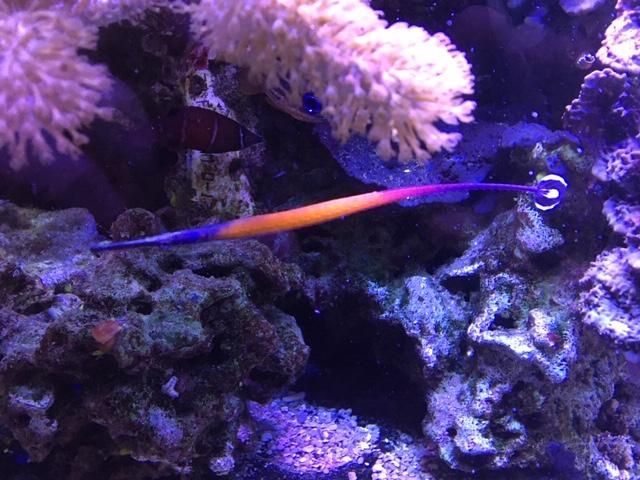
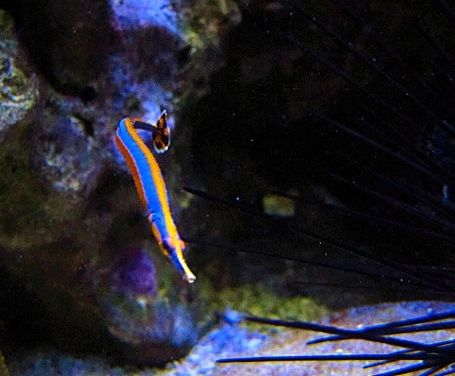
My last Janss Pipefish lived for 7 years, and as far as I can tell, that is their lifespan, so I feel that was a success. My bluestripe pipefish live about 5 years and I also consider that a success.


I have two Fireclowns now, and they are about 35 years old. Not bad, so I consider that successful. Although they can live into their 40s, I realize that not all of our fish live to their maximum lifespan, just as humans do not.

However, saying that keeping a copperband, Long Nose butterfly, or angelfish for 3 or 4 years is a success, I find hard to believe. If those fish died from a disease, I really can't say it was successful.

I don't think we should lower the bar just because so many people can't keep those fish for at least half their normal lifespan.

(And Randy. I am speaking of a HOME tank. Not a public aquarium with a million-gallon tank.) 😁
 
I think that difficukt fish should not be left in the ocean. Take up diving if you want to see these fish. I've seen shools of Moorish Idols, Arabian Butterfly fish, etc, etc. Sure, you can get away with things sometimes but you will feel bad about it when the specimen dies.
I'm a retired surgeon. A good surgeon performs a standard, procedure and minimizes complications. Some "try to get away with things" cause it might save time or make it technically easier - guess what happens
 
Part of keeping difficult fish is to learn and advance the Hobby. A good example is Mandarins and even Coral. Back in the late 70's when I had my first Tank, no one knew how to successfully keep these animals. Today we know so much more, and many more resources and Technology is available to improve the rate of success. How can we learn by leaving difficult fish in the ocean? Down the road, there will more than likely come a time when there is no Fish or Invert that cannot be successful kept in a home Aquarium.
 
Part of keeping difficult fish is to learn and advance the Hobby. A good example is Mandarins and even Coral. Back in the late 70's when I had my first Tank, no one knew how to successfully keep these animals. Today we know so much more, and many more resources and Technology is available to improve the rate of success. How can we learn by leaving difficult fish in the ocean? Down the road, there will more than likely come a time when there is no Fish or Invert that cannot be successful kept in a home Aquarium.

That is true - to a point. Working with delicate species and trying to overcome their husbandry issues is how the hobby moves forward. However, the converse of that is buying difficult to keep species and then not trying anything novel to keep them alive, the common result is that you'll just see the same problems.

Hawaiian cleaner wrasse are well known to have literally a 100% mortality rate in 4 to 6 months. Buying one to "give it a try" just gives the same results. It wasn't until captive raised ones were available, that home aquarists began to have any real success with them.

Orange spotted filefish also have a high mortality rate. Then, an expert aquarist sourced some net caught ones, and worked really hard to wean them off live coral diets - and even got theirs to spawn! Trouble is, people read that, then see one in their local store and buy it - but it dies because they didn't follow the same exhausting steps. That same person had success with coral eating butterflyfish, wrote about it, but the same thing happened - people went out and bought starved, poor conditioned corallivores, and lost them....

The key here is to not make the same mistakes that have already been shown to not work.....
 

WHICH PART OF YOUR SETUP IS HARDEST TO REACH OR REMOVE FOR ROUTINE MAINTENANCE?

  • Glass behind or beside the tank

    Votes: 8 36.4%
  • Powerheads or wavemakers

    Votes: 2 9.1%
  • Sump or rear filtration chambers

    Votes: 2 9.1%
  • Skimmer or other filtration equipment

    Votes: 1 4.5%
  • Overflow or plumbing

    Votes: 6 27.3%
  • Lights or lids

    Votes: 0 0.0%
  • Mine is pretty easy to access!

    Votes: 2 9.1%
  • Other—tell us what I missed

    Votes: 1 4.5%
Back
Top
Home
Post thread…
Market
What's new