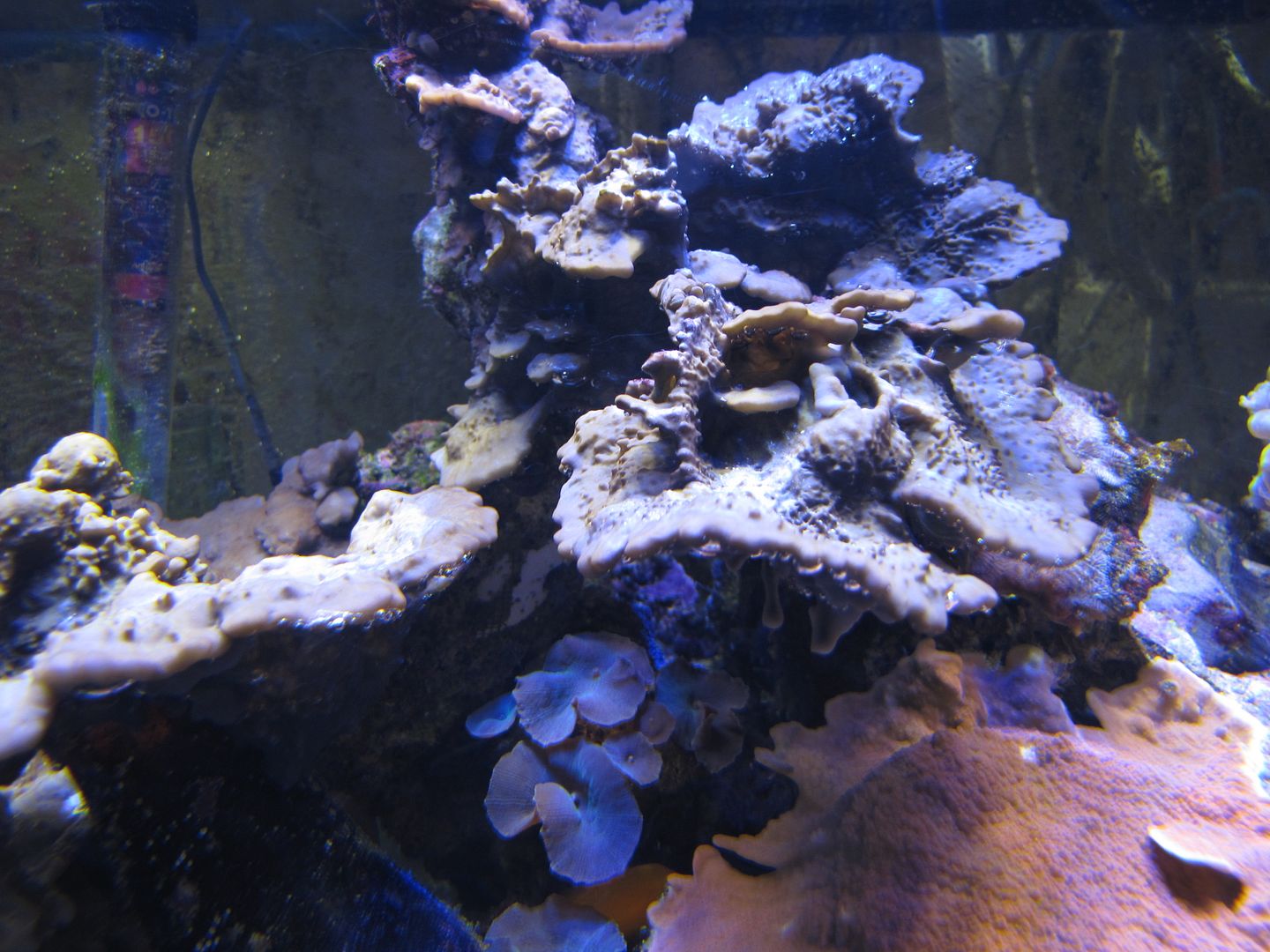
WHat's too much? Looks like what you have is pineapple sponges which can be the dominate sponge initially when a system matures. As mentioned above they will regulate themselves over time and you should see other cryptic sponges grow.
Cryptic sponges are essential recyclers in marine systems processing labile DOC 1000X faster than bacterioplankton. This is good as too much labile DOC is not good for corals. Here's a databomb if you're interested in reading more. Here's some videos you may find informative also.
Excess labile carbon promotes the expression of virulence factors in coral reef bacterioplankton
https://www.nature.com/articles/ismej2017142
Element cycling on tropical coral reefs.
This is Jasper de Geoij's ground breaking research on reef sponges. (The introduction is in Dutch but the content is in English.)
https://www.rug.nl/research/portal/files/14555035/13completethesis.pdf
Sponge symbionts and the marine P cycle
https://www.pnas.org/content/112/14/4191
Phosphorus sequestration in the form of polyphosphate by microbial symbionts in marine sponges
https://www.pnas.org/content/112/14/4381
Differential recycling of coral and algal dissolved organic matter via the sponge loop.
Sponges treat DOC from algae differently than DOC from corals
https://besjournals.onlinelibrary.wiley.com/doi/full/10.1111/1365-2435.12758
A Vicious Circle? Altered Carbon and Nutrient Cycling May Explain the Low Resilience of Caribbean Coral Reefs
https://academic.oup.com/bioscience/article/66/6/470/2754308
Surviving in a Marine Desert The Sponge Loop Retains Resources Within Coral Reefs
Dissolved organic carbon and nitrogen are quickly processed by sponges and released back into the reef food web in hours as carbon and nitrogen rich detritus.
https://www.researchgate.net/publication/279061640_2013_deGoeij_Science_Sponge_loop
Natural Diet of Coral-Excavating Sponges Consists Mainly of Dissolved Organic Carbon (DOC)
https://www.ncbi.nlm.nih.gov/pmc/articles/PMC3934968/
The Role of Marine Sponges in Carbon and Nitrogen Cycles of COral Reefs and Nearshore Environments.
https://search.proquest.com/openvie...9d1e5/1?pq-origsite=gscholar&cbl=18750&diss=y
"Coral Reefs in the Microbial Seas" This video compliments Rohwer's book of the same title (Paper back is ~$20, Kindle is ~$10), both deal with the conflicting roles of the different types of DOC in reef ecosystems. While there is overlap bewteen his book and the video both have information not covered by the other and together give a broader view of the complex relationships found in reef ecosystems
Changing Seas - Mysterious Microbes
Nitrogen cycling in hte coral holobiont
BActeria and Sponges
Maintenance of Coral Reef Health (refferences at the end)
Optical Feedback Loop in Colorful Coral Bleaching
Richard Ross What's up with phosphate"