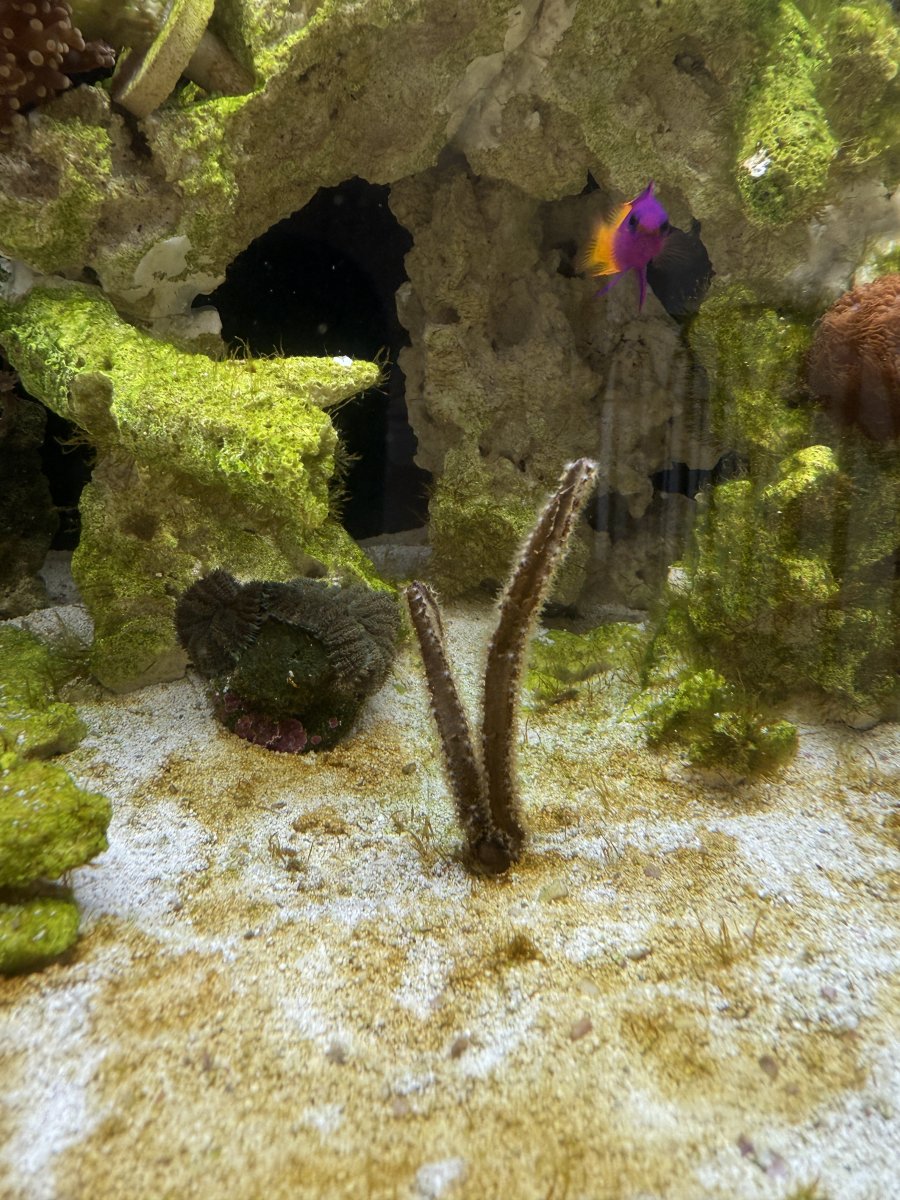
Unlike most corals, many gorgonia do have a clearly established use for iodine to make some of their body parts, so be sure you dose it.
Who Uses Iodine: Gorgonia And Antipatharian Corals (Black Coral)
Another set of creatures of the deep that use iodine are certain gorgonia, such as Plexaura flexuosa. They have 3,5-diiodotyrosine in their bodies, to the tune of 0.1 to 2.6% of the total dry weight as iodine. This iodoamino acid is presumably incorporated into proteins in the skeleton (stem), but the benefit is unclear. Again, it may be largely an antipredatory effect that is desired. The iodine incorporation in gorgonia seems to increase with age. The proteins of many different gorgonia species contain substantial iodine: Eunicella otenocalloides 6.5-8.9% by weight%, Gorgonia verrucosa 4.2-9.0, G. lamarcki 3.3-6.8, G. scirpearia 0.4-0.6, Rhipidigorgia flabellum 0.6-1.1, Euplexora maghrebensis 0.19-0.23, and Plexaura kukenthali 1.9-2.2.44 It has also been demonstrated that at least one gorgonia (E. verrucosa) takes up iodine in the form of inorganic iodine from the water column.
One study showed that the organoiodine compound thyroxine, and some related compounds, are localized to certain parts of the gorgonia L. virgulata. Most interestingly, one of the places it is localized to are scleroblasts (spicule-forming cells) and on the spicules themselves. Further, the addition of thyroxine to these cells impacted the uptake of calcium, and it is suggested that the thyroxine functions in spicule formation.