Squamosa shell

  • Thread starter Thread starter DmitryB
  • Start date Start date
  • Tagged users Tagged users None

DmitryB

Valuable Member
View Badges
Joined
May 26, 2026
Messages
1,387
Reaction score
1,068
Location
Hunter, NY
What state or country do you live in
New York
Rating - 100%
1   0   0
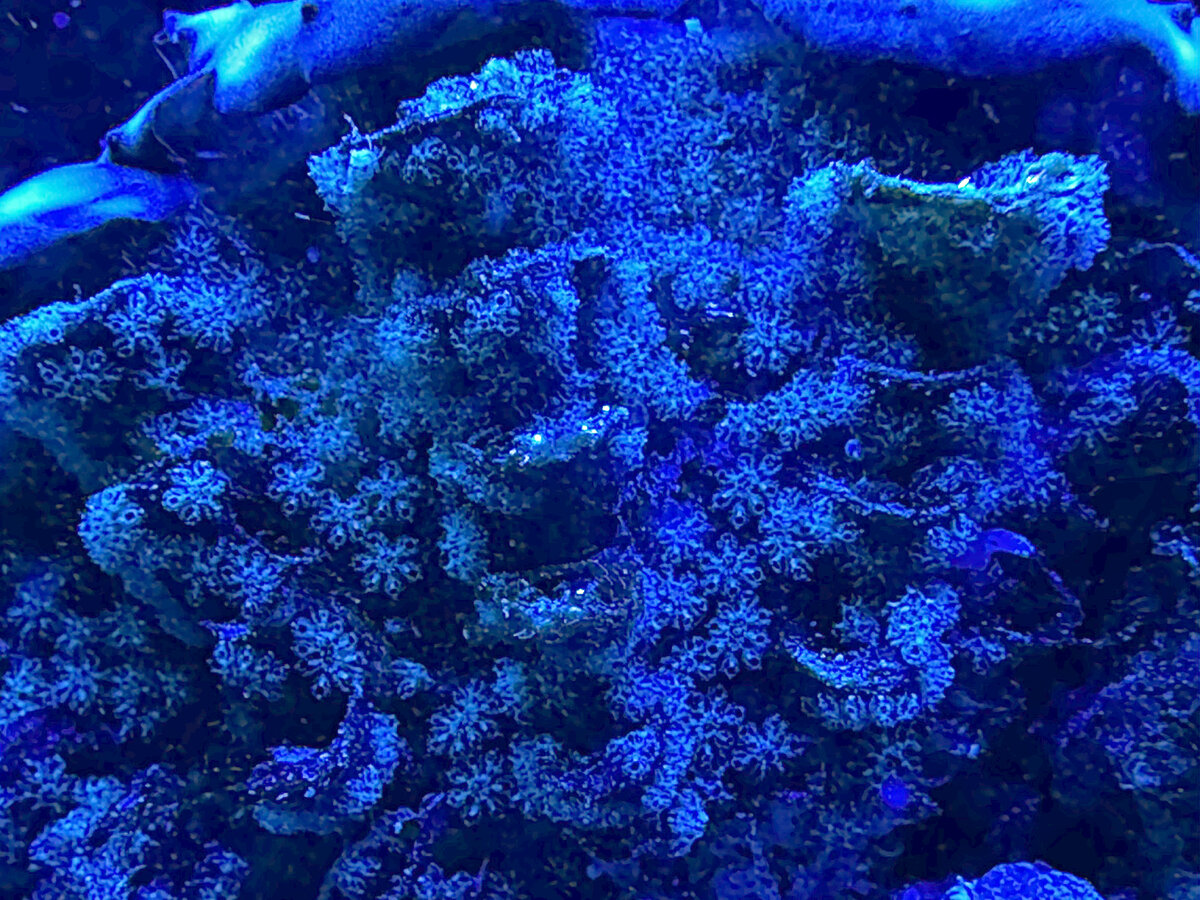
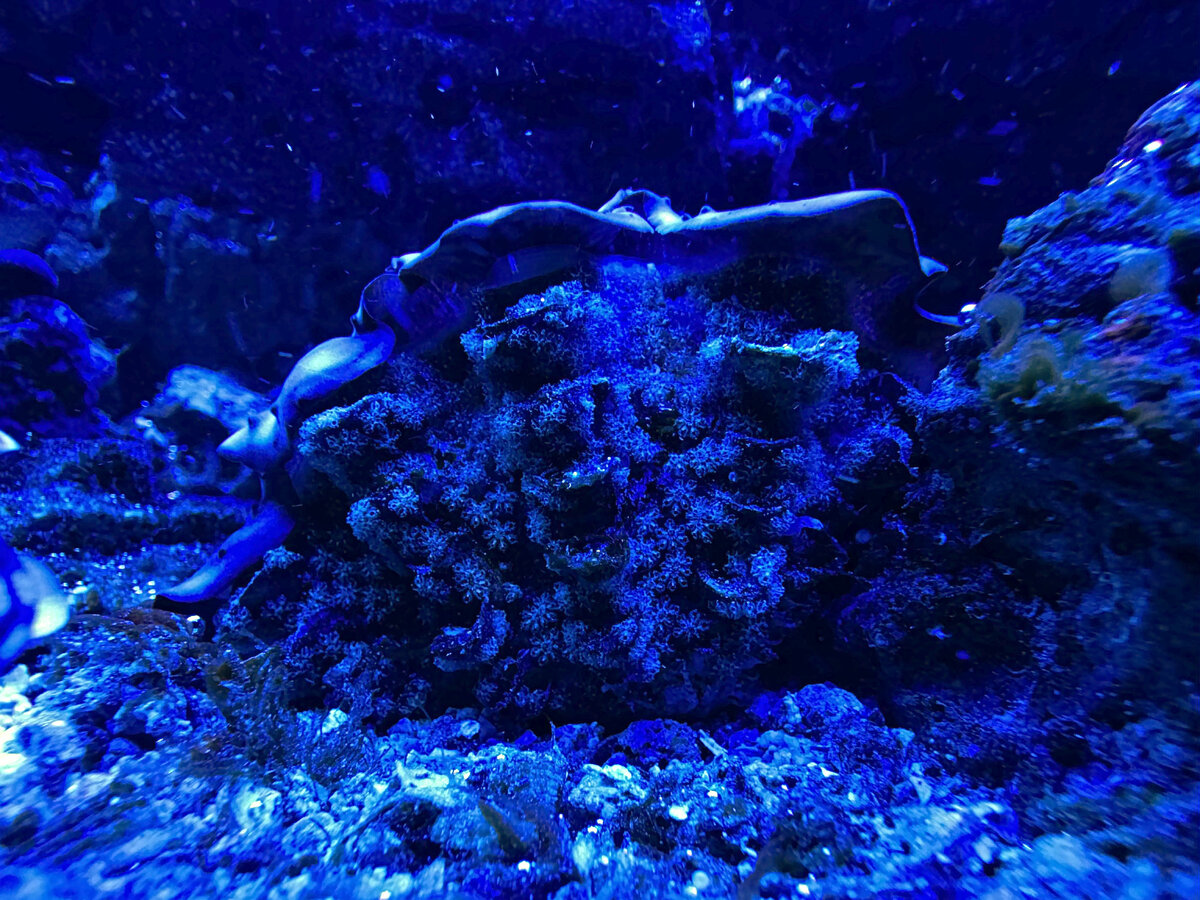
I got a Biota squamosa a few weeks ago; pretty decent size. What is this on its shell? At first I thought "hey that's a cool snowflake pattern on its shell" but I'm starting to think that's not normal? I figured Biota wouldn't have weird hitchhikers on their stuff.
IMG_8254.jpg

IMG_8255.jpg
 
tunicate or bryozoan, not clove polyps
 
I'm confused!!

I was going to take the clam out of tank and use Joe's Juice, but it's attached to the bottom glass. So...

Is this thing whatever it is going to kill my tank or ???

😭
 
Take a picture under whites. If this is a tunicate, it is likely the genus Botryllus. If you are not dosing phyto, it will probably go away on its own. If its the octocoral, its not clove polyps (Clavularia) but instead probably a species in the collection of morphologically similar corals people are calling Sarcothelia. You may have a problem if its the latter.
 
Looks like colonial tunicates, harmless filter feeders, but they like to spread to the undersides of things. I still have some leftover from my Aussie and Solomon live rock.
 
Yep ascidians. Nothing to worry about. Makes sense because Biota probably grows these in an environment with a lot of food in the water column to boost growth. They eat similar stuff to clams, but giant clams can get by with only photosynthesis.

With these ‘star shaped’ ones, I’ve been told there’s two genera. One is Botrylloides and the other is Botryllus. I don’t know how updated this taxonomy factoid is. However, I can tell you that these are some of the closest things to vertebrates. They are more similar to us than to any invertebrate animal, with the only exception being lancelets. Fascinating find. I would consider myself lucky if I had an established colony of these in any of my tanks.
Well, that's a relief! Thank you! I did wonder how an invasive polyp would get into a Biota system. I'm glad I did not send them a sternly worded email yet.
 
Well, that's a relief! Thank you! I did wonder how an invasive polyp would get into a Biota system. I'm glad I did not send them a sternly worded email yet.
I think almost all of these clams are maricultured (Biota, ORA, etc.) and coming from the ocean so I wouldn’t be surprised to find all kinds of things. I think it’s cool; I’d welcome anything like that coming in on the shell.
 

TOP 10 Trending Threads

WHAT’S USUALLY THE FIRST CLUE THAT SOMETHING IS OFF IN YOUR REEF?

  • A fish’s behavior or appetite changes

    Votes: 8 13.1%
  • A coral looks different or stops opening normally

    Votes: 40 65.6%
  • Water clarity or surface appearance changes

    Votes: 8 13.1%
  • Equipment sounds or flow seem different

    Votes: 7 11.5%
  • A test result catches my attention

    Votes: 14 23.0%
  • Algae or other growth starts changing

    Votes: 13 21.3%
  • I usually notice when the problem is already obvious

    Votes: 3 4.9%
  • It depends on what’s going on

    Votes: 10 16.4%
  • Other (Post in the comments)

    Votes: 1 1.6%
Back
Top
Home
Post thread…
Market
What's new