




- Joined
- Dec 15, 2017
- Messages
- 92
- Reaction score
- 102
- What state or country do you live in
- Georgia
So today I did a thing. I finally took the leap into the reef keeping hobby with permission from my loving so understanding wife. She already has to deal with my obsession with bass fishing and now this lol.
So a friend of ours had a used Coralife Biocube 29g he had purchased from a friend of his who was moving and he had planned to do a seahorse specific tank, however, after the lose of a close friend he and his wife decided to move and that left the opening for me to grab up this little gem. There is a little scratching on the front glass but nothing to write home about.
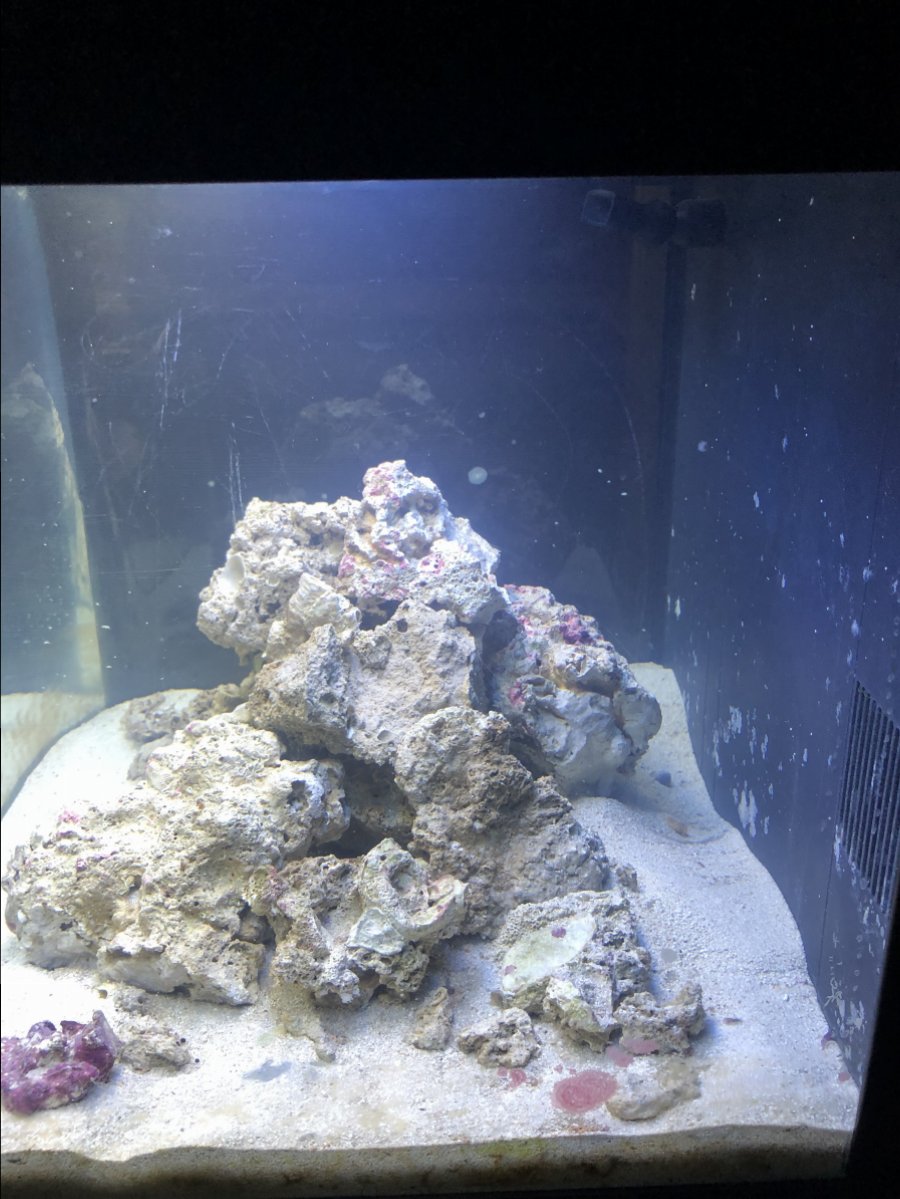
The tank has been running at our friend’s house for about 6 months with about 20-30 lbs of live sand, about 20 lbs of live rock, and another 15 lbs of MarinePure 2in plates. So all we did was drain the tank to move it to my place and then I filled it with about 19g of fresh RO water he made and added salt and let it mix overnight in the tank only because I don’t have any containers large enough to mix that much water.
Here is a list of the components and equipment I’m running in the tank currently.
20lbs live sand
15lbs live rock
15lbs MarinePure
inTank media basket with:
Golf ball sized clump of Chaeto
Carbon/biopellet combo which will be swapped for Puritan and Chemipure Blue
MarinePure scraps
50w submersible heater
Stock return pump
Stock Coralife power compact bulbs, one daylight combo and one actinic combo, don’t know specifics of the intensity.
In the market for a small used power head right now as well. Used items are hard to come by here in southeast GA. Don’t know why but they just are.
I also have the BioCube skimmer but our friend said he couldn’t get it dialed in right. For now I’m going to hold onto it and give it a shot later down the line.
Stocking list ideas will be coming soon. Won’t be too fish heavy. The plane is to focus on aquacultured fish and corals to help lower our impact on wild caught specimens.


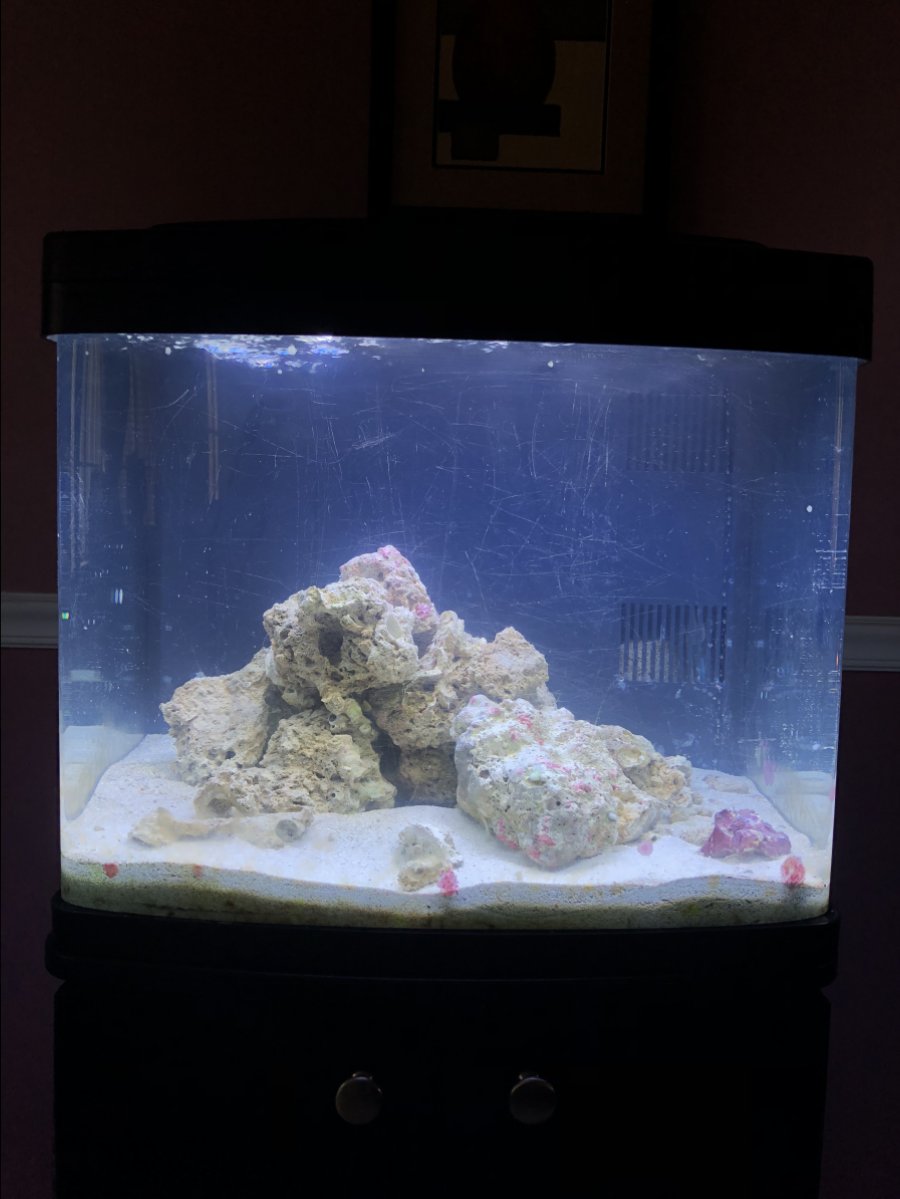

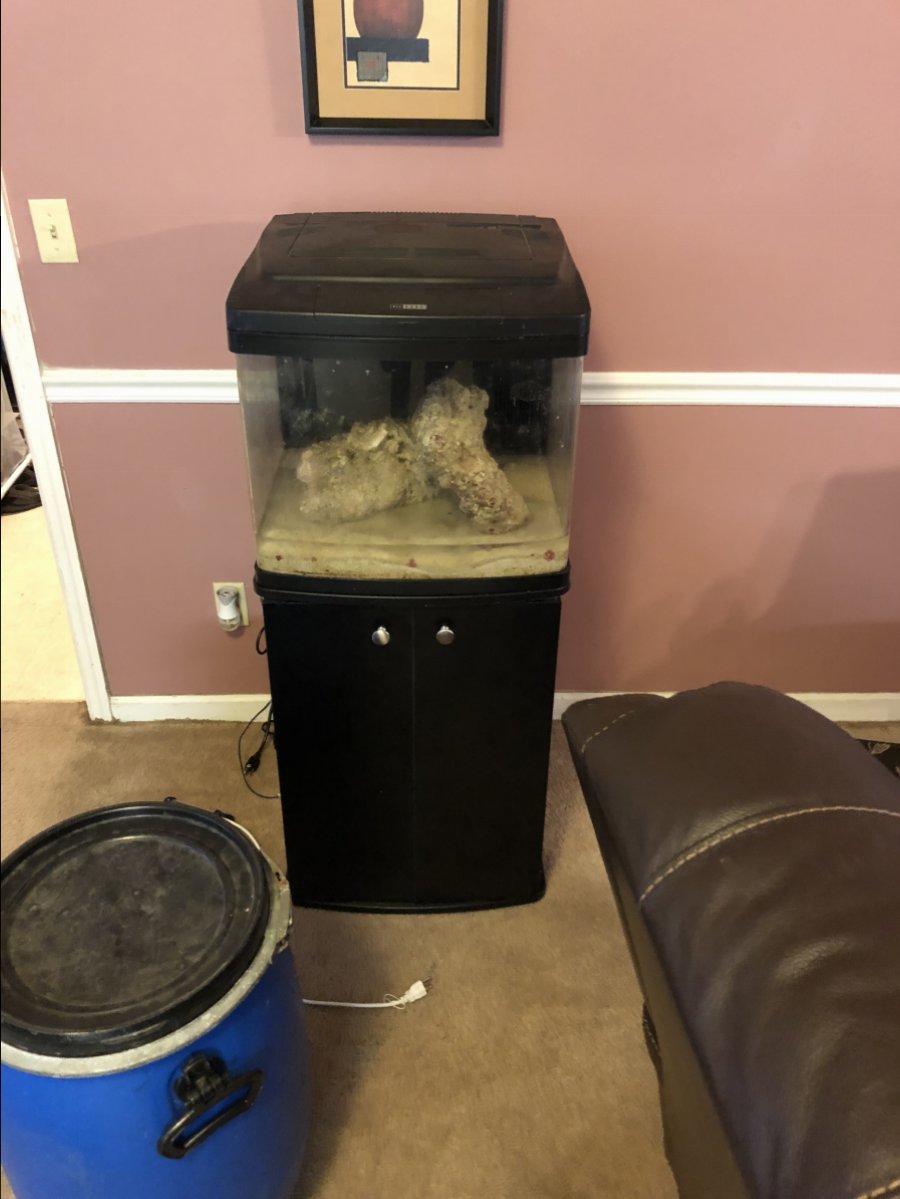

So a friend of ours had a used Coralife Biocube 29g he had purchased from a friend of his who was moving and he had planned to do a seahorse specific tank, however, after the lose of a close friend he and his wife decided to move and that left the opening for me to grab up this little gem. There is a little scratching on the front glass but nothing to write home about.
The tank has been running at our friend’s house for about 6 months with about 20-30 lbs of live sand, about 20 lbs of live rock, and another 15 lbs of MarinePure 2in plates. So all we did was drain the tank to move it to my place and then I filled it with about 19g of fresh RO water he made and added salt and let it mix overnight in the tank only because I don’t have any containers large enough to mix that much water.
Here is a list of the components and equipment I’m running in the tank currently.
20lbs live sand
15lbs live rock
15lbs MarinePure
inTank media basket with:
Golf ball sized clump of Chaeto
Carbon/biopellet combo which will be swapped for Puritan and Chemipure Blue
MarinePure scraps
50w submersible heater
Stock return pump
Stock Coralife power compact bulbs, one daylight combo and one actinic combo, don’t know specifics of the intensity.
In the market for a small used power head right now as well. Used items are hard to come by here in southeast GA. Don’t know why but they just are.
I also have the BioCube skimmer but our friend said he couldn’t get it dialed in right. For now I’m going to hold onto it and give it a shot later down the line.
Stocking list ideas will be coming soon. Won’t be too fish heavy. The plane is to focus on aquacultured fish and corals to help lower our impact on wild caught specimens.












