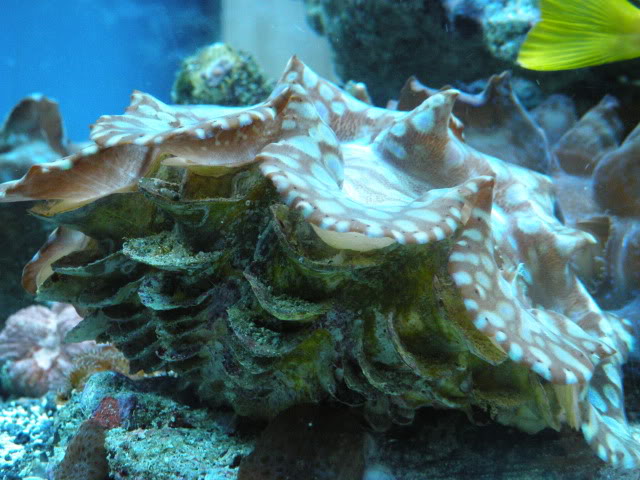
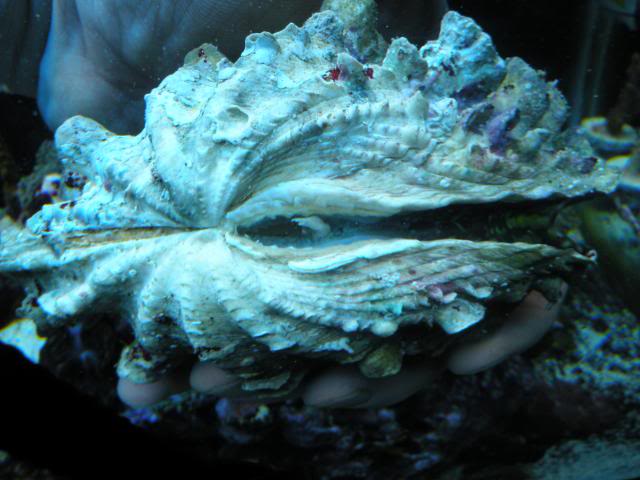
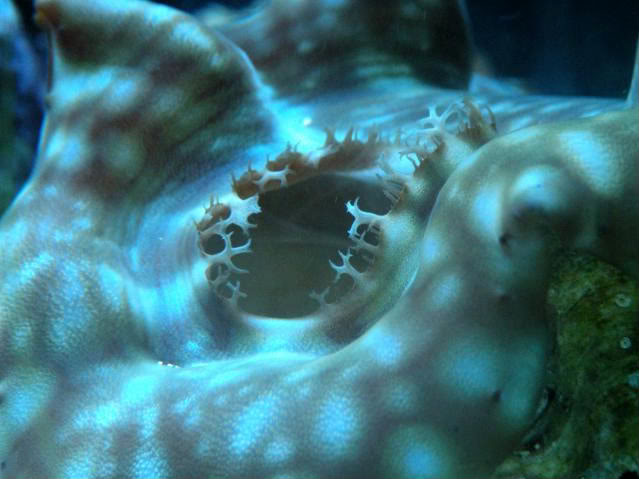
Genus = Tridacna
Species = Sqamosa
Common name= Squamosa clam
Species = Sqamosa
Common name= Squamosa clam
Size and growth rate
T. Squamosa is also known as the fluted or scaly clam. This species can grow to over 17" in length. Squamosa's are one of the fastest growing of the giant clams. These clams have been reported to grow as little as 4cm and as much as 8cm per year.
Location and geographic range
Squamosa's have been reported in a large variety of environments. It is reported that they prefer sheltered areas like back reef lagoons. They are also on reef flats and coral drop off's both inside and outside of lagoons. T Squamosa is found in the Red Sea and range from the east coast of Africa, to the Marshall islands and Polynesia, to Micronesia. They also range northward to the southern islands of Japan, and south to western Australia.
Attachment to substrate
T. Squamosa uses their a byssal organ that secretes the sticky threads that will attach it to the substrate. This helps keep the clam from being swept away. In time the large size of this animal helps keeps it in place.
Lighting and flow requirements
Squamosa's are one of the least light demanding of the giant clams, even though they still require high end light. They will probably be ok with VHO or compact fluorescent lights but I recommend metal halide or T5 with individual reflectors. Giant clams are found on reefs that usually have SPS corals, flow should be moderate to high. Just be sure that the mantle isn't being held over un naturally because of too much flow.
Coloration
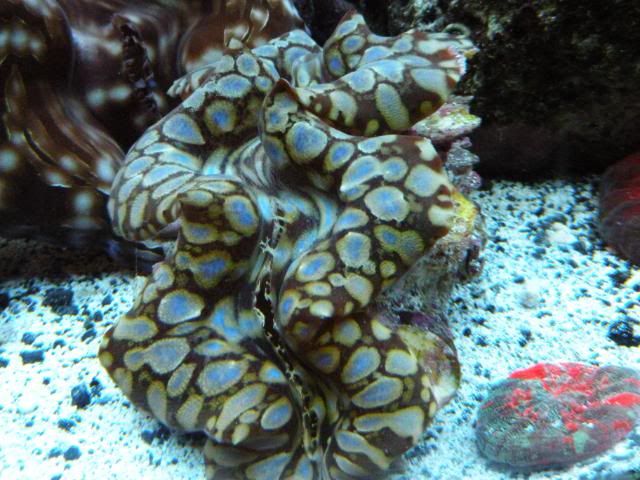
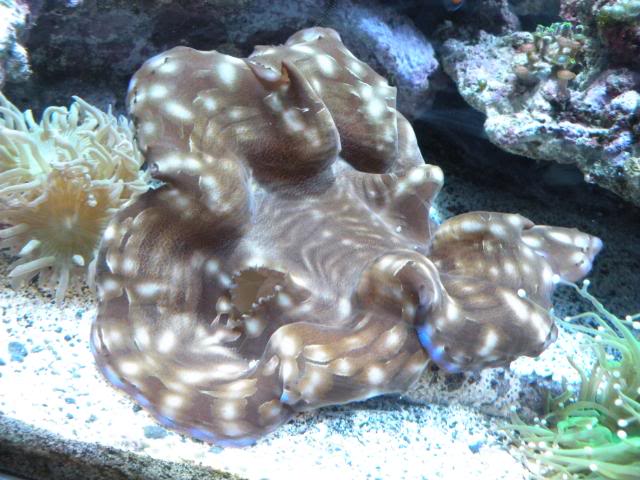
The Squamosa clams are most commonly brown, tan or green. The are known to have various stripes, spots, and splotches of color and some specimens have white, green, orange, and or EVEN BLUE:eek:
Reef compatability
Giant clams are found among the reefs of the world and are compatable with most reef safe animals. Although there are some reef safe fish that are not clam safe. These include: Angelfish, some Wrasses, Blennie's, Eels, and some shrimp.
Conclusion and comments.
Squamosa's are one of my favorite giant clams, they have such a vast selection of coloration and patterns.
It is my personal opinion that if you intend to keep a Tridacna gigas you should have an aquarium of 100 gallons or larger. They can be kept in smaller tanks but they rapidly outgrow them.