

ALK drops rapidly when lights turn off

insurance_guy

New Member
View Badges
Joined
May 8, 2024
Messages
23
Reaction score
6
Location
Appleton
Rating - 0%
0   0   0
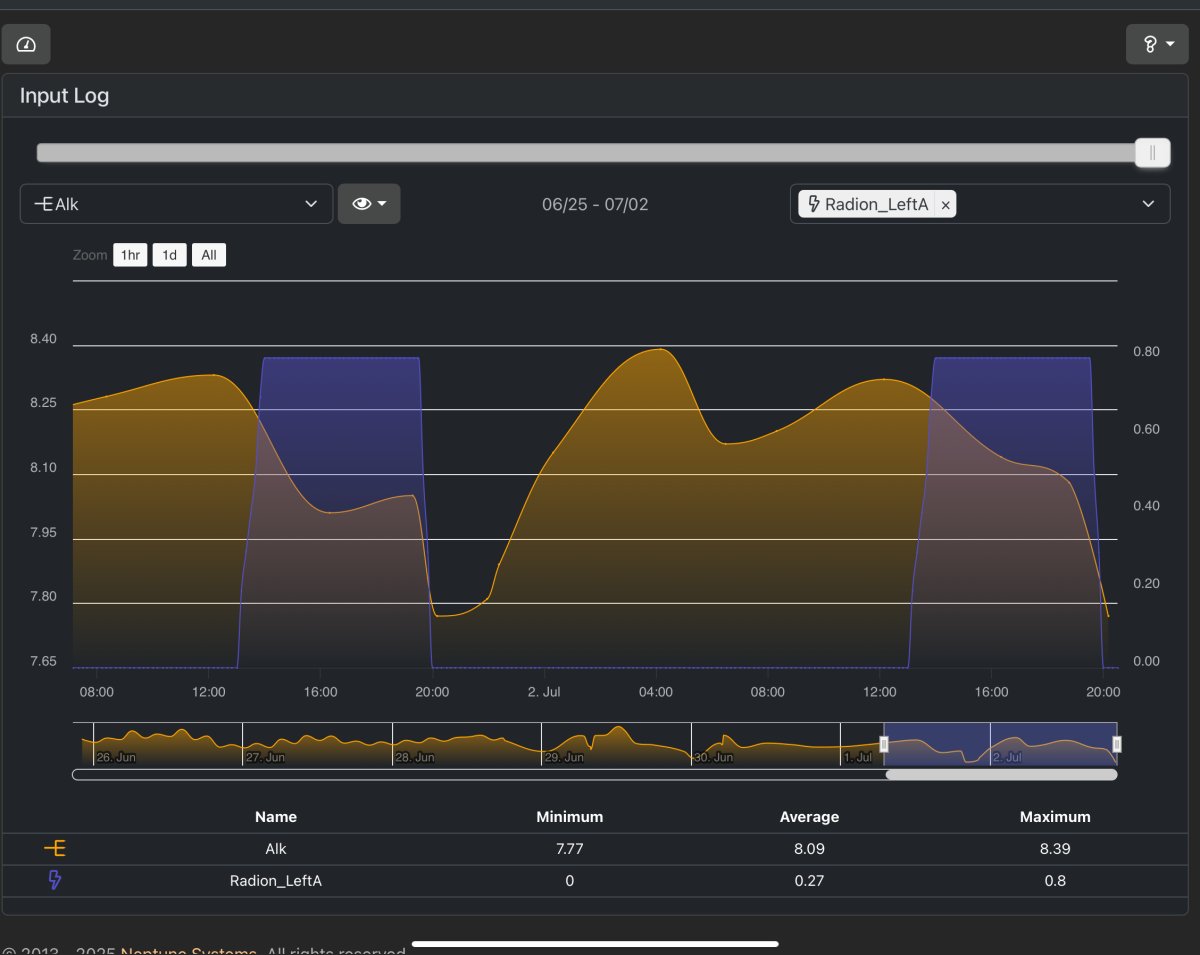
I have about 210 total water with a SPS tank. I dose two part with alk and ca each three times a day but at different times. Run a skimmer, and have a co2 scrubber to balance ph. I have a sand bed which is 2-3 inches, a a fair fish load. Recently my alk has been acting weird. Each night as the lights go off, my alk drops from about 8.1 to 7.77 rapidly. Like within an hour. I monitor with a trident and have increased my dosing of alk. What can be causing the swing right when the lights go off?

I’ve ordered a kalk stirrer in hopes that if I start dosing this might help balance it out

Here is my alk and light readings.
IMG_0149.jpeg


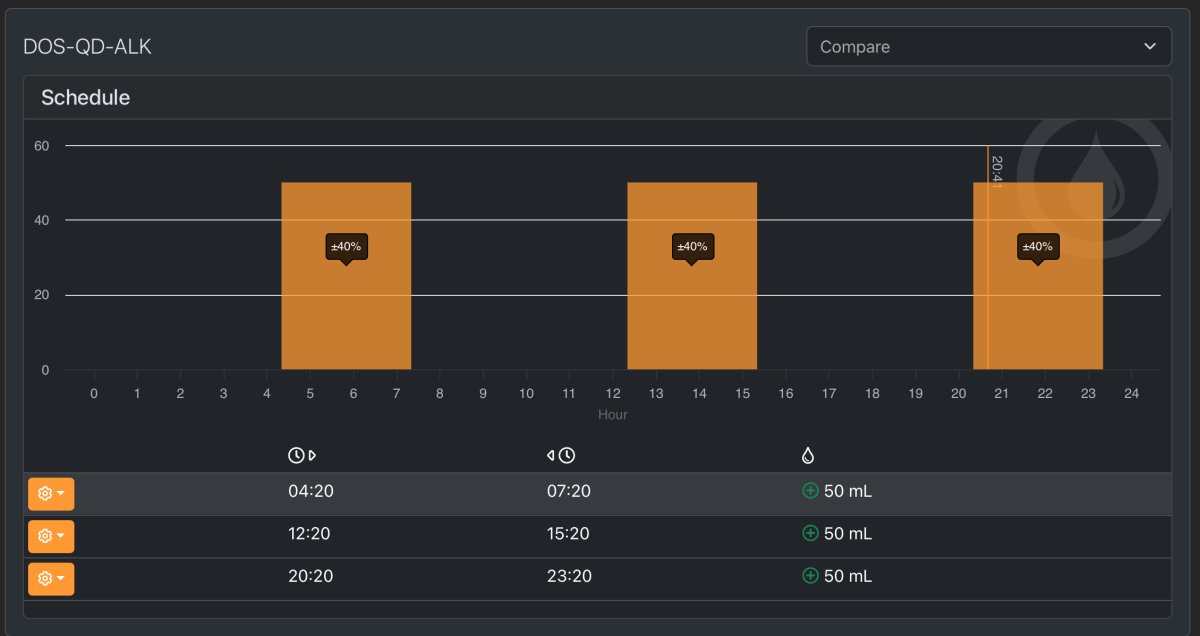
Here is my alk dosing schedule. Calcium is dosed opposite times than the alk.
IMG_0150.jpeg
 
I have about 210 total water with a SPS tank. I dose two part with alk and ca each three times a day but at different times. Run a skimmer, and have a co2 scrubber to balance ph. I have a sand bed which is 2-3 inches, a a fair fish load. Recently my alk has been acting weird. Each night as the lights go off, my alk drops from about 8.1 to 7.77 rapidly. Like within an hour. I monitor with a trident and have increased my dosing of alk. What can be causing the swing right when the lights go off?

I’ve ordered a kalk stirrer in hopes that if I start dosing this might help balance it outHere is my alk and light readings.


Here is my alk dosing schedule. Calcium is dosed opposite times than the alk.
That's a 0.3 dkh drop which is within the error range of any Alk test.

It's not worth worrying about.
 
Are you using a refugium? I don't think that's enough of a drop to worry about, but it could be due to the corals no longer photosynthesizing and causing the CO2 in solution to create carbonic acid, and reducing alkalinity to bicarbonate.

If you are using a fuge, not sure.
 
Try reef trace 1 and two I personally run kalk but if you’ve never had experience with it I would be very careful
Yeah I wouldn't go down that route unless you know what you are working with and have the demand to employ it. Kalk can really do a number on stability unless you know how to dose it.
 
Are you using a refugium? I don't think that's enough of a drop to worry about, but it could be due to the corals no longer photosynthesizing and causing the CO2 in solution to create carbonic acid, and reducing alkalinity to bicarbonate.

If you are using a fuge, not sure.
Yes fuge with large amounts of algae
 
Perhaps you should space out the dosing during the day to keep things more stable. It looks like you are running the neptune to test alk? Why not allow it to control the dose of the alk and cal over the course of the photoperiod so you're not dumping ~50ml in one shot 3 times a day but rather smaller amounts over a longer period?
 
My guess is that there would be a steady curve down from 12 to 20 if there was not a dose in the middle that artificially gave the bump at 16-18.

I do not think the curve accurately reflects the timing of demand.
 
What was the outcome here? I also have been having a hard time getting my dosing to stabilize.

Thanks
 
I dose my alk at night to offset the pH and alkalinity drop caused by the build-up of CO2 in the water when photosynthesis stops after lights off.
 
I dose my alk at night to offset the pH and alkalinity drop caused by the build-up of CO2 in the water when photosynthesis stops after lights off.

Just to be clear, CO2 lowers pH but it has no effect on alk, and most folks find that most of the alk consumption happens during the day.
 
Alk stability with this level of assumed precision on an hour-by-hour basis does not seem like a worthy pursuit. And I’m the guy who aims for unnecessary levels of stability.

But such a pattern sure is interesting!
 

TOP 10 Trending Threads

Back
Top
Home
Post thread…
Market
What's new








