


Asterina Starfish ID

  • Thread starter Thread starter mjw011689
  • Start date Start date
  • Tagged users Tagged users None

mjw011689

Active Member
View Badges
Joined
May 2, 2021
Messages
453
Reaction score
262
Location
north phoenix
What state or country do you live in
Arizona
Rating - 0%
0   0   0
does anyone know the species of asterina star this is? I know most say they’re ok, but I’ve had a ton of zoas eaten recently, and I’ve had an explosion of these guys. Some research shows there are some types of asterinas that are not safe and I’m wondering if that’s what I’ve got going on. As far as I remember, the white ones are safe, but these are not the white ones. At least not all
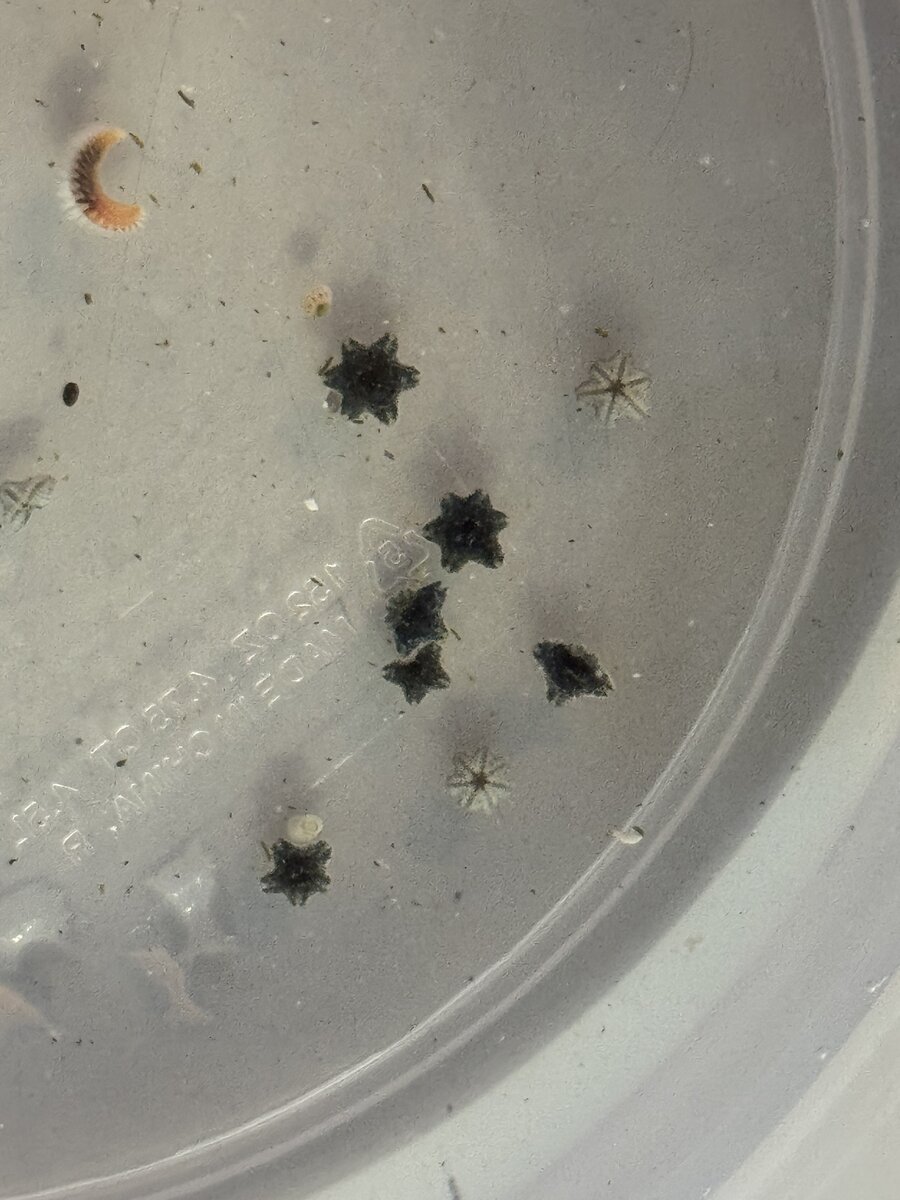
IMG_1108.jpeg
 
As far as I know it's impossible to even distinguish Asterina from Aquilonastra starfish without microscope images. It will be really difficult (if not impossible) to name the species. I had brigher and darker ones eat Zoa polyps which is why I take them out as soon as I see them.

In severe cases you will need to get a Harlequin shrimp. This means you cannot have any starfish in your tank and once there aren't enough anymore, you will need to feed it or pass it onto the next reefer with the same issue.
 
Yep I’ve already got one. I’m actually going to add more because he’s not even making a dent. It’s a 125, there’s plenty. FWIW, I did some research on harlequins and it seems they’re safe with brittle stars, which i can confirm. He doesn’t touch mine.
 
As far as I know it's impossible to even distinguish Asterina from Aquilonastra starfish without microscope images. It will be really difficult (if not impossible) to name the species. I had brigher and darker ones eat Zoa polyps which is why I take them out as soon as I see them.

In severe cases you will need to get a Harlequin shrimp. This means you cannot have any starfish in your tank and once there aren't enough anymore, you will need to feed it or pass it onto the next reefer with the same issue.
Yeah, I've looked at keying these out to the species level before (hoping to help confirm which species are reef-safe and which aren't), and while it's technically doable, it definitely requires a good microscope and a decent amount of skill in getting photos with it.

As mentioned, darker colored ones (these are the ones I have seen the strongest evidence of harm from, IIRC) and ones with orangish spots on top are the ones I have seen decent evidence for being not reef-safe (as a note, the coloration/spotting can help narrow the list of potential ID's in the genus, but not actually to the point of getting a proper ID):
As a general rule, if the top of the starfish is primarily black, or if it has red/orangish spots on it (like the star in the link below), then it may be harmful:
https://www.reef2reef.com/threads/e...g-some-zoanthids.1062019/page-3#post-12665293
 

TOP 10 Trending Threads

IF YOU HAD TO OPERATE EVERYTHING ELSE MANUALLY, WHICH AUTOMATED SYSTEM WOULD YOU KEEP?

  • Auto top-off

    Votes: 46 56.1%
  • Automated dosing

    Votes: 6 7.3%
  • Mechanical filtration / roller filter

    Votes: 4 4.9%
  • Automated water testing

    Votes: 3 3.7%
  • Automatic feeding

    Votes: 1 1.2%
  • Lighting schedule

    Votes: 15 18.3%
  • Controller and remote monitoring

    Votes: 3 3.7%
  • Leak detection and emergency shutoff

    Votes: 1 1.2%
  • Automatic water changes

    Votes: 2 2.4%
  • None. I prefer to operate everything manually

    Votes: 0 0.0%
  • Something else (explain in the comments)

    Votes: 1 1.2%

New Posts

Back
Top
Home
Post thread…
Market
What's new





