




We’ve talked so much about the “high-biodiversity” approach to reef keeping that I personally find so compelling (and apparently, so do you), that I thought it might be good to take a moment and give some thought to the kinds of habitats we could actually mimic in our approach to trying to replicate them.
I mean, sure, you can simply create a tank without a specific “theme” or inspiration from a geographic locale, but I think you might find some inspiration from a few of the reef zones and localities I’ve got in my head..
Now, trust me…it’s not that I’m suggesting these ideas simply because they are representative of habitats I am obsessed by…Not exclusively, mind you. Rather, it’s about the idea that these fascinating habitats are typically not replicated by the majority of reefers, for a variety of reasons…Not the least which being that they are NOT exclusively coral-based. Rather, they are habitats which lend themselves well to our idea of higher-biodiversity microcosms.
I almost think we have to embrace a different definition than “reef aquarium”. which, in my humble opinion, describes one type of system…one of many habitats that we can attempt to replicate in the confines of our aquariums.
We are talking about creating systems that foster a wide variety of life forms, not just for the benefit off the corals, but for all of the animals which reside within them. In the next few blogs, we’ll examine some possibilities for such systems, and hopefully, garner some input and discussion on the best ways to accomplish creating them successfully in our aquariums..
An aquarium designed around mangroves is a great candidate for this type of thing. A perfect way to kick off our discussion!
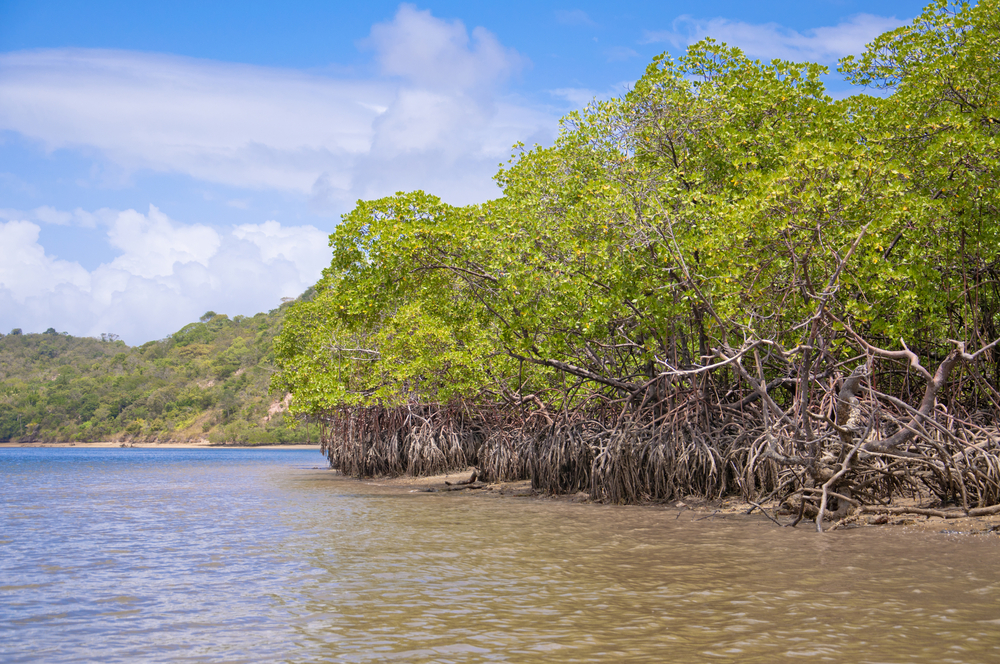
Now, hobbyists have been playing with mangroves for a long time. We’ve seen ‘em in refugiums, an occasional reef tank…but almost never as the real focal point of the aquarium. I think that, other than some cool public aquarium displays, the best use of a mangrove as a “nexus” of a biologically diverse and compelling system has been Julian Sprung’s tanks. They are marvels of biodiversity, and mangroves play an important role in them.
Oh, before we continue our discussion, let me clarify one thing:
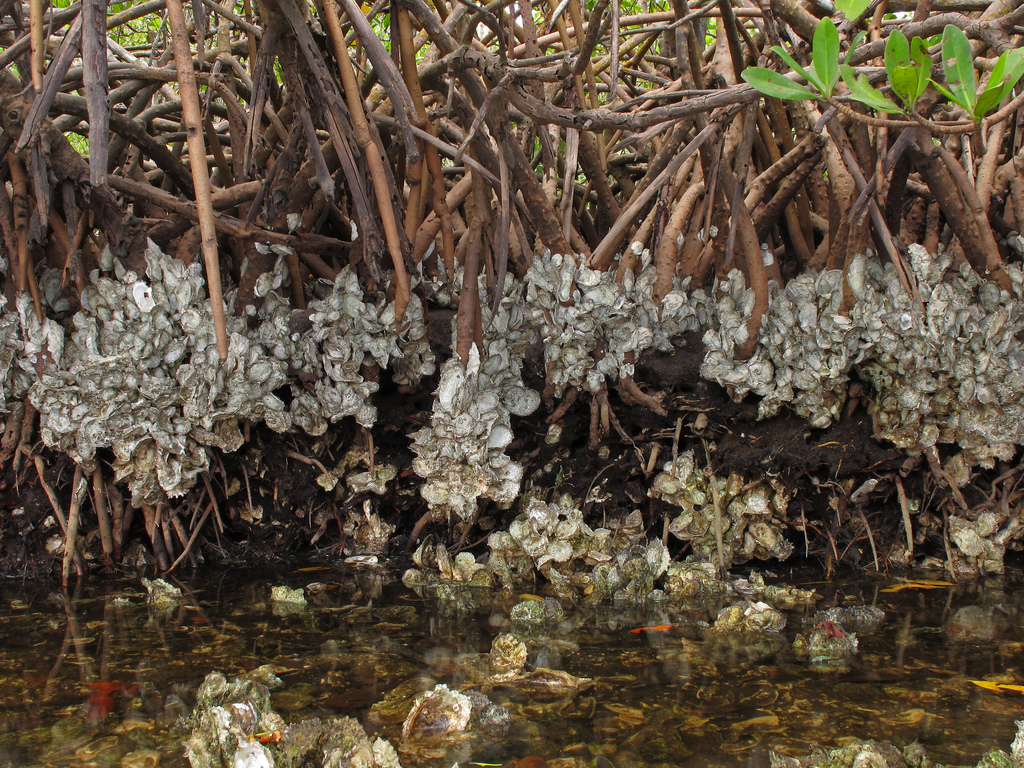
I realize that, for all intents and purposes, that mangroves are NOT a “legit” nutrient export mechanism…that is, unless you have a dozen mature trees for your 100-gallon tank! The reality is, mangroves in the aquarium offer us a unique opportunity to grow corals, anemones, clams, tunicates, sea squirts, etc., etc. in a biologically rich habitat. The roots and branches of mangroves are an ideal “substrate” upon which algal mats and biofilms, can flourish, providing feeding and foraging opportunities for a variety of aquarium inhabitants.
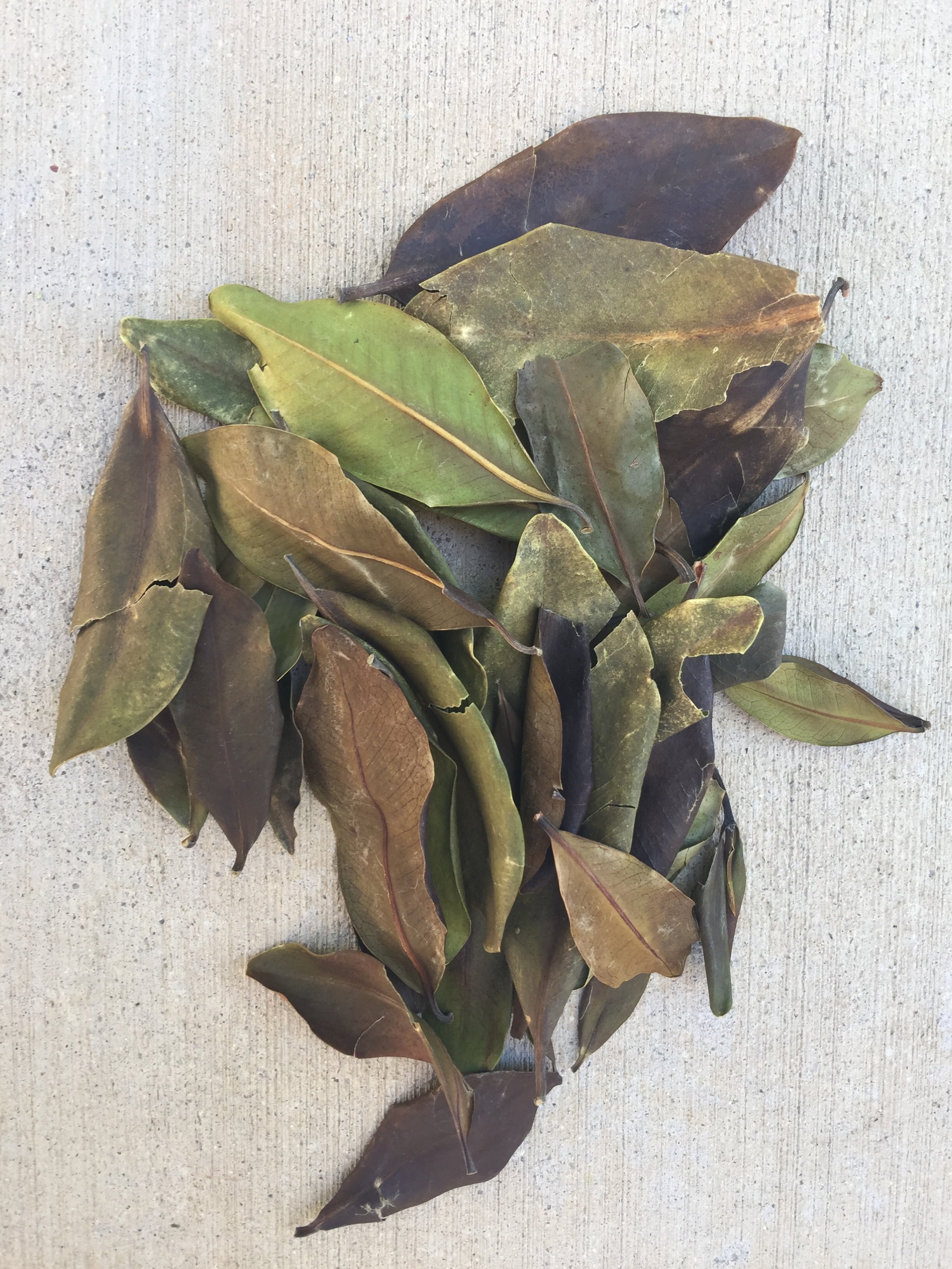
As the leaves fall into the water, if allowed to decompose (ohh…WOULD you do that? I WOULD!), can foster the growth of significant populations of microorganisms and small crustaceans…the literal base of a “food web” in our tanks. Can you imagine a better place for hard-to feed fishes, like Dragonets, Pipefishes, Seahorses, etc.? In fact, a cool thing about a tank like this is that you could probably manage it effectively with water exchanges and minimal protein skimming…Allowing some nutrient to accumulate within the system for the purposes of feeding the micro algae and population of small organisms which “power” this small ecosystem.
A “pristine” aquatic habitat?
No, not in the usual sense. You WANT biofilms, a healthy growth of algae, coralline, some detritus accumulation, decomposing leaves…perhaps slightly tinted water (because of the tannins in the leaves…). This requires a serious mental shift for many reefers, especially those of us raised on the “your tank must look spotless at all times” mindset. Don’t get me wrong. Don’t twist it: I’m NOT advocating lax maintenance. I’m not suggesting that you over-populate your tank, fail to test water, execute water exchanges, etc. No.
I wont let you just “kill by cliche” this idea by suggesting stuff like that. :)
I am suggesting that we as aquarists free ourselves from the chains of convention that we seem to be clinging to, which suggest that every reef tank is crystal clear water, spotless live rock, and blinding white sand. I’m not the most experienced SCUBA diver out there, but I’ve dove on and surfed over enough coral reefs and lagoons to realize that the reality of many ecosystems is not this sterile utopia that we have in our head in the hobby for so long. Of course, some reef systems are that “desert” that we’ve metaphorically characterized them as over the decades. However, many, many, many fascinating tropical marine habitats fall into the broader category of what we’d call “environmentally rich”….or at the very least, ecologically diverse.
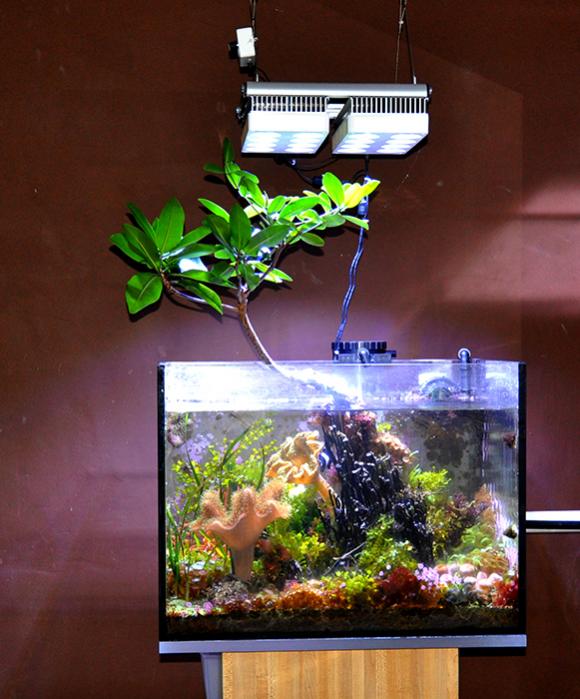
(pic by Richard Aspinal)
A mangrove standing as the “anchor feature” of your next “reef” tank is fascinating. What would you use as a substrate? How would you configure the aquascape? What type of substrate would you incorporate?
I’d use a substrate of fine eolithic aragonite, and a mix of…muds, like commercially available stuff: Walt Smith’s “Fiji Gold”, CaribSea’s “Marine Biosediment”, Brightwell “KoraLagoon Substrat”, “Miracle Mud”, and even some freshwater planted tank materials, and terrestrial muds and soils. I’d use both live mangrove seedlings/propagules and dead mangrove root pieces… I’d throw in dried mangrove leaves and allow them to decompose on the bottom of the aquarium, and/or be utilized by the resident snail/crab/invert population. Full disclosure: Yes, my company, Tannin Aquatics, offers dried mangrove leaves for sale…
I’d even grow some seagrasses in this mix…Halodule, Halophila, or, if your substrate is deep enough- Thalassia. Yes, I’d encourage a bit of calcareous macroalge in the mix as well. I’d attach some of the macro algae to the dead mangrove root sections. I’d use a daylight flavored lighting spectrum- LED all the way, but you could get away with T5 or even NO florescent, for that matter.
Coral-wise, I’d go for corals like Goniopora, Catalaphyllia, Discosoma, Fungia, Trachyphullia, etc. Oh sure, I’d even use some Pocillopora and Seriatopora as well, for added color and interest… Oh, maybe some Faviids, too! To me, that’s a varied enough coral “menu” to keep me happy for a long time. A system this diverse would be anything but “boring”, even if it only incorporated a half-dozen different varieties of coral. The idea is to create and maintain a diverse, actively-evolving microcosm of life, not to create a “used car lot” of expensive coral frags.
And for fishes- well, it can run the gamut. I’m not even going to get into specifics here, because there are just too many possibilities!
I’d love to go with some significant water movement in this tank…like 50-70 turns an hour- utilizing your personal fave “weapons of choice” for the job. With a shallow, wide aquarium (that’s what I’d use!), you could rock some very cool “ebb and flow” in this tank to get the seagrasses and LPS swaying.
And of course, as always.. utilizing technology to not only help us manage systems better, but to help create more realistic representations of the specific characteristics of this habitat. There has never been a better time to re-visit some older ideas than now- with a was to amazing technology and an array of experience that abounds in the ever-expanding reef community. I think it's really a super time for us to examine niche biotope reef aquariums! There is ample room for study, interpretation…and creativity.
I leave you with a great quote from Steve jobs on the creative process, which might just get you started:
"Creativity is just connecting things. When you ask creative people how they did something they feel a little guilty because they didn't really do it, they just saw something. It seemed obvious to them after awhile.”
Well said.
Discuss. Dream. Scheme.
Coming up soon…food for thought:
Lembeh Straight Muck
Rubble Zone (Back Reef)
Stay adventurous. Stay creative. Stay bold.
And Stay Wet.
Scott Fellman
I mean, sure, you can simply create a tank without a specific “theme” or inspiration from a geographic locale, but I think you might find some inspiration from a few of the reef zones and localities I’ve got in my head..
Now, trust me…it’s not that I’m suggesting these ideas simply because they are representative of habitats I am obsessed by…Not exclusively, mind you. Rather, it’s about the idea that these fascinating habitats are typically not replicated by the majority of reefers, for a variety of reasons…Not the least which being that they are NOT exclusively coral-based. Rather, they are habitats which lend themselves well to our idea of higher-biodiversity microcosms.
I almost think we have to embrace a different definition than “reef aquarium”. which, in my humble opinion, describes one type of system…one of many habitats that we can attempt to replicate in the confines of our aquariums.
We are talking about creating systems that foster a wide variety of life forms, not just for the benefit off the corals, but for all of the animals which reside within them. In the next few blogs, we’ll examine some possibilities for such systems, and hopefully, garner some input and discussion on the best ways to accomplish creating them successfully in our aquariums..
Mangroves as the “anchor” of a diverse aquarium ecosystem.
An aquarium designed around mangroves is a great candidate for this type of thing. A perfect way to kick off our discussion!
Now, hobbyists have been playing with mangroves for a long time. We’ve seen ‘em in refugiums, an occasional reef tank…but almost never as the real focal point of the aquarium. I think that, other than some cool public aquarium displays, the best use of a mangrove as a “nexus” of a biologically diverse and compelling system has been Julian Sprung’s tanks. They are marvels of biodiversity, and mangroves play an important role in them.
Oh, before we continue our discussion, let me clarify one thing:
I realize that, for all intents and purposes, that mangroves are NOT a “legit” nutrient export mechanism…that is, unless you have a dozen mature trees for your 100-gallon tank! The reality is, mangroves in the aquarium offer us a unique opportunity to grow corals, anemones, clams, tunicates, sea squirts, etc., etc. in a biologically rich habitat. The roots and branches of mangroves are an ideal “substrate” upon which algal mats and biofilms, can flourish, providing feeding and foraging opportunities for a variety of aquarium inhabitants.
As the leaves fall into the water, if allowed to decompose (ohh…WOULD you do that? I WOULD!), can foster the growth of significant populations of microorganisms and small crustaceans…the literal base of a “food web” in our tanks. Can you imagine a better place for hard-to feed fishes, like Dragonets, Pipefishes, Seahorses, etc.? In fact, a cool thing about a tank like this is that you could probably manage it effectively with water exchanges and minimal protein skimming…Allowing some nutrient to accumulate within the system for the purposes of feeding the micro algae and population of small organisms which “power” this small ecosystem.
“Oh no. There he goes about that “mental shift” stuff again.”
A “pristine” aquatic habitat?
No, not in the usual sense. You WANT biofilms, a healthy growth of algae, coralline, some detritus accumulation, decomposing leaves…perhaps slightly tinted water (because of the tannins in the leaves…). This requires a serious mental shift for many reefers, especially those of us raised on the “your tank must look spotless at all times” mindset. Don’t get me wrong. Don’t twist it: I’m NOT advocating lax maintenance. I’m not suggesting that you over-populate your tank, fail to test water, execute water exchanges, etc. No.
I wont let you just “kill by cliche” this idea by suggesting stuff like that. :)
I am suggesting that we as aquarists free ourselves from the chains of convention that we seem to be clinging to, which suggest that every reef tank is crystal clear water, spotless live rock, and blinding white sand. I’m not the most experienced SCUBA diver out there, but I’ve dove on and surfed over enough coral reefs and lagoons to realize that the reality of many ecosystems is not this sterile utopia that we have in our head in the hobby for so long. Of course, some reef systems are that “desert” that we’ve metaphorically characterized them as over the decades. However, many, many, many fascinating tropical marine habitats fall into the broader category of what we’d call “environmentally rich”….or at the very least, ecologically diverse.
(pic by Richard Aspinal)
A mangrove standing as the “anchor feature” of your next “reef” tank is fascinating. What would you use as a substrate? How would you configure the aquascape? What type of substrate would you incorporate?
I’d use a substrate of fine eolithic aragonite, and a mix of…muds, like commercially available stuff: Walt Smith’s “Fiji Gold”, CaribSea’s “Marine Biosediment”, Brightwell “KoraLagoon Substrat”, “Miracle Mud”, and even some freshwater planted tank materials, and terrestrial muds and soils. I’d use both live mangrove seedlings/propagules and dead mangrove root pieces… I’d throw in dried mangrove leaves and allow them to decompose on the bottom of the aquarium, and/or be utilized by the resident snail/crab/invert population. Full disclosure: Yes, my company, Tannin Aquatics, offers dried mangrove leaves for sale…
I’d even grow some seagrasses in this mix…Halodule, Halophila, or, if your substrate is deep enough- Thalassia. Yes, I’d encourage a bit of calcareous macroalge in the mix as well. I’d attach some of the macro algae to the dead mangrove root sections. I’d use a daylight flavored lighting spectrum- LED all the way, but you could get away with T5 or even NO florescent, for that matter.
Coral-wise, I’d go for corals like Goniopora, Catalaphyllia, Discosoma, Fungia, Trachyphullia, etc. Oh sure, I’d even use some Pocillopora and Seriatopora as well, for added color and interest… Oh, maybe some Faviids, too! To me, that’s a varied enough coral “menu” to keep me happy for a long time. A system this diverse would be anything but “boring”, even if it only incorporated a half-dozen different varieties of coral. The idea is to create and maintain a diverse, actively-evolving microcosm of life, not to create a “used car lot” of expensive coral frags.
And for fishes- well, it can run the gamut. I’m not even going to get into specifics here, because there are just too many possibilities!
I’d love to go with some significant water movement in this tank…like 50-70 turns an hour- utilizing your personal fave “weapons of choice” for the job. With a shallow, wide aquarium (that’s what I’d use!), you could rock some very cool “ebb and flow” in this tank to get the seagrasses and LPS swaying.
And of course, as always.. utilizing technology to not only help us manage systems better, but to help create more realistic representations of the specific characteristics of this habitat. There has never been a better time to re-visit some older ideas than now- with a was to amazing technology and an array of experience that abounds in the ever-expanding reef community. I think it's really a super time for us to examine niche biotope reef aquariums! There is ample room for study, interpretation…and creativity.
I leave you with a great quote from Steve jobs on the creative process, which might just get you started:
"Creativity is just connecting things. When you ask creative people how they did something they feel a little guilty because they didn't really do it, they just saw something. It seemed obvious to them after awhile.”
Well said.
Discuss. Dream. Scheme.
Coming up soon…food for thought:
Lembeh Straight Muck
Rubble Zone (Back Reef)
Stay adventurous. Stay creative. Stay bold.
And Stay Wet.
Scott Fellman
Last edited by a moderator:

























