Difficult to keep fish, should we even keep them?

I got a notification for this thread which is why I clicked to read it. It's not surprising to me that those who seem to have had luck (or whatever the proper word is) seem to comment on posts such as this more commonly than the thousands of hobbyists who had the fish for a week before it died. I also think it's interesting how everyone reports their fish or whatever invert are in perfect health and happy...I'm sure that thousands of fish will ne bought today and be fat amd happy for a week before some unexplainable event leads to mortality. I don't mean to be so cynical, but it doesn't seem likely to be a coincidence.
 
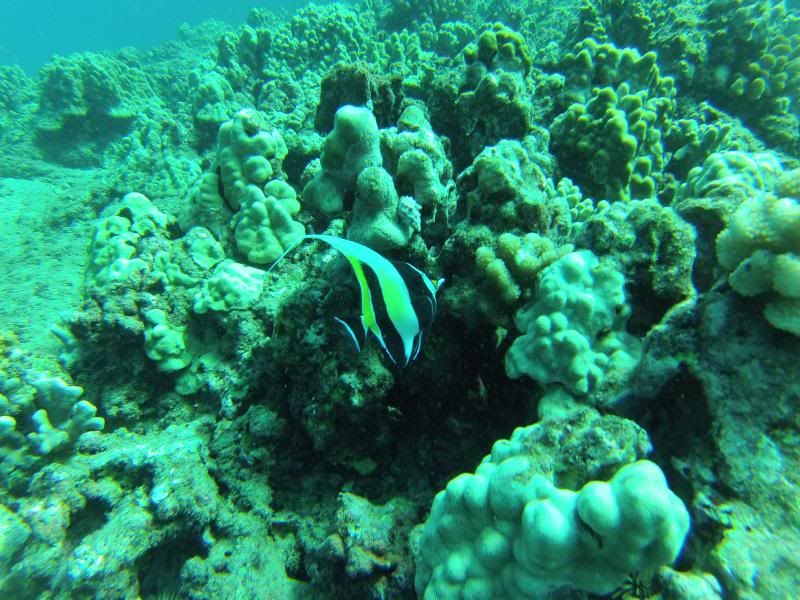
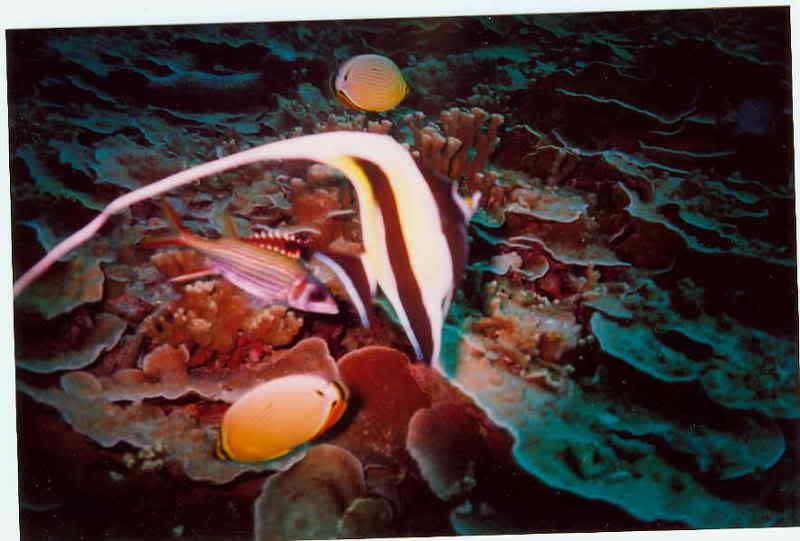
One of the benefits of this hobby is the number of different fish we can keep in our reef tanks. Even though there are a lot of relatively easy fish to keep, such as clownfish, there are also difficult-to-keep fish like Moorish Idols. As reef keepers, should we refrain from these more difficult-to-keep fish, or should we embrace the challenge? Curious to hear what everyone says!

It Aint Easy Chris Harrison GIF by The Bachelorette
The Moorish idol is in the expert only category, so we need to define expert really. I would say that a minimum of 10 years experience with years of stable numbers are enough to qualify as a novice expert instead of an expert novice. Another 10 years, multiple tanks and experimenting with different techniques and methods is probably expert enough for the Moorish idols to stand a chance. I mean, an expert knows that you need a reef more massive than the average house is built to contain to house a school of hundreds will probably be totally successful. And every little downgrade from this ideal cut your chance in half.
 
One of the benefits of this hobby is the number of different fish we can keep in our reef tanks. Even though there are a lot of relatively easy fish to keep, such as clownfish, there are also difficult-to-keep fish like Moorish Idols. As reef keepers, should we refrain from these more difficult-to-keep fish, or should we embrace the challenge? Curious to hear what everyone says!

It Aint Easy Chris Harrison GIF by The Bachelorette
every fish in the hobby is easy to keep, as long as it’s a healthy specimen from the get go. A reliable source is all it takes
I respectfully disagree agree with this statement but I do understand the general sentiment.

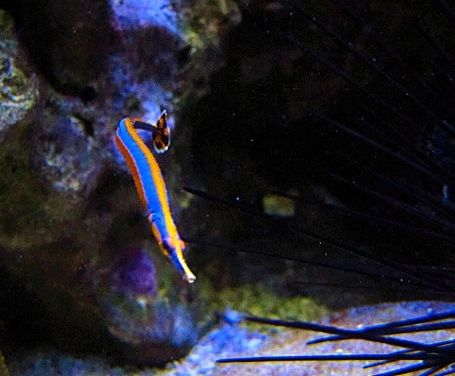
There are several fish who have dietary needs that are very difficult to replicate in captivity resulting is 90% failure rate after 3 months. The Moorish Idol, being the most infamous. The Meyers Butterfly is another example. I would include Blue Streak Cleaner Wrasses on the next tier.

When these fish are captive breed it is a completely different situation.

The comment about starting with a healthy is good and appropriate for fish that are not difficult to keep.
 
I might revise rock beauties now that more is known about meeting their dietary needs, but they are still pretty tough to keep long term. I did have one for over two years in the 1980’s, but although it looked good, it just never grew much. I don’t recall the circumstances of its death.
A now defunct large fish store had, in my direct experience with them, a Rock Beauty for 12 years in a large aquarium. When the store went out of business one of the managers took the fish home (it was his and not for sale) but I have no idea about its ultimate fate. I do know (this was decades ago) that it received no special foods, just large meaty chunks of clam and prepared gelatin mixtures. Its coloration was less vivid than a wild fish, but it seemed healthy down through the years as it grew to full adult size.
 
Ya'll need to watch JURASSIC PARK again. They answered this very question.

And besides what fish not to keep, ever think about how this hobby just takes something from this part of the world and that part, mixes it together and then wonders why there are problems? No one builds an Indonesia tank, a Pacific tank, or Indian ocean tank. Nope, take this euphyllia from the Indonesia, toss in a mushroom from Florida, ah! some zoas from the Red Sea and of course a couple of sticks from Aussielands. Then throw in a Mediterranean tang, an artic clownfish, a great salt lake eel, a dead sea jelly and an octopus from the English Channel and we have our reef MIXED reef tank. Or in JURASSIC PARK words a raptosaurus rex. Maybe somethings should stay both dead and in the wild. Maybe the builds need to be a bit more geographically sancrosanct...
 
It's probably safe to assume that there's plenty of common aquarium inhabitants that were once hard to keep, but aren't anymore now that more is known about the husbandry requirements.

A nonfish example of that are the large host anemones. Ron Shimek used to rage about them being doomed and folks were killing anemones that had been around for decades since they grew so slow.

He was right about them often dying, but likely wrong about the presumed age. Since folks began treating them with antibiotics after shipping, success rates went way up, and we then learned that they can grow quite fast under good conditions.
Decades? There are lone H. magnifica atop coralheads in the Pacific that have been subjects of research over 150 years running now. They never split and never move during observations.
 
For me my longest to date was my CBB at 13 years, not sure how old it was was when I purchased it. Several others at 7+ death due to adding a fish too quickly from isolation. My latest 7 year fish was rehomed to a good friend of mine which was a Maldives Regal Angel. When people mention several fish that live for many years in the wild the part where it can be eaten by another fish or man sometimes gets left out. I have seen pictures of fish markets all over the world with tangs, angels and many more sold for food. What is cute to us is yummy to others
 
@Jay Hemdal Jay, what’s been your experience with Yellow Longnose Butterflies if you’ve kept them? Biota’s now breeding them.

I don’t have any specific issue with those, but in the US, with Hawaii shut down, good quality ones are more difficult to find.
 
@Jay Hemdal That sounds about right. I do wonder how many problematic fish would be much easier if they weren’t beat up in transit and the whole supply chain. If we got them direct, or with a much shorter supply chain, how many losses could have been prevented? Would love to know your experience with this. Thanks.
 
@Jay Hemdal That sounds about right. I do wonder how many problematic fish would be much easier if they weren’t beat up in transit and the whole supply chain. If we got them direct, or with a much shorter supply chain, how many losses could have been prevented? Would love to know your experience with this. Thanks.

Yes - sourcing good quality fish goes a long way in getting fish that live. Quality varies from supplier to supplier, but there are some general conclusions that can be made for entire areas (countries or states).
I’ve worked on a list for many years. It is a bit subjective and the list can change over time:

https://www.reef2reef.com/ams/sourcing-marine-fishes-and-invertebrates.875/
 
every fish in the hobby is easy to keep, as long as it’s a healthy specimen from the get go. A reliable source is all it takes
I think this statement disregards the skill of the aquarist. Maybe you don’t realize how much you’ve learned that makes the healthy specimen “easy” to keep. I’ve kept several so-called expert level fish, many times successfully, but sometimes not. The important thing is to learn from the experiences that didn’t go well. Actually, it’s also important to learn from what does go well.
Knowing your species, understanding if they are exhibiting natural or stressed behaviors, long term feeding requirements and feeding techniques — those are all part of the skilled aquarists toolbox. And some specimens I obtained in a healthy state really stretched my skills to keep them thriving.
 
I don't think keeping a fish for its entire Lifespan is the only measure of success. If that were true, most Hobbyists could never reach that goal.
I do. For example, I think the oldest Human lived to 122 years. The rest of us have a normal or average lifespan of about 78 years for men in the US. (I am 76 🥺) so if a person dies at 10 years old, I would not consider that a success at longevity.

Yes, that person could have been hit by a bus carrying Sumo Wrestlers or died of Malaria but whatever the reason, they were not successful. That is the same with a clownfish that dies after 10 years when that fish can live over 40 years.

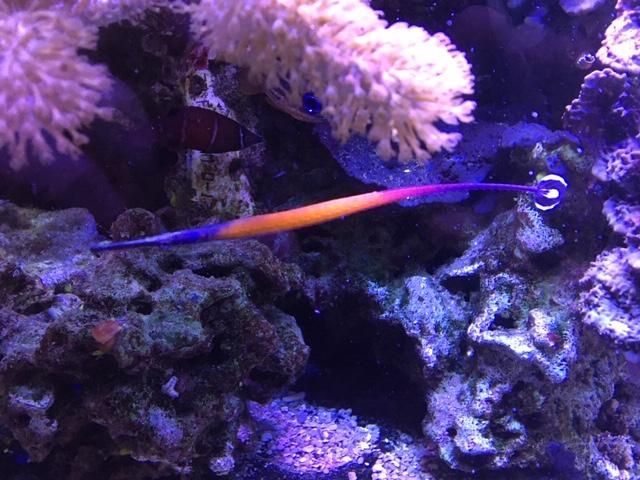
Most aquarists are not able to keep fish for 5 years which is a complete failure unless it was a bluestripe pipefish or a Bangai Cardinal which have very short lifespans, so I would say, Yes, you are correct in stating that most hobbyists are not successful with certain fish including myself and I have been at this for 70 years.

We don't have to be completely successful to enjoy this hobby and fish in the sea have a very short life due to predators. But in a tank, they have no predators so that should not be a problem.

I think I had two Moorish Idols that lived about 5 years. That is a complete failure. I don't know how long their lifespan is because virtually no one with a "home" tank has kept one longer than about 7 years as far as I know.

I know they live much longer than that in a public aquarium and I presume in the sea as they are fairly closely related to butterfly fish and they live well into their 20s.

We do not yet know what their problem is and it is not because they don't eat. They are in fact very large eaters, and I have followed them in the sea for many hours over many years.


As far as the title of this thread goes, I feel if you don't have a lot of experience, you probably will not be successful with a fish such a Moorish Idle especially if you will be feeding it only prepared food from an LFS. Moorish Idols live on sponges and dying organic matter such as the one I posted that I photographed in Hawaii.

This one from Bora Bora lived on a lime green sponge which I never identified.


The "male" I think, would circle the reef in wide, 100 yard arcs and find some sponge. Then a few minutes later the "female" would somehow find him and start eating the sponge as he goes away to find more sponge.

We can't do that in a home aquarium. At least, I can't.

The rest of the fish that are considered hard to keep are not really hard to keep as long as we can feed them correctly, and again, fish in the sea do not live on commercially prepared foods. They need other foods that I do not want to go into now because of the arguments it will cause and because I am so close to my average lifespan, I want to spend my time doing something productive like collecting amphipods or cutting my toenails. 😎

But if I do live those two more years, I will consider my lifespan successful. 😁
 
Paul B., the average Lifespan of Fish like many animals is influenced by many outside factors. I think you set the bar too high when determining successful outcomes. Just because you were not able to keep your Idols alive more than five years doesn't mean others on this Forum have not. Your measure of success when keeping any species would never be obtainable by virtually all Hobbyists out there and every Marine Fish would be classified as "difficult to keep".
 
Paul B., the average Lifespan of Fish like many animals is influenced by many outside factors. I think you set the bar too high when determining successful outcomes. Just because you were not able to keep your Idols alive more than five years doesn't mean others on this Forum have not. Your measure of success when keeping any species would never be obtainable by virtually all Hobbyists out there and every Marine Fish would be classified as "difficult to keep".

As a side note - I’ve long been interested in fish mortality rates as a measure of husbandry success. I used to measure my facility’s mortality rate for an average monthly and annual value, and had processes in place to try and manage it.

I wrote some of my early thoughts here:
https://reefs.com/magazine/aquarium-fish-mortality-rates-of-fishes-in-captivity/
 
Excellent Article, public aquariums have the advantage of large, stable, closely monitored systems. They have experienced keepers as backups if someone goes on vacation or gets sick that the average Hobbyist cannot duplicate. The Mortality Rate must be higher, and bar used as a measure of success for the Hobbyist must be lower. Hobbyists just need to do their research before buying any fish, difficult or not, as opposed to "Impulse Buying". That may be one of the best reasons to purchase on-line. I often see fish I would consider purchasing, only to find after some research that they are unsuitable for my Tank.
 
Paul B., the average Lifespan of Fish like many animals is influenced by many outside factors. I think you set the bar too high when determining successful outcomes. Just because you were not able to keep your Idols alive more than five years doesn't mean others on this Forum have not. Your measure of success when keeping any species would never be obtainable by virtually all Hobbyists out there and every Marine Fish would be classified as "difficult to keep".
I know I set the bar high for Hobbyists, but I also set it the same for myself. I think the fish would feel living close to their normal lifespan would be successful. 😎

Most "outside factors" are under our control. Ex. We know the power will go out. Get a generator.

As for keeping Moorish Idols in a home tank, someone may have kept them longer than 7 years, but in my lifetime, with my experience, I myself have not found one older than that yet. Of course, I have not read every account of them, so maybe someone kept one for 20 years. I hope so anyway, but I think 98% of them die in a year or less.
Many people feel they are successful if the fish eats and lives a few weeks.

I have kept hippo tangs for 10 or 12 years, and I still consider that a failure, as well as my 10-year-old Copperbands.

It's good, I would imagine, but not really successful, as most don't live 6 months.

My last Janss Pipefish lived for 7 years, and as far as I can tell, that is their lifespan, so I feel that was a success. My bluestripe pipefish live about 5 years and I also consider that a success.


I have two Fireclowns now, and they are about 35 years old. Not bad, so I consider that successful. Although they can live into their 40s, I realize that not all of our fish live to their maximum lifespan, just as humans do not.

However, saying that keeping a copperband, Long Nose butterfly, or angelfish for 3 or 4 years is a success, I find hard to believe. If those fish died from a disease, I really can't say it was successful.

I don't think we should lower the bar just because so many people can't keep those fish for at least half their normal lifespan.

(And Randy. I am speaking of a HOME tank. Not a public aquarium with a million-gallon tank.) 😁
 
I know I set the bar high for Hobbyists, but I also set it the same for myself. I think the fish would feel living close to their normal lifespan would be successful. 😎

Most "outside factors" are under our control. Ex. We know the power will go out. Get a generator.

As for keeping Moorish Idols in a home tank, someone may have kept them longer than 7 years, but in my lifetime, with my experience, I myself have not found one older than that yet. Of course, I have not read every account of them, so maybe someone kept one for 20 years. I hope so anyway, but I think 98% of them die in a year or less.
Many people feel they are successful if the fish eats and lives a few weeks.

I have kept hippo tangs for 10 or 12 years, and I still consider that a failure, as well as my 10-year-old Copperbands.

It's good, I would imagine, but not really successful, as most don't live 6 months.

My last Janss Pipefish lived for 7 years, and as far as I can tell, that is their lifespan, so I feel that was a success. My bluestripe pipefish live about 5 years and I also consider that a success.


I have two Fireclowns now, and they are about 35 years old. Not bad, so I consider that successful. Although they can live into their 40s, I realize that not all of our fish live to their maximum lifespan, just as humans do not.

However, saying that keeping a copperband, Long Nose butterfly, or angelfish for 3 or 4 years is a success, I find hard to believe. If those fish died from a disease, I really can't say it was successful.

I don't think we should lower the bar just because so many people can't keep those fish for at least half their normal lifespan.

(And Randy. I am speaking of a HOME tank. Not a public aquarium with a million-gallon tank.) 😁


Moorish idols are weird fish - we have a pair that we got from Australia 11 years ago and they look great. They are in a 90,000 gallon tank and really only eat mysids and small pelleted food. I wouldn't expect them to do well on that diet, but they are thriving. I suspect it has something to do with the size of the tank....
 
Tank size may be more important than diet. Idols are very active fish, and when confined to a small tank with an abundance of food may become "Fish Couch Potatoes" and eventually began to have digestive issues that shorten their lifespans. The benefits of exercise are well documented in Humans so why could they not apply to certain species of Fish. The question is, if this were true what size Tank would meet their needs? 90000 Gallons is out of the question. 😆
 

TOP 10 Trending Threads

WHICH PART OF YOUR SETUP IS HARDEST TO REACH OR REMOVE FOR ROUTINE MAINTENANCE?

  • Glass behind or beside the tank

    Votes: 3 18.8%
  • Powerheads or wavemakers

    Votes: 2 12.5%
  • Sump or rear filtration chambers

    Votes: 2 12.5%
  • Skimmer or other filtration equipment

    Votes: 1 6.3%
  • Overflow or plumbing

    Votes: 5 31.3%
  • Lights or lids

    Votes: 0 0.0%
  • Mine is pretty easy to access!

    Votes: 2 12.5%
  • Other—tell us what I missed

    Votes: 1 6.3%
Back
Top
Home
Post thread…
Market
What's new