




Peace River
Thrive Master
View Badges
Staff member
Super Moderator
Ultimate Member
Reef Squad
Partner Member 2027
Excellence Award
R2R App User
Pumpkin
Database Team
Article Contributor
Hospitality Award
Article Administrator
- Joined
- Apr 29, 2014
- Messages
- 25,006
- Reaction score
- 174,210
- Location
- USA
- What state or country do you live in
- Florida
Ok, so this thread may only apply to one other person someday who is looking for the same solution to the same minor annoyance that I recently was dealing with. For everyone else who reads this post, please use this as encouragement to keep hacking, keep being a maker, keep thinking outside the box, and keep finding DIY solutions.
Because my focus is not on a single display tank, rather I mostly have many utility tanks for breeding, experiments, etc. that ranges from freshwater to saltwater. In addition to a few more traditional reef tanks, I have a fish room that is filled with air powered filtration (e.g., sponge filters, etc.) and instead of having 25 separate air pumps, I have one Jehmco linear piston pump that is connected to a loop of 3/4" PVC piping. The pipe has twenty-five airline valve taps that can each be controlled separately with the valves. Obviously they can be further controlled with an inline valve. This system has been in place with only minor modifications for well over a decade and one minor annoyance is that the valves are often hard to turn if they haven't been actuated within six months or more.
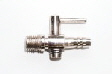
Figure 1: air valve with lever - source of frustration
(image from Jehmco - https://www.jehmco.com/html/air_accessories.html)
Because it can be nearly impossible to break the valve free by hand, gripping and turning with pliers can be difficult, and the struggle is real. This finally lead to researching and then creating a tool. The valve lever is 3mm so I went in search of a mini "breaker bar" and found that the inside diameter (ID) of a 3/16" break line is about 3.1mm. I bought a random 3/16" steel brake line from the local auto parts store. I cut the flared end off from one end and deburred the part. It slipped perfectly over the valve. I added a cap to the threaded sleeve on the remaining flared end and used a small piece from a scrap rubber hose to clean up the look (see pictures below). Finally, I drilled a hole in a nearby shelf and added the other threaded sleeve as a holder for the new tool to keep it in the area where it would be used.

Figure 2: brake line with flare cut off one end; threaded sleeve top right; brass cap bottom right.

Figure 3: assembled tool
The tool works exactly as designed and the length (about 8") allows me to reach the valves on the PVC loop at ceiling level without having to stretch quite as far. If I were to build another one, I would be more intentional about the size and pitch of the threaded sleeve to make it easier to find a matching cap. The random brake line that I grabbed had a m10x1.0 threaded sleeve. Brake line caps don't seem to be easy to find locally, and most metric caps found at a hardware store have a different pitch (m10x1.5). I ended up with a brass 1/8" FIP cap which worked. If you have read this far then thank you and hopefully this will provide a small inspiration to create a tool for that annoying issue in your fish room!
Because my focus is not on a single display tank, rather I mostly have many utility tanks for breeding, experiments, etc. that ranges from freshwater to saltwater. In addition to a few more traditional reef tanks, I have a fish room that is filled with air powered filtration (e.g., sponge filters, etc.) and instead of having 25 separate air pumps, I have one Jehmco linear piston pump that is connected to a loop of 3/4" PVC piping. The pipe has twenty-five airline valve taps that can each be controlled separately with the valves. Obviously they can be further controlled with an inline valve. This system has been in place with only minor modifications for well over a decade and one minor annoyance is that the valves are often hard to turn if they haven't been actuated within six months or more.
Figure 1: air valve with lever - source of frustration
(image from Jehmco - https://www.jehmco.com/html/air_accessories.html)
Because it can be nearly impossible to break the valve free by hand, gripping and turning with pliers can be difficult, and the struggle is real. This finally lead to researching and then creating a tool. The valve lever is 3mm so I went in search of a mini "breaker bar" and found that the inside diameter (ID) of a 3/16" break line is about 3.1mm. I bought a random 3/16" steel brake line from the local auto parts store. I cut the flared end off from one end and deburred the part. It slipped perfectly over the valve. I added a cap to the threaded sleeve on the remaining flared end and used a small piece from a scrap rubber hose to clean up the look (see pictures below). Finally, I drilled a hole in a nearby shelf and added the other threaded sleeve as a holder for the new tool to keep it in the area where it would be used.
Figure 2: brake line with flare cut off one end; threaded sleeve top right; brass cap bottom right.
Figure 3: assembled tool
The tool works exactly as designed and the length (about 8") allows me to reach the valves on the PVC loop at ceiling level without having to stretch quite as far. If I were to build another one, I would be more intentional about the size and pitch of the threaded sleeve to make it easier to find a matching cap. The random brake line that I grabbed had a m10x1.0 threaded sleeve. Brake line caps don't seem to be easy to find locally, and most metric caps found at a hardware store have a different pitch (m10x1.5). I ended up with a brass 1/8" FIP cap which worked. If you have read this far then thank you and hopefully this will provide a small inspiration to create a tool for that annoying issue in your fish room!









