DIY trace elements - How to lower threshold for reefers to start?

Luc Vogels

Active Member
View Badges
Joined
Dec 27, 2015
Messages
173
Reaction score
537
Location
Netherlands
Rating - 0%
0   0   0
Over the past few years, I have spent considerable time preparing my own trace element solutions and determining the daily dosage required by my reef. Reef2Reef has been a great source of information and inspiration, but one piece of information I often found difficult to find was a practical starting point for periodic trace element dosing.

I therefore started conservatively and gradually adjusted the dosages based on the response of the aquarium and monthly ICP testing. After two years, I have reached a reasonably stable understanding of my reef's trace element consumption and the corresponding dosing amounts.

Clearly, these values cannot simply be transferred from one reef to another. Consumption will depend on factors such as coral biomass and growth, livestock, filtration methods, and the supplementation system being used. Nevertheless, I think actual dosing data from established reefs can provide useful reference points, particularly for reefers who want to prepare their own trace element solutions.

I would therefore like to share my current dosing levels and hear whether others consider this information useful as a reference, or whether the differences between individual reefs make such comparisons of limited value. I’m also curious how these numbers compare with what other reefers are dosing. Are we roughly in the same ballpark, perhaps within 50%, or could the differences be as large as 500%?

Aquarium: 3000 Liter (793 Gallon)
Build Thread: Here
Aquarium Type: Mixed reef
Aquarium Live stock: heavily stocked (mature reef)
Major element supplementation system: Triton Core 7
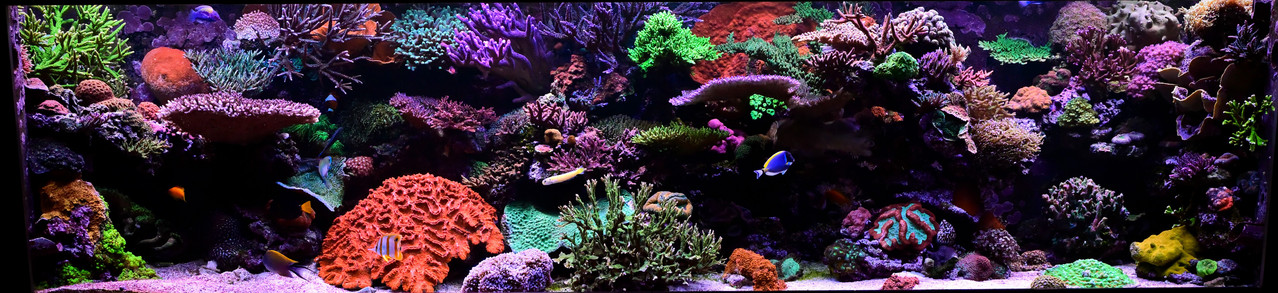
Juli-054.jpg


ElementChemical productDaily product dose (µg/L/day)Daily element / nutrient dose (µg/L/day)
StrontiumSrCl₂·6H₂O520.7143171.1301
VanadiumV2O5 *0.53570.3001
CobaltCoCl₂·6H₂O0.10710.0265
ManganeseMnSO₄·H₂O0.24960.0811
CopperCuSO₄·5H₂O0.26300.0669
ZincZnSO₄·7H₂O0.23570.0536
NickelNiSO₄·6H₂O0.23840.0532
ChromiumCrCl₃·6H₂O0.05790.0113
IronFeSO4 7 H2O *23.75004.7708
IodineKI3.11442.3809
FluorineNaF39.464317.8564
NitratesNH4HCO3119.047693.3649
NitratesCO(NH2)28.928618.4351
PhosphatesKH2PO411.90488.3077
*An additive is used to improve solubility

If a specific trace element is not in the list I do not consider it useful to dose periodically.

If there is interest, I can also share the practical side of my dosing approach: which chemical compounds I use, which elements I combine into stock solutions, the concentrations of those solutions, and how I dose them.

 
Thank you for posting info about what is a poorly understood aspect of reef tank husbandry.

Am I correct in interpreting that these doses were based on attaining target levels for these ions, and assuming so, what were those target levels?

Have you explored higher or lower target
Levels for any individual ions and noted differences?
 
Thank you for the post. Yes, I am interested in how you chose the chemical compounds, how you found the bioavailability information, and how much trial and error went into the process.
 
Last edited:
Thank you for posting info about what is a poorly understood aspect of reef tank husbandry.

Am I correct in interpreting that these doses were based on attaining target levels for these ions, and assuming so, what were those target levels?

Have you explored higher or lower target
Levels for any individual ions and noted differences?
The values represented in the table are the dosages required to maintain the trace elements at a constant level. I did observe fluctuations in alkalinity consumption and coral coloration based on reduced values, but I never purposely explored extremely elevated levels of these elements.

That being said, R2R has sometimes helped me regain confidence in how to act when a level was too high. In my case, this happened with calcium reaching 700 and a 10x overdosage of barium. In both cases, I learned not to overreact and to resolve the situation gradually through water changes.

Studying the impact of heavily elevated or depleted elements is a difficult and potentially dangerous thing to do in a private reef tank. And why would you take the risk? Some of my corals I have already have for over 10 years, so I only take educated risks.

This topic is really about that: hoping that more data from other reefers will become available so we can further optimize our approach and reduce the risks, especially for someone just starting out.

Thank you for the post. Yes, I am interested in how you chose the chemical compounds, how you found the bioavailability information, and how much trial and error went into the process.
In a next post I will share my approach and the target levels I try to maintain!
Great post. Tagging along to learn. Many thanks.
Thank you!
 
hereby want to share my approach to maintaining stable trace element levels in my reef.
This is all scaled to my consumption, needs, and equipment and might be suboptimal for another reefer.
I took inspiration from older Balling literature and also from some key topics here on R2R.

My stock solutions

Here I ensured that the stock solutions are properly soluble, can be stored for a while (at least 6 months), and are still easy to prepare and measure.
Clean_stockElement to increaseSupplementChemical (g per 1,000 mL FINAL)Dissolution additiveQuantity (gram)Solubility screen reference (~25°C, g/L water)*
A_1_1StrontiumSrCl₂·6H₂O538.045.17%
B_1_1VanadiumV2O5Sodium Hydroxide0.00.00%
C_1_1CobaltCoCl₂·6H₂O970.00.41%
C_1_2ManganeseMnSO₄·H₂O629.02.96%
C_1_3CopperCuSO₄·5H₂O349.02.81%
C_1_4ZincZnSO₄·7H₂O965.00.91%
C_1_5NickelNiSO₄·6H₂O693.01.28%
C_1_6ChromiumCrCl₃·6H₂O590.05.50%
D_1_1IronFeSO4 7 H2Osodium citrate dihydrate667.01.71%
E_1_1IodineKI1430.00.46%
F_1_1FluorineNaF42.052.62%
NO3_1_1Ammonium bicarbonateNH4HCO3248.064.52%
NO3_1_2UreaCO(NH2)21190.01.01%
PO4_1_1PhosphateKH2PO4255.039.22%
​
Some of these stock solutions I combine to "stock_mixes" to reduce the number of required dosing heads:
Stock_mixStock_1Stock_1 (ml)Stock_2Stock_2 (ml)Stock_3Stock_3 (ml)Stock_4Stock_4 (ml)Stock_5Stock_5 (ml)Stock_6Stock_6 (ml)Final volume (mL)RO top-up (mL)*
A_1A_1_110000
B_1B_1_110000
C_1C_1_115C_1_27.5C_1_315C_1_415C_1_515C_1_611000931.5
D_1D_1_110000
E_1E_1_110000
F_1F_1_110000
N03_1N03_1_1250NO3_1_22501000500
PO4_1PO4_1_110000
​
I use 8 dosing heads to dose the trace mixes.
I prepare eight 1000 ml bottles, which are then evenly dosed over 28 days (8 dosages distributed over the day, with no two dosages occurring at the same time).
Trace Mixml (stock)StockRO top-up (mL)*
AA_1A_1820
BB_1B_1950
CC_1C_1850
DD_1D_1825
EE_1E_1960
FF_1F_1850
No3N03_1NO3_1750
P04PO4_1PO4_1990
​
Based on ICP testing, I only adjust this last table; I try to avoid adjusting the stock solutions or the dosing times. This gives me a very clear overview of whether a dosing channel is broken or underperforming, since the bottle will be more or less depleted than the others.

This approach works well for me, but if you see any improvements I could make or have any tips, please let me know!
 
Last edited:
Nos últimos anos, dediquei bastante tempo à preparação das minhas próprias soluções de oligoelementos e à determinação da dosagem diária necessária para o meu aquário de recife. O Reef2Reef tem sido uma excelente fonte de informação e inspiração, mas uma informação que muitas vezes achei difícil de encontrar foi um ponto de partida prático para a dosagem periódica de oligoelementos.

Por isso, comecei de forma conservadora e fui ajustando gradualmente as dosagens com base na resposta do aquário e nos testes mensais de ICP. Após dois anos, consegui ter uma compreensão razoavelmente estável do consumo de oligoelementos do meu recife e das respectivas dosagens.

É evidente que esses valores não podem ser simplesmente transferidos de um recife para outro. O consumo dependerá de fatores como biomassa e crescimento dos corais, presença de animais aquáticos, métodos de filtragem e o sistema de suplementação utilizado. No entanto, acredito que dados reais de dosagem de recifes estabelecidos podem fornecer pontos de referência úteis, principalmente para aquaristas que desejam preparar suas próprias soluções de oligoelementos.

Gostaria, portanto, de compartilhar meus níveis de dosagem atuais e saber se outros consideram essas informações úteis como referência, ou se as diferenças entre os aquários de recife individuais tornam essas comparações de valor limitado. Também tenho curiosidade em saber como esses números se comparam aos de outros aquaristas. Estamos mais ou menos na mesma faixa, talvez com uma diferença de 50%, ou as diferenças podem chegar a 500%?

Aquário: 3000 litros (793 galões)
Tópico de construção: Aqui
Tipo de aquário: Recife misto
Animais marinhos do aquário: grande número de habitantes (recife maduro)
Sistema de suplementação de elementos principais: Triton Core 7

Juli-054.jpg


ElementoProduto químicoDose diária do produto (µg/L/dia)Dose diária de elemento/nutriente (µg/L/dia)
EstrôncioSrCl₂·6H₂O520,7143171.1301
VanádioV2O5 *0,53570,3001
CobaltoCoCl₂·6H₂O0,10710,0265
ManganêsMnSO₄·H₂O0,24960,0811
CobreCuSO₄·5H₂O0,26300,0669
ZincoZnSO₄·7H₂O0,23570,0536
NíquelNiSO₄·6H₂O0,23840,0532
CromoCrCl₃·6H₂O0,05790,0113
FerroFeSO4 7 H2O *23,75004,7708
IodoKI3,11442,3809
FlúorNaF39,464317,8564
NitratosNH4HCO3119,047693,3649
NitratosCO(NH2)28,928618.4351
FosfatosKH2PO411,90488,3077
*Um aditivo é usado para melhorar a solubilidade

Se um determinado oligoelemento não estiver na lista, não considero útil medicá-lo periodicamente.

Caso haja interesse, posso também compartilhar o lado prático da minha abordagem de dosagem: quais compostos químicos eu uso, quais elementos eu combino em soluções concentradas, as concentrações dessas soluções e como eu as doso.
Very good!!
 
The values represented in the table are the dosages required to maintain the trace elements at a constant level. I did observe fluctuations in alkalinity consumption and coral coloration based on reduced values, but I never purposely explored extremely elevated levels of these elements.

That being said, R2R has sometimes helped me regain confidence in how to act when a level was too high. In my case, this happened with calcium reaching 700 and a 10x overdosage of barium. In both cases, I learned not to overreact and to resolve the situation gradually through water changes.

Studying the impact of heavily elevated or depleted elements is a difficult and potentially dangerous thing to do in a private reef tank. And why would you take the risk? Some of my corals I have already have for over 10 years, so I only take educated risks.

This topic is really about that: hoping that more data from other reefers will become available so we can further optimize our approach and reduce the risks, especially for someone just starting out.


In a next post I will share my approach and the target levels I try to maintain!

Thank you!

Ok, thanks. I’ll just note that the demand for many chemicals may depend on the actual concentration that you try to maintain. That is, demand will be higher at higher concentrations because many consumption pathways will accelerate as concentration rises.

Hence the question.
 

TOP 10 Trending Threads

WHAT DO YOU ALWAYS RUN OUT OF AT THE WORST TIME?

  • Salt mix

    Votes: 9 17.0%
  • Fish or coral food

    Votes: 3 5.7%
  • Test kits or reagents

    Votes: 4 7.5%
  • Filter media or replacement fleece

    Votes: 4 7.5%
  • RO/DI filters or supplies

    Votes: 8 15.1%
  • Fragging and repair supplies, like glue or epoxy

    Votes: 5 9.4%
  • I keep a backup of everything

    Votes: 16 30.2%
  • Other (Post in the comments)

    Votes: 4 7.5%
Back
Top
Home
Post thread…
Market
What's new