




Finesse- fin-esse (verb): To do (something) in a subtle and delicate manner.
Have you ever noticed that, as hobbyists, when we are trying to solve a problem in one of our aquariums, the "solution"- the easy, initial one- is always to "add something" to the aquarium. Be it an additive, piece of gear, or other accessory, it's always about the addition of stuff, right?

And if it's not about adding more stuff to the aquarium, it's often about doing more "stuff": Big water changes, more extensive maintenance procedures, significant stocking adjustments...BIG moves to affect rapid, significant changes. The aquarium equivalent of brute force. Big moves.

And these occasional big, bold moves cost more, in terms of time, money, and energy, and often have another collateral price attached to them, in terms of animal stress, human aggravation, financial strain, and energy expended, than smaller, more "finessed" practices from Day One do.
Wouldn't finesse make more sense when affecting changes?
Or for that matter, when creating your system, why not incorporate more thought-out, measured, yet easily adjusted practices, better equipment, and long-term philosophies to set you on a proper course? In other words, plan your system with the potential problems already in mind, so that you've sort of "pre-solved" them.
Huh?
For example, if you just KNOW you're ultimately going to want more than 6 assorted Acro colonies in that aquarium, and you have the space, financial resources, and energy, wouldn't it simply make sense to start with the 75, 90, or even 120 gallon tank now, rather than go to the time, trouble and expense of building a 50 gallon system, knowing your predilection for expansion? Sure, it might cost more from the start, or even delay the start of the project, but "editing" your system after it's up and running, and then migrating to that inevitable larger tank is almost always way more expensive than just doing it the right way the first time!
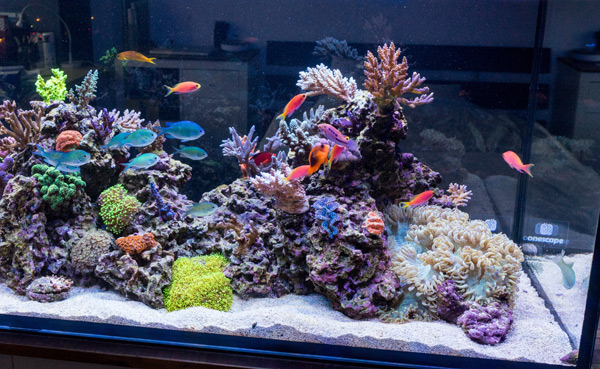
It's the same with equipment selection. We see this in the reef world all the time: In our enthusiasm to "get in the game", a smaller tank with perhaps "second tier" components is hastily assembled. Following the usual cycling and adjustment period, the neophyte reefer becomes aware of the shortcomings of the "quick and cheap, I'll upgrade later..." approach, laments the decisions he/she made, and begins to assemble better (and typically pricier) gear, a bigger tank, and so on soon after he or she sets up the initial tank. The realities are usually such that, if the start of the project was delayed just a short time, it could have been executed the first time in a more efficient, sustainable, and satisfying manner.

Maintenance and husbandry also come into play. It's not just about doing bigger water changes and more extensive cleanings and such. It's about planning from the start- from day one- easily accomplished and sustainable husbandry practices that can be incorporated into your routine easily and with minimum stress. By adopting, for example, small, more frequent water changes and maintenance tasks versus once a month, 40%-50% water changes and extensive maintenance sessions, the savings in time, money, and energy is huge...And the "quality of life" these more frequent, smaller, and more easily accomplished practices bring is significant.
Big "corrections" become less necessary, and far less frequent!
It almost seems a bit contrarian, in a way, especially coming from a guy like me, who espouses the Facebook ethos of "move fast and break things" in business, doesn't it? However, in hobby practice, it's a far more logical and beneficial long-term strategy: Delay the smaller tank project in favor of a larger, more thought-out, better-equipped one. Create a system with an eye towards the long-term.

Get your hands wet more frequently, but for less time, and purchase the best equipment you can from "the get go." All with an eye on expansion, ease of use, and long-term viability/sustainability of your effort, enjoyment, and enthusiasm. The old fable of the Tortoise and the Hare comes to mind, but we're sort of "tweaking" it a bit, aren't we?

Finesse versus brute force. Long-term versus short-term, and an understanding of our own habits and philosophies are valuable tools we can use to create an amazing, lifetime hobby experience.
Look ahead. Plan ahead. Move intelligently, if not more slowly...
Oh- and Stay Wet!
Scott Fellman
Have you ever noticed that, as hobbyists, when we are trying to solve a problem in one of our aquariums, the "solution"- the easy, initial one- is always to "add something" to the aquarium. Be it an additive, piece of gear, or other accessory, it's always about the addition of stuff, right?
And if it's not about adding more stuff to the aquarium, it's often about doing more "stuff": Big water changes, more extensive maintenance procedures, significant stocking adjustments...BIG moves to affect rapid, significant changes. The aquarium equivalent of brute force. Big moves.
And these occasional big, bold moves cost more, in terms of time, money, and energy, and often have another collateral price attached to them, in terms of animal stress, human aggravation, financial strain, and energy expended, than smaller, more "finessed" practices from Day One do.
Wouldn't finesse make more sense when affecting changes?
Or for that matter, when creating your system, why not incorporate more thought-out, measured, yet easily adjusted practices, better equipment, and long-term philosophies to set you on a proper course? In other words, plan your system with the potential problems already in mind, so that you've sort of "pre-solved" them.
Huh?
For example, if you just KNOW you're ultimately going to want more than 6 assorted Acro colonies in that aquarium, and you have the space, financial resources, and energy, wouldn't it simply make sense to start with the 75, 90, or even 120 gallon tank now, rather than go to the time, trouble and expense of building a 50 gallon system, knowing your predilection for expansion? Sure, it might cost more from the start, or even delay the start of the project, but "editing" your system after it's up and running, and then migrating to that inevitable larger tank is almost always way more expensive than just doing it the right way the first time!
It's the same with equipment selection. We see this in the reef world all the time: In our enthusiasm to "get in the game", a smaller tank with perhaps "second tier" components is hastily assembled. Following the usual cycling and adjustment period, the neophyte reefer becomes aware of the shortcomings of the "quick and cheap, I'll upgrade later..." approach, laments the decisions he/she made, and begins to assemble better (and typically pricier) gear, a bigger tank, and so on soon after he or she sets up the initial tank. The realities are usually such that, if the start of the project was delayed just a short time, it could have been executed the first time in a more efficient, sustainable, and satisfying manner.
Maintenance and husbandry also come into play. It's not just about doing bigger water changes and more extensive cleanings and such. It's about planning from the start- from day one- easily accomplished and sustainable husbandry practices that can be incorporated into your routine easily and with minimum stress. By adopting, for example, small, more frequent water changes and maintenance tasks versus once a month, 40%-50% water changes and extensive maintenance sessions, the savings in time, money, and energy is huge...And the "quality of life" these more frequent, smaller, and more easily accomplished practices bring is significant.
Big "corrections" become less necessary, and far less frequent!
It almost seems a bit contrarian, in a way, especially coming from a guy like me, who espouses the Facebook ethos of "move fast and break things" in business, doesn't it? However, in hobby practice, it's a far more logical and beneficial long-term strategy: Delay the smaller tank project in favor of a larger, more thought-out, better-equipped one. Create a system with an eye towards the long-term.
Get your hands wet more frequently, but for less time, and purchase the best equipment you can from "the get go." All with an eye on expansion, ease of use, and long-term viability/sustainability of your effort, enjoyment, and enthusiasm. The old fable of the Tortoise and the Hare comes to mind, but we're sort of "tweaking" it a bit, aren't we?
Finesse versus brute force. Long-term versus short-term, and an understanding of our own habits and philosophies are valuable tools we can use to create an amazing, lifetime hobby experience.
Look ahead. Plan ahead. Move intelligently, if not more slowly...
Oh- and Stay Wet!
Scott Fellman















