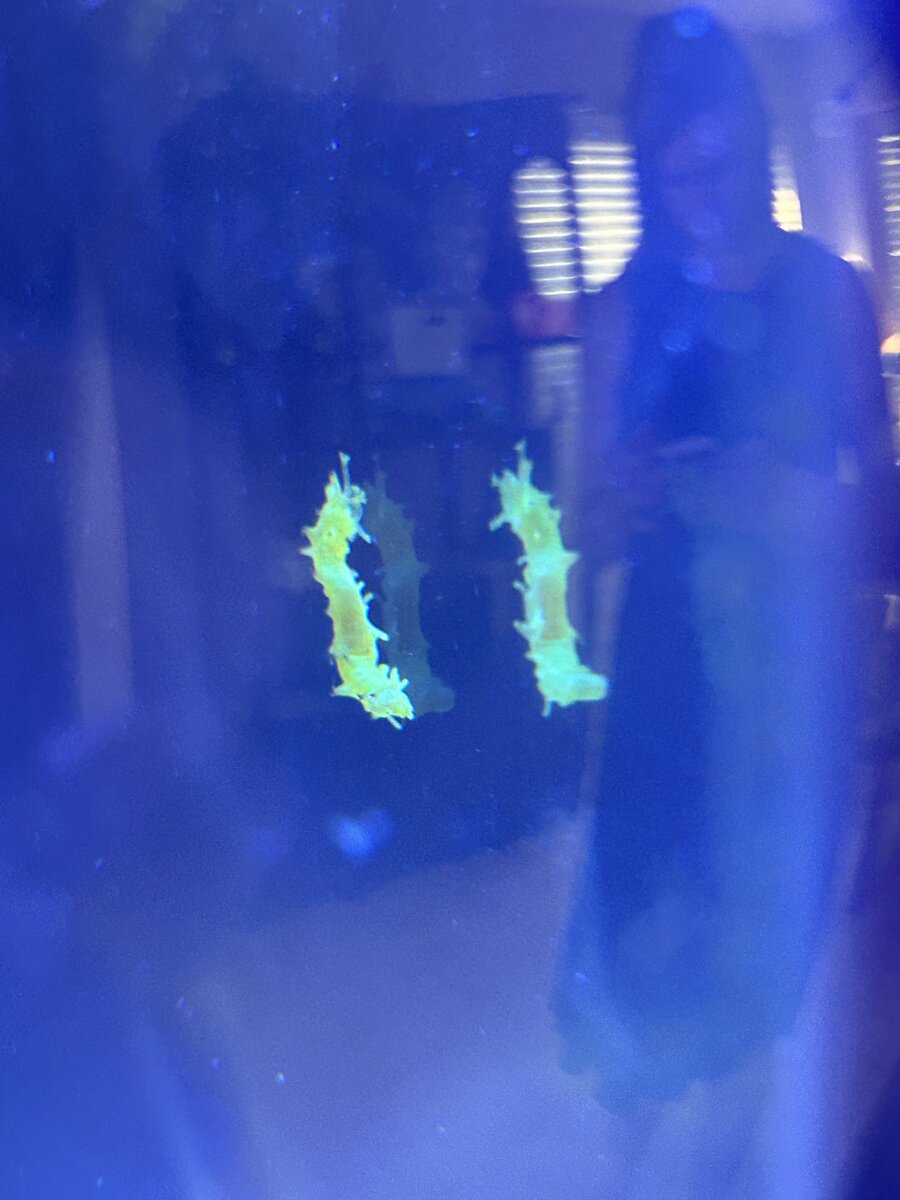
Green Baby Thing

Fish.Bum00

Active Member
View Badges
Joined
Dec 22, 2019
Messages
204
Reaction score
72
Location
Livonia
Rating - 100%
1   0   0
Hey all,

Found this little guy on my glass this morning. Kinda looks like a baby lettuce Nudi.

Anyone have an ID for me?
IMG_6158.jpeg
 
Last edited:
OP
OP
Fish.Bum00

Fish.Bum00

Active Member
View Badges
Joined
Dec 22, 2019
Messages
204
Reaction score
72
Location
Livonia
Rating - 100%
1   0   0
Yup. It’s making its way up the glass as we speak. Not sure, but looks to be eating some of the crap on the glass like a snail would.
 

ISpeakForTheSeas

7500 Club Member
View Badges
Joined
Nov 22, 2021
Messages
9,362
Reaction score
10,745
Location
United States
Rating - 0%
0   0   0
Juvenile sea cucumber of some variety (they're really hard to ID when young like this).
Sorry for the short responses; I'm short on time.

Generally good; small chance of a "cuke nuke" that crashes the tank (generally not an issue unless it wanders into a powerhead or something in the tank harasses it); filter-feeding cuke species sometimes struggle with eating enough of the right foods to survive.

For feeding info see my post linked below:
For cuke nuke/toxin info:
Yeah, all sea cucumbers (including sea apples) are toxic - some are just much, much less likely to release that toxin than others, and some contain less of it than others in the first place. As a general rule (there are exceptions), filter-feeding sea cucumbers are more likely to release toxins than deposit-feeding (A.K.A. sand-sifting) cukes are, and they are more likely to contain more of the toxins as well.

The toxin - Holothurin - is an ichthyotoxin (so it primarily impacts fish); importantly, however, like many other toxins, it will affect inverts (and people) in high enough concentrations. In most aquariums this isn't an issue, as most cukes kept contain relatively low levels of the toxin and are kept in tanks with enough water to dilute it, but it could potentially be an issue in a pico tank if toxins are released into the water (so don't touch the water in the pico if the cuke dies - just change 100% of the water and move on at that point to be safe).

Sea cucumbers can release Holothurin in a variety of ways when severely stressed and when dead/decaying (the toxin is literally in the body - the body wall, organs, etc. - so the cuke doesn't need to be alive to produce the toxin). So, keeping sea cucumbers in a low stress environment is key to avoiding the release of toxins - don't keep them with anything that might harass them (thankfully, not many things typically kept in aquariums bother cukes), make sure they can't get harmed by the equipment/setup of the tank (cukes and unprotected powerheads don't get along), watch for signs of stress or poor health, remove them right away if they die, and keep carbon and mixed saltwater on hand in case of emergencies.

All that to say, in most cases, sea cucumbers are cool, beneficial critters in our tanks and don't "cuke nuke" the tanks even if they do release their toxins - the rare cases where they do "nuke" a tank are good reminders to be aware of and prepared for the risk that they might though.

Yeah, I've only heard of a couple of instances where a "cuke nuke" actually took place despite knowing multiple instances of cucumbers ejecting either a toxic fluid, their organs, or their cuvierian tubules, so it's definitely not a common event (at least not with sand sifting species). That said, keep in mind that the toxicity varies from one species to the next, and some species are more toxic in certain ways (some are more toxic when they expel toxins in some way, others contain more toxin in their body wall, etc.), and various circumstances (such as water volume, skimmers, running carbon or not, etc.) about the aquarium they're in can determine how much harm the toxin causes.

Personally, I'd say they generally seem pretty safe, but you need to be aware of the (relatively low) risk and have a plan in place to handle it if things go awry.

The cuke nukings:
An instance of ejecting a fluid (nothing seemed to have been harmed in the tank, but this stuff is reportedly toxic):
 

TOP 10 Trending Threads

WHAT AMOUNT OF LIVE ROCK AND SAND SHOULD BE PRIORITIZED FOR OPTIMAL BIODIVERSITY/FILTRATION?

  • 100% live rock + bagged sand

    Votes: 38 27.3%
  • 100% dry rock + 100% live sand

    Votes: 47 33.8%
  • 50/50 live/dry rock, 50/50 live/bagged sand

    Votes: 30 21.6%
  • 75% live rock, 25% live sand

    Votes: 14 10.1%
  • 25% live rock, 75% live sand

    Votes: 10 7.2%
Back
Top