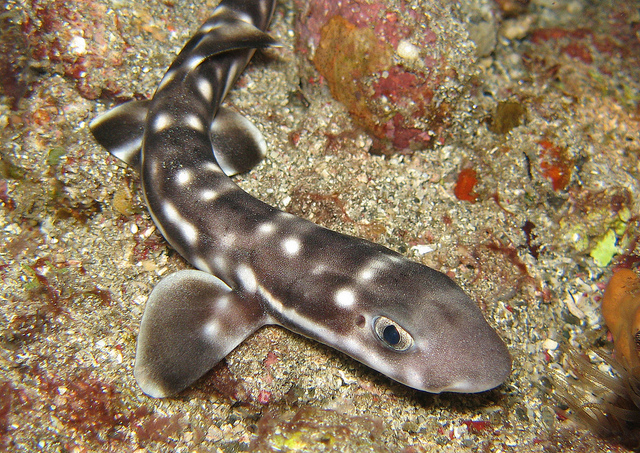
Congratulations on getting your little guy to hatch and eat while in your care.
Hand feeding the shark while small is usually the easiest way to get them to eat and ensure they are getting the food and not other tank mates.
When introducing new foods to the small shark it may be hesitant to feed for a few reasons, one being not recognized as food and second is no electrical signal from the ''prey'' item being offered to increase predatory or exploratory bite / feeding response.
If reluctant to feed or accept new food being offered then you can provoke a bite, feeding by hand you would want to Gently rub the food on the mouth and under snout of the shark. Gently is key and usually the shark will bite at the food most times realizing its edible or tasty thus accepting the offering.
You will find that some foods will be accepted quicker than others as each animal is different and has ''favorites''.
Be sure to offer a variety of foods to ensure proper health and you can even soak food in Selcon.
Once the shark is large enough to start accepting small silver sides you can gut load the fish with vitamins or other enriched foods so the shark is getting nutritionally dense foods ensuring a health animal.
I've done this many times with sharks and Rays from different sizes ranging in the new born stages to juvenile not wanting to eat due to stress of transporting and moving tanks. Works well.
Feeding crab, shirmp, clam, fish and such from the local saltwater / ocean or
Market is a good idea along with going to the local seafood dock or
market and asking for the by catch as this is normally free of charge. Just develop a good relationship with employees and or owners while spending a few bucks on fresh seafood for dinner.
Make sure that any by catch or fresh seafoods are frozen for a 24 hour period or longer before feeding to your shark, other tank mates as well. This will kill off any parasites and bacteria living on / in the critter being used as food.
Small crabs are great too, just remove the top shell (less mess to clean up) crack in half or cut halves into quarters with legs or no legs for small sharks and rays then freeze, defrost and feed, enjoy the show.
They are messy eaters, your other fish and critters will help with the left overs that come out the gills and mouth from the chomping and slurping.
due to this you will need to make sure your mechanical filtration is over sized and efficient along with good flow and filter socks to help remove small uneaten particles of food.
I agree with advise given to feed with a feeder stick once the shark readily takes foods you offer in a strong manner as its easier to feed, less risk of getting blood blisters on your fingers and like mentioned will help train the shark or ray to feed from the stick and not other tank mates.
There is always risk involved with keeping sharks and rays concerning other tank mates, that is just part of the choice.
On a side note I am not sure why someone would start being condescending or rather rude comparing the OP to some other member right off the start merely for asking a question or asking for advice / help/ knowledge. Is this not what we are all part of online communities / reef clubs for in the first place ?
Sure did not think it was decent or normal for folks to immediately judge, insinuate or plain be rude rather than helpful right out the gate.
Any who, Good luck to you in your new adventure
Hope you get to enjoy your shark for a long time to come.