Help!

  • Thread starter Thread starter nathan772
  • Start date Start date
  • Tagged users Tagged users None

nathan772

New Member
View Badges
Joined
Dec 26, 2024
Messages
7
Reaction score
0
Location
leicestershire
What state or country do you live in
United Kingdom
Rating - 0%
0   0   0
Hi all I have a blue marine reef 120 set up.

The set up has been running for 3 months now I had hermits, 2x clown fish, 1x royal gamma, 1x blue damsel 1x emperor cardinal and 1x pyjama wrasse. (All the fishwere added a few days apart) we have a boxer shrimp.

Everything seemed good for 2 weeks. I brought a goby to clean up the sand abit then all went wrong the goby was on the living room floor the morning after, the next day a clown fish died, a few days after the other clown fish and then a week later the emperor and royal gamma. Boxer shrimp was munching on the bodies.

I tested all the water and all seemed ok. I left the tank for a month did all testing and then with the blue damsel and pyjama wrasse perfectly fine decided to add 2 clown fish again. The morning after one clown fish was dead. I phoned up the fish shop and went down with a jar of water for testing. The shop also tested the water, all came back clear and they replaced the clownfish Free of charge.

When the new clownfish was added we noticed the blue damsel terrorizing the clowns we phoned up the fish shop and they said if the blue damsel is kept alone they can sometimes be mischievous, as a last resort we took the blue damsel to the fish shop to remove this possibility. After we did this we noticed the pyjama wrasse was out a lot more and the clowns seemed happy. The next morning we woke up to the new clownfish dead on the sand (not being eaten by the boxer shrimp this time).

Can someone please offer some advice on what the problem could be as I feel like giving up at this point

Photo of setup included.
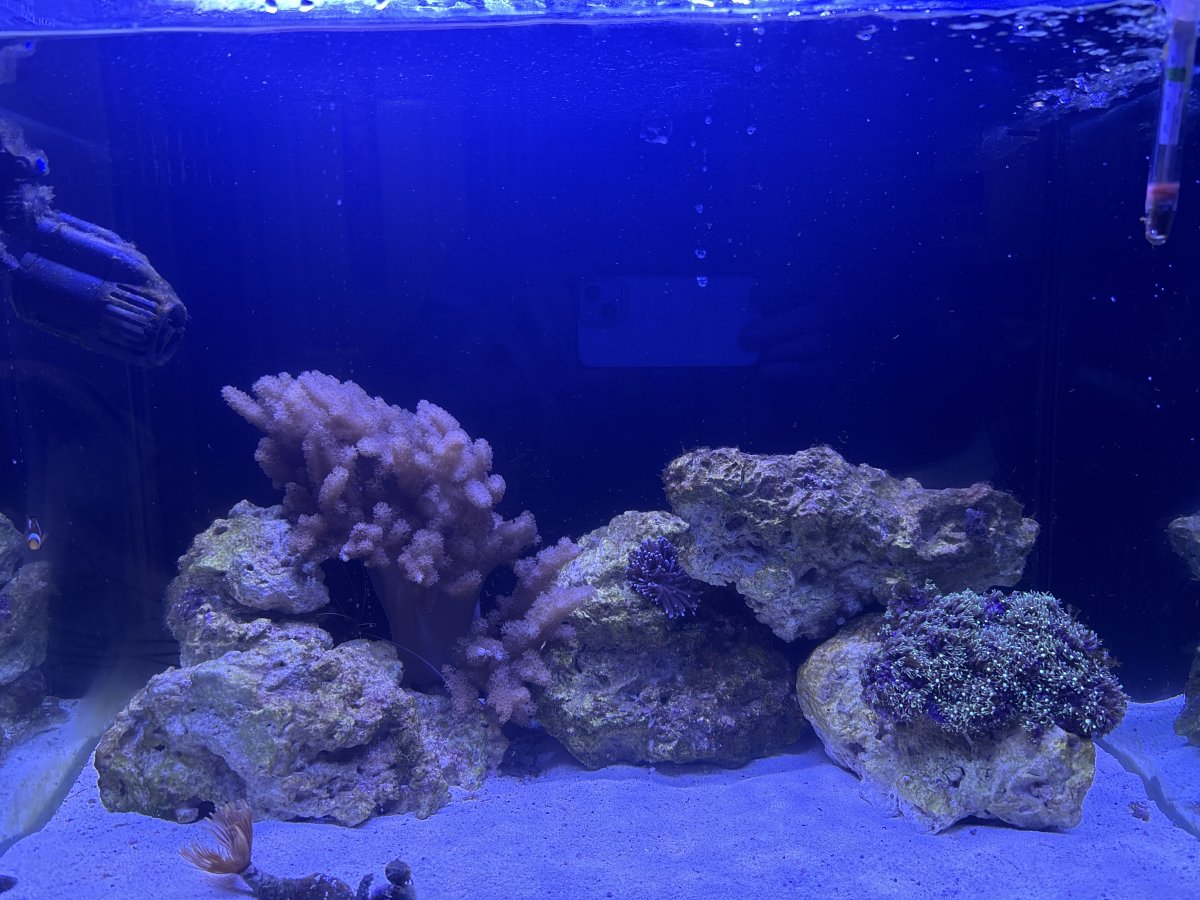
image.jpg


Current levels

Temp 26.5 degrees C
PH 8.0
Salinity 1.025
N02 nitrogen dioxide <0.025
NH4 Ammonia <0.05
KH 11
NO3 Nitrate 1
PO4 <0.02

 
Hi all I have a blue marine reef 120 set up.

The set up has been running for 3 months now I had hermits, 2x clown fish, 1x royal gamma, 1x blue damsel 1x emperor cardinal and 1x pyjama wrasse. (All the fishwere added a few days apart) we have a boxer shrimp.

Everything seemed good for 2 weeks. I brought a goby to clean up the sand abit then all went wrong the goby was on the living room floor the morning after, the next day a clown fish died, a few days after the other clown fish and then a week later the emperor and royal gamma. Boxer shrimp was munching on the bodies.

I tested all the water and all seemed ok. I left the tank for a month did all testing and then with the blue damsel and pyjama wrasse perfectly fine decided to add 2 clown fish again. The morning after one clown fish was dead. I phoned up the fish shop and went down with a jar of water for testing. The shop also tested the water, all came back clear and they replaced the clownfish Free of charge.

When the new clownfish was added we noticed the blue damsel terrorizing the clowns we phoned up the fish shop and they said if the blue damsel is kept alone they can sometimes be mischievous, as a last resort we took the blue damsel to the fish shop to remove this possibility. After we did this we noticed the pyjama wrasse was out a lot more and the clowns seemed happy. The next morning we woke up to the new clownfish dead on the sand (not being eaten by the boxer shrimp this time).

Can someone please offer some advice on what the problem could be as I feel like giving up at this point

Photo of setup included.
image.jpg


Current levels

Temp 26.5 degrees C
PH 8.0
Salinity 1.025
N02 nitrogen dioxide <0.025
NH4 Ammonia <0.05
KH 11
NO3 Nitrate 1
PO4 <0.02

I doubt this is a water quality issue, as the invertebrates are apparently healthy. That typically points to some sort of fish disease. Does the tank have good aeration?

Jay
 
I doubt this is a water quality issue, as the invertebrates are apparently healthy. That typically points to some sort of fish disease. Does the tank have good aeration?

Jay
Hi Jay

Yes the tank has good aeration, once I lost the large amount of fish I did treat the remaining two with NT Labs marine antibacterial. The pyjama wrass and blue damsel have remained healthy to this day which is the most confusing thing if it was a disease that wiped out the fish how are these two still ok over a month later.
 
I'm sorry to hear about the challenges you're experiencing with your aquarium setup. Fish loss can be very frustrating, especially when parameters seem normal. Based on the information you've provided, here are several potential issues to consider and steps you can take to help identify and address the problem:

1. Acclimation:​

  • Ensure Proper Acclimation: It's crucial to acclimate new fish slowly to reduce shock from changes in water parameters. This includes both temperature and chemistry. A drip acclimation method is often recommended.

2. Stress Factors:​

  • Territorial Behavior: Some fish, particularly certain damselfish like the blue damsel, can be aggressive and territorial, which might stress or even injure new arrivals. Although you've removed the damsel, monitor for any remaining stress from previous interactions.
  • Tank Size and Setup: Ensure that the setup is spacious enough for the species you have. Some fish need more space to establish territories, which can lead to stress and aggression.

3. Environmental Quality:​

  • Oxygen Levels: Ensure that your tank has sufficient water movement and surface agitation to keep oxygen levels high, especially if the tank is densely stocked.
  • Hidden Issues: Sometimes, there can be subtler factors (e.g., accumulated toxins from decaying matter, or a sudden spike in something overlooked) that affect fish health. Double-check for any signs of ammonia or nitrite spikes, even small readings can stress fish.

4. Incompatible Species:​

  • Compatibility: You already mentioned the aggressive nature of the blue damsel. If introducing new species leads to unexplained stress or death, consider doing additional research on compatibility or introducing a larger school of fish for more stable dynamics.

5. Disease and Parasites:​

  • Quarantine New Arrivals: Always quarantine new fish for at least 2-4 weeks before introducing them to the main tank. Diseases might not show symptoms right away and can spread quickly in a community tank.
  • Observe for Symptoms: Look for any signs of illness such as white spots, unusual behavior (scratching, isolating), or changes in appetite. Sometimes, the aggressiveness of fish may not directly lead to death, but stress can lower the immune system, making fish more susceptible to diseases.

6. Tank Maintenance:​

  • Regular Maintenance: Ensure tank cleanliness by performing regular water changes, vacuuming sand, and ensuring filters are clean.
  • Nutrient Levels: While your nitrate and phosphate levels seem low, maintaining a balance in nutrients can affect algae growth that might be stressful for some fish.

7. Consider Species Changes:​

  • While it's tempting to persist with certain species, if problems continue, evaluate if more peaceful species would be a better long-term choice for your setup.
Given your desire to keep going with your aquarium, taking small, systematic steps can often help stabilize the tank and improve the survivability of your fish. Don't hesitate to ask more specific questions as you go along, and best of luck with your marine reef setup!
 
Hi Jay

Yes the tank has good aeration, once I lost the large amount of fish I did treat the remaining two with NT Labs marine antibacterial. The pyjama wrass and blue damsel have remained healthy to this day which is the most confusing thing if it was a disease that wiped out the fish how are these two still ok over a month later.

The NT Labs product is similar to the Ruby Reef Rally Pro product in the US. These products have ingredients that work for many diseases, but in order to make them "reef safe", the dose is made lower, often too low to help much.

I can't say why the two fish survived unscathed - but if they are symptom free, I would wait 45 days just to ensure it stays that way.

Jay
Thank y my for your advice Jay, much appreciated!
 

TOP 10 Trending Threads

HOW WOULD YOU FEEL ABOUT RECEIVING A FISH OR CORAL AS A HOLIDAY GIFT?

  • I’d love one, as long as it’s a species I chose

    Votes: 14 34.1%
  • I’d trust someone who knows my tank to choose

    Votes: 1 2.4%
  • I’d rather get a gift card and pick it myself

    Votes: 14 34.1%
  • I’d prefer gear or supplies instead

    Votes: 0 0.0%
  • Please don’t surprise me with livestock

    Votes: 12 29.3%
  • Other (Post in the comments)

    Votes: 0 0.0%
Back
Top
Home
Post thread…
Market
What's new