Is my anemone stinging my clownfish

cryingrn

New Member
View Badges
Joined
Jan 9, 2026
Messages
5
Reaction score
2
Location
US
Rating - 0%
0   0   0
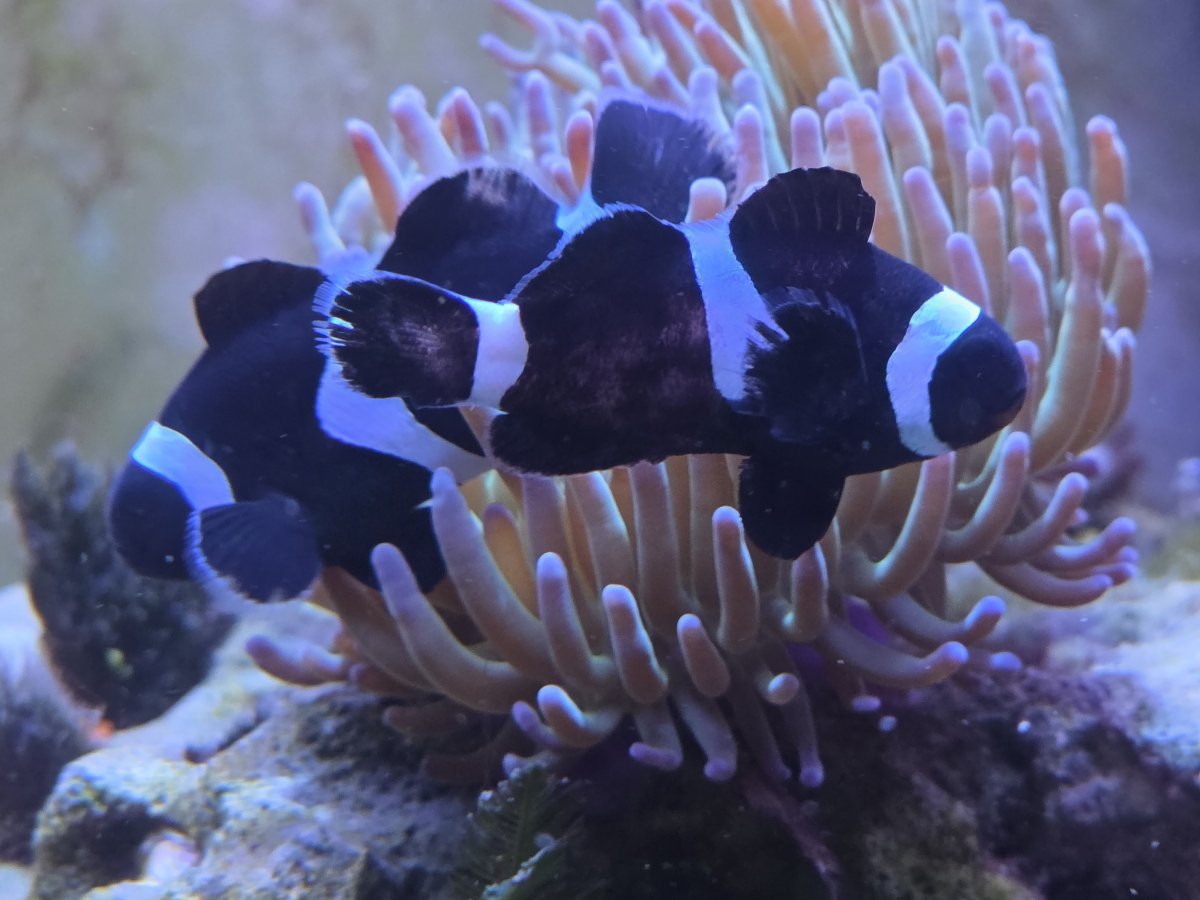
I have had this pair of ocellaris clownfish in my tank for two years (acquired as adults) and to my knowledge they have never been hosted by an anemone until about two weeks ago when I added my ritteri in. Pretty immediately they start presenting with damaged fins and blemishes, which I assumed initially might have been from fighting but I've never seen any inappropriate behavior between them. It's progressively gotten worse, they're still being hosted, and even at night I haven't seen anything unusual behaviorally from them or the other fish in my tank (a chalk basslet). Because this started the exact same time the anemone began hosting, I am pretty sure the anemone is stinging them and because they have never been hosted before, their slime coats were insufficient. I am wondering now if I need to separate them from the anemone, if I need to treat them with anything, if I need to leave them be... or if it looks like something else may be going on. The male is in worse shape than the female, and he spends less time in the anemone than her, but they're both looking pretty beat up.
3606.jpg
 

vetteguy53081

Well known Member and monster tank lover
View Badges
Joined
Aug 11, 2013
Messages
108,107
Reaction score
242,673
Location
Wisconsin -
Rating - 100%
17   0   0
I have had this pair of ocellaris clownfish in my tank for two years (acquired as adults) and to my knowledge they have never been hosted by an anemone until about two weeks ago when I added my ritteri in. Pretty immediately they start presenting with damaged fins and blemishes, which I assumed initially might have been from fighting but I've never seen any inappropriate behavior between them. It's progressively gotten worse, they're still being hosted, and even at night I haven't seen anything unusual behaviorally from them or the other fish in my tank (a chalk basslet). Because this started the exact same time the anemone began hosting, I am pretty sure the anemone is stinging them and because they have never been hosted before, their slime coats were insufficient. I am wondering now if I need to separate them from the anemone, if I need to treat them with anything, if I need to leave them be... or if it looks like something else may be going on. The male is in worse shape than the female, and he spends less time in the anemone than her, but they're both looking pretty beat up.

3606.jpg
There are definite signs of aggression and tsil/fin nipping and bite marks
Either amongst themselves or another tank mate
Setting a cell phone on video mode for 20 minutes at feeding time will help identify an aggressor BUT YOU MUST walk away as they know you’re there
Come back and review video and see what is going on
Stings known as hyper melanization are hard to see on dark clowns
 
OP
OP
C

cryingrn

New Member
View Badges
Joined
Jan 9, 2026
Messages
5
Reaction score
2
Location
US
Rating - 0%
0   0   0
There are definite signs of aggression and tsil/fin nipping and bite marks
Either amongst themselves or another tank mate
Setting a cell phone on video mode for 20 minutes at feeding time will help identify an aggressor BUT YOU MUST walk away as they know you’re there
Come back and review video and see what is going on
Stings known as hyper melanization are hard to see on dark clowns
So I did this and completely left the house to pick up some groceries for the next few nights... nothing around feeding time at least and I could usually see all 3 potential suspects at the same time while food was actively circulating (the two clownfish and my chalk basslet; the only other fish is an engineering goby but he never ever goes into the part of the water column that they hang out in even with food involved). There was no chasing, no nipping, and they were usually swimming side-by-side. I work from home most days so 90% of my waking life is spent in direct view of this tank so I really haven't seen anything inappropriate with them. The male will "twitch" and "spasm" at her occasionally, especially after getting this anemone, which is indicative that something is going on but she allows him into the nem with her. Could they be fighting at night? The most I've been able to do is shine a flashlight on them occasionally to see what they're up to (typically sleeping in the nem together) which doesnt feel helpful to see if theyre beating each other up
 

Jay Hemdal

10K Club member
View Badges
Joined
Jul 31, 2020
Messages
37,586
Reaction score
37,390
Location
Dundee, MI
Rating - 0%
0   0   0
I have had this pair of ocellaris clownfish in my tank for two years (acquired as adults) and to my knowledge they have never been hosted by an anemone until about two weeks ago when I added my ritteri in. Pretty immediately they start presenting with damaged fins and blemishes, which I assumed initially might have been from fighting but I've never seen any inappropriate behavior between them. It's progressively gotten worse, they're still being hosted, and even at night I haven't seen anything unusual behaviorally from them or the other fish in my tank (a chalk basslet). Because this started the exact same time the anemone began hosting, I am pretty sure the anemone is stinging them and because they have never been hosted before, their slime coats were insufficient. I am wondering now if I need to separate them from the anemone, if I need to treat them with anything, if I need to leave them be... or if it looks like something else may be going on. The male is in worse shape than the female, and he spends less time in the anemone than her, but they're both looking pretty beat up.
3606.jpg

Welcome to Reef2Reef!

What has happened is that with the addition of the anemone, they both took up residence and their pair bond broke down. 100% those are fish bites on the front clown's fins. Unless you have some other troublemaker fish in the tank, it is from them fighting.

Your options are:

Let it ride and see if they settle down.

Put a tank divider in and let the more damaged clown have the anemone for a few weeks to see if that "balances out" the territory.

Rehome one of the clowns.
 

vetteguy53081

Well known Member and monster tank lover
View Badges
Joined
Aug 11, 2013
Messages
108,107
Reaction score
242,673
Location
Wisconsin -
Rating - 100%
17   0   0
So I did this and completely left the house to pick up some groceries for the next few nights... nothing around feeding time at least and I could usually see all 3 potential suspects at the same time while food was actively circulating (the two clownfish and my chalk basslet; the only other fish is an engineering goby but he never ever goes into the part of the water column that they hang out in even with food involved). There was no chasing, no nipping, and they were usually swimming side-by-side. I work from home most days so 90% of my waking life is spent in direct view of this tank so I really haven't seen anything inappropriate with them. The male will "twitch" and "spasm" at her occasionally, especially after getting this anemone, which is indicative that something is going on but she allows him into the nem with her. Could they be fighting at night? The most I've been able to do is shine a flashlight on them occasionally to see what they're up to (typically sleeping in the nem together) which doesnt feel helpful to see if theyre beating each other up
Intimidation causing the tremors and claiming real estate being the nem
 
OP
OP
C

cryingrn

New Member
View Badges
Joined
Jan 9, 2026
Messages
5
Reaction score
2
Location
US
Rating - 0%
0   0   0
Welcome to Reef2Reef!

What has happened is that with the addition of the anemone, they both took up residence and their pair bond broke down. 100% those are fish bites on the front clown's fins. Unless you have some other troublemaker fish in the tank, it is from them fighting.

Your options are:

Let it ride and see if they settle down.

Put a tank divider in and let the more damaged clown have the anemone for a few weeks to see if that "balances out" the territory.

Rehome one of the clowns.

This is kinda what I am suspecting- there aren't any other fish in the tank that would or could do this (the chalk basslet and goby are pushovers and I mean that affectionately).

I might let this go on a little bit longer to see if its getting better, because the female at least seems to be looking a little better than she did a week ago. If it goes on much longer I will rehome one of them since their wellbeing is my priority in this situation.

Do I need to worry about treating either of them (the male especially) to prevent a secondary infection from setting in or should I leave that be?
 

vetteguy53081

Well known Member and monster tank lover
View Badges
Joined
Aug 11, 2013
Messages
108,107
Reaction score
242,673
Location
Wisconsin -
Rating - 100%
17   0   0
This is kinda what I am suspecting- there aren't any other fish in the tank that would or could do this (the chalk basslet and goby are pushovers and I mean that affectionately).

I might let this go on a little bit longer to see if its getting better, because the female at least seems to be looking a little better than she did a week ago. If it goes on much longer I will rehome one of them since their wellbeing is my priority in this situation.

Do I need to worry about treating either of them (the male especially) to prevent a secondary infection from setting in or should I leave that be?
Secondary often treatable with ruby rally pro which is safe with coral and inverts and yes you can observe at this time
 

Jay Hemdal

10K Club member
View Badges
Joined
Jul 31, 2020
Messages
37,586
Reaction score
37,390
Location
Dundee, MI
Rating - 0%
0   0   0
This is kinda what I am suspecting- there aren't any other fish in the tank that would or could do this (the chalk basslet and goby are pushovers and I mean that affectionately).

I might let this go on a little bit longer to see if its getting better, because the female at least seems to be looking a little better than she did a week ago. If it goes on much longer I will rehome one of them since their wellbeing is my priority in this situation.

Do I need to worry about treating either of them (the male especially) to prevent a secondary infection from setting in or should I leave that be?

Secondary bacterial infections can happen with fin damage. Look for redness, severe erosion of the fins (like whole sections dropping off, not just rips).

The treatment for that would be a broad spectrum, gram negative antibiotic in a hospital tank.
 
OP
OP
C

cryingrn

New Member
View Badges
Joined
Jan 9, 2026
Messages
5
Reaction score
2
Location
US
Rating - 0%
0   0   0
Secondary bacterial infections can happen with fin damage. Look for redness, severe erosion of the fins (like whole sections dropping off, not just rips).

The treatment for that would be a broad spectrum, gram negative antibiotic in a hospital tank.
Thank you. I'll go ahead and start getting some filter media cycled in case I need to set up a hospital tank in a hurry. I qtn all new fish so luckily I have these things on hand.

Clowns will be clowns I guess
 

TOP 10 Trending Threads

WHAT AMOUNT OF LIVE ROCK AND SAND SHOULD BE PRIORITIZED FOR OPTIMAL BIODIVERSITY/FILTRATION?

  • 100% live rock + bagged sand

    Votes: 38 26.6%
  • 100% dry rock + 100% live sand

    Votes: 48 33.6%
  • 50/50 live/dry rock, 50/50 live/bagged sand

    Votes: 32 22.4%
  • 75% live rock, 25% live sand

    Votes: 15 10.5%
  • 25% live rock, 75% live sand

    Votes: 10 7.0%
Back
Top