Is salt creep on eurobrace a problem?

  • Thread starter Thread starter Miami Reef
  • Start date Start date
  • Tagged users Tagged users None

Miami Reef

Reef Chem Enthusiast
View Badges
Joined
Sep 8, 2017
Messages
17,251
Reaction score
29,670
Location
Miami
What state or country do you live in
Florida
Rating - 0%
0   0   0
I like to have a lot of powerhead agitation because I have junk that collects on the water surface.

The issue is that salt creep collects on the top.

My main question is if salt creep causes more harm than it’s worth to remove the surface scum.
I think I notice that the corals look sad when the salt creep falls back in (I usually dump it back in and clean it with saltwater from the tank).

I think if I make my surface agitation calm, I would get very little salt creep, but the junk on the sides would bother me.
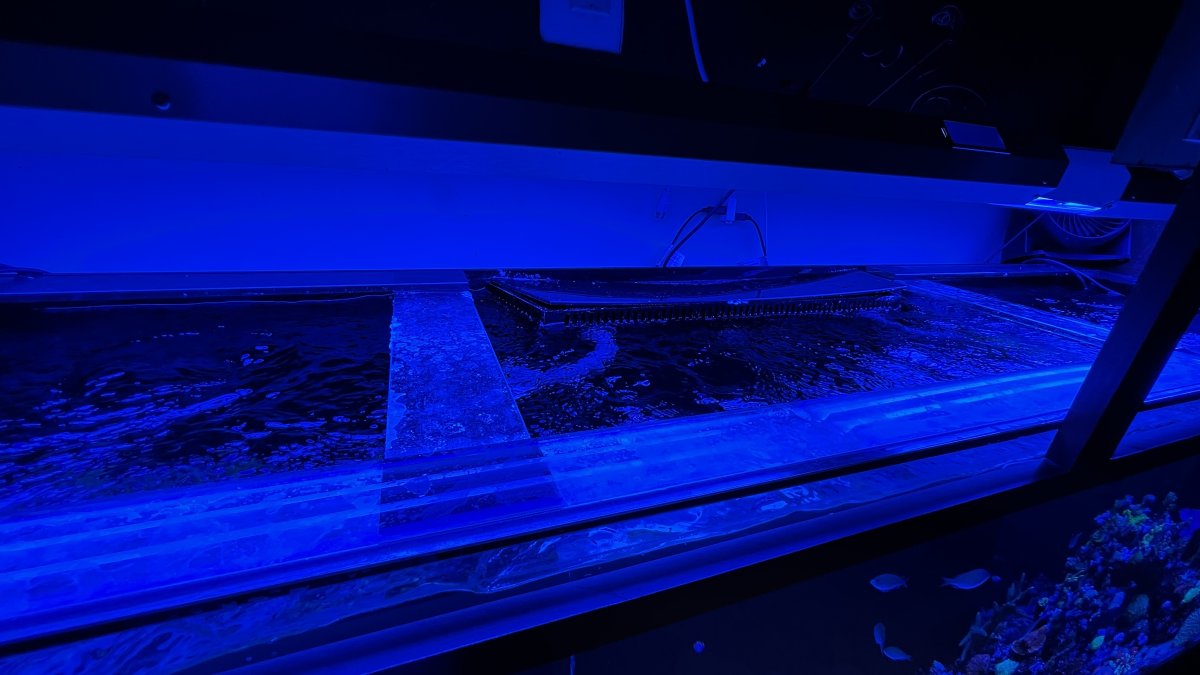

IMG_4919.jpeg
 
I agree that since it’s basically calcified dry salt going back in the water would be potentially harmful, so less would be better. I get quite a bit on the side points of the lid, so I just clean that regularly.
 
I agree that since it’s basically calcified dry salt going back in the water would be potentially harmful, so less would be better. I get quite a bit on the side points of the lid, so I just clean that regularly.
Yes. I underestimated when I said ”sad” to describe how the corals felt.

I think I’m pretty confident that I can trace RTN/STN when I added back a lot of salt creep at one time. The next day I had tissue recession. I don’t normally get STN unless I add back a lot of salt creep.
 
I've literally seen salt crystals from salt creep off of my lid drop down and land on one of my hammers and melt the polyps away like butter.

edit: it recovered fine
 
Yes. I underestimated when I said ”sad” to describe how the corals felt.

I think I’m pretty confident that I can trace RTN/STN when I added back a lot of salt creep at one time. The next day I had tissue recession. I don’t normally get STN unless I add back a lot of salt creep.
I almost killed a gorgeous chalice this way...
But I'm also curious about your original question which I believe was about salt creep damaging the silicone on the eurobrace, correct?
 
I almost killed a gorgeous chalice this way...
But I'm also curious about your original question which I believe was about salt creep damaging the silicone on the eurobrace, correct?
No. I didn’t say anything about damaging silicone.

I just wanted to have surface agitation to remove the surface scum, but I get salt creep build up on the eurobrace. The more salt creep buildup on the eurobrace, the more risk of it falling back in the tank.
 
No. I didn’t say anything about damaging silicone.

I just wanted to have surface agitation to remove the surface scum, but I get salt creep build up on the eurobrace. The more salt creep buildup on the eurobrace, the more risk of it falling back in the tank.
Oh, my mistake.
 
This is what the surface scum looks like (older video, but the scum is still the same without agitation):

It’s on the left and right sides.

 
So I should limit surface agitation then.

How do I get that junk into the overflows then? It just collects on the sides on top of the powerheads.
 
So I should limit surface agitation then.

How do I get that junk into the overflows then? It just collects on the sides on top of the powerheads.
Don’t change something big for something small. If everything is loving the strong flow at the top then taking that away could be problematic. You can just dial it down a tiny bit and clean more regularly. Don’t want to be stressing things for a non lethal pet peeve.
 
I had some salt creep from where I was cleaning the rim of my tank fall back into the tank and land on a torch coral. The torch immediately closed up completely and ended up dying.
I suspect the salt didn’t kill it, but I am convinced it didn’t help.
I now actively try not to drop any salt creep back into my tank.
 
Don’t change something big for something small. If everything is loving the strong flow at the top then taking that away could be problematic.
It’s the same flow. The only difference is that the power-heads aren’t pointing at the surface.
 
The scum on the surface is due to the direction/pattern of your surface agitation. I usually use the returns on central overflows and point them towards the back corners of the tank, but aimed at the surface. This way, the flow carries the stuff sitting on the surface away from the sides towards the front pane of the tank, and eventually backwards from the front into the overflow.

You don't want to limit surface agitation, that's important for gas exchange, but you don't want it so turbulent that you're getting riffles and bubbles popping at the surface, flinging saltwater everywhere for creep to form.
 

TOP 10 Trending Threads

WHAT DO YOU ALWAYS RUN OUT OF AT THE WORST TIME?

  • Salt mix

    Votes: 17 17.9%
  • Fish or coral food

    Votes: 5 5.3%
  • Test kits or reagents

    Votes: 10 10.5%
  • Filter media or replacement fleece

    Votes: 5 5.3%
  • RO/DI filters or supplies

    Votes: 15 15.8%
  • Fragging and repair supplies, like glue or epoxy

    Votes: 12 12.6%
  • I keep a backup of everything

    Votes: 24 25.3%
  • Other (Post in the comments)

    Votes: 7 7.4%
Back
Top
Home
Post thread…
Market
What's new