Most hardy butterflyfish ?

Paul B

10K Club member
View Badges
Joined
Nov 3, 2010
Messages
21,355
Reaction score
71,772
Location
Long Island NY
Rating - 0%
0   0   0
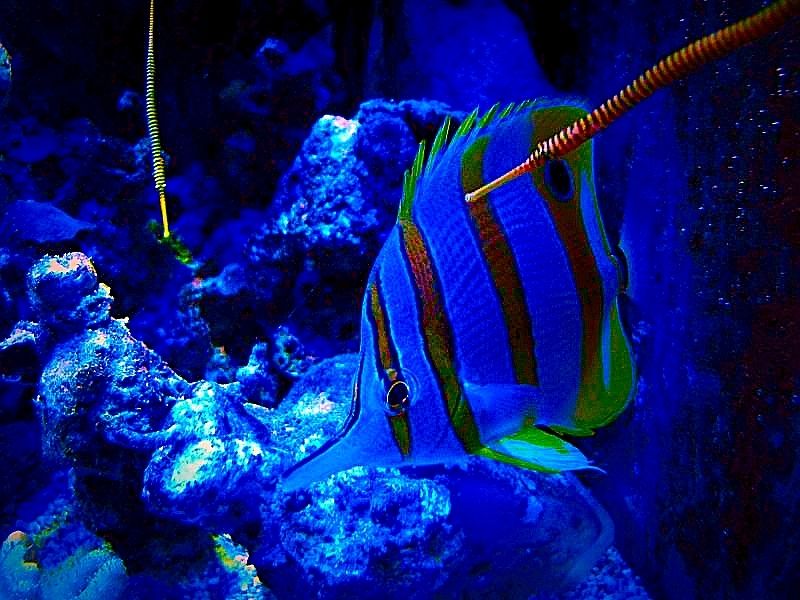
I find copperbands pretty easy as long as you feed them what they were designed to eat. In the sea they eat tiny worms and any small creature so feed them pieces of clam. LRS food and live whiteworms. They generally live for me about 10 years.

I find them slightly easier than long nose butterflies.
Most butterflies are a little more delicate than other fish.

 
Upvote 0

kboogie

Well-Known Member
View Badges
Joined
Aug 6, 2021
Messages
879
Reaction score
553
Location
Boynton Beach
Rating - 0%
0   0   0
Based on my experience from being in the business for almost a decade and as a hobbyist of over 35 years, here are some notable Butterflyfish grouped by difficulty to keep.

Easy - 80% to 95% success rate

Chaetodon auriga - Threadfin

Chaetodon lunula - Racoon

Heniochus acuminatus) - Black and White Heniochus

Hemitaurichthys polylepis- Pyramid


Medium - 50% to 80% success rate

Chaetodon collare - Pakistan Butterfly

Chaetodon falcula - Falcula

Chaetodon xanthurus - Pearlscale

Chaetodon Semilavartis - Golden Butterfly

Chaetodon tinkeri - Tinker’s

Chaetodon Mitratus - Indian Butterfly


Hard - Less than 50% success rate

Chelmon rostratus - Copperband aka Rent a Fish

Chaetodon meyeri - Meyer’s Butterfly

Chaetodon Lavartus - Orange Face Butterfly

Chaetodon Trifaciatus - Melon Butterfly

Chaetodon Melapterus - Arabian Butterfly

Having Copperband l is flex and people who have them say “it is so easy” when in reality the statistics don’t like. They are one of the hardest butterflies to keep.
 
Upvote 0

Paul B

10K Club member
View Badges
Joined
Nov 3, 2010
Messages
21,355
Reaction score
71,772
Location
Long Island NY
Rating - 0%
0   0   0
I just think many people don't feed Copperbands correctly or provide the right hiding places. They certainly are not the easiest fish to keep long term, but I find they live about 10 years for me. Not always of course.

But I feed them live worms and clams. Too many hobbiests try to feed them dry foods and pellets which they rarely eat. I also think many people quarantine or medicate them which they don't take to well.
Just my opinion of course and I have been keeping them continuously since the 70s.


Those other butterflies you listed are probably easier, I don't know because I have not kept all those butterflies so you would know better. 😎
 
Upvote 0

Jay Hemdal

10K Club member
View Badges
Joined
Jul 31, 2020
Messages
37,761
Reaction score
37,629
Location
Dundee, MI
Rating - 0%
0   0   0
Hi Team,

I am interested to hear which butterflyfish you guys believe is the easiest to successfully keep in the home aquarium ?

While there are certainly inherently more delicate species, one thing that is overlooked is the SOURCE of the fish. I would have no major misgivings about buying a copperband from Australia, but I’d never get one from SE Asia.

 
Upvote 0

steveschuerger

Avowed Goni freak
View Badges
Joined
Dec 11, 2021
Messages
23,733
Reaction score
55,329
Location
Beantown
Rating - 0%
0   0   0
I loved my copperband. I had success probably due to the fact if started by eating all my little tubed duster worms that came with the live rock. In less than 10 days it was eating the frozen smorgasbord that I fed everybody. Very good water.
1768222821698.jpeg
 
Upvote 0

Paul B

10K Club member
View Badges
Joined
Nov 3, 2010
Messages
21,355
Reaction score
71,772
Location
Long Island NY
Rating - 0%
0   0   0
I would have no major misgivings about buying a copperband from Australia, but I’d never get one from SE Asia.
I agree. I try to not buy anything from SE Asia. I spent a year in the jungle there and was not impressed by anything. 🙄

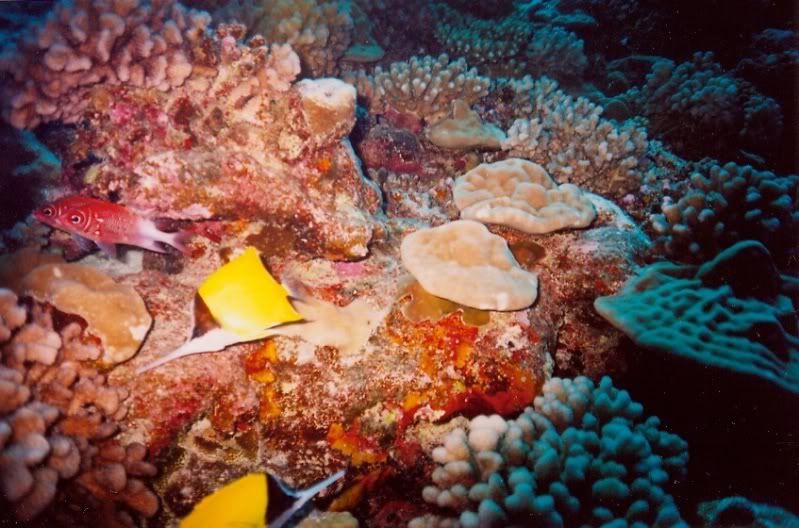
I took this is Bora Bora. Not exactly a Copperband, but close. And not exactly Australia, but also close. 😎

I have dove in Australia but that was in 1971 and I was on R&R so I didn't have a camera. 😀


Look at how much longer their "snout" is compared to the ones we normally buy.


Last edited:
Upvote 0

larrysaltisfun

Well-Known Member
View Badges
Joined
Apr 5, 2025
Messages
582
Reaction score
338
Location
outer banks NC
Rating - 0%
0   0   0
This is an extremely useful thread. Wish I had read it before I bought my first and probably last copper band back during Thanksgiving. I knew it was considered “expert only. “ Lasted about seven weeks.

Died eight days after putting into my display tank . one day he was swimming with everybody the next day he died suddenly….. he was thin and my powder brown might’ve kicked his tail one too many times.

Now I know the difference between peaceful and semi aggressive species there is a critical difference.

Thank you, KB for putting together that list of easiest to hardest. Didn’t realize I started with the hardest. had him in medicated quarantine which as stated by Paul B he did not like. I fed him clams mysis and Rods. I think looking back I should not have attempted this fish without a plethora of microfauna and and worms present.

I got him a copper band feeder. I did everything correctly EXCEPT provide the appropriate environment for him. The critical step that was missing.


you get so attached to them cutest little things. I followed everybody’s advice. Finally, I Didn’t realize there was difference in hardiness based on where they are harvested from, thank you Jay Hemdal for that information.
 
Upvote 0
OP
OP
A

Aussie_Saltwater

Community Member
View Badges
Joined
Nov 30, 2020
Messages
61
Reaction score
48
Location
Melbourne
Rating - 0%
0   0   0
Based on my experience from being in the business for almost a decade and as a hobbyist of over 35 years, here are some notable Butterflyfish grouped by difficulty to keep.

Easy - 80% to 95% success rate

Chaetodon auriga - Threadfin

Chaetodon lunula - Racoon

Heniochus acuminatus) - Black and White Heniochus

Hemitaurichthys polylepis- Pyramid


Medium - 50% to 80% success rate

Chaetodon collare - Pakistan Butterfly

Chaetodon falcula - Falcula

Chaetodon xanthurus - Pearlscale

Chaetodon Semilavartis - Golden Butterfly

Chaetodon tinkeri - Tinker’s

Chaetodon Mitratus - Indian Butterfly
I

Hard - Less than 50% success rate

Chelmon rostratus - Copperband aka Rent a Fish

Chaetodon meyeri - Meyer’s Butterfly

Chaetodon Lavartus - Orange Face Butterfly

Chaetodon Trifaciatus - Melon Butterfly

Chaetodon Melapterus - Arabian Butterfly

Having Copperband l is flex and people who have them say “it is so easy” when in reality the statistics don’t like. They are one of the hardest butterflies to keep.

While there are certainly inherently more delicate species, one thing that is overlooked is the SOURCE of the fish. I would have no major misgivings about buying a copperband from Australia, but I’d never get one from SE Asia.


Would the Klein's Butterfly be a species with a higher success rate ?
 
Upvote 0
OP
OP
A

Aussie_Saltwater

Community Member
View Badges
Joined
Nov 30, 2020
Messages
61
Reaction score
48
Location
Melbourne
Rating - 0%
0   0   0
Based on my experience from being in the business for almost a decade and as a hobbyist of over 35 years, here are some notable Butterflyfish grouped by difficulty to keep.

Easy - 80% to 95% success rate

Chaetodon auriga - Threadfin

Chaetodon lunula - Racoon

Heniochus acuminatus) - Black and White Heniochus

Hemitaurichthys polylepis- Pyramid


Medium - 50% to 80% success rate

Chaetodon collare - Pakistan Butterfly

Chaetodon falcula - Falcula

Chaetodon xanthurus - Pearlscale

Chaetodon Semilavartis - Golden Butterfly

Chaetodon tinkeri - Tinker’s

Chaetodon Mitratus - Indian Butterfly
I

Hard - Less than 50% success rate

Chelmon rostratus - Copperband aka Rent a Fish

Chaetodon meyeri - Meyer’s Butterfly

Chaetodon Lavartus - Orange Face Butterfly

Chaetodon Trifaciatus - Melon Butterfly

Chaetodon Melapterus - Arabian Butterfly

Having Copperband l is flex and people who have them say “it is so easy” when in reality the statistics don’t like. They are one of the hardest butterflies to keep.

While there are certainly inherently more delicate species, one thing that is overlooked is the SOURCE of the fish. I would have no major misgivings about buying a copperband from Australia, but I’d never get one from SE Asia.


Would the Klein's Butterfly be a species with a higher success rate ?
 
Upvote 0

Jay Hemdal

10K Club member
View Badges
Joined
Jul 31, 2020
Messages
37,761
Reaction score
37,629
Location
Dundee, MI
Rating - 0%
0   0   0
Would the Klein's Butterfly be a species with a higher success rate ?

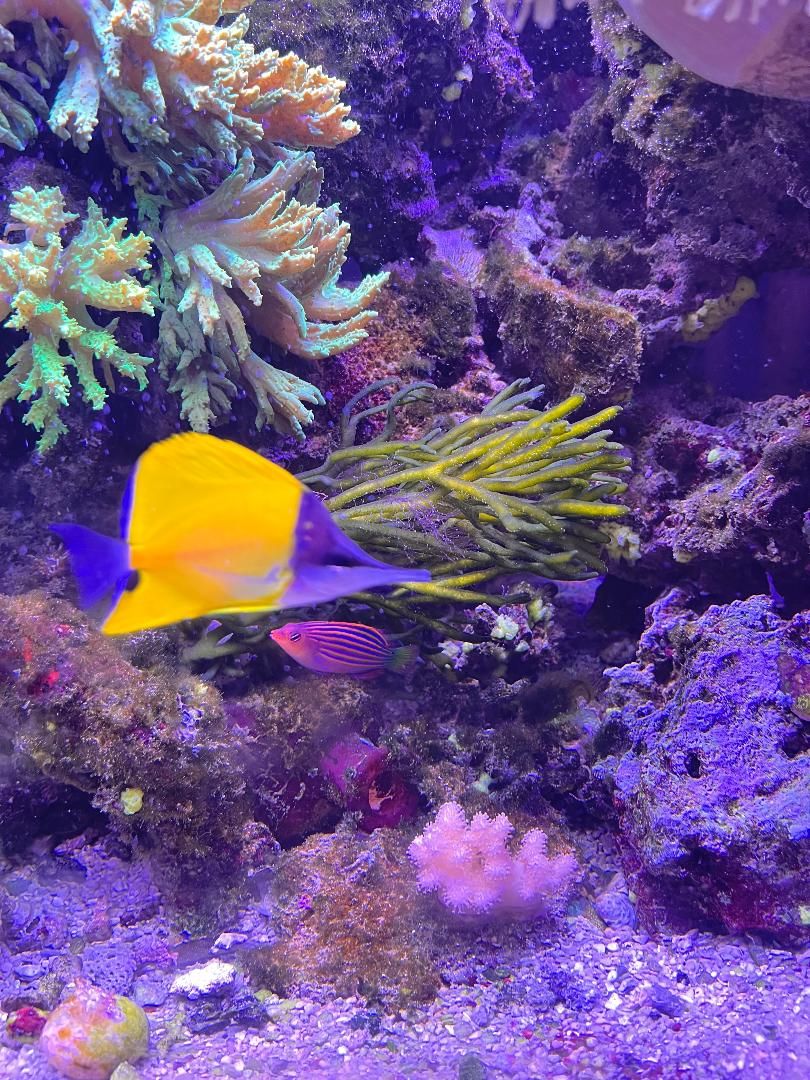
Klein's and the related Tahiti butterflyfish are two of the hardiest butterflyfish. They definitely are not reef safe though.
 
Upvote 0

Isaac Alves

2500 Club Member
View Badges
Joined
Nov 22, 2015
Messages
2,817
Reaction score
1,813
Location
Rancho Santa Margarita, CA
Rating - 0%
0   0   0
I've owned two Klein's butterfly fish in my reefing journey...I lost one during a tank transfer crash. But both times the fish were super hardy, and very aggressive eaters -- which works out in a tank with higher flow and larger tangs. The second, which I got to replace the one I lost is still awesome and kicking.

NOTE --- I did purchase both from Fishotel so I'm getting a very healthy fish that has been prophylactically treated for disease, worms and conditioning.
 
Upvote 0

RobertK

Well-Known Member
View Badges
Joined
Sep 6, 2011
Messages
661
Reaction score
723
Location
NorCal
Rating - 0%
0   0   0
What about biota’s milletseed? I would think captive raised would be easier.
I was wondering the same thing. Biota has it listed in their "fish only tanks" section, but in the description of the fish they say it is "reef safe with caution". Anyone here have one in a reef tank?
 
Upvote 0

Fishfreak2009

Follow Your Passions!
View Badges
Joined
Nov 2, 2016
Messages
2,688
Reaction score
5,619
Location
Mount Morris Michigan
Rating - 0%
0   0   0
So long as you acquire initially healthy specimens in good body condition, I've found Chaetodon auriga, Chaetodon lunula, Chaetodon ulietensis, Chaetodon kleinii, Chaetodon miliaris, Heniochus acuminatus, and Heniochus diphreutes to be the easiest species long-term. My 2 juvenile (2") auriga butterflies actively compete with a 12" maculosus angel and a few tangs, eating frozen right from my fingers.

However, again, many other species do fine long-term as well as long as you acquire fish in good shape to start with and don't put them in tanks where they'll be bullied or outcompeted. Chaetodon citrinellus, C. punctatofasciatus, C. pelewensis, C. decussatus, C. semilarvatus, any of the Roaps subgenus, Forcipiger, C. xanthurus, C. mertensii, C. madagaskariensis, C. collare, and dozens of others will do fine long-term in captivity if a fish that's in good shape initially is purchased.

Heck, even an initially healthy Copperband (good luck finding one though) usually adjusts and does just fine. Unfortunately many butterflies are starved and shipped in poor condition. Fish with broken fin spines, missing scales in patches, torn fins, obvious ectoparasites, muscle-mass loss (especially behind the eyes), and mouth trauma (often times pieces of jaws are broken on these guys, especially copperbands) are not going to survive.

Where I'm located in Southeast Michigan, between about 7 fish shops within 2 hrs of me probably 95% of the butterflies I see aren't gonna survive past 1 month. Many arrive already severely malnourished at the pet shop, are immediately dumped in an almost bare tank with many other more aggressive fish, and fed sparingly to help keep the store tanks clean. I've found I have better luck locally using fish within 24 hrs of arrival from the wholesaler, or even having the store special-order me a butterfly as soon as it's on the wholesaler availability list, minimizing time spent at the wholesaler and retailer. Actually have one local shop trying to get me a few butterflies from Quality Marine in the next week or 3.

And avoid the vast majority of primarily corallivorous species. The melons (trifasciatus, lunulatus, melapterus), C. trifascialis, C. larvatus, C. octotaenia, C. meyeri, C. ornatissimus, and plenty of others should be left on the reef. VERY few people succeed with them more than a month, and 99.9999% of the corallivorous butterflies die from starvation and/or disease. As the late Robert Fenner always said, they are the "cut flowers" of the aquarium trade. They're pretty and relatively inexpensive compared to many other fish, but don't survive, and so are treated as disposable by some in the hobby unfortunately.

 
Upvote 0

kboogie

Well-Known Member
View Badges
Joined
Aug 6, 2021
Messages
879
Reaction score
553
Location
Boynton Beach
Rating - 0%
0   0   0
What about biota’s milletseed? I would think captive raised would be easier.
They are from deeper water where they eat plankton, sponges, and other non-photosynthetic inverts.

They do have a higher success rate.

Biota fish have a high success rate because they grow up eating prepared foods.
 
Upvote 0

RobertK

Well-Known Member
View Badges
Joined
Sep 6, 2011
Messages
661
Reaction score
723
Location
NorCal
Rating - 0%
0   0   0
They are from deeper water where they eat plankton, sponges, and other non-photosynthetic inverts.

They do have a higher success rate.

Biota fish have a high success rate because they grow up eating prepared foods.
Have you kept one in a reef tank?
 
Upvote 0

TOP 10 Trending Threads

HOW DO YOU ADJUST YOUR CUC AS ALGAE DISAPPEARS?

  • Capture and re-home CUC

    Votes: 6 6.9%
  • Increase white light/hours in tank to spur algae growth to feed CUC

    Votes: 6 6.9%
  • Feed nori to support CUC

    Votes: 31 35.6%
  • Feed herbivore pellets to support CUC

    Votes: 27 31.0%
  • Allow attrition to balance CUC and algae

    Votes: 40 46.0%
  • Provide macro algae to feed CUC

    Votes: 6 6.9%
  • Introduce CUC predators

    Votes: 1 1.1%
  • Other (please explain)

    Votes: 7 8.0%
Back
Top