Sand for DIY rock mold

  • Thread starter Thread starter Nick Rose
  • Start date Start date
  • Tagged users Tagged users None

Nick Rose

Active Member
View Badges
Joined
Sep 27, 2018
Messages
454
Reaction score
208
Location
San Mateo, Ca
What state or country do you live in
California
Rating - 0%
0   0   0
Is it ok to use sand for the mold that the DIY rock mixer goes into? When I took the rocks out and cleaned the sand off some of it is still on the rock. Will this cause any issues when they are ready to go in the tank after the curing/kuring process?


This is the sand I’m using for the mold.
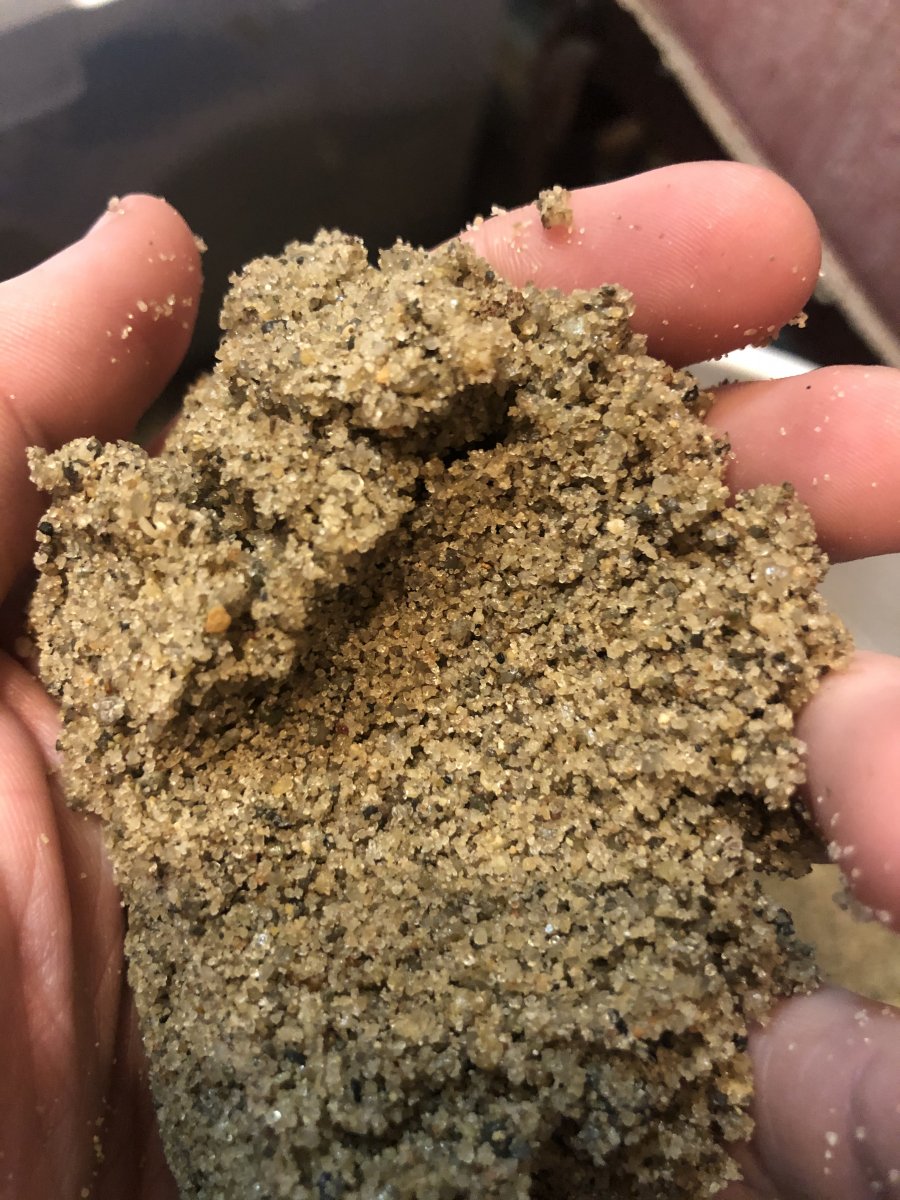
014E1FA4-53AA-4EE6-81A2-F00C8F548A56.jpeg
 
What kind of sand is it? If its silica based then its possible it can cause some issues if it contains and impurities that are harmful to reef inhabitants.
 
I don’t know if it’s silica based. I’ll have to contact them to see if it is. I’ll just have to work harder to clean the grains off the rock.
Is there any other sand that can be used? The reason I went with this was that it only cost $5 per 1cuft bag.
https://store.lyngsogarden.com/products/-2-olympia-sand-581.html
 
I don’t know if it’s silica based. I’ll have to contact them to see if it is. I’ll just have to work harder to clean the grains off the rock.
Is there any other sand that can be used? The reason I went with this was that it only cost $5 per 1cuft bag.
https://store.lyngsogarden.com/products/-2-olympia-sand-581.html

If you put some of that sand in vinegar you can see if it bubbles. If it does not bubble then there is a good chance its a silica based sand. Unfortunately there is no way to know if it contains impurities that are harmful to reef inhabitants without testing it. The only sand I would say could be trusted would be a reef sand but it would not be as cost effective.
 
I'm not convinced that silica sand causes issues. I used it long ago with no problems as have others. If silica were an issue, then wouldn't tanks made of glass be a no-go? Silicates are what can cause problems and they're not the same as silica. However, an aragonite sand is the best way to go to remove all doubt.
 
I did get a reply from Lyngso and it is Silica. Don’t know if this makes a difference but they said it is washed sand.
 
Silica and silicates are not the same thing by they absolutely go hand in hand. There is a reason people use argonite sand in there reef tanks and not play sand.

From that internet thing...

Silicon dioxide (SiO2) sand and fused quartz are silicas. Silicate minerals constitute about 90 percent of the Earth's crust. Silicates are anions containing silicon and oxygen (for example, orthosilicate, SiO4-4), and several are usually slightly soluble in water, so silicate salts are commonly present in water.

Its important to remember that sand in the ocean is not pulverized rock, its parrot fish poop from eating corals
 

HOW MUCH DOES A FISH’S FEEDING REQUIREMENTS AFFECT YOUR STOCKING DECISIONS?

  • A lot! - I avoid fish that require frequent or specialized feeding

    Votes: 12 29.3%
  • Quite a bit, but an automatic feeder can change my answer

    Votes: 6 14.6%
  • It depends on whether my nutrient export can handle it

    Votes: 6 14.6%
  • It depends on how badly I want the fish

    Votes: 10 24.4%
  • Not much. I’m willing to adjust my routine

    Votes: 9 22.0%
  • Not at all. Feeding demands don’t limit my stocking choices

    Votes: 7 17.1%
  • I usually learn about the demanding feeding schedule after buying the fish!

    Votes: 2 4.9%
  • I haven’t really considered this before

    Votes: 3 7.3%
  • Something else (see my comments in the thread)

    Votes: 1 2.4%
Back
Top
Home
Post thread…
Market
What's new