





- Joined
- Aug 7, 2025
- Messages
- 130
- Reaction score
- 63
- Location
- the void
- What state or country do you live in
- Other International
Photos of nems at very bottom of post.
My background: 15 years reefkeeping and 33 years total saltwater aquarium experience. I consider myself a semi-advanced aquarist (but always learning) with a modest experience in keeping anemones (LTA + BTA mostly). I'd really like to keep feedback here corralled to advanced anemone keepers and those who have actually experienced a similar issue.
Affected Anemones: 4 x Bubble Tipped Anemones ( if it matters - 2 x Colorado Sunbursts, 1 x Nexus Burst, 1 x Holy Grail). CSB have been in tank for ~ 2 years. Nexus + HG added to tank ~ 90 days ago. There are no other anemones in the tank.
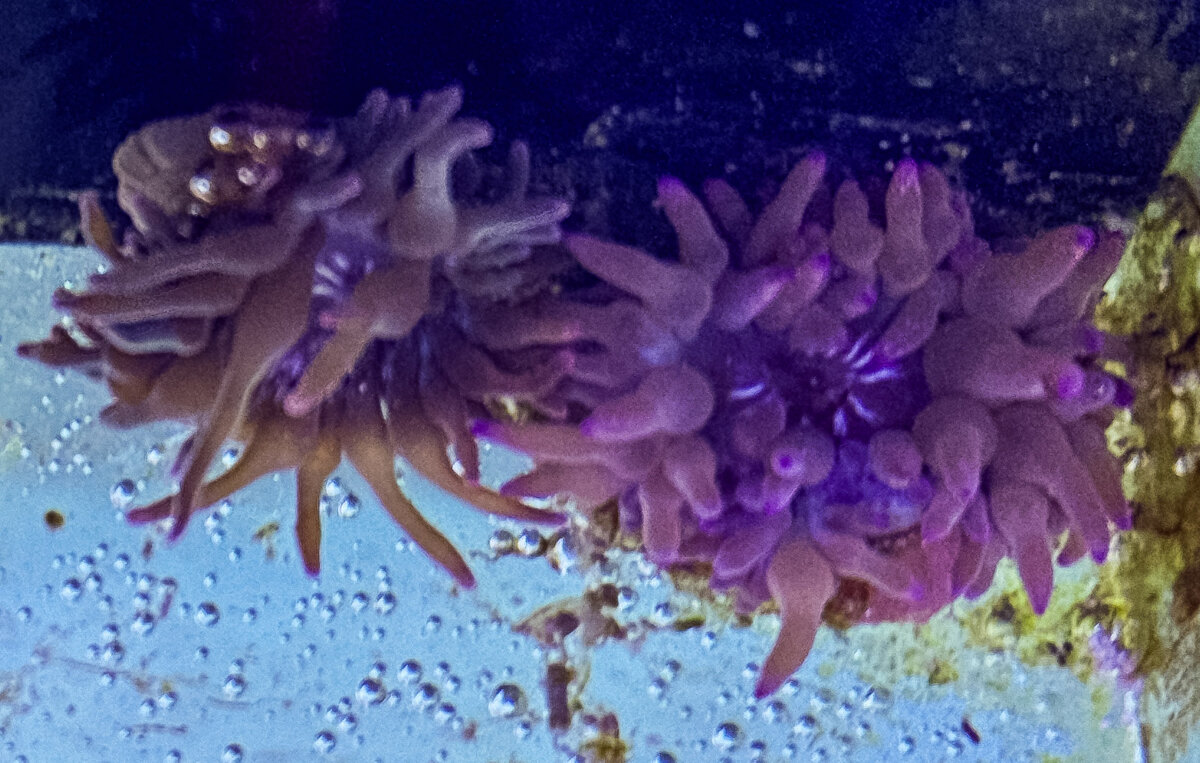
Problem/Symptoms: Over the past 2 weeks all anemones have lost considerable color and size, and continue to lose color and size. 2 x CSB have protruding mouths/stomachs. The others do not. Prior to this issue, the CSB's were ~ 4-5 inches in diameter when fully inflated, colorful, responsive, sticky, eating. NB + HG ~ 2.0-2.5 inches in diameter fully inflated, responsive, sticky, but never really 'thriving'. Currently CSBs are ~ 2.5 inches in diameter in photos and NB+HG are ~ 1.0 inch.
Aquarium Details: Barebottom 150 gal SPS Reef, appx 1.5 years old. Just started adding SPS and all are colorful, healthy. Alk is steady ~ 8.0 dKH (Hanna) and PO4 currently ~ 0.04 ppm (Hanna ULR). 'Full Spectrum' (Radion Pros, all channels 100%) lighting - anemones receiving ~ 300 ish PAR. Dosing w/ A4R to maintain Alkalinty. Skimmer (currently not running), filter sock, passive GAC use. Don't know if it's important but previously I have used Trisodium Phosphate to maintain detectable PO4 but the anemones really seem to dislike it. Any time I dosed it previously, the anemones would shrink up.
Possible Factors + Timeline:
- 90 days: Added Holy Grail and Nexus Burst to Aquarium
- 14 days: Dosed Interceptor prophylactically at 23 mg / 75 gal concentration. Turned off skimmer. Removed GAC.
- 13 days: Alk increase 8.0 -> 9.6 + PO4 decrease from 0.04 -> 0.00 (both, overnight). Took immediate action by adjusting A4R dosing and using ReefRoids (dosed directly into filter sock) to increase PO4. 5 out of the 60 or-so corals exhibiting paleness and retracted polyps. All other corals unaffected. Returned skimmer to service, added 1/4 cup 0.8 ROX carbon. Decreased lighting intensity from 75% -> 70%
- 12 days: Dinos appear (have not confirmed ID, but can if needed to help diagnose). Continue to dose ReefRoids.
- 11 days: Take skimmer off-line to aid in increasing PO4.
- 10 days: Alk back to 8.0 (demand continues to increase, almost daily) and PO4 back to ~ 0.04.
Today: Continue to dose ReefRoids to maintain PO4 above 0.03. Skimmer still off-line. Dinos still maintain a moderate presence but are (very) slowly going away. The Dinos are bad enough were I feel I need to gently 'turkey baste' the bases of some corals a couple times a day but no major irritation or die-off due to being overwhelmed by them.
My gut tells me a bacterial issue (exacerbated increased PO4 and PO4 dosing) and initial stress from the Alk increase, PO4 decrease, and possibly the Interceptor treatment itself. But, I didn't want to jump right into Cipro without getting feedback from some pro's first. I have access to a QT if necessary. I'd be grateful ( @OrionN and others w/ similar experience) if you would be willing to share your thoughts and recommendations on both diagnosis and treatment.
Thanks in advance.
Photos As Of This Evening: (colors in photos are close to actual)
2 x Colorado Sunbursts

Nexus Burst (Left) and Holy Grail (Right)
My background: 15 years reefkeeping and 33 years total saltwater aquarium experience. I consider myself a semi-advanced aquarist (but always learning) with a modest experience in keeping anemones (LTA + BTA mostly). I'd really like to keep feedback here corralled to advanced anemone keepers and those who have actually experienced a similar issue.
Affected Anemones: 4 x Bubble Tipped Anemones ( if it matters - 2 x Colorado Sunbursts, 1 x Nexus Burst, 1 x Holy Grail). CSB have been in tank for ~ 2 years. Nexus + HG added to tank ~ 90 days ago. There are no other anemones in the tank.
Problem/Symptoms: Over the past 2 weeks all anemones have lost considerable color and size, and continue to lose color and size. 2 x CSB have protruding mouths/stomachs. The others do not. Prior to this issue, the CSB's were ~ 4-5 inches in diameter when fully inflated, colorful, responsive, sticky, eating. NB + HG ~ 2.0-2.5 inches in diameter fully inflated, responsive, sticky, but never really 'thriving'. Currently CSBs are ~ 2.5 inches in diameter in photos and NB+HG are ~ 1.0 inch.
Aquarium Details: Barebottom 150 gal SPS Reef, appx 1.5 years old. Just started adding SPS and all are colorful, healthy. Alk is steady ~ 8.0 dKH (Hanna) and PO4 currently ~ 0.04 ppm (Hanna ULR). 'Full Spectrum' (Radion Pros, all channels 100%) lighting - anemones receiving ~ 300 ish PAR. Dosing w/ A4R to maintain Alkalinty. Skimmer (currently not running), filter sock, passive GAC use. Don't know if it's important but previously I have used Trisodium Phosphate to maintain detectable PO4 but the anemones really seem to dislike it. Any time I dosed it previously, the anemones would shrink up.
Possible Factors + Timeline:
- 90 days: Added Holy Grail and Nexus Burst to Aquarium
- 14 days: Dosed Interceptor prophylactically at 23 mg / 75 gal concentration. Turned off skimmer. Removed GAC.
- 13 days: Alk increase 8.0 -> 9.6 + PO4 decrease from 0.04 -> 0.00 (both, overnight). Took immediate action by adjusting A4R dosing and using ReefRoids (dosed directly into filter sock) to increase PO4. 5 out of the 60 or-so corals exhibiting paleness and retracted polyps. All other corals unaffected. Returned skimmer to service, added 1/4 cup 0.8 ROX carbon. Decreased lighting intensity from 75% -> 70%
- 12 days: Dinos appear (have not confirmed ID, but can if needed to help diagnose). Continue to dose ReefRoids.
- 11 days: Take skimmer off-line to aid in increasing PO4.
- 10 days: Alk back to 8.0 (demand continues to increase, almost daily) and PO4 back to ~ 0.04.
Today: Continue to dose ReefRoids to maintain PO4 above 0.03. Skimmer still off-line. Dinos still maintain a moderate presence but are (very) slowly going away. The Dinos are bad enough were I feel I need to gently 'turkey baste' the bases of some corals a couple times a day but no major irritation or die-off due to being overwhelmed by them.
My gut tells me a bacterial issue (exacerbated increased PO4 and PO4 dosing) and initial stress from the Alk increase, PO4 decrease, and possibly the Interceptor treatment itself. But, I didn't want to jump right into Cipro without getting feedback from some pro's first. I have access to a QT if necessary. I'd be grateful ( @OrionN and others w/ similar experience) if you would be willing to share your thoughts and recommendations on both diagnosis and treatment.
Thanks in advance.
Photos As Of This Evening: (colors in photos are close to actual)
2 x Colorado Sunbursts
Nexus Burst (Left) and Holy Grail (Right)
Last edited:



 ). I'm testing Alk and PO4 daily and NO3 once or twice a week. I'll report back with parameters and changes with the nems.














