



I was talking to a customer over the weekend, and he was excitedly relating to me the plans for his newest aquarium, a 300 gallon mega reef display. He told me all about the cool lighting, the crazy pumps, the fancy gear and water change systems and all kinds of cool technical aspects of his upcoming mega-budget super reef. As I listened, I couldn’t help but reflect that the basis for the phone call was an issue he was having with keeping some very basic coral alive. In fact, the customer said that almost everything he bought for his 29 gallon reef died within a few weeks after getting the animals in his system. He performed “some†water changes, and tested “some†parameters (most of his water parameters were “perfectâ€, according to him…oh boy…)

Are you sure you're ready for a larger tank?
And this guy was about to embark on a five-figure, mutli-hundred gallon mega reef system. Does he have a clue at all, I thought? I mean, his assumption was that his troubles with corals would simply vanish if he built a larger reef. Magically, all of the skills and experience he lacked in 29 gallons would be remedied by increasing his reef by 271 gallons….
I did what any responsible seasoned reefer would do: After I told him how cool all his gear sounded, I asked him if he was up to the challenge. Well, the retort was a bit angry, actually. I mean, the guy was ready to drop around 25 grand on the tank, so therefore, he felt that this meant he knew what he was doing. “I’ve been researching this reef for MONTHS,†he proudly retorted.
I was like, “Seroiusly? But you can’t keep a darned coral alive?â€
Somehow, in his head, he felt like he felt like he “paid his dues†with his smaller “reefâ€, and that he was ready to go “to the next level†(his exact words) with this sparkling new mega reef. I did my beast to gently dissuade him fro making such a huge commitment with his limited experience and skills. I’ve seen this type of looming disaster before- we all have…And the ensuing train wreck that is likely to emerge will not be pretty. It will suck mostly for the animals that will die because of his incompetence and arrogance. It will suck for the people that built the fine quality components that he will no doubt misapply. It will especially suck for him, because he will not get the joy you get from progressing naturally in the hobby and building carefully upon successes. It will suck for the hobby in general, because, although he’ll add to the hobby economy for a short time, his failure will cost it in the long-term. It will NOT suck for the predators on the forums that will snatch up his equipment at volume prices when he calls it quits and sells everything at a huge loss.

"Houston, we have a problem..."
I may be a a bit cynical, but I’ve been a round the block a few times, and I can smell a disaster when it is looming.
In the marine aquarium hobby, much like in life, we're often led to believe that "bigger is better." A large house is better for your growing family! The large bottle of pasta sauce will make 3 nights of lasagna! And of course, the large can of paint is a better buy, right? Well, more often than not, the reality soon sets in: The larger house means a larger property tax bill, the large bottle of pasta sauce goes bad after a week, and that large can of paint hardens to uselessness before you ever get halfway through it!
Okay, our aquariums are not bottles of pasta sauce or cans of paint, yet there are some useful analogies we can draw from the comparisons. Much has been written abut how larger aquariums are a better way to go for most hobbyists. But are they really the best for everyone?
Let me start of by stating that I have nothing against large aquariums. In fact, until very recently, the smallest aquarium I've kept in the past five years is 150 gallons. Before I blast the whole institution of "Bigger Aquariums Are Better", and invoke the ire of everyone who owns a deluxe aquarium, let's look at the true advantages of larger aquariums.

Why buy a pint when you can by a case- or two! The "Costco approach" to reef keeping doesn't work for everyone!
Let's define what I call a "large aquarium". As far as this "fish geek" is concerned, a large aquarium is anything over 100 gallons. Or you could look at it from a more practical standpoint: "large" is any size of aquarium that will result in chiropractic bills if less than three people attempt to lift it. "Large" is any aquarium that will result in weather patterns forming in your living room as a result of the moisture. "Large" is'¦well- you get the picture.
Just what are the advantages of keeping larger aquariums? To begin with, larger aquariums aquariums do offer a more stable environment. Larger water volumes retain temperature better (acting as heat sinks), hold more oxygen, maintain chemical balance longer, and dilute metabolic waste easier, by virtue of volume (provided the aquarium is not overcrowded, and that common-sense husbandry techniques are employed).
Within reason, larger volumes of water (especially of greater surface area dimensions) allow you to keep greater numbers of fishes, or larger specimens. Again, common sense must prevail. If your fishy "career" includes a legacy of overcrowded 50 gallon tanks, there's a really good chance that you'll repeat the same thing with your 200 gallon aquarium. It may take a little longer (and cost a lot more), but it happens.
Of course, larger aquariums provide more space to develop dramatic aquascaping schemes. You can utilize those huge pieces of live rock that look absurd in smaller aquariums. You could actually build up a 6 inch sandbed (sorry, bare-bottom fans) and still have room for rocks, water, and livestock.
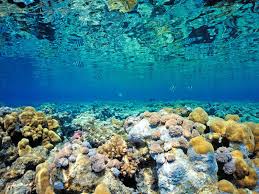
"Go big or go home...right?"
Finally, there is the topic of aesthetics. A large aquarium can become a dramatic focal point in the room in which it is situated. Relaxing on your comfortable couch in front of that enormous tank stocked with colorful fishes and corals is an activity that never gets old.
Yep- big tanks are pretty cool. They're also expensive to purchase. And they're a bit tougher to work with. And they cost more to operate. And they take longer to stock. Wait...where am I going with this?
All of this seemingly negative talk about the challenges of setting up a large aquarium is not presented to discourage you from setting one up. However, it is presented to give you a sort of "reality check" as you contemplate a large system. It's easy to fantasize about the huge aquarium that you're going to build when you win the lottery. It's quite another to actually set it up if you're of more modest means. In reality, it's usually necessary to compromise somewhat based on budget, space, time, etc.
They became a big part of your life, just like a dog, cat, or a child (I can't believe I'm putting all of them in the same sentence, but you get the idea). You don't just fire 'em up and forget about 'em.
Remember, despite what you might see and hear, having a large aquarium does not brand you as a "success" in our hobby, any more than maintaining a smaller system brands you as a novice. It's not like you crossed over some imaginary barrier and arrived as a "serious" hobbyist. Success in the hobby is about creating and maintaining a vibrant, healthy aquarium, regardless of size, for the long term growth and prosperity of its inhabitants.
Yes, large aquariums are impressive. But I've seen plenty of large aquariums that were downright unremarkable (in fact, I've set up a few, myself). Many hobbyists set up huge systems as the "next phase" in their aquarium career, and some end in disappointment- or even disaster. If you're not able to master the art and science of aquarium keeping with a small system, a large tank will likely not be any different for you. Think before you leap.
Large aquariums can be visually arresting, beneficial to their inhabitants, and just generally add a new dimension of fun to your hobby. However, the time, money and commitment to maintain them are a serious consideration. Keeping a large aquarium is not an endeavor that you enter into lightly.
Sure, I'm preaching to the choir here, but you'd be surprised how often seemingly solid aquarists literally go off the deep end and chart a course for hobby destruction.
Bigger isn't always better. It's just bigger.

Joe Yaiullo Still has to scrape algae..and it's not quite as easy in a 20,000 gallon reef, huh? Think about it.
So, before you make that leap, please PLEASE do a reality check and, if you're not certain if your up for the challenge...wait. There is no "law" that says you have to have a humongous tank after 2, 3- or even 27 years in the hobby. Like everything else, be yourself, do it YOUR way, and enjoy!
Which now begs the question....Who has made the jump to a huge tank, and what were the biggest surprises you've had along the way. What were the most pleasant, and unpleasant aspects of the transition...Share, so that we can ll benefit from your experience!
Until next time.
Stay Wet,
Scott Fellman
Unique Corals
Are you sure you're ready for a larger tank?
And this guy was about to embark on a five-figure, mutli-hundred gallon mega reef system. Does he have a clue at all, I thought? I mean, his assumption was that his troubles with corals would simply vanish if he built a larger reef. Magically, all of the skills and experience he lacked in 29 gallons would be remedied by increasing his reef by 271 gallons….
I did what any responsible seasoned reefer would do: After I told him how cool all his gear sounded, I asked him if he was up to the challenge. Well, the retort was a bit angry, actually. I mean, the guy was ready to drop around 25 grand on the tank, so therefore, he felt that this meant he knew what he was doing. “I’ve been researching this reef for MONTHS,†he proudly retorted.
I was like, “Seroiusly? But you can’t keep a darned coral alive?â€
Somehow, in his head, he felt like he felt like he “paid his dues†with his smaller “reefâ€, and that he was ready to go “to the next level†(his exact words) with this sparkling new mega reef. I did my beast to gently dissuade him fro making such a huge commitment with his limited experience and skills. I’ve seen this type of looming disaster before- we all have…And the ensuing train wreck that is likely to emerge will not be pretty. It will suck mostly for the animals that will die because of his incompetence and arrogance. It will suck for the people that built the fine quality components that he will no doubt misapply. It will especially suck for him, because he will not get the joy you get from progressing naturally in the hobby and building carefully upon successes. It will suck for the hobby in general, because, although he’ll add to the hobby economy for a short time, his failure will cost it in the long-term. It will NOT suck for the predators on the forums that will snatch up his equipment at volume prices when he calls it quits and sells everything at a huge loss.
"Houston, we have a problem..."
I may be a a bit cynical, but I’ve been a round the block a few times, and I can smell a disaster when it is looming.
In the marine aquarium hobby, much like in life, we're often led to believe that "bigger is better." A large house is better for your growing family! The large bottle of pasta sauce will make 3 nights of lasagna! And of course, the large can of paint is a better buy, right? Well, more often than not, the reality soon sets in: The larger house means a larger property tax bill, the large bottle of pasta sauce goes bad after a week, and that large can of paint hardens to uselessness before you ever get halfway through it!
Okay, our aquariums are not bottles of pasta sauce or cans of paint, yet there are some useful analogies we can draw from the comparisons. Much has been written abut how larger aquariums are a better way to go for most hobbyists. But are they really the best for everyone?
Let me start of by stating that I have nothing against large aquariums. In fact, until very recently, the smallest aquarium I've kept in the past five years is 150 gallons. Before I blast the whole institution of "Bigger Aquariums Are Better", and invoke the ire of everyone who owns a deluxe aquarium, let's look at the true advantages of larger aquariums.
Why buy a pint when you can by a case- or two! The "Costco approach" to reef keeping doesn't work for everyone!
Let's define what I call a "large aquarium". As far as this "fish geek" is concerned, a large aquarium is anything over 100 gallons. Or you could look at it from a more practical standpoint: "large" is any size of aquarium that will result in chiropractic bills if less than three people attempt to lift it. "Large" is any aquarium that will result in weather patterns forming in your living room as a result of the moisture. "Large" is'¦well- you get the picture.
Just what are the advantages of keeping larger aquariums? To begin with, larger aquariums aquariums do offer a more stable environment. Larger water volumes retain temperature better (acting as heat sinks), hold more oxygen, maintain chemical balance longer, and dilute metabolic waste easier, by virtue of volume (provided the aquarium is not overcrowded, and that common-sense husbandry techniques are employed).
Within reason, larger volumes of water (especially of greater surface area dimensions) allow you to keep greater numbers of fishes, or larger specimens. Again, common sense must prevail. If your fishy "career" includes a legacy of overcrowded 50 gallon tanks, there's a really good chance that you'll repeat the same thing with your 200 gallon aquarium. It may take a little longer (and cost a lot more), but it happens.
Of course, larger aquariums provide more space to develop dramatic aquascaping schemes. You can utilize those huge pieces of live rock that look absurd in smaller aquariums. You could actually build up a 6 inch sandbed (sorry, bare-bottom fans) and still have room for rocks, water, and livestock.
"Go big or go home...right?"
Finally, there is the topic of aesthetics. A large aquarium can become a dramatic focal point in the room in which it is situated. Relaxing on your comfortable couch in front of that enormous tank stocked with colorful fishes and corals is an activity that never gets old.
Yep- big tanks are pretty cool. They're also expensive to purchase. And they're a bit tougher to work with. And they cost more to operate. And they take longer to stock. Wait...where am I going with this?
All of this seemingly negative talk about the challenges of setting up a large aquarium is not presented to discourage you from setting one up. However, it is presented to give you a sort of "reality check" as you contemplate a large system. It's easy to fantasize about the huge aquarium that you're going to build when you win the lottery. It's quite another to actually set it up if you're of more modest means. In reality, it's usually necessary to compromise somewhat based on budget, space, time, etc.
They became a big part of your life, just like a dog, cat, or a child (I can't believe I'm putting all of them in the same sentence, but you get the idea). You don't just fire 'em up and forget about 'em.
Remember, despite what you might see and hear, having a large aquarium does not brand you as a "success" in our hobby, any more than maintaining a smaller system brands you as a novice. It's not like you crossed over some imaginary barrier and arrived as a "serious" hobbyist. Success in the hobby is about creating and maintaining a vibrant, healthy aquarium, regardless of size, for the long term growth and prosperity of its inhabitants.
Yes, large aquariums are impressive. But I've seen plenty of large aquariums that were downright unremarkable (in fact, I've set up a few, myself). Many hobbyists set up huge systems as the "next phase" in their aquarium career, and some end in disappointment- or even disaster. If you're not able to master the art and science of aquarium keeping with a small system, a large tank will likely not be any different for you. Think before you leap.
Large aquariums can be visually arresting, beneficial to their inhabitants, and just generally add a new dimension of fun to your hobby. However, the time, money and commitment to maintain them are a serious consideration. Keeping a large aquarium is not an endeavor that you enter into lightly.
Sure, I'm preaching to the choir here, but you'd be surprised how often seemingly solid aquarists literally go off the deep end and chart a course for hobby destruction.
Bigger isn't always better. It's just bigger.
Joe Yaiullo Still has to scrape algae..and it's not quite as easy in a 20,000 gallon reef, huh? Think about it.
So, before you make that leap, please PLEASE do a reality check and, if you're not certain if your up for the challenge...wait. There is no "law" that says you have to have a humongous tank after 2, 3- or even 27 years in the hobby. Like everything else, be yourself, do it YOUR way, and enjoy!
Which now begs the question....Who has made the jump to a huge tank, and what were the biggest surprises you've had along the way. What were the most pleasant, and unpleasant aspects of the transition...Share, so that we can ll benefit from your experience!
Until next time.
Stay Wet,
Scott Fellman
Unique Corals








