Advice on ?cyano?

ashtoreth

Active Member
View Badges
Joined
Nov 1, 2020
Messages
105
Reaction score
23
Location
Pennsylvania
Rating - 0%
0   0   0
We’ve been battling cyano for a while now with (1) manual removal and (2) slowly lowering phosphates, but it hasn’t really gotten better over the last 8 months so wanted some advice before deciding if we should try more aggressive tactics (e.g. prolonged blackouts, chemicals / bottle bacteria to outcompete / adding seasoned rock from other established tanks etc.) since it sounds like different factors in tank setup / condition might really impact success with those options and we want to minimize risk of introducing new problematic imbalances / pests in to the tank.

I have a bunch more detail on the tank below for those that think the context is helpful but my main questions are:
-Am I right in thinking this is cyano or am I battling something else entirely (red under blue light and red/brown/orange under white light; blooms during the day and fades at night; and sometimes web-like structure if a bigger section takes hold; mostly on sand and a light film sometimes on glass)?
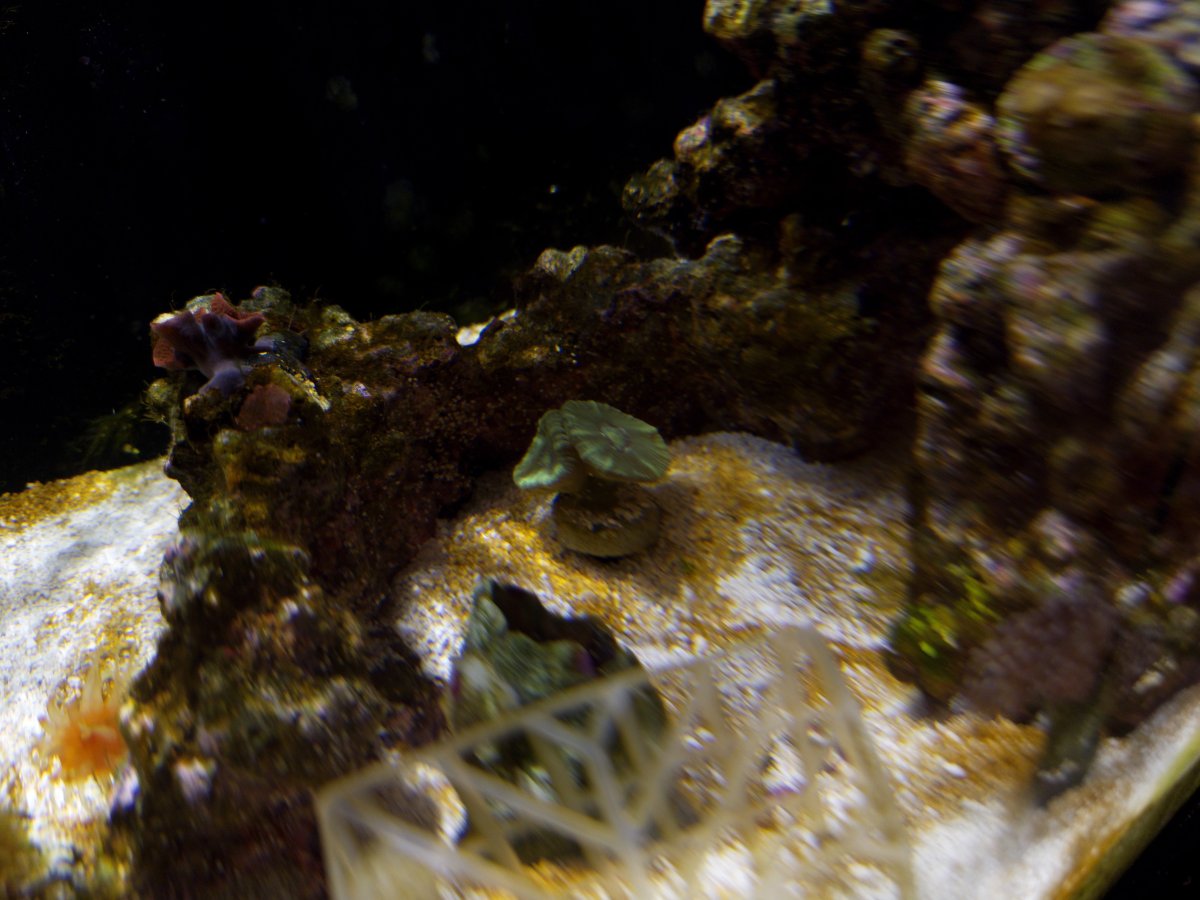
IMG_3602.jpeg
IMG_3598.jpeg

-For folks who’ve done dry systems in the past and battled cyano, do you have any input on whether you’ve successfully “ridden” it out in a year or so without additives/chemicals? If not, what was your most efficient and coral-safe method?
-For folks with dry-start systems, have you been able to long-term settle into a higher phosphate tank (~.1-.3) without cyano?
-Is there any advice on how “late” you can wait to address more aggressively before the existing population tips the scales to “way harder to address” (e.g. is the current state bad enough or only when they are growing over corals / rocks)?
-Our current cyano growth seems worse right after a water change—does certain strains get naturally limited by something the new water replenishes? (RODI shows 0 tds and I’ve tested the salt water for phosphates and show basically 0 — e.g. sometime 0.01 or sometime 0 on the hanna ULR phosphate tests)
-Would significantly more clean-up crew help this problem? (We are currently at ~3 nassarius and 3 ceriths and an emerald crab but had added to 5 nassarius snails, 3-5 trocchus, and 3-5 ceriths at one point while fighting cyano and didn’t seen any benefit)


~More info on tank~

Size: 40gal (IM 40L AIO)
Filtration: IM UV sterilizer, filter floss (changed every 1-2 days) and ceramic bio media balls; no other filters, reactors, skimmers, scrubber, fuge, etc.
Age: 10 months old
Rock/sand: dry manmade rock (“Real Reef Rock”) and dry (aragonite) sand
Flow: standard IM mighty jet return pump and two Tunze Nanostream 6015 power heads (one each side of the tank)
Maintenance: weekly 10gal water change & sand siphoning
Salt: Tropic Marin Pro
Tank stock: two clowns, one YWG, one midas blenny, one fire fish, a cleaner shrimp and a fire shrimp (all 8-9 months old)
Feeding: we feed fish heavily (mix of frozen mysis and brine) but no added coral feeding

Starting about 8 months ago the cyano started forming on the sand (but not really on rocks). Things we tried:
-Upping direct flow at specific spots—temporarily helped but eventually cyano spots would form wherever the sand wasn’t getting blown all over the place
-lowering phosphates using Chemipure Elite (our nitrates have been low typically <=5ppm); we were hovering around ~.35-.4ppm when the cyano first came, stayed down at .2-.3 for ~3 months and then tried in the last month to bring it down closer to .1-.2.
The overall sandbed area impacted by cyano has been consistently getting worse over this time and the growth during the day seems higher / bigger.

Current tank parameters:
Temp: 77.8
Salinity: 35ppt
Phosphate: .13
Nitrate: 5.6
Calcium: 415
Magnesium: 1395-1410
Alk: 7-7.15

So far no cyano has grown on our corals and no massive webs have formed so we are on the fence about whether we should continue “riding it out” or try some other method. We don’t want to massively disrupt tank balance since we have seen decent growth in some of our “easiest corals” (e.g. zoa’s growing from 3 to 10 polyps, coralline algae patches on many rocks and powerheads, GSP growing everywhere, pulsing xenias doubling) and also don’t want to do any “band-aid” patches that are just delaying our tank’s timing to long-term stability / maturity, but don’t want to let this get out of hand or delay fixing something that needs a permanent solution in order to ever achieve stability.
 

Dan_P

7500 Club Member
View Badges
Joined
Sep 21, 2018
Messages
9,785
Reaction score
9,638
Rating - 0%
0   0   0
We’ve been battling cyano for a while now with (1) manual removal and (2) slowly lowering phosphates, but it hasn’t really gotten better over the last 8 months so wanted some advice before deciding if we should try more aggressive tactics (e.g. prolonged blackouts, chemicals / bottle bacteria to outcompete / adding seasoned rock from other established tanks etc.) since it sounds like different factors in tank setup / condition might really impact success with those options and we want to minimize risk of introducing new problematic imbalances / pests in to the tank.

I have a bunch more detail on the tank below for those that think the context is helpful but my main questions are:
-Am I right in thinking this is cyano or am I battling something else entirely (red under blue light and red/brown/orange under white light; blooms during the day and fades at night; and sometimes web-like structure if a bigger section takes hold; mostly on sand and a light film sometimes on glass)?
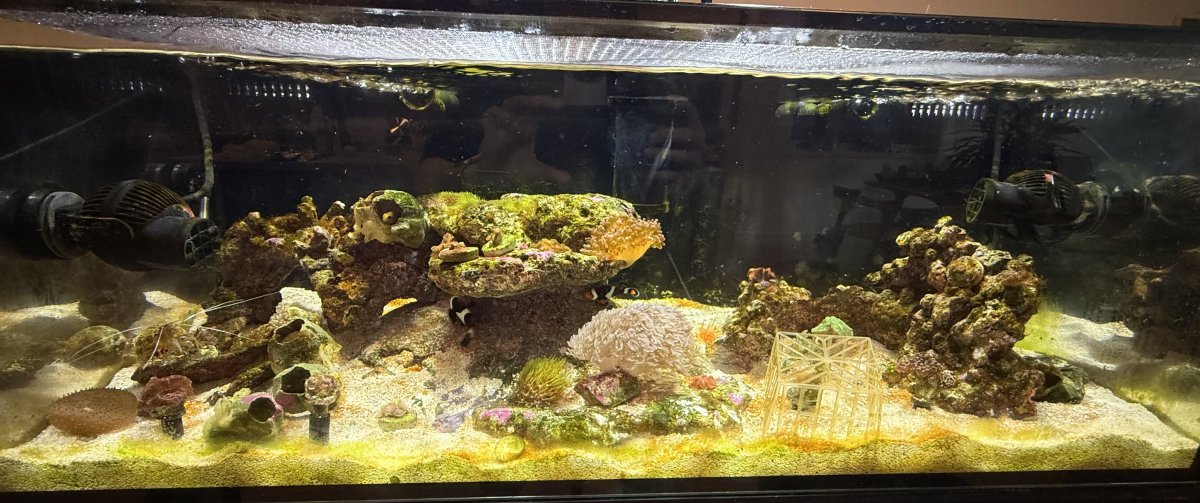
IMG_3602.jpeg
IMG_3598.jpeg

-For folks who’ve done dry systems in the past and battled cyano, do you have any input on whether you’ve successfully “ridden” it out in a year or so without additives/chemicals? If not, what was your most efficient and coral-safe method?
-For folks with dry-start systems, have you been able to long-term settle into a higher phosphate tank (~.1-.3) without cyano?
-Is there any advice on how “late” you can wait to address more aggressively before the existing population tips the scales to “way harder to address” (e.g. is the current state bad enough or only when they are growing over corals / rocks)?
-Our current cyano growth seems worse right after a water change—does certain strains get naturally limited by something the new water replenishes? (RODI shows 0 tds and I’ve tested the salt water for phosphates and show basically 0 — e.g. sometime 0.01 or sometime 0 on the hanna ULR phosphate tests)
-Would significantly more clean-up crew help this problem? (We are currently at ~3 nassarius and 3 ceriths and an emerald crab but had added to 5 nassarius snails, 3-5 trocchus, and 3-5 ceriths at one point while fighting cyano and didn’t seen any benefit)


~More info on tank~

Size: 40gal (IM 40L AIO)
Filtration: IM UV sterilizer, filter floss (changed every 1-2 days) and ceramic bio media balls; no other filters, reactors, skimmers, scrubber, fuge, etc.
Age: 10 months old
Rock/sand: dry manmade rock (“Real Reef Rock”) and dry (aragonite) sand
Flow: standard IM mighty jet return pump and two Tunze Nanostream 6015 power heads (one each side of the tank)
Maintenance: weekly 10gal water change & sand siphoning
Salt: Tropic Marin Pro
Tank stock: two clowns, one YWG, one midas blenny, one fire fish, a cleaner shrimp and a fire shrimp (all 8-9 months old)
Feeding: we feed fish heavily (mix of frozen mysis and brine) but no added coral feeding

Starting about 8 months ago the cyano started forming on the sand (but not really on rocks). Things we tried:
-Upping direct flow at specific spots—temporarily helped but eventually cyano spots would form wherever the sand wasn’t getting blown all over the place
-lowering phosphates using Chemipure Elite (our nitrates have been low typically <=5ppm); we were hovering around ~.35-.4ppm when the cyano first came, stayed down at .2-.3 for ~3 months and then tried in the last month to bring it down closer to .1-.2.
The overall sandbed area impacted by cyano has been consistently getting worse over this time and the growth during the day seems higher / bigger.

Current tank parameters:
Temp: 77.8
Salinity: 35ppt
Phosphate: .13
Nitrate: 5.6
Calcium: 415
Magnesium: 1395-1410
Alk: 7-7.15

So far no cyano has grown on our corals and no massive webs have formed so we are on the fence about whether we should continue “riding it out” or try some other method. We don’t want to massively disrupt tank balance since we have seen decent growth in some of our “easiest corals” (e.g. zoa’s growing from 3 to 10 polyps, coralline algae patches on many rocks and powerheads, GSP growing everywhere, pulsing xenias doubling) and also don’t want to do any “band-aid” patches that are just delaying our tank’s timing to long-term stability / maturity, but don’t want to let this get out of hand or delay fixing something that needs a permanent solution in order to ever achieve stability.

I see a brown-gold coloration which is associated with diatoms and dinoflagellates. Cyanobacteria films are usually green or red.
 

Reef.

5000 Club Member
View Badges
Joined
Mar 12, 2019
Messages
5,364
Reaction score
3,905
Rating - 0%
0   0   0
When you say you have tried removal? How have you done this? Vacuuming is a good method but only if the suction is strong enough to actually remove the cyano and not just move it around.

So what I would do if my tank, vacuum and more flow if you can and carbon changed a couple times a week, give that a go for a couple of weeks, if its working you will see improvements within days if no noticeable change then no point going the full 2 weeks, I would then use one of the Red slime removers, Ive used Red slime remover with excellent results, all gone within 2-3 days with no casualties, but expect an algae bloom.

Vacuuming that actually removes the cyano is to only use the tube of the vacuum, remove the plastic end part, then remove the top layer of sand into a bucket, let sit for a couple of minutes then sieve the water back into the tank using a one micron cloth, then the sand into the bottom of the bucket needs rinsing with rodi water till clean, then add a little bottled bacteria, let sit for a couple of minutes, then return to tank, as said if no noticeable improvement within days use Red Rx it really is not that scary and will probably get your tank stable faster than constantly messing with the tank for a year to try and remove the cyano.
 
OP
OP
ashtoreth

ashtoreth

Active Member
View Badges
Joined
Nov 1, 2020
Messages
105
Reaction score
23
Location
Pennsylvania
Rating - 0%
0   0   0
I see a brown-gold coloration which is associated with diatoms and dinoflagellates. Cyanobacteria films are usually green or red.
Ah. Interesting…the stuff on my sand is more orange brown but I had thought dinos don’t come unless in low nutrient environments. Is it possible there’s a specific strain that also outcompetes in high nutrient environments (think my phosphates were .3-.4 and nitrates were ~5 when they showed up)?

Is the green slime on my tank glass / rocks green cyano?
 
OP
OP
ashtoreth

ashtoreth

Active Member
View Badges
Joined
Nov 1, 2020
Messages
105
Reaction score
23
Location
Pennsylvania
Rating - 0%
0   0   0
When you say you have tried removal? How have you done this? Vacuuming is a good method but only if the suction is strong enough to actually remove the cyano and not just move it around.

So what I would do if my tank, vacuum and more flow if you can and carbon changed a couple times a week, give that a go for a couple of weeks, if its working you will see improvements within days if no noticeable change then no point going the full 2 weeks, I would then use one of the Red slime removers, Ive used Red slime remover with excellent results, all gone within 2-3 days with no casualties, but expect an algae bloom.

Vacuuming that actually removes the cyano is to only use the tube of the vacuum, remove the plastic end part, then remove the top layer of sand into a bucket, let sit for a couple of minutes then sieve the water back into the tank using a one micron cloth, then the sand into the bottom of the bucket needs rinsing with rodi water till clean, then add a little bottled bacteria, let sit for a couple of minutes, then return to tank, as said if no noticeable improvement within days use Red Rx it really is not that scary and will probably get your tank stable faster than constantly messing with the tank for a year to try and remove the cyano.
Ah. No, I’ve only done consistent deep siphons during water changes and bastered it into the water column whenever I see more growing during the day (sometimes 4-5 times a day) and changed filter floss aggressively if I see some collect. I don’t mind trying something like Red RX but I mostly don’t understand how that permanently solves the problem—don’t I have to fix the root cause? Or is it my tank is diverse enough at 10 months that clearing the slate will allow better competitors to take over and keep cyano from grabbing hold again?
 

Reef.

5000 Club Member
View Badges
Joined
Mar 12, 2019
Messages
5,364
Reaction score
3,905
Rating - 0%
0   0   0
The green on the glass is an excellent sign the tank is doing well, Rx at the minute is not needed, the way you vacuum is following all the advice people normally give but its not going to fix a problem tank, with issues, your nutrient export doesn’t sound great as your po4 is on the very high side, so vacuuming to remove an issue needs to be more extensive.

I don’t think your tank has that big of an issue as you think, as said the green algae on the glass is good to see.

Your point about not fixing the issue by using Rx is a good one but once you have cyano or dino etc fixing the issue once the cyano etc goes past a certain point may not be enough to remove the cyano once it has gotten hold of your tank, then stronger measures are needed.
 

Mr. Mojo Rising

10K Club member
View Badges
Joined
Feb 14, 2021
Messages
13,336
Reaction score
15,812
Location
Toronto
Rating - 0%
0   0   0
It does not look like cyano to me, I see green algae and perhaps some dino's. But actually doesn't look that bad IMO

One thing I notice on your filtration is no method to remove dissolved organics, in fact not much nutrient export at all, which means water changes are the only method to remove doc's and excess nutrients. Personally I change out 10 gallons weekly on my 40 gallon, I also use a turkey baster and blast the rocks before and then suck all that out when I syphon out the water.

Not sure what "feeding heavy" means, but IMO for 5 nano fish I feed a quarter of a cube, pre-rinsed to remove excess phosphates, I feed feed small amounts 3-4 times a day, no food should be left to rot, this increases the organics.
 

Reef.

5000 Club Member
View Badges
Joined
Mar 12, 2019
Messages
5,364
Reaction score
3,905
Rating - 0%
0   0   0
It does not look like cyano to me, I see green algae and perhaps some dino's. But actually doesn't look that bad IMO

One thing I notice on your filtration is no method to remove dissolved organics, in fact not much nutrient export at all, which means water changes are the only method to remove doc's and excess nutrients. Personally I change out 10 gallons weekly on my 40 gallon, I also use a turkey baster and blast the rocks before and then suck all that out when I syphon out the water.

Not sure what "feeding heavy" means, but IMO for 5 nano fish I feed a quarter of a cube, pre-rinsed to remove excess phosphates, I feed feed small amounts 3-4 times a day, no food should be left to rot, this increases the organics.
I agree.
I suggested carbon for the organics. Cyano and dinos treatment are basically the same, the 0.5 po4 could be a combination of things, also test result for po4 could be incorrect.
 
OP
OP
ashtoreth

ashtoreth

Active Member
View Badges
Joined
Nov 1, 2020
Messages
105
Reaction score
23
Location
Pennsylvania
Rating - 0%
0   0   0
The green on the glass is an excellent sign the tank is doing well, Rx at the minute is not needed, the way you vacuum is following all the advice people normally give but its not going to fix a problem tank, with issues, your nutrient export doesn’t sound great as your po4 is on the very high side, so vacuuming to remove an issue needs to be more extensive.

I don’t think your tank has that big of an issue as you think, as said the green algae on the glass is good to see.

Your point about not fixing the issue by using Rx is a good one but once you have cyano or dino etc fixing the issue once the cyano etc goes past a certain point may not be enough to remove the cyano once it has gotten hold of your tank, then stronger measures are needed.
Got it. Yes, I was thinking of addressing the problem (which I thought was the high phosphate) and went down the path of a phosphate remover since my nitrates were always on the lower end (e.g. really struggle to get it up to 10 or even past 5 sometimes after the initial 3 months) and I started with dry rock that may leech excess for some time, but didn’t understand why the condition didn’t seem to improve even after I brought down the phosphate for months. If Rx is not needed at the moment, is the recommendation to do the more intensive manual removal method via sieving water back through a 1micron filter sock? Or is my worry on the nitrates unnecessary and I should try starting something like chaeto fuge or skimmer to uptake phosphate and nitrates at the same time?
 
OP
OP
ashtoreth

ashtoreth

Active Member
View Badges
Joined
Nov 1, 2020
Messages
105
Reaction score
23
Location
Pennsylvania
Rating - 0%
0   0   0
It does not look like cyano to me, I see green algae and perhaps some dino's. But actually doesn't look that bad IMO

One thing I notice on your filtration is no method to remove dissolved organics, in fact not much nutrient export at all, which means water changes are the only method to remove doc's and excess nutrients. Personally I change out 10 gallons weekly on my 40 gallon, I also use a turkey baster and blast the rocks before and then suck all that out when I syphon out the water.

Not sure what "feeding heavy" means, but IMO for 5 nano fish I feed a quarter of a cube, pre-rinsed to remove excess phosphates, I feed feed small amounts 3-4 times a day, no food should be left to rot, this increases the organics.
I feed mostly spirulina-enriched hikari frozen mysis (one cube lasts us about 2-3 days) and every other week will mix in some SF Bay brine shrimp for diversity. All pre-rinsed. And then every so often we swap out one meal for TDO or Nyos pellets for diversity (or if we travel). We try to feed 4-5 times a day in small amounts (worried about midas blenny starving)—timed it and food is usually completely gone in 30 secs to 1 minute.

Is there a good way to export the phosphate without overly lowering my nitrates? I was considering a skimmer since I feel like I probably have quite a bit of DOC just given the tank’s position in the house (closer to the kitchen) but was worried about anything that strips the nitrates so started with the phosphate only remover (which somehow still causes nitrates to dip according to my tests). I feel like the corals have looked best when my nitrates are higher, e.g. >=5ppm (but that could just be coincidental).
 
OP
OP
ashtoreth

ashtoreth

Active Member
View Badges
Joined
Nov 1, 2020
Messages
105
Reaction score
23
Location
Pennsylvania
Rating - 0%
0   0   0
I agree.
I suggested carbon for the organics. Cyano and dinos treatment are basically the same, the 0.5 po4 could be a combination of things, also test result for po4 could be incorrect.
Sorry, to clarify, by carbon, do you just mean a bag of activated carbon thrown in the filtration area in the back and swapped out for fresh bag every few days? Or do you mean active carbon dosing?
 

Dan_P

7500 Club Member
View Badges
Joined
Sep 21, 2018
Messages
9,785
Reaction score
9,638
Rating - 0%
0   0   0
Ah. Interesting…the stuff on my sand is more orange brown but I had thought dinos don’t come unless in low nutrient environments. Is it possible there’s a specific strain that also outcompetes in high nutrient environments (think my phosphates were .3-.4 and nitrates were ~5 when they showed up)?

Is the green slime on my tank glass / rocks green cyano?
Nutrients by themselves are unlikely the cause of dinoflagellate growth. I am not sure whether anyone knows why they spring up.

As for the green slime on the glass, if you mean literally a green slime, then it might be cyanobacteria. If by green slime you just mean a green coloration on the glass, more detail is needed for a better guess at an ID. Cyanobacteria tends to form skin-like films on things. The attachment to substrate it is on is rather loose, maybe like a blister.
 

Reef.

5000 Club Member
View Badges
Joined
Mar 12, 2019
Messages
5,364
Reaction score
3,905
Rating - 0%
0   0   0
Sorry, to clarify, by carbon, do you just mean a bag of activated carbon thrown in the filtration area in the back and swapped out for fresh bag every few days? Or do you mean active carbon dosing?
Yeah just a bag of carbon, carbon dosing will make things much worse, don't get too carried away with it as the affect will be small but try and be consistent.

Don't try and reduce your po4 yet as it is not causing a big issue.

I would vacuum the sand, start with just a small section if you don’t normally vacuum, top layer do more often than the whole depth of the sand as you want all the micro organisms in the sand to do their thing, so maybe once a week for the whole sand depth and the top layer with rinsing the sand then replacing as much as you can manage.

The tank is not that bad, take it slow as any big changes will set you back.

Oh forgot, nitrate at 5 is fine, 10 better probably but no lower than 5 is a good aim, again I would leave that alone for now, sort out the sand, then see where your levels are…keep in mind, if cyano etc it uses nutrients too so as you remove the cyano your levels may explode, so test to keep an eye on them, aim for no lower than 5 nitrate and no higher than 0.5 po4.
 
Last edited:
OP
OP
ashtoreth

ashtoreth

Active Member
View Badges
Joined
Nov 1, 2020
Messages
105
Reaction score
23
Location
Pennsylvania
Rating - 0%
0   0   0
Yeah just a bag of carbon, carbon dosing will make things much worse, don't get too carried away with it as the affect will be small but try and be consistent.

Don't try and reduce your po4 yet as it is not causing a big issue.

I would vacuum the sand, start with just a small section if you don’t normally vacuum, top layer do more often than the whole depth of the sand as you want all the micro organisms in the sand to do their thing, so maybe once a week for the whole sand depth and the top layer with rinsing the sand then replacing as much as you can manage.

The tank is not that bad, take it slow as any big changes will set you back.

Oh forgot, nitrate at 5 is fine, 10 better probably but no lower than 5 is a good aim, again I would leave that alone for now, sort out the sand, then see where your levels are…keep in mind, if cyano etc it uses nutrients too so as you remove the cyano your levels may explode, so test to keep an eye on them, aim for no lower than 5 nitrate and no higher than 0.5 po4.
Got it, thank you. I will try that. Is there a specific bottle bac you suggest for the soak before returning the sand to the tank? And is timing of the vacuuming during the day important (eg is it better to do so during peak lights where the cyano or dino is physically showing up the most on top or doesn’t really matter)?
 
OP
OP
ashtoreth

ashtoreth

Active Member
View Badges
Joined
Nov 1, 2020
Messages
105
Reaction score
23
Location
Pennsylvania
Rating - 0%
0   0   0
Nutrients by themselves are unlikely the cause of dinoflagellate growth. I am not sure whether anyone knows why they spring up.

As for the green slime on the glass, if you mean literally a green slime, then it might be cyanobacteria. If by green slime you just mean a green coloration on the glass, more detail is needed for a better guess at an ID. Cyanobacteria tends to form skin-like films on things. The attachment to substrate it is on is rather loose, maybe like a blister.
I have a bit of green slime on rocks that I typically baster off and try to suck up in water changes but it’s only a few small patches and grows very slowly so didn’t seem like a huge nuisance. It sounds like that might be cyano?

The other green I was referring to was the stuff on the bottom of my glass—they are often hard to scrape off unless I go in with a razor blade or really put in elbow grease, so that sounds like they probably aren’t cyano? This is the stuff that I assume @Reef. said is a good sign for the tank? I wasn’t sure what it is or what it meant about the state of the tank and just previously assumed it was a normal algae but not one going out of control…
 

Reef.

5000 Club Member
View Badges
Joined
Mar 12, 2019
Messages
5,364
Reaction score
3,905
Rating - 0%
0   0   0
Got it, thank you. I will try that. Is there a specific bottle bac you suggest for the soak before returning the sand to the tank? And is timing of the vacuuming during the day important (eg is it better to do so during peak lights where the cyano or dino is physically showing up the most on top or doesn’t really matter)?
Wait until it’s visible but not too extensive peak light is a good time, you can rinse the sand with tap water then do a last rinse with rodi if you are short on rodi water.

I have heard microbe lift special blend is good, I use fritz turbo start just because it’s easy for me to get hold off and is excellent, turbo 9 is probably better to get than the 900 as the 900 needs to be refrigerated, if you trust the LFS had the 900 refrigerated then that would work too. You only need to add maybe 10mls each time to the sand when rinsing. Don’t forget you actually want to stuck up the top layer of sand when vacuuming and you'll be surprised at how much muck washes off it.

The green on the glass is algae, i find a cheap wall paper scraper such as a stanley scraper is great, the blades are very cheap so can be replaced after each use.
 
Last edited:

Dan_P

7500 Club Member
View Badges
Joined
Sep 21, 2018
Messages
9,785
Reaction score
9,638
Rating - 0%
0   0   0
I have a bit of green slime on rocks that I typically baster off and try to suck up in water changes but it’s only a few small patches and grows very slowly so didn’t seem like a huge nuisance. It sounds like that might be cyano?

The other green I was referring to was the stuff on the bottom of my glass—they are often hard to scrape off unless I go in with a razor blade or really put in elbow grease, so that sounds like they probably aren’t cyano? This is the stuff that I assume @Reef. said is a good sign for the tank? I wasn’t sure what it is or what it meant about the state of the tank and just previously assumed it was a normal algae but not one going out of control…
Hard to say whether the green growth on the glass is good or bad when it is an unknown organism. Best to treat it as an irrelevant mystery organism and focus on the growth that is bothering you.
 

TOP 10 Trending Threads

WHAT AMOUNT OF LIVE ROCK AND SAND SHOULD BE PRIORITIZED FOR OPTIMAL BIODIVERSITY/FILTRATION?

  • 100% live rock + bagged sand

    Votes: 34 27.0%
  • 100% dry rock + 100% live sand

    Votes: 45 35.7%
  • 50/50 live/dry rock, 50/50 live/bagged sand

    Votes: 27 21.4%
  • 75% live rock, 25% live sand

    Votes: 11 8.7%
  • 25% live rock, 75% live sand

    Votes: 9 7.1%
Back
Top