Algae ID and HELP!!

Eric81

Active Member
View Badges
Joined
Jan 22, 2013
Messages
113
Reaction score
27
Location
Dallas, TX
Rating - 0%
0   0   0
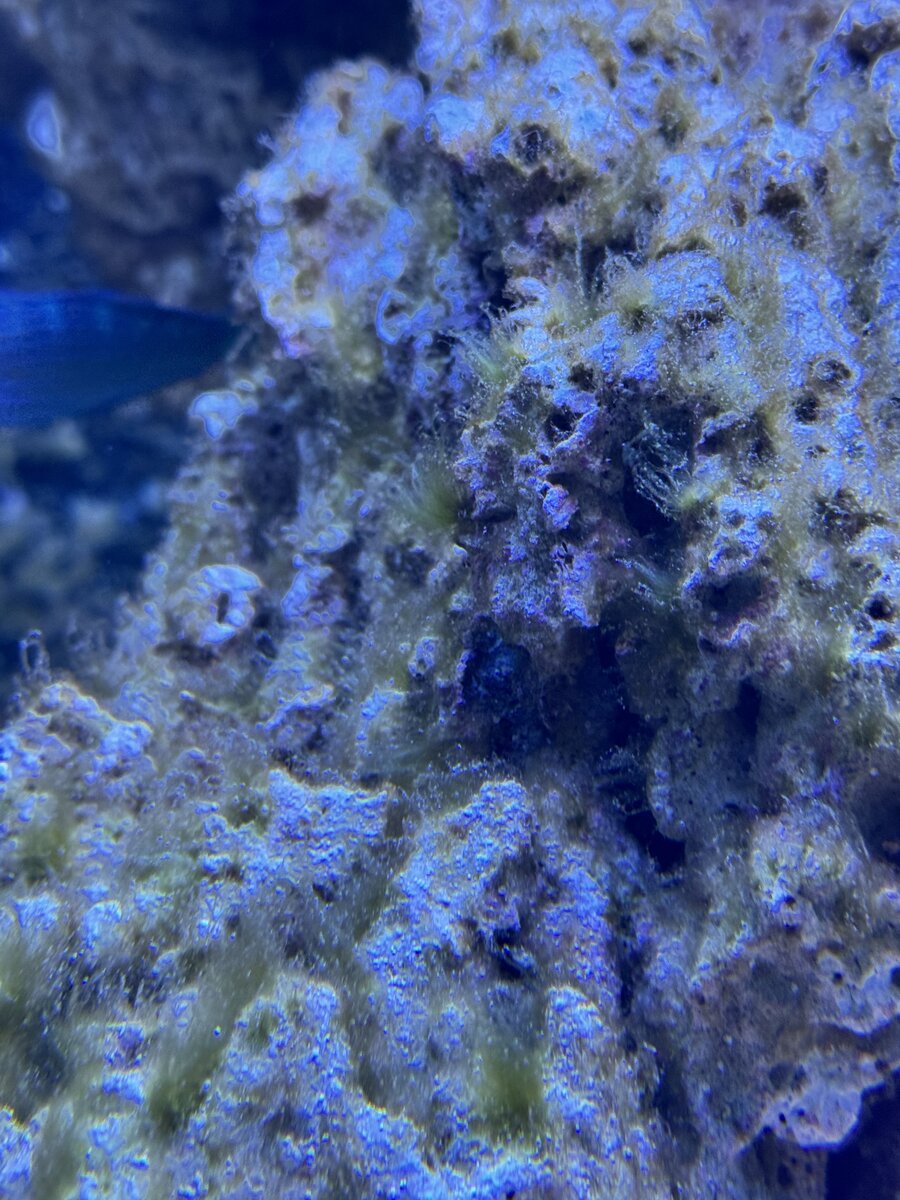
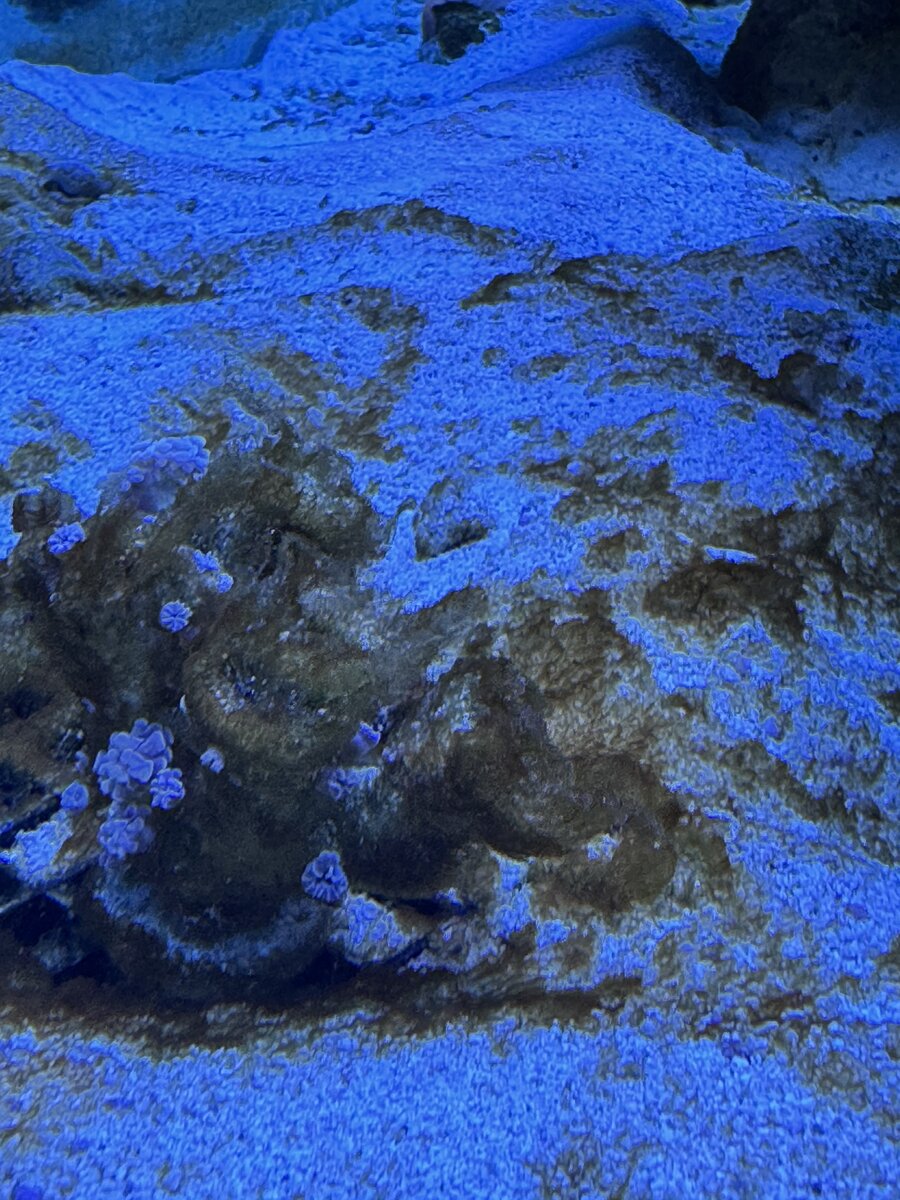
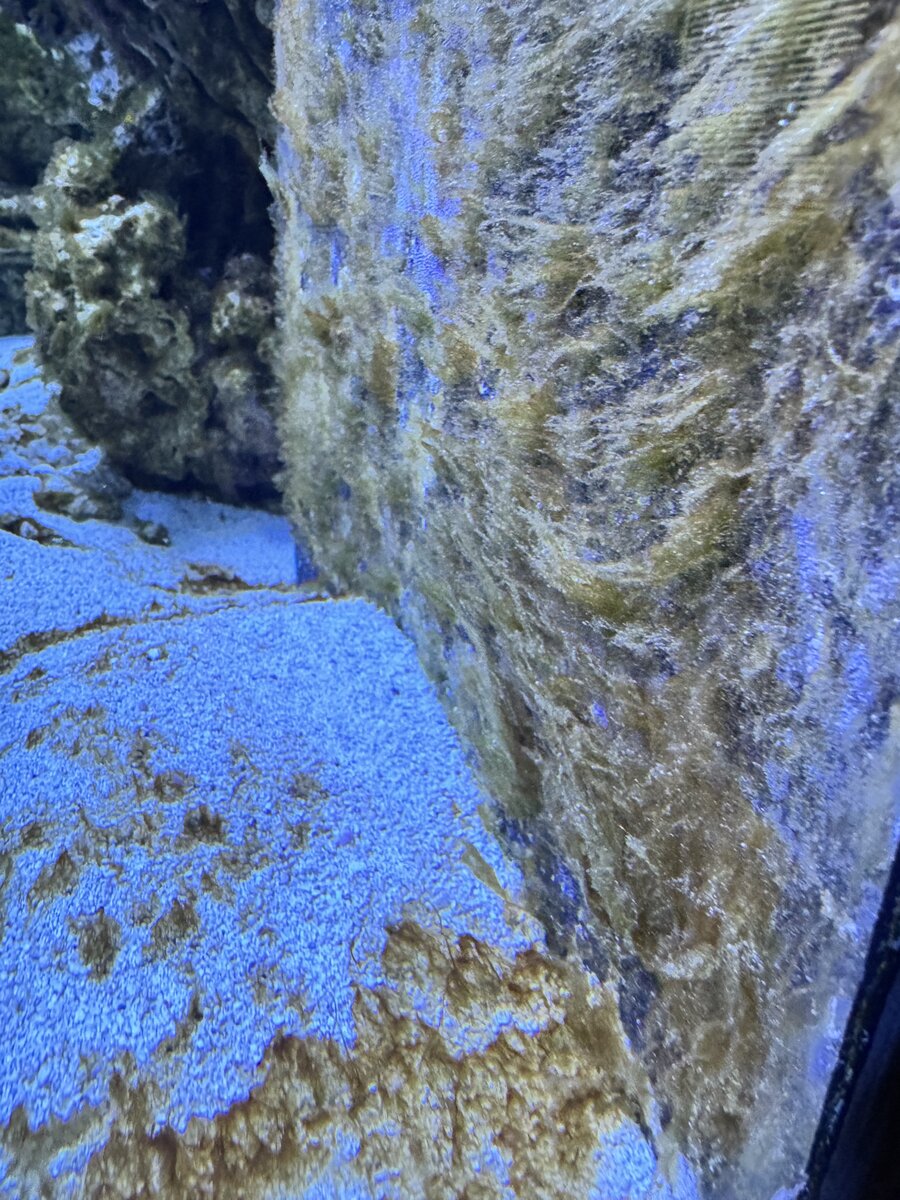
I've been in this hobby 13 years and can't get rid of this algae. It looks similar to GHA, but is a brown/rust color. It is really easy to remove and a some of it can be blown off with a turkey baster (I do have some true GHA in a few spots as well). Grows on everything (rock, sand, glass, silicone, power heads, etc) but none is in the sump.

I rebooted my 300G tank on January 3rd of this year (it previously had a die off, in which I never found the cause). Dried and Bleached all the rock, rinsed and dried the sand. Went through the diatom phase, but then this has come up and I have been battling it for the past 3 months. 3 day black out helps, but it roars back within a week, as soon as the lights are back on. It doesn't have bubbles, so I don't think it is Dinos. Tried water changes, phosphate rX, and snails don't seem to want to touch it.

Tank Stats:
Alk - 8.84 Hanna
Cal - 400 Red Sea
Mag - 1380 Salifert
Phos - 0 - Hanna
Nitrate - 0-5 API
Salinity - 35 ppt
Filtration: Protein Skimmer, UV, Filter Socks, Chaeto

HELP!
IMG_3334.jpeg
IMG_3336.jpeg
IMG_3337.jpeg
 

Subsea

7500 Club Member
View Badges
Joined
Jun 21, 2018
Messages
8,925
Reaction score
11,554
Location
Austin, Tx
Rating - 0%
0   0   0
Turn off blue.
White light to help identification.

Consider that zero nitrate & zero phosphate are a recipe for Cynobacteria & Dinoflagellates or a mixture of both.

Try Florida fighting conch for sandbed and urchins everywhere else.
 

Dan_P

7500 Club Member
View Badges
Joined
Sep 21, 2018
Messages
9,785
Reaction score
9,638
Rating - 0%
0   0   0
I've been in this hobby 13 years and can't get rid of this algae. It looks similar to GHA, but is a brown/rust color. It is really easy to remove and a some of it can be blown off with a turkey baster (I do have some true GHA in a few spots as well). Grows on everything (rock, sand, glass, silicone, power heads, etc) but none is in the sump.

I rebooted my 300G tank on January 3rd of this year (it previously had a die off, in which I never found the cause). Dried and Bleached all the rock, rinsed and dried the sand. Went through the diatom phase, but then this has come up and I have been battling it for the past 3 months. 3 day black out helps, but it roars back within a week, as soon as the lights are back on. It doesn't have bubbles, so I don't think it is Dinos. Tried water changes, phosphate rX, and snails don't seem to want to touch it.

Tank Stats:
Alk - 8.84 Hanna
Cal - 400 Red Sea
Mag - 1380 Salifert
Phos - 0 - Hanna
Nitrate - 0-5 API
Salinity - 35 ppt
Filtration: Protein Skimmer, UV, Filter Socks, Chaeto

HELP!
IMG_3334.jpeg
IMG_3336.jpeg
IMG_3337.jpeg
Its looks like sickly hair algae that is infested with diatoms or dinoflagellates, maybe even cyanobacteria. You would need to get the stuff under a microscope to figure out what you are dealing with.
 

Subsea

7500 Club Member
View Badges
Joined
Jun 21, 2018
Messages
8,925
Reaction score
11,554
Location
Austin, Tx
Rating - 0%
0   0   0
@Eric81
GHA is a “catch all” name for many subspecies. Just like Cynobacteria has many subspecies with differrent colors.

Consider bringing in some diver collected uncured live rock to bring in diversity of competitors & consumer.

A full tank shot with white light would help us to help you.

PS: consider getting a Florida fighting conch to work in your sandbed. Also, better discribe how you started this tank in January of this year.
 

Subsea

7500 Club Member
View Badges
Joined
Jun 21, 2018
Messages
8,925
Reaction score
11,554
Location
Austin, Tx
Rating - 0%
0   0   0
“I rebooted my 300G tank on January 3rd of this year (it previously had a die off, in which I never found the cause). Dried and Bleached all the rock, rinsed and dried the sand. Went through the diatom phase, but then this has come up and I have been battling it for the past 3 months. 3 day black out helps, but it roars back within a week, as soon as the lights are back on. It doesn't have bubbles, so I don't think it is Dinos. Tried water changes, phosphate rX, and snails don't seem to want to touch it.”

Six months ago, in your above scenario, after the RIP CLEAN where you sanitized & bleched all rock & sand, what replaced biomass?

How did you cycle this 300G tank?
 
Last edited:
OP
OP
Eric81

Eric81

Active Member
View Badges
Joined
Jan 22, 2013
Messages
113
Reaction score
27
Location
Dallas, TX
Rating - 0%
0   0   0
“I rebooted my 300G tank on January 3rd of this year (it previously had a die off, in which I never found the cause). Dried and Bleached all the rock, rinsed and dried the sand. Went through the diatom phase, but then this has come up and I have been battling it for the past 3 months. 3 day black out helps, but it roars back within a week, as soon as the lights are back on. It doesn't have bubbles, so I don't think it is Dinos. Tried water changes, phosphate rX, and snails don't seem to want to touch it.”

Six months ago, in your above scenario, after the RIP CLEAN where you sanitized & bleched all rock & sand, what replaced biomass?

How did you cycle this 300G tank?
I had a few large rocks, that I transferred out of another tank that I had. Then added a piece of table shrimp in there and monitored it, while it when through the cycle. Added my first fish and clean up crew a week after the cycle finished (about 1 month from my tank restart date). I will try and get better pictures this evening. Appreciate your input!
 

Fishy888

2500 Club Member
View Badges
Joined
Oct 26, 2021
Messages
3,949
Reaction score
14,010
Location
Decatur, IL
Rating - 0%
0   0   0
“I rebooted my 300G tank on January 3rd of this year (it previously had a die off, in which I never found the cause). Dried and Bleached all the rock, rinsed and dried the sand. Went through the diatom phase, but then this has come up and I have been battling it for the past 3 months. 3 day black out helps, but it roars back within a week, as soon as the lights are back on. It doesn't have bubbles, so I don't think it is Dinos. Tried water changes, phosphate rX, and snails don't seem to want to touch it.”

Six months ago, in your above scenario, after the RIP CLEAN where you sanitized & bleched all rock & sand, what replaced biomass?

How did you cycle this 300G tank?
I had a few large rocks, that I transferred out of another tank that I had. Then added a piece of table shrimp in there and monitored it, while it when through the cycle. Added my first fish and clean up crew a week after the cycle finished (about 1 month from my tank restart date). I will try and get better pictures this evening. Appreciate your input!
I hate to be the bearer of bad news, but you have dinos.

Have you been testing your NO3 and PO4 levels? I about guarantee you that one or both are 0. You want to start by getting your NO3 to 10 ppm and phosphates to 0.1 ppm.

Once you’ve done that add some good bacteria. There are some good sources to buy bacteria in a bottle from. You also need truly live rock. The “live rock” at your LFS is most likely dry rock they added bottled bacteria to. You’re looking for live rock from a well established tank. The more the better, but I’d start with 20 lbs if at all possible.

Pods are your friend here. Even cyano is your friend right now. Pods will eat dinos! I would dose them to your display and sump if you don’t have any in your system. Also get some chaeto in your sump if you don’t have it already.

When I had dinos this is how I beat them. If you keep your nitrates and phosphates around the numbers I quoted you’ll start getting cyano first then green hair algae. Cyanobacteria outcompete dinoflagellates. The GHA will also out compete them.

Let us know what your levels are. Oh and DON’T do any water changes! Dinos love, love, loooovvvvveeee trace elements. Do you have fish or coral?
 
OP
OP
Eric81

Eric81

Active Member
View Badges
Joined
Jan 22, 2013
Messages
113
Reaction score
27
Location
Dallas, TX
Rating - 0%
0   0   0
I appreciate everyone’s input. After more research, I am 99% sure it is Lyngbia. Got a long road ahead but have a plan of action.
 

Subsea

7500 Club Member
View Badges
Joined
Jun 21, 2018
Messages
8,925
Reaction score
11,554
Location
Austin, Tx
Rating - 0%
0   0   0
I appreciate everyone’s input. After more research, I am 99% sure it is Lyngbia. Got a long road ahead but have a plan of action.

Lyngbya

lyngbya 300x225


Often a reddish brown, Lyngbya spp. are a type of cyanobacteria. Even though it looks just like hair algae and is filamentous rather than slimy. It dislodges easily from the rock, has no discernible root or mat structure and grows fast. Lyngbya species seem to grow very fast in warmer tanks, and spread quickly once attached to a powerhead, suggesting they can replicate by fragmentation easily. Nevertheless aggressive manual removal over time can be effective.
 

Fishy888

2500 Club Member
View Badges
Joined
Oct 26, 2021
Messages
3,949
Reaction score
14,010
Location
Decatur, IL
Rating - 0%
0   0   0
I appreciate everyone’s input. After more research, I am 99% sure it is Lyngbia. Got a long road ahead but have a plan of action.

Lyngbya

lyngbya 300x225


Often a reddish brown, Lyngbya spp. are a type of cyanobacteria. Even though it looks just like hair algae and is filamentous rather than slimy. It dislodges easily from the rock, has no discernible root or mat structure and grows fast. Lyngbya species seem to grow very fast in warmer tanks, and spread quickly once attached to a powerhead, suggesting they can replicate by fragmentation easily. Nevertheless aggressive manual removal over time can be effective.
I agree you have Lyngbya on the glass and all but what’s in the sand bed looked a lot like dinos especially with the blue light.
 

TOP 10 Trending Threads

WHAT AMOUNT OF LIVE ROCK AND SAND SHOULD BE PRIORITIZED FOR OPTIMAL BIODIVERSITY/FILTRATION?

  • 100% live rock + bagged sand

    Votes: 34 26.6%
  • 100% dry rock + 100% live sand

    Votes: 45 35.2%
  • 50/50 live/dry rock, 50/50 live/bagged sand

    Votes: 28 21.9%
  • 75% live rock, 25% live sand

    Votes: 11 8.6%
  • 25% live rock, 75% live sand

    Votes: 10 7.8%
Back
Top