Black Percula Clownfish?

Soren

Valuable Member
View Badges
Joined
Oct 2, 2020
Messages
2,490
Reaction score
7,357
Location
Illinois, USA
Rating - 0%
0   0   0
I finally decided to go ahead with an order for 2 of my dream fish to start quarantine while completing my main setup.
They were sold as "True Percula Clownfish: Super Black (Amphiprion percula) for over $100 each. I sent an email with these pictures to the supplier asking about it, so I will keep them anonymous at this time.
Here was the website stock photo of what I ordered:

1758666972325.png


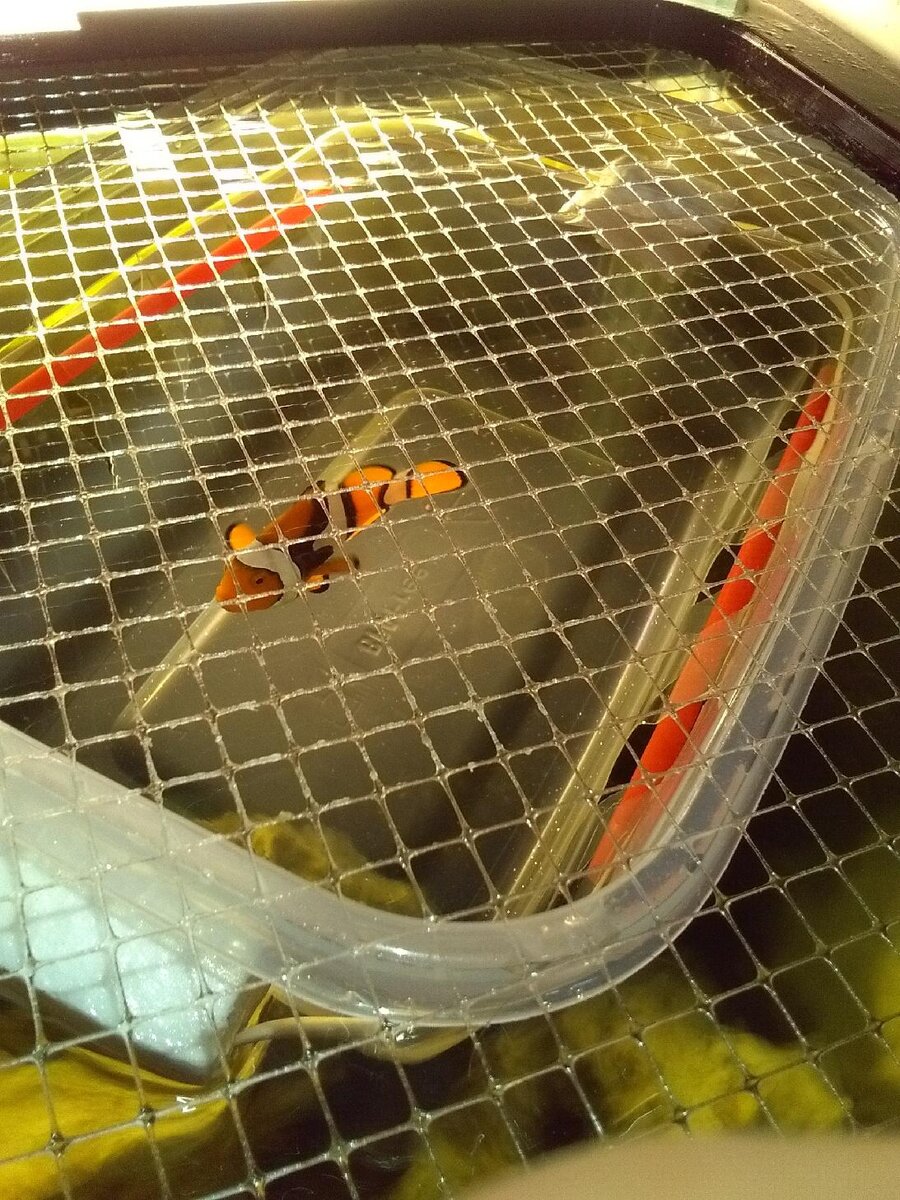
When they arrived today, I was disappointed to find that they almost no more black than typical percula clownfish. They are about 2-inches long, so not super young juveniles with baby coloration. I am aware that more black is likely to develop as they age, but how black should they appear at this size?

Here are a few low-quality pictures (hope to get better pictures tomorrow):
1st one looks like a typical percula clownfish to me:
KIMG0146.jpg
KIMG0144.jpg


2nd is slightly more black and is a bit larger. Immediately, there was aggression between these two, so this aggressor is in isolation for a few days while they settle into my quarantine:
KIMG0142.jpg
KIMG0141.jpg


What do you think?
Did I get what I ordered?

 

KrisReef

Last to get paid.
View Badges
Joined
May 15, 2018
Messages
22,082
Reaction score
39,131
Location
Vatican & Las Vegas Penthouse Quarters
Rating - 100%
1   0   0
I have observed the same difficulty regarding these named fishes. I have decided to only purchase them in person to avoid having to wonder like this, and to avoid having a pair of siblings instead of a true pair of random mates. My harlequin tusk ate the last one I brought home just to reinforce the difficulty of having a couple of these fishes that I like.
 
OP
OP
Soren

Soren

Valuable Member
View Badges
Joined
Oct 2, 2020
Messages
2,490
Reaction score
7,357
Location
Illinois, USA
Rating - 0%
0   0   0
I have observed the same difficulty regarding these named fishes. I have decided to only purchase them in person to avoid having to wonder like this, and to avoid having a pair of siblings instead of a true pair of random mates. My harlequin tusk ate the last one I brought home just to reinforce the difficulty of having a couple of these fishes that I like.
Now I already have these 2, so I'll grow them and see, but I am definitely thinking I need to only buy in-person so I can see the fish instead of only reading a description. This especially holds true for my percula clownfish, as it is an even race between them and Darwin black-and-white ocellaris clownfish for my top favorite fish that I want in my reef.
 

KrisReef

Last to get paid.
View Badges
Joined
May 15, 2018
Messages
22,082
Reaction score
39,131
Location
Vatican & Las Vegas Penthouse Quarters
Rating - 100%
1   0   0
Now I already have these 2, so I'll grow them and see, but I am definitely thinking I need to only buy in-person so I can see the fish instead of only reading a description. This especially holds true for my percula clownfish, as it is an even race between them and Darwin black-and-white ocellaris clownfish for my top favorite fish that I want in my reef.
I really love the looks of the lightening maroons but they are generally too vicious to keep in any tank that I might want to put my hands in. 🤣
 

D-Nak

Valuable Member
View Badges
Joined
Oct 15, 2011
Messages
2,030
Reaction score
1,743
Location
Bay Area, CA
Rating - 0%
0   0   0
The stock photo is most likely a wild PNG/SI true percula (meaning it's from either Papua New Guinea or the Solomon Islands) where lots of percula have the black completely filled in between the head and middle stripe.

What you received could potentially be tank raised--the first one definitely looks tank raised but the second is possibly wild (hard to tell in the photos) and the black areas on both could potentially (I'm using that word a lot on purpose) fill in but there's no guarantee.

Technically speaking, you probably did get what was advertised. If tank raised, the seller is merely restating the type of clown purchased from the breeder. Unfortunately, the amount of black to be considered "Super Black" is what will be up for debate. Anything more than a typical percula might be considered "Super Black."

Something else to note--wild PNG/SI perculas do change colors -- they get darker and/or lighter depending on environmental conditions such as high/low lighting and the presence/absence of a host anemone. I have a wild caught PNG/SI percs that live in a cubicle tank with low lighting and without host anemones, and the black has lightened quite a bit. When I first added them to my collection they were jet black. Now it's more of a muddy black, almost amber/brown tones. I know, however, that once I add them to my DT with high lighting and a host anemone, the jet black will most likely come back.
 
OP
OP
Soren

Soren

Valuable Member
View Badges
Joined
Oct 2, 2020
Messages
2,490
Reaction score
7,357
Location
Illinois, USA
Rating - 0%
0   0   0
The stock photo is most likely a wild PNG/SI true percula (meaning it's from either Papua New Guinea or the Solomon Islands) where lots of percula have the black completely filled in between the head and middle stripe.

What you received could potentially be tank raised--the first one definitely looks tank raised but the second is possibly wild (hard to tell in the photos) and the black areas on both could potentially (I'm using that word a lot on purpose) fill in but there's no guarantee.

Technically speaking, you probably did get what was advertised. If tank raised, the seller is merely restating the type of clown purchased from the breeder. Unfortunately, the amount of black to be considered "Super Black" is what will be up for debate. Anything more than a typical percula might be considered "Super Black."

Something else to note--wild PNG/SI perculas do change colors -- they get darker and/or lighter depending on environmental conditions such as high/low lighting and the presence/absence of a host anemone. I have a wild caught PNG/SI percs that live in a cubicle tank with low lighting and without host anemones, and the black has lightened quite a bit. When I first added them to my collection they were jet black. Now it's more of a muddy black, almost amber/brown tones. I know, however, that once I add them to my DT with high lighting and a host anemone, the jet black will most likely come back.
Thanks for feedback. I assumed the stock photo was indeed a PNG/SI percula, which is what I hoped to get. I am used to juvenile ocellaris clownfish already being pretty black for the Darwin black-and-white variation, so I was not expecting to get such a normal-looking percula clownfish when I paid a higher price. I do hope the 2nd one gets more black as it matures, as my ideal preference is the same as the stock photo. For the first one pictured above, it no longer matters, as it rapidly declined in health and died this morning with evidence indicating bacterial and/or fungal infection. The other 2 clownfish in the quarantine are healthy, so it seems to be an issue with that fish and I should get a credit for stay-alive guarantee (though, as always, I'd rather have a healthy fish any day than my money back...).

As I should already have known in this industry, descriptions about color are always up for debate. Hence, I will be buying in-person or WYSIWYG in the future so these questions can be alleviated.

Nice to know about the color changes over time. I've observed this with my typical ocellaris pair in my work desk 40g tank with more dark tones filling in as they start to give indication of breeding/egg-laying soon.
My hope is to have a nice percula pair with mainly black mid-body between the white stripes for my in-progress 180g mixed reef.
 

Onyxia

Community Member
View Badges
Joined
Mar 20, 2010
Messages
76
Reaction score
39
Location
Illinois
Rating - 0%
0   0   0
if you're looking for dream fish why not pick
Thanks for feedback. I assumed the stock photo was indeed a PNG/SI percula, which is what I hoped to get. I am used to juvenile ocellaris clownfish already being pretty black for the Darwin black-and-white variation, so I was not expecting to get such a normal-looking percula clownfish when I paid a higher price. I do hope the 2nd one gets more black as it matures, as my ideal preference is the same as the stock photo. For the first one pictured above, it no longer matters, as it rapidly declined in health and died this morning with evidence indicating bacterial and/or fungal infection. The other 2 clownfish in the quarantine are healthy, so it seems to be an issue with that fish and I should get a credit for stay-alive guarantee (though, as always, I'd rather have a healthy fish any day than my money back...).

As I should already have known in this industry, descriptions about color are always up for debate. Hence, I will be buying in-person or WYSIWYG in the future so these questions can be alleviated.

Nice to know about the color changes over time. I've observed this with my typical ocellaris pair in my work desk 40g tank with more dark tones filling in as they start to give indication of breeding/egg-laying soon.
My hope is to have a nice percula pair with mainly black mid-body between the white stripes for my in-progress 180g mixed reef.
That one will never go full black dorsal, that type of percula with the thick border is a different line than the normal onyx from SI.

ORA does some nice onyx that would fit what youre looking for. Def try and have a local store order from them.
 

OrionN

Anemones
View Badges
Joined
Jul 28, 2013
Messages
11,302
Reaction score
22,511
Location
Corpus Christi, TX
Rating - 0%
0   0   0
Percula lighten up due to various factor that sometime not predictable. My WC completely dark Onyx Percula lighten considerably when she was hosted by my Magnifica. If I change tank and get her into one of my Gigantea She would/should be all Onyx with orange face and bits of orange on various fins.
This is a high price WC Onyx that this picture would not justify the price.
IMG_1042.jpeg
 

TOP 10 Trending Threads

WHAT AMOUNT OF LIVE ROCK AND SAND SHOULD BE PRIORITIZED FOR OPTIMAL BIODIVERSITY/FILTRATION?

  • 100% live rock + bagged sand

    Votes: 37 27.6%
  • 100% dry rock + 100% live sand

    Votes: 45 33.6%
  • 50/50 live/dry rock, 50/50 live/bagged sand

    Votes: 30 22.4%
  • 75% live rock, 25% live sand

    Votes: 12 9.0%
  • 25% live rock, 75% live sand

    Votes: 10 7.5%
Back
Top