Blue light on Algae scrubber not growing algae any longer

Reefcowboy

Well-Known Member
View Badges
Joined
Jul 27, 2014
Messages
888
Reaction score
1,304
Location
Long Island, NY
Rating - 0%
0   0   0
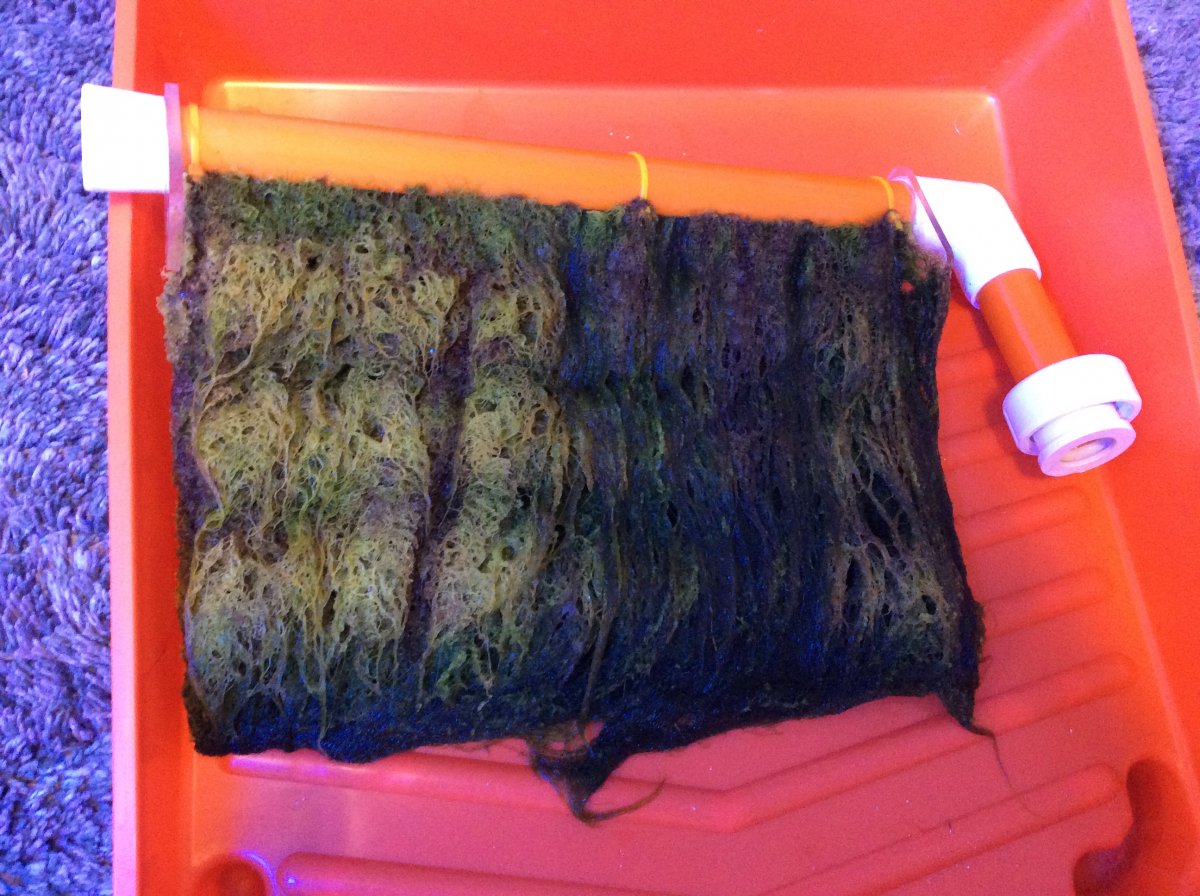
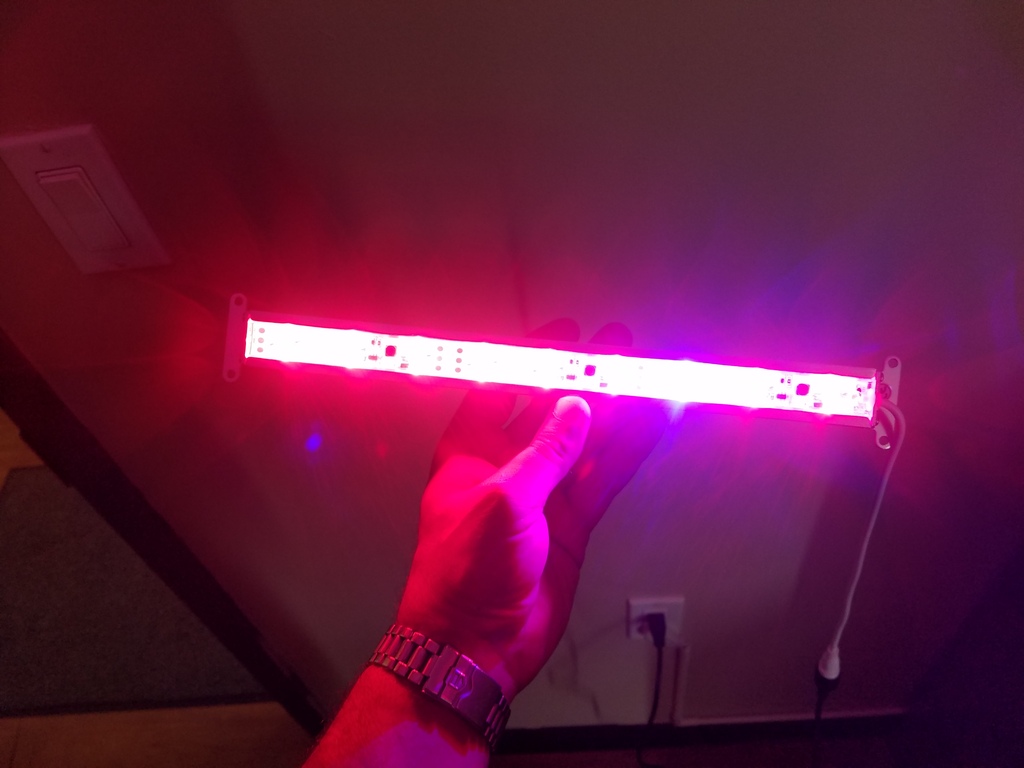
I have a custom algae scrubber that has been running for about 6-7 months now. It is lit by 6 led strips(3 each side of the screen) and the strips all are configured the same way, all have red leds except one second to last led, which is blue. For many months, algae grew faster near the blue led.

I harvested the scrubber today and noticed no algae was growing at the spot where the blue leds are anymore. The algae everywhere else was lush, dark green. Where the blue leds are, they algae didnt grow and the few that did were dark/gross slimy looking.

Any idea why could this be happening? The tank is a heavy bioload 150 gal sps with all params on point. I dont run gfo or carbon, just feed heavy the fish and depend on the scrubber, which keep my NO3 ar 3-5 ppm.

The only thing I changed from before was water changes. I used to do them 1-2 times a month and did one today after a good month and a half without it. Maybe the water was lacking some minerals for the algae?iron?

Heres a pic of the strips and what the screen looked like before a harvest.I didnt take a pic of it today, but looked similar.

32C195A6-6667-4D64-A907-4CBD56573F40.jpeg


2F2B1AEA-32BD-440E-9A86-7878BB2EBFBC.jpeg


F8DAA6D9-E6B2-4413-B0F4-5DFF0F8FE7AA.jpeg


7011B1AF-1F92-4EA9-9BAA-F995D66E25D2.jpeg


6F8D4597-CDB5-459C-86D3-3860F2BFB20E.jpeg
 
OP
OP
Reefcowboy

Reefcowboy

Well-Known Member
View Badges
Joined
Jul 27, 2014
Messages
888
Reaction score
1,304
Location
Long Island, NY
Rating - 0%
0   0   0
From what I've read the red spectrum is much more beneficial for algae growth. Has this not been an issue in the past?
You are correct, not sure why the manufacturer would use a single blue led in the cluster with reds. If you look at the algae screen above, where the blue led hits the screen, the algae is dark green, where the reds make them white and not so fast growing. Now the oposite is happening. Im scratching my head
 

saltyfilmfolks

Lights! Camera! Reef!
View Badges
Joined
Feb 25, 2014
Messages
28,739
Reaction score
40,625
Location
California
Rating - 0%
0   0   0
Grow lights aren’t red. Their pink purple visually.
Red plus blue =
Alage grows in the ocean where the light is blue.

https://www.ncbi.nlm.nih.gov/m/pubmed/15406376/

Why the algae is dying near the blue led, I have no idea save the nutrients are lower and it’s over dosing on the Nm it provides.
 

lapin

10K Club member
View Badges
Joined
Dec 16, 2017
Messages
11,680
Reaction score
18,292
Location
Austin
Rating - 0%
0   0   0
The only thing I changed from before was water changes. I used to do them 1-2 times a month and did one today after a good month and a half without it. Maybe the water was lacking some minerals for the algae?iron?
Thats possible. Whatever strand that liked blue light could be missing Iron, Manganese or Iodine. Or all 3.
 
OP
OP
Reefcowboy

Reefcowboy

Well-Known Member
View Badges
Joined
Jul 27, 2014
Messages
888
Reaction score
1,304
Location
Long Island, NY
Rating - 0%
0   0   0
Thanks guys, thats what Im thinking too. Im following closely now after this large water change. Im hoping the algae picks back up. Ill keep you all posted
 

Scrubber_steve

2500 Club Member
View Badges
Joined
Feb 19, 2018
Messages
3,224
Reaction score
4,801
Location
down under
Rating - 0%
0   0   0
You are correct, not sure why the manufacturer would use a single blue led in the cluster with reds. If you look at the algae screen above, where the blue led hits the screen, the algae is dark green, where the reds make them white and not so fast growing. Now the oposite is happening. Im scratching my head
Just to clarify some points; at a best guess from that photo the algae growing on your screen looks like a species of ulva. It grows in shallow water & tidal zones where it is out of the water at low tide. So it recieves full sunlight - full red spectrum, in either case, unlike algaes at deeper depths. Red 660nm is the main spectrum needed & blue is inconsequential as shown by my screen photo where only 660nm red is used.
upload_2019-1-4_7-23-34.png
As I understand it, green terestrial plants utilise blue spectrum for gemination & sprouting, & the amount & spectrum of blue light used can affect the shape of lettuce leaves, for example. Blue light may be benificial while a virgin algae scrubber screen is naturally seeding, but once the screen has matured the blue is unnecessary & too much can just cause dark slimey growth.
I doubt that your lacking anything in the way of nutrients as you feed heavy, but its possible (iron is a limiting element). I can get this growth & colour consistently on my screen without dosing trace elements & with very low no3 & po4.
What is more important is how many watts are hitting your screen, for how many hours a day, compared to inorganic nutrient levels ? What were you NO3 & PO4 levels a month ago compared to now?

From your growth screen photo, it appears to me that algae growth would be blocking the pipe slot & restricting water flow over the algae. If this is the case the algae might be desicating on the outer layer & bleaching slightly under the red.
 
Last edited:
OP
OP
Reefcowboy

Reefcowboy

Well-Known Member
View Badges
Joined
Jul 27, 2014
Messages
888
Reaction score
1,304
Location
Long Island, NY
Rating - 0%
0   0   0
Just to clarify some points; at a best guess from that photo the algae growing on your screen looks like a species of ulva. It grows in shallow water & tidal zones where it is out of the water at low tide. So it recieves full sunlight - full red spectrum, in either case, unlike algaes at deeper depths. Red 660nm is the main spectrum needed & blue is inconsequential as shown by my screen photo where only 660nm red is used.
upload_2019-1-4_7-23-34.png
As I understand it, green terestrial plants utilise blue spectrum for gemination & sprouting, & the amount & spectrum of blue light used can affect the shape of lettuce leaves, for example. Blue light may be benificial while a virgin algae scrubber screen is naturally seeding, but once the screen has matured the blue is unnecessary & too much can just cause dark slimey growth.
I doubt that your lacking anything in the way of nutrients as you feed heavy, but its possible (iron is a limiting element). I can get this growth & colour consistently on my screen without dosing trace elements & with very low no3 & po4.
What is more important is how many watts are hitting your screen, for how many hours a day, compared to inorganic nutrient levels ? What were you NO3 & PO4 levels a month ago compared to now?

From your growth screen photo, it appears to me that algae growth would be blocking the pipe slot & restricting water flow over the algae. If this is the case the algae might be desicating on the outer layer & bleaching slightly under the red.
Thank you for the elaborated post. Very informational. You are correct, my scrubber has the pipe slit design which cloggs certain spots from time to time and algae flow gets restricted at the oposite end from where the water comes in. Algae gets low flow and does bleach, but I noticed they grow fast and dont ever stop. My nitrates are perfect at around 3-4ppm in my 150 gal. I feed around 10 frozen cubes of varied foods a day and PO4 is always zero.

I have three led bars on each side of the screen from a company called “expressions ltd” and the product is very good, just intrigued why only one blue led...I guess like you stated, to help seed the algae in new screens. Par must be high for how close it sits away from my screen.

I wish I had room for the “sprinkler” top type but Unfortunately that is not available. I checked it now and the screen is back fully covered, meaning the water change was the fix. I was def lacking iron. I dont like to dose iron due to potential issues, so with water changes Ill prob be able to fix the issue, just need to do them more often
 

Scrubber_steve

2500 Club Member
View Badges
Joined
Feb 19, 2018
Messages
3,224
Reaction score
4,801
Location
down under
Rating - 0%
0   0   0
Thank you for the elaborated post. Very informational. You are correct, my scrubber has the pipe slit design which cloggs certain spots from time to time and algae flow gets restricted at the oposite end from where the water comes in. Algae gets low flow and does bleach, but I noticed they grow fast and dont ever stop. My nitrates are perfect at around 3-4ppm in my 150 gal. I feed around 10 frozen cubes of varied foods a day and PO4 is always zero.

I have three led bars on each side of the screen from a company called “expressions ltd” and the product is very good, just intrigued why only one blue led...I guess like you stated, to help seed the algae in new screens. Par must be high for how close it sits away from my screen.

I wish I had room for the “sprinkler” top type but Unfortunately that is not available. I checked it now and the screen is back fully covered, meaning the water change was the fix. I was def lacking iron. I dont like to dose iron due to potential issues, so with water changes Ill prob be able to fix the issue, just need to do them more often

Glad its all ok now. Dosing iron is no problem, just do half recommended dosage

You could make some type of light shade to reduce growth at the slot

upload_2019-1-5_11-44-24.png
 
OP
OP
Reefcowboy

Reefcowboy

Well-Known Member
View Badges
Joined
Jul 27, 2014
Messages
888
Reaction score
1,304
Location
Long Island, NY
Rating - 0%
0   0   0
Glad its all ok now. Dosing iron is no problem, just do half recommended dosage

You could make some type of light shade to reduce growth at the slot

upload_2019-1-5_11-44-24.png
Good idea, I had forgotten about the cover. It is a simple fix, will def do that. Needless to say having had refugiums in the past, dosed carbon, you name it...never had a system as stable and easy to maintain as with the turf scrubber. The ATS delivers much more than I expected

Thanks again for the good advice
 
Last edited:

TOP 10 Trending Threads

WHAT AMOUNT OF LIVE ROCK AND SAND SHOULD BE PRIORITIZED FOR OPTIMAL BIODIVERSITY/FILTRATION?

  • 100% live rock + bagged sand

    Votes: 38 26.6%
  • 100% dry rock + 100% live sand

    Votes: 48 33.6%
  • 50/50 live/dry rock, 50/50 live/bagged sand

    Votes: 32 22.4%
  • 75% live rock, 25% live sand

    Votes: 15 10.5%
  • 25% live rock, 75% live sand

    Votes: 10 7.0%
Back
Top