i cant think
Wrasse Addict
View Badges
Ultimate Member
Reef Squad
Excellence Award
Reef Tank 365
R2R App User
Pumpkin
Article Contributor
UK Reef Club Member
Rock Pool Reef Keepers
My Tank Thread
My Aquarium Showcase
- Joined
- Sep 1, 2021
- Messages
- 20,633
- Reaction score
- 34,655
- Location
- United Kingdom (England)
- What state or country do you live in
- United Kingdom
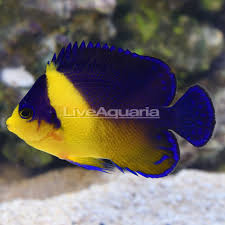
I have a couple of questions on the Venusta Angel, it’s by far one of my top 3 favourite dwarf angels, and I have the opportunity to source a captive bred Venusta.
If you’ve never heard of this fish, this is an adult :)
So, here’s the questions I’ve got!
1. If I got a Capive Bred with the lack of purple, and I mean it’s already an inch long with 75% yellow and maybe 25% purple, would the ratio eventually change to more purple than yellow?
2. How long does it take to go from an inch if not 0.5 inch, to even close to the adult size (4 inches)? I’d assume at least 5 years if not longer, but I’ve watched Emperor juveniles grow within a few months to a decent size.
3. Are there any corals I’d have to watch out for specifically - I already don’t keep many Micromussa (other than a Holy Grail Micro), and want to focus primarily on torches, hammers and gonis with the odd random LPS like chalices.
4. What is there swim pattern like? I’ve kept other large and dwarf angels, they’re always chilled out swimmers compared to Tangs and other large fish we commonly keep, so I’d assume these are fairly similar in swimming style to deeper water anthias where they stay closer to the rocks and aren’t too active, just gracefully hunting.
I’d probably keep this in my 3 foot nano (25G tank) for a long time if I can before it would have to go into my 5 footer - by which point if the growth rate is that painfully slow, I’d have room - if not a larger tank!
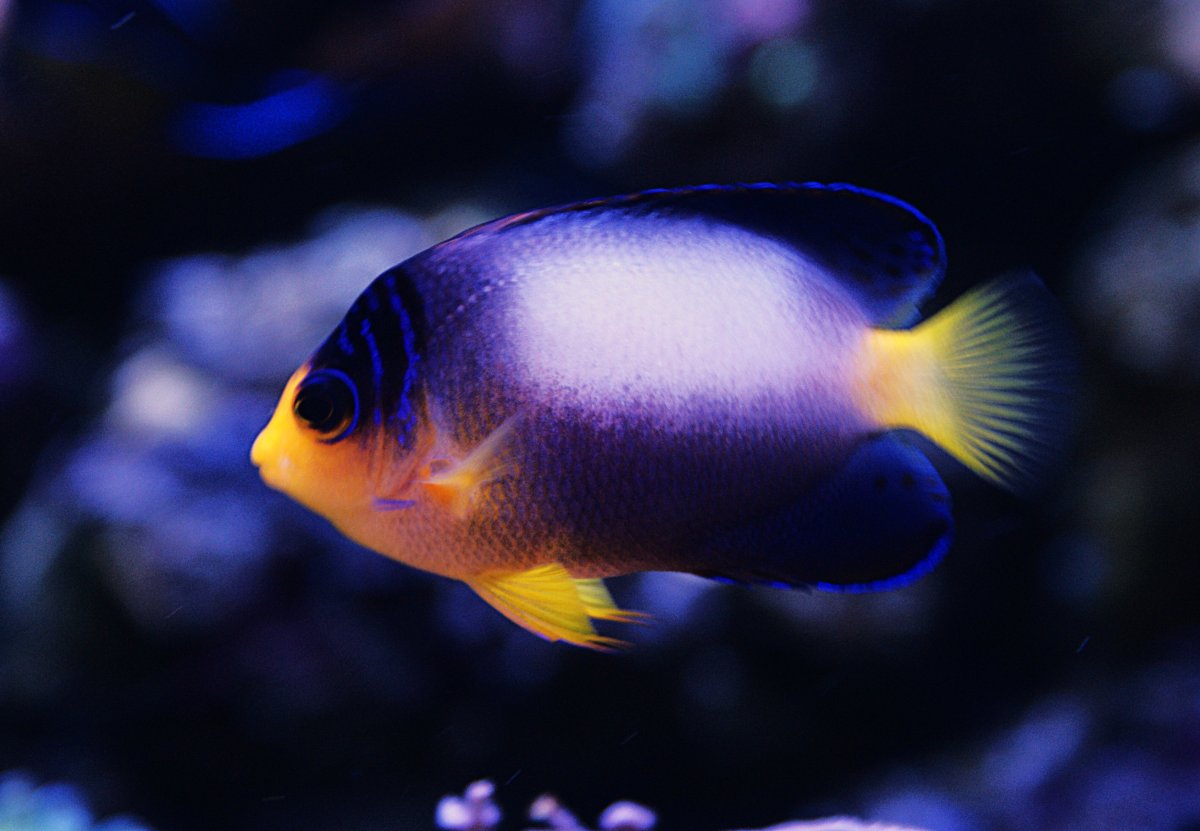
Plus, a photo of my multicolour angel - I love the “obscure” rarer angels if you can’t tell!
If you’ve never heard of this fish, this is an adult :)
So, here’s the questions I’ve got!
1. If I got a Capive Bred with the lack of purple, and I mean it’s already an inch long with 75% yellow and maybe 25% purple, would the ratio eventually change to more purple than yellow?
2. How long does it take to go from an inch if not 0.5 inch, to even close to the adult size (4 inches)? I’d assume at least 5 years if not longer, but I’ve watched Emperor juveniles grow within a few months to a decent size.
3. Are there any corals I’d have to watch out for specifically - I already don’t keep many Micromussa (other than a Holy Grail Micro), and want to focus primarily on torches, hammers and gonis with the odd random LPS like chalices.
4. What is there swim pattern like? I’ve kept other large and dwarf angels, they’re always chilled out swimmers compared to Tangs and other large fish we commonly keep, so I’d assume these are fairly similar in swimming style to deeper water anthias where they stay closer to the rocks and aren’t too active, just gracefully hunting.
I’d probably keep this in my 3 foot nano (25G tank) for a long time if I can before it would have to go into my 5 footer - by which point if the growth rate is that painfully slow, I’d have room - if not a larger tank!
Plus, a photo of my multicolour angel - I love the “obscure” rarer angels if you can’t tell!