




Lasse
10K Club member
View Badges
Ultimate Member
Reef Squad
Excellence Award
Reef Tank 365
Reef Of The Month
R2R App User
Article Contributor
My Tank Thread
- Joined
- Mar 20, 2016
- Messages
- 12,966
- Reaction score
- 31,918
- Location
- Källarliden 14 D Bohus, Sweden
- What state or country do you live in
- Other International
In the thread https://www.reef2reef.com/threads/h...understanding-of-par-this-whole-time.1035018/ all from PAR to coral colourations is discussed.
Among other things - coral colouration during different wavelengths was discussed. I decide to start an own thread according this and I have also done some experiments in order to show what I mean.
The colours of our corals are either from reflection or fluorescence. Reflection colours is just the protons that bounces back to the eye - fluorescence colours is that the coral catch the proton and bounce back another photon of normally longer wavelength (read lower energy quanta) The coral works like a light source. This light is very weak and your eyes will not catch it if there is a lot of reflecting colours in the lumen window. The lumen window is there the eyes works best - in the graph - the yellow line
Look at this
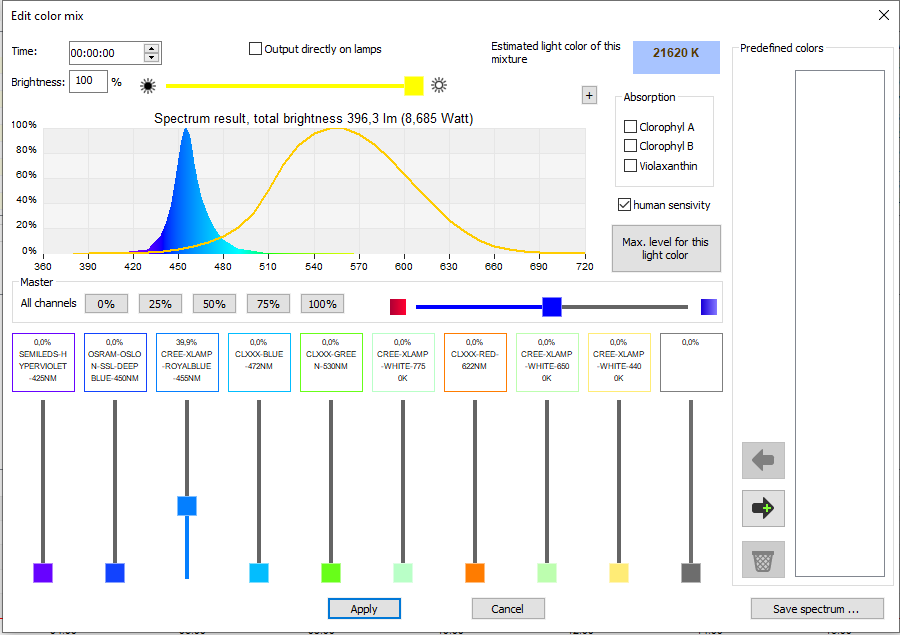
If a coral bounce back green photons (530 nm) you will see them even if they are week . Now we take 6500 K to the same level in watt. There is no chance that you should even notice the weak fluorescence sources
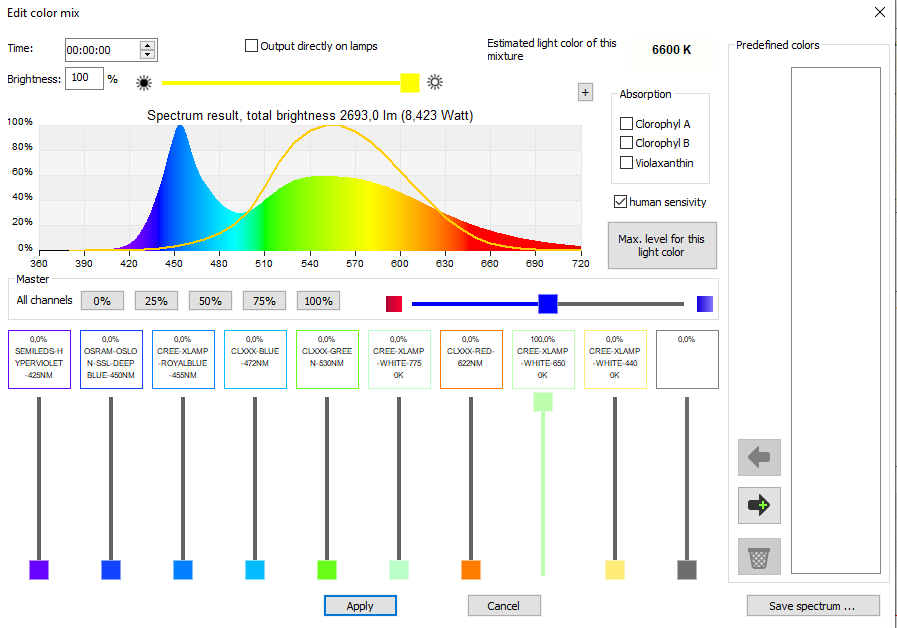
Even if you fill up with blue wavelengths - 6500 K eillcompete out the fluorescence in most cases but not all as we will see later.
First experiment Red Seriatopora hystrix
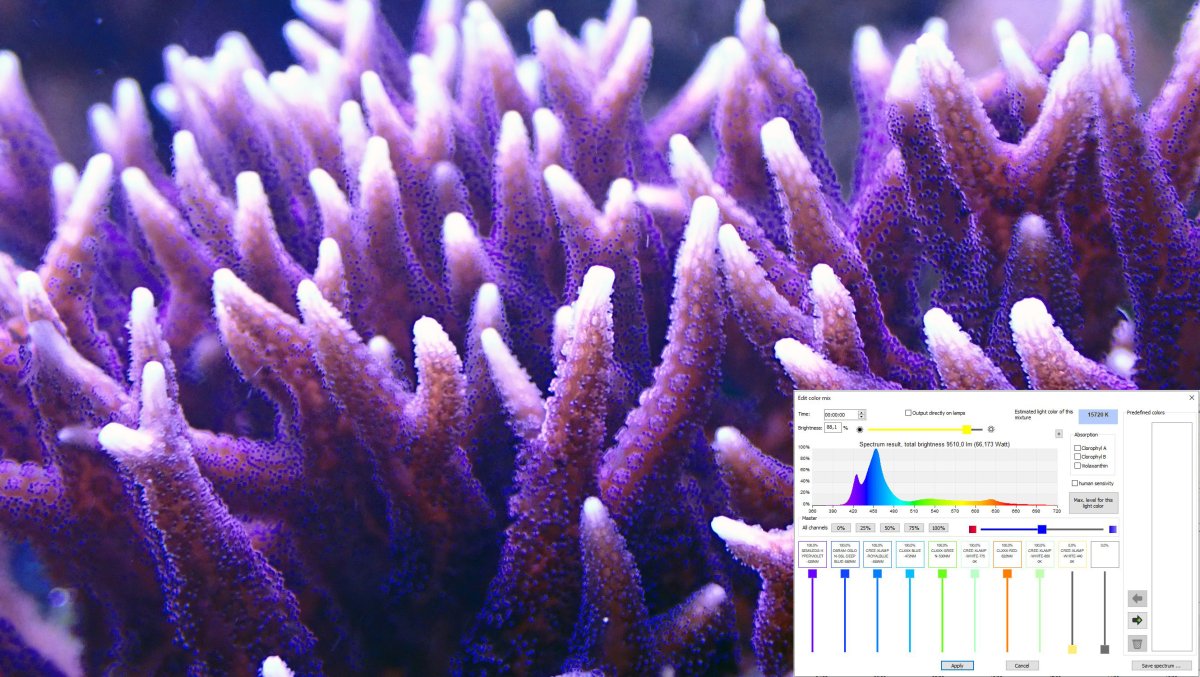
My normal full light
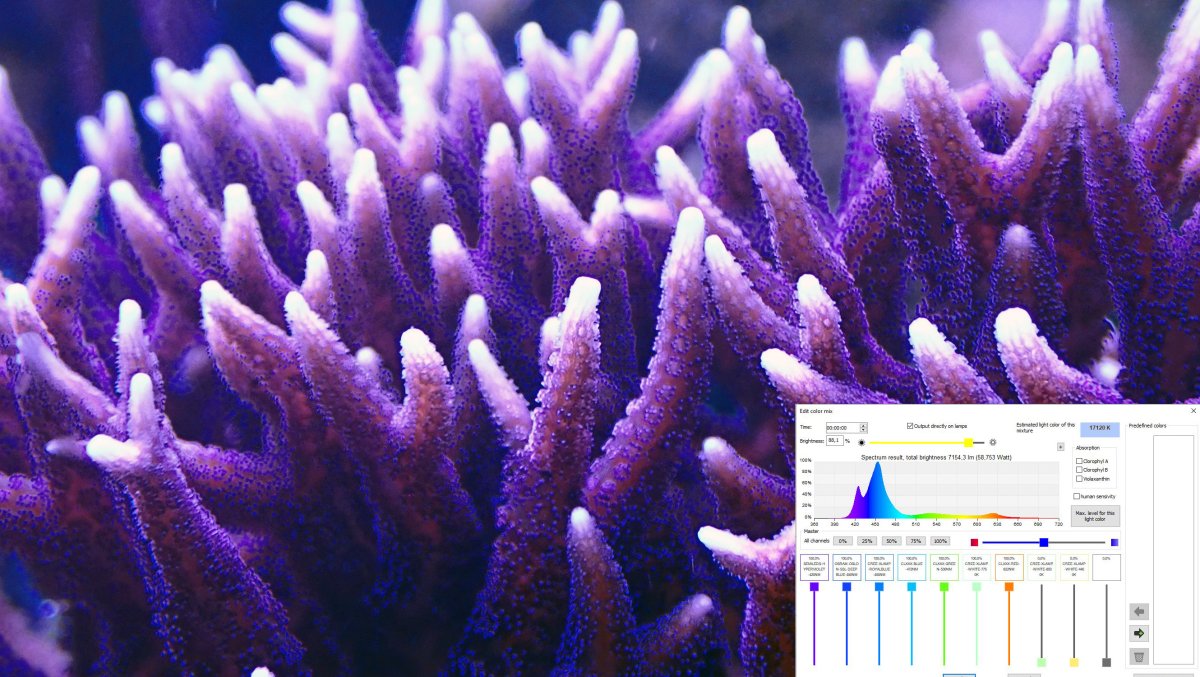
Close down 6500 K - not much happens
6500 and 8000 K zero - still red
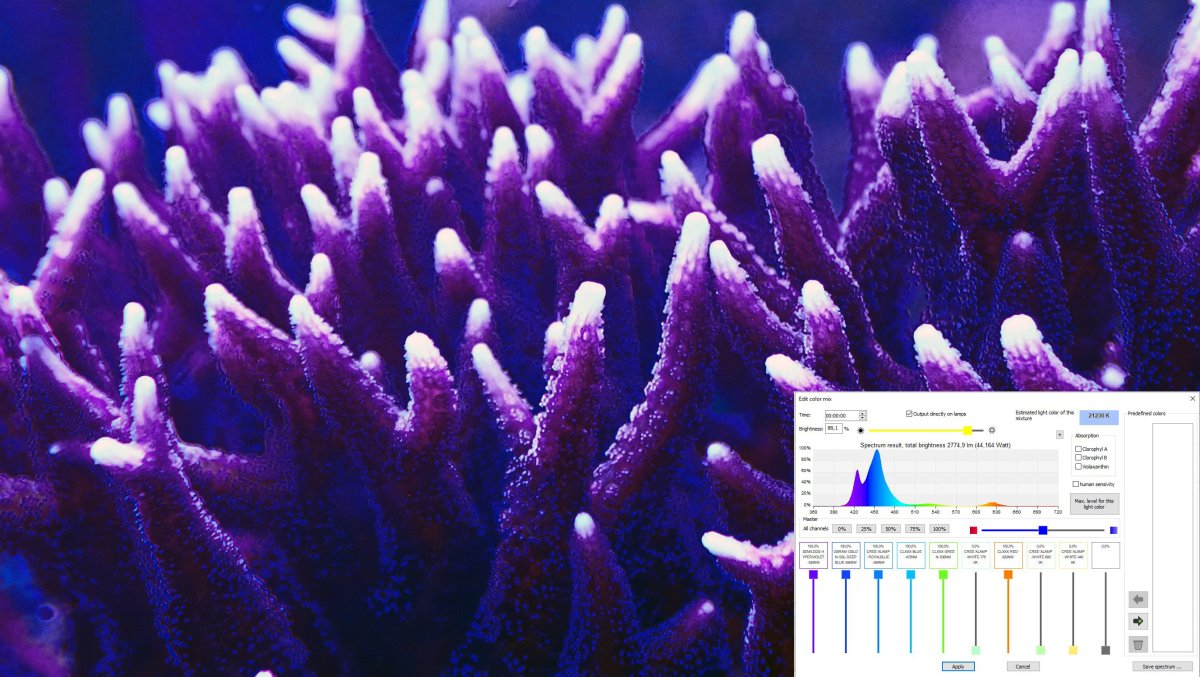
Close down 6500K, 8000K, and red 622 nm - where did the red colour go?
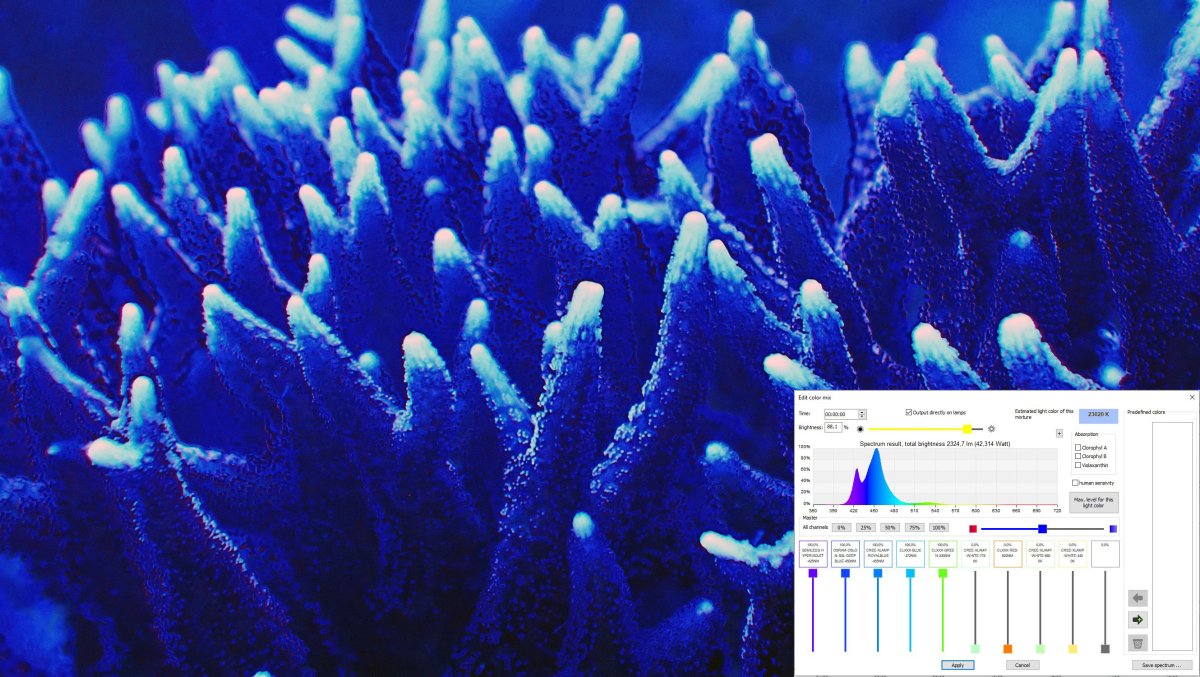
6500K, 8000K, red 622 nm and green 530 nm = 0
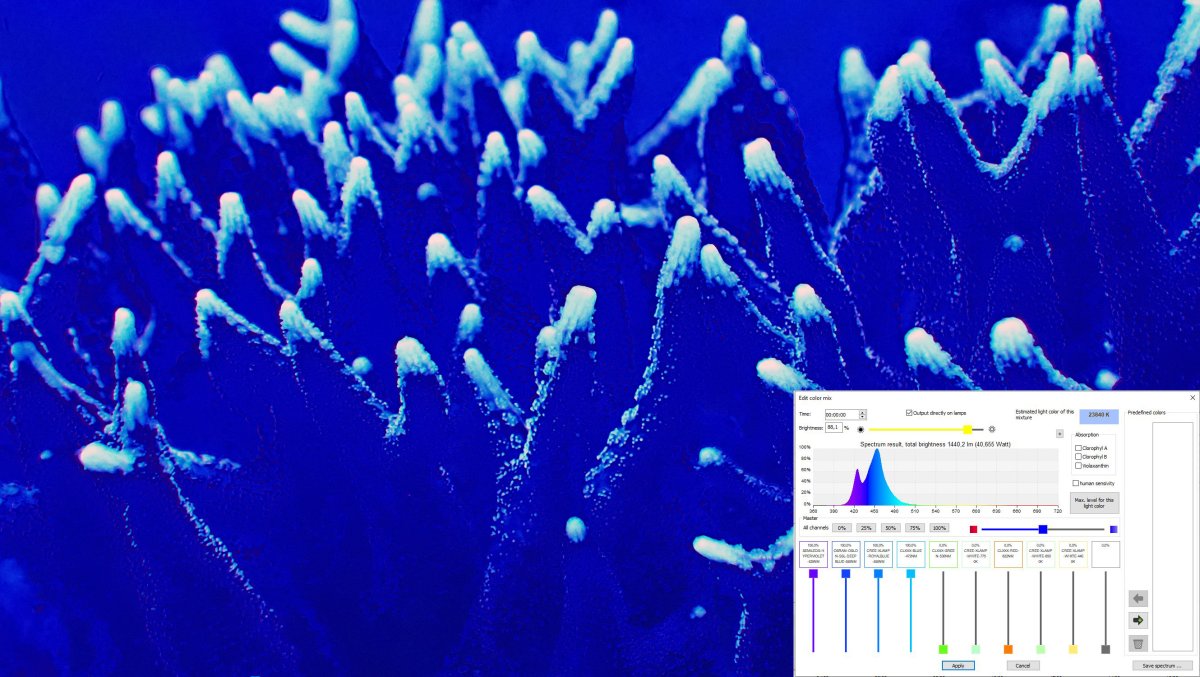
6500K, 8000K, red 622 nm, green 530 nm and blue 470 = 0
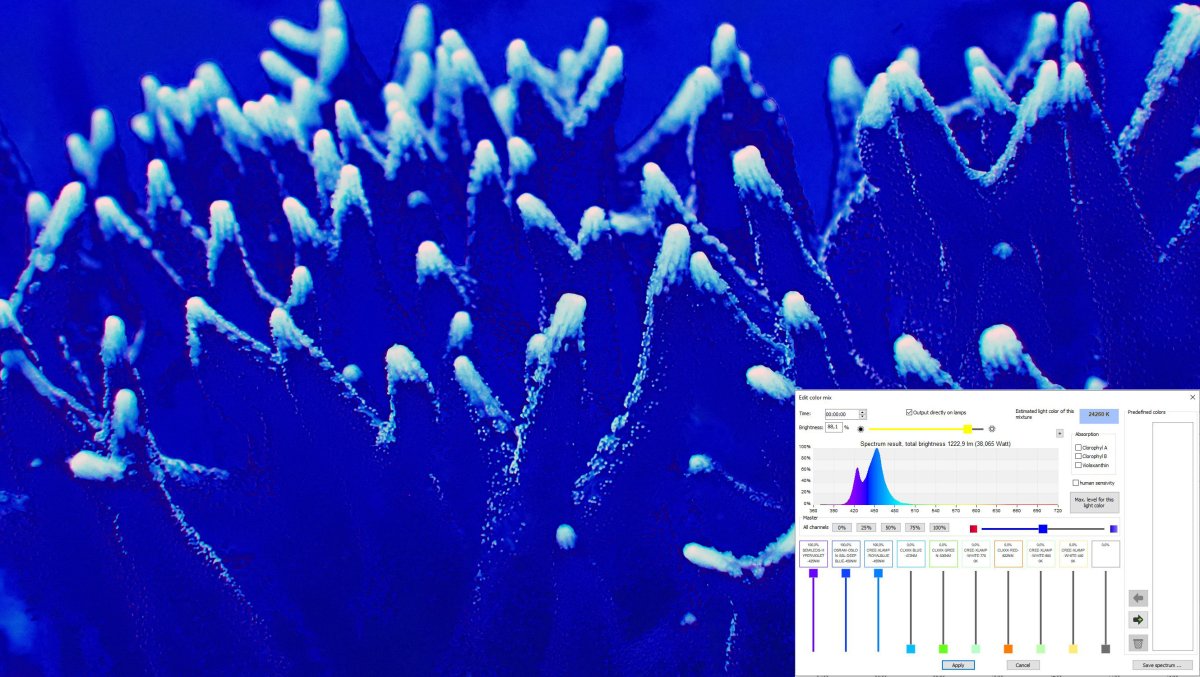
6500K, 8000K, red 622 nm, green 530 nm, blue 470 and blue 455 = 0 - here some very weak reddish fluorescence
take over
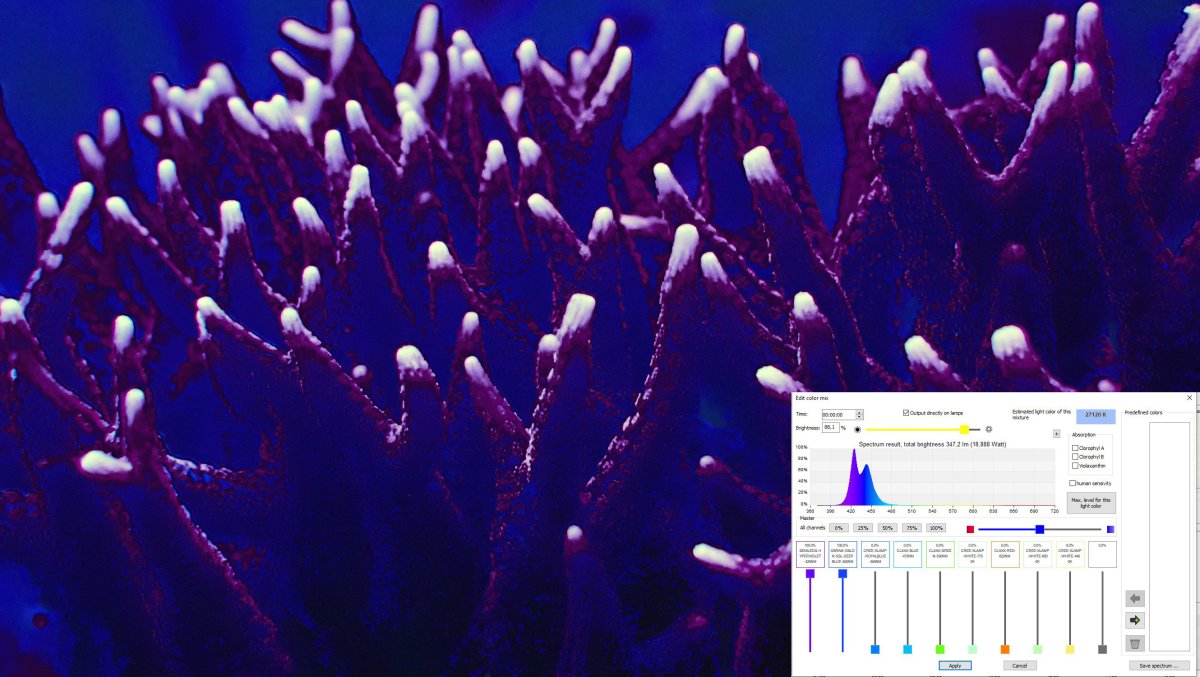
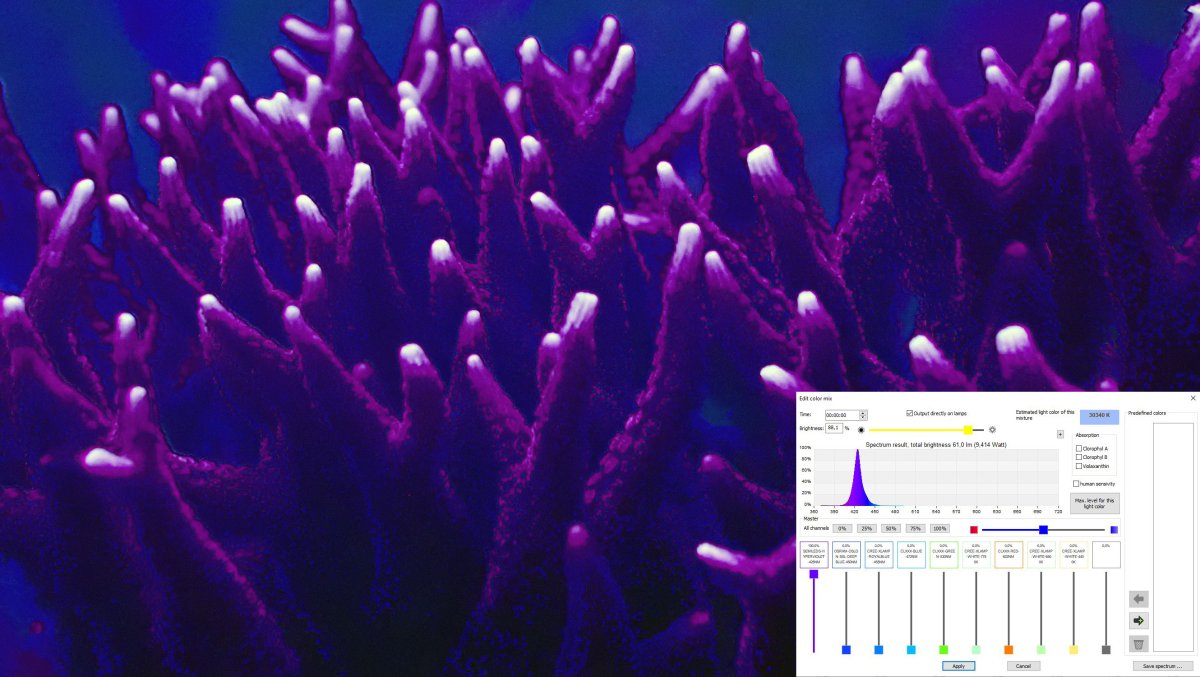
6500K, 8000K, red 622 nm, green 530 nm, blue 470, blue 455 and blue 450 = 0. Only 425 nm and a little bit more fluorescence of reddish brown
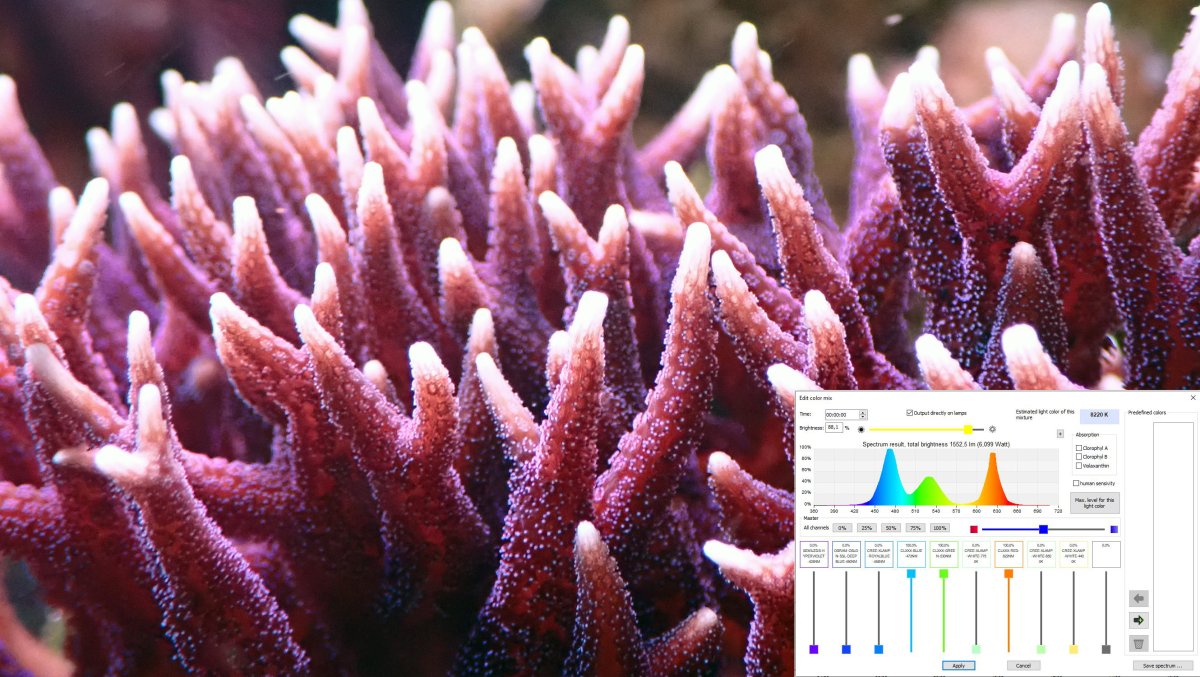
Test with RGB - very red
Test with 7750 K white - more yellowish
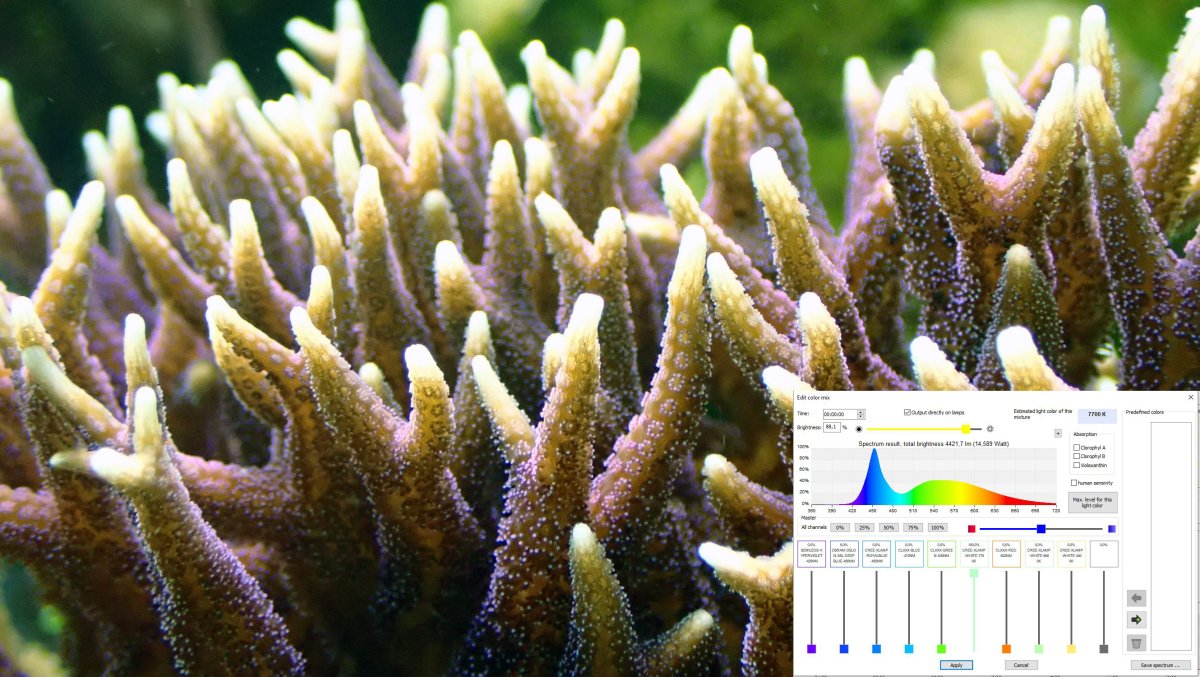
This experiment shows that Red Seriatopora hystrix¨s colour is mostly a reflecting colour - red LED will help to give a good red colour of it
I will come back tomorrow with more examples - green montipora.
Sincerely Lasse
Among other things - coral colouration during different wavelengths was discussed. I decide to start an own thread according this and I have also done some experiments in order to show what I mean.
The colours of our corals are either from reflection or fluorescence. Reflection colours is just the protons that bounces back to the eye - fluorescence colours is that the coral catch the proton and bounce back another photon of normally longer wavelength (read lower energy quanta) The coral works like a light source. This light is very weak and your eyes will not catch it if there is a lot of reflecting colours in the lumen window. The lumen window is there the eyes works best - in the graph - the yellow line
Look at this
If a coral bounce back green photons (530 nm) you will see them even if they are week . Now we take 6500 K to the same level in watt. There is no chance that you should even notice the weak fluorescence sources
Even if you fill up with blue wavelengths - 6500 K eillcompete out the fluorescence in most cases but not all as we will see later.
First experiment Red Seriatopora hystrix
My normal full light
Close down 6500 K - not much happens
6500 and 8000 K zero - still red
Close down 6500K, 8000K, and red 622 nm - where did the red colour go?
6500K, 8000K, red 622 nm and green 530 nm = 0
6500K, 8000K, red 622 nm, green 530 nm and blue 470 = 0
6500K, 8000K, red 622 nm, green 530 nm, blue 470 and blue 455 = 0 - here some very weak reddish fluorescence
take over
6500K, 8000K, red 622 nm, green 530 nm, blue 470, blue 455 and blue 450 = 0. Only 425 nm and a little bit more fluorescence of reddish brown
Test with RGB - very red
Test with 7750 K white - more yellowish
This experiment shows that Red Seriatopora hystrix¨s colour is mostly a reflecting colour - red LED will help to give a good red colour of it
I will come back tomorrow with more examples - green montipora.
Sincerely Lasse

















