- Joined
- Jan 11, 2026
- Messages
- 64
- Reaction score
- 113
- Location
- Atlanta
- What state or country do you live in
- Georgia
Hello fellow reefers!
I have been keeping keep tanks for 20 years and have had the usual ups and downs but when I was adding frags to my 21G peninsula reef at the start of this year, I made the ultimate rookie mistake and didn't dip. Why not? Because like nearly every one of us, I had "never dipped" and "never had a problem". And we all know where this is going...
I introduced monti-eating nudibranchs to my new system and set off what turned into a 7-month battle with this unbelievably resilient coral predator. I tried pulling all the montis I could get out and dipping them, but it only seemed to slow the little frilly jerks down- they would always come back and I never could get all of them because some frags had already encrusted and/or were glued down too firmly to dip. Soon they had spread to every one of my montipora species and even started making a dent in my anacropora, one of the only non-monti corals they will eat. The damage was never extreme, just white patches appearing here and there. But ultimately, these pests wound up slowly killing my red digitata, my orange setosa, my purple spongodes, and the original rainbow encrusting monti they came in on. It was incredibly frustrating.
However, over time, I noticed that my two monti caps (one red one green) had begun to develop an apparent immune defense to them. They seemed to be producing more/thicker mucus when being actively predated upon, and gradually they were not only regrowing over damaged areas, but expanding rapidly. This, along with my consistent manual removal efforts (and perhaps natural predators) ultimately resulted in their total eradication from my tank.
So, in the event that you're here because you too have been visited by the tiny frilly white fairies of death, read on!
Eradicating Montipora-Eating Nudibranchs: An evidence (and experience) based guide
1. For the love of all that is good in this universe (which tbh isn't much anymore, so): DIP YOUR FRAGS! I use Bayer Advanced Dip now and have not had any additional coral pests enter my tank since I've been consistently using this dip and method. I don't believe that Bayer kills the eggs (same issue with other coral dips) but any montis or anacropora that I add receive a scrub with a soft-bristle toothbrush after the dip and rinse to remove any eggs.
2. Pluck them out! Alright so you're here because either you skipped step 1 or you had some eggs survive. The next step is to manually remove as many nudibranchs and eggs as you can, every night. Missing a night here and there is probably okay, but my assumption is that if I had truly gone 'hunting' every night, I would've defeated them faster. They are more active after dark, so once my lights had been out for an hour or so, I'd get a very bright flashlight and a bamboo skewer and start pulling them out. I tried several tools to pluck them, but found the texture of the bamboo skewer was just right- the nudis seemed to stick to it instead of just dislodging and floating away, and they are cheap. I also broke some of them partially about 1" from the pointy end and glued the break so that the pointy end was now at an angle. This worked well for getting any nudis on the underside of the plating montis. One by one, pluck 'em out and destroy them.
3. Scrub for eggs. Get a soft-bristled toothbrush or similar and use it to gently scrub any areas where you either see eggs or suspect there might be eggs. This devilish species LOVES tiny nooks and crannies, especially for egg-laying. They also seem to like the margins, including where the coral is growing onto the rock/plug and the growth edge. I did my scrubbing with the pump and powerhead on full blast so that hopefully any eggs in the water would get pulled into the intake.
4. Blow off your rocks. I didn't really see this as part of my strategy until I started noticing that after I'd blow off my rocks, I'd see tiny adult nudis on the glass. I of course removed all I saw, but I also started paying closer attention to what, exactly, was being blown off my rocks and montis. Sure enough, I saw that the jet of water was dislodging nudis from the coral and rocks around it. This strategy is especially important for any branching species where it is impossible to see and manually remove the adults from between the branches. I think that regularly blowing off your frags is essential for eradication for this reason. I did my best to use the turkey baster to suck up and dispose of any nudis during this process, but I also was careful to check the glass after I finished. There would always be a couple on the glass and of course I'd get them out too.
5. Add natural predators. My tank is a 21G nano holding around 18G of water after displacement so my options were really limited. I also have many small sexy shrimp so a lot of the usually-recommended wrasses were out. I chose a possum wrasse, and he definitely eats the nudis- I would watch him hover around the montis regularly and on rare occasions even saw him pluck them off when they were exposed. However he's nocturnal mostly, so I assume he was regularly eating them at night. Wrasses of all kinds are said to eat montipora-eating nudis, but from my research it seems no species is truly a guarantee. Melanarus wrasses are often the most-recommended. I also think that my peppermint shrimp and coral banded shrimp would sometimes eat them.
6. Stay consistent with the above steps and wait. The coral may do what mine did and slowly build up immunity if you can keep the numbers down. I lost some beautiful frags over this time, so while I did ultimately eradicate the nudis, if you were hoping for a quick fix that would save all your frags, this ain't it. But being dedicated to manual removal in all forms and putting in the time, I was able to defeat my plague and I did so without chemicals, without removing my corals, and without having to leave the tank monti-free.
Now go forth and mush some pestilence! I hope this approach will work for you as it did for me. Feel free to comment with any questions, and see the attached photos for growth progress on my 3 largest montis.
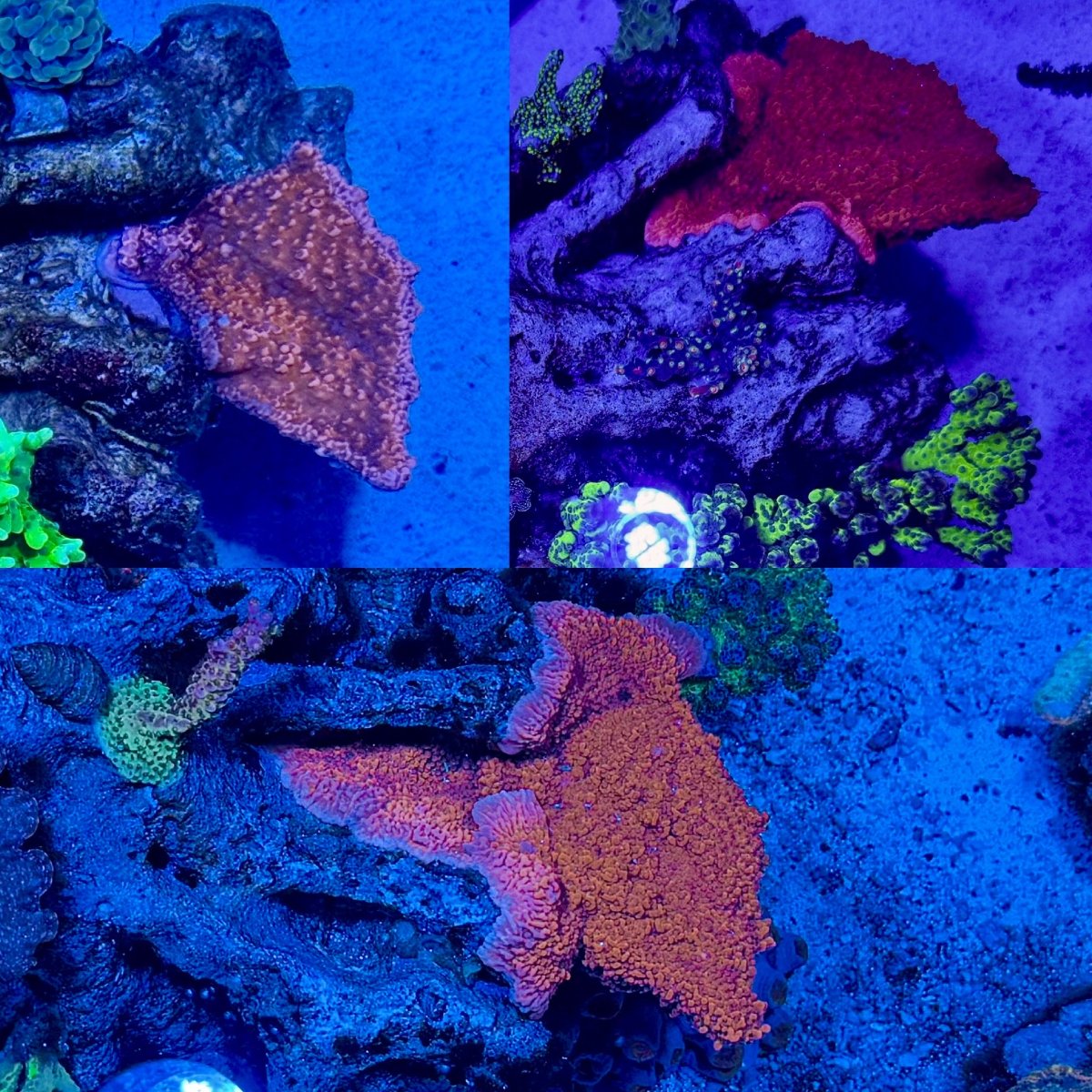
Red Monti Cap: Top left is during active nudi infestation, about 2 months after adding this frag. Top right is after 5 months, nudis mostly gone but still a few. Bottom is today (no nudis for about 7 weeks now).
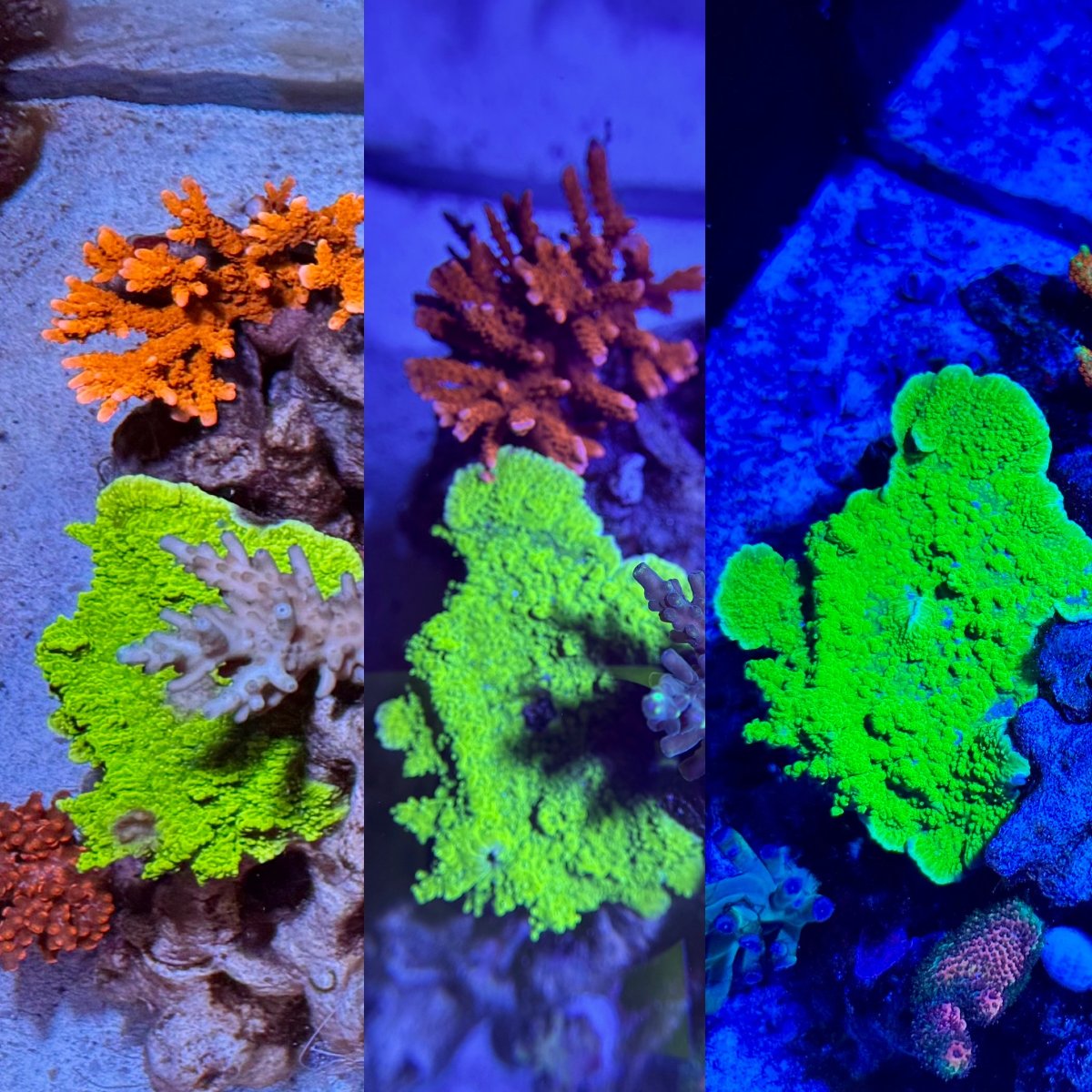
Green Monti Cap: Left is 2 months after adding with tons of nudis; middle is ~ 5 months with a few left, and right is today. Sadly the red/orange digi in the left and middle pics was lost to the nudibranchs :(
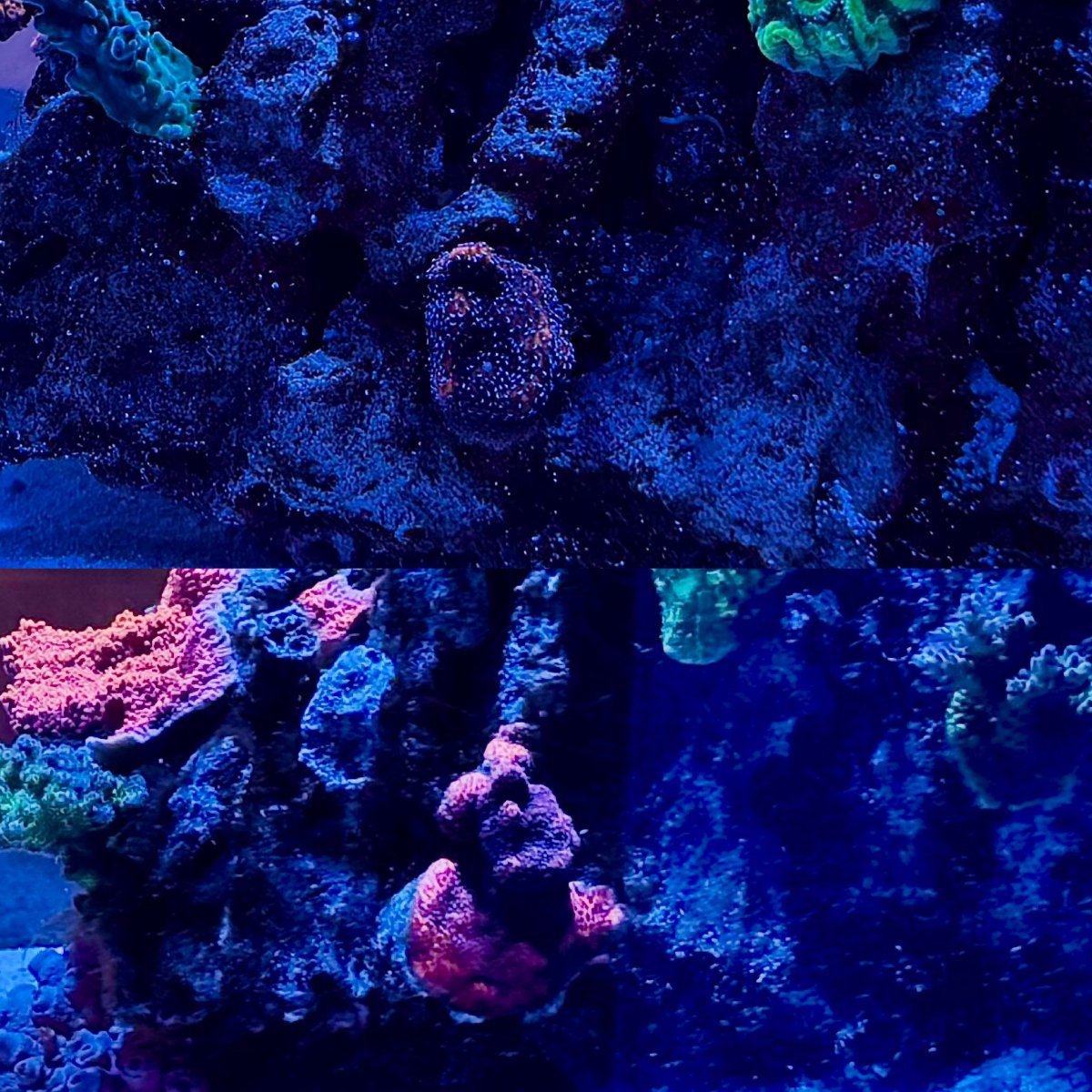
Encrusting Monti (undata maybe?): Top pic 1 month after adding. I got this frag as a freebie with an order and thought it was doomed as I was in full-blown infestation with nudis at this time, but I figured why not and glued it onto a vertical cliff on my rocks that gets mid/low light but high flow. Bottom pic is today, about 4-5 months after adding it. It generally seemed less appealing to the nudis than the digi and caps, but it absolutely got infested and I did have to manually remove many adults and eggs from this coral. But it has grown incredibly well since then!
I have been keeping keep tanks for 20 years and have had the usual ups and downs but when I was adding frags to my 21G peninsula reef at the start of this year, I made the ultimate rookie mistake and didn't dip. Why not? Because like nearly every one of us, I had "never dipped" and "never had a problem". And we all know where this is going...
I introduced monti-eating nudibranchs to my new system and set off what turned into a 7-month battle with this unbelievably resilient coral predator. I tried pulling all the montis I could get out and dipping them, but it only seemed to slow the little frilly jerks down- they would always come back and I never could get all of them because some frags had already encrusted and/or were glued down too firmly to dip. Soon they had spread to every one of my montipora species and even started making a dent in my anacropora, one of the only non-monti corals they will eat. The damage was never extreme, just white patches appearing here and there. But ultimately, these pests wound up slowly killing my red digitata, my orange setosa, my purple spongodes, and the original rainbow encrusting monti they came in on. It was incredibly frustrating.
However, over time, I noticed that my two monti caps (one red one green) had begun to develop an apparent immune defense to them. They seemed to be producing more/thicker mucus when being actively predated upon, and gradually they were not only regrowing over damaged areas, but expanding rapidly. This, along with my consistent manual removal efforts (and perhaps natural predators) ultimately resulted in their total eradication from my tank.
So, in the event that you're here because you too have been visited by the tiny frilly white fairies of death, read on!
Eradicating Montipora-Eating Nudibranchs: An evidence (and experience) based guide
1. For the love of all that is good in this universe (which tbh isn't much anymore, so): DIP YOUR FRAGS! I use Bayer Advanced Dip now and have not had any additional coral pests enter my tank since I've been consistently using this dip and method. I don't believe that Bayer kills the eggs (same issue with other coral dips) but any montis or anacropora that I add receive a scrub with a soft-bristle toothbrush after the dip and rinse to remove any eggs.
2. Pluck them out! Alright so you're here because either you skipped step 1 or you had some eggs survive. The next step is to manually remove as many nudibranchs and eggs as you can, every night. Missing a night here and there is probably okay, but my assumption is that if I had truly gone 'hunting' every night, I would've defeated them faster. They are more active after dark, so once my lights had been out for an hour or so, I'd get a very bright flashlight and a bamboo skewer and start pulling them out. I tried several tools to pluck them, but found the texture of the bamboo skewer was just right- the nudis seemed to stick to it instead of just dislodging and floating away, and they are cheap. I also broke some of them partially about 1" from the pointy end and glued the break so that the pointy end was now at an angle. This worked well for getting any nudis on the underside of the plating montis. One by one, pluck 'em out and destroy them.
3. Scrub for eggs. Get a soft-bristled toothbrush or similar and use it to gently scrub any areas where you either see eggs or suspect there might be eggs. This devilish species LOVES tiny nooks and crannies, especially for egg-laying. They also seem to like the margins, including where the coral is growing onto the rock/plug and the growth edge. I did my scrubbing with the pump and powerhead on full blast so that hopefully any eggs in the water would get pulled into the intake.
4. Blow off your rocks. I didn't really see this as part of my strategy until I started noticing that after I'd blow off my rocks, I'd see tiny adult nudis on the glass. I of course removed all I saw, but I also started paying closer attention to what, exactly, was being blown off my rocks and montis. Sure enough, I saw that the jet of water was dislodging nudis from the coral and rocks around it. This strategy is especially important for any branching species where it is impossible to see and manually remove the adults from between the branches. I think that regularly blowing off your frags is essential for eradication for this reason. I did my best to use the turkey baster to suck up and dispose of any nudis during this process, but I also was careful to check the glass after I finished. There would always be a couple on the glass and of course I'd get them out too.
5. Add natural predators. My tank is a 21G nano holding around 18G of water after displacement so my options were really limited. I also have many small sexy shrimp so a lot of the usually-recommended wrasses were out. I chose a possum wrasse, and he definitely eats the nudis- I would watch him hover around the montis regularly and on rare occasions even saw him pluck them off when they were exposed. However he's nocturnal mostly, so I assume he was regularly eating them at night. Wrasses of all kinds are said to eat montipora-eating nudis, but from my research it seems no species is truly a guarantee. Melanarus wrasses are often the most-recommended. I also think that my peppermint shrimp and coral banded shrimp would sometimes eat them.
6. Stay consistent with the above steps and wait. The coral may do what mine did and slowly build up immunity if you can keep the numbers down. I lost some beautiful frags over this time, so while I did ultimately eradicate the nudis, if you were hoping for a quick fix that would save all your frags, this ain't it. But being dedicated to manual removal in all forms and putting in the time, I was able to defeat my plague and I did so without chemicals, without removing my corals, and without having to leave the tank monti-free.
Now go forth and mush some pestilence! I hope this approach will work for you as it did for me. Feel free to comment with any questions, and see the attached photos for growth progress on my 3 largest montis.
Red Monti Cap: Top left is during active nudi infestation, about 2 months after adding this frag. Top right is after 5 months, nudis mostly gone but still a few. Bottom is today (no nudis for about 7 weeks now).
Green Monti Cap: Left is 2 months after adding with tons of nudis; middle is ~ 5 months with a few left, and right is today. Sadly the red/orange digi in the left and middle pics was lost to the nudibranchs :(
Encrusting Monti (undata maybe?): Top pic 1 month after adding. I got this frag as a freebie with an order and thought it was doomed as I was in full-blown infestation with nudis at this time, but I figured why not and glued it onto a vertical cliff on my rocks that gets mid/low light but high flow. Bottom pic is today, about 4-5 months after adding it. It generally seemed less appealing to the nudis than the digi and caps, but it absolutely got infested and I did have to manually remove many adults and eggs from this coral. But it has grown incredibly well since then!
Last edited: