




- Joined
- Jan 11, 2026
- Messages
- 64
- Reaction score
- 113
- Location
- Atlanta
- What state or country do you live in
- Georgia
Hey y’all, I’m not sure if this is the ideal location for this post, but here goes!
I have been battling monti-eating nudis for about 5 months now, and I have noticed something interesting happening to some of the affected corals. In short, they seem to be developing ’immunity’ to them. I assume what is actually happening is closer to a physical resistance or reaction that repels them, but let’s call it immunity for brevity.
As far as my treatment approaches, I did initially pull all my monti frags and dip them in Bayer Advanced, but as has been well-documented elsewhere, even the strongest dips generally don’t kill the eggs. After trying this for a few weeks I basically gave up and switched my approach to manual removal: every night with a flashlight and tweezers, although I eventually found out a wooden toothpick is better (they seem to stick to the toothpick). I did my best but they persisted. Some mornings I’d wake up to a 1/2” white patch on my plating and encrusting montis.
So I added some biological control (predators) to the mix. My possum wrasse definitely eats them, but often they are in nooks and crannies he can’t get to, so it wasn’t a true fix but just a little help to complement my manual removal. A month ago I added a peppermint shrimp, who is also definitely eating some, but there are still a few present most nights when I go to pluck them out.
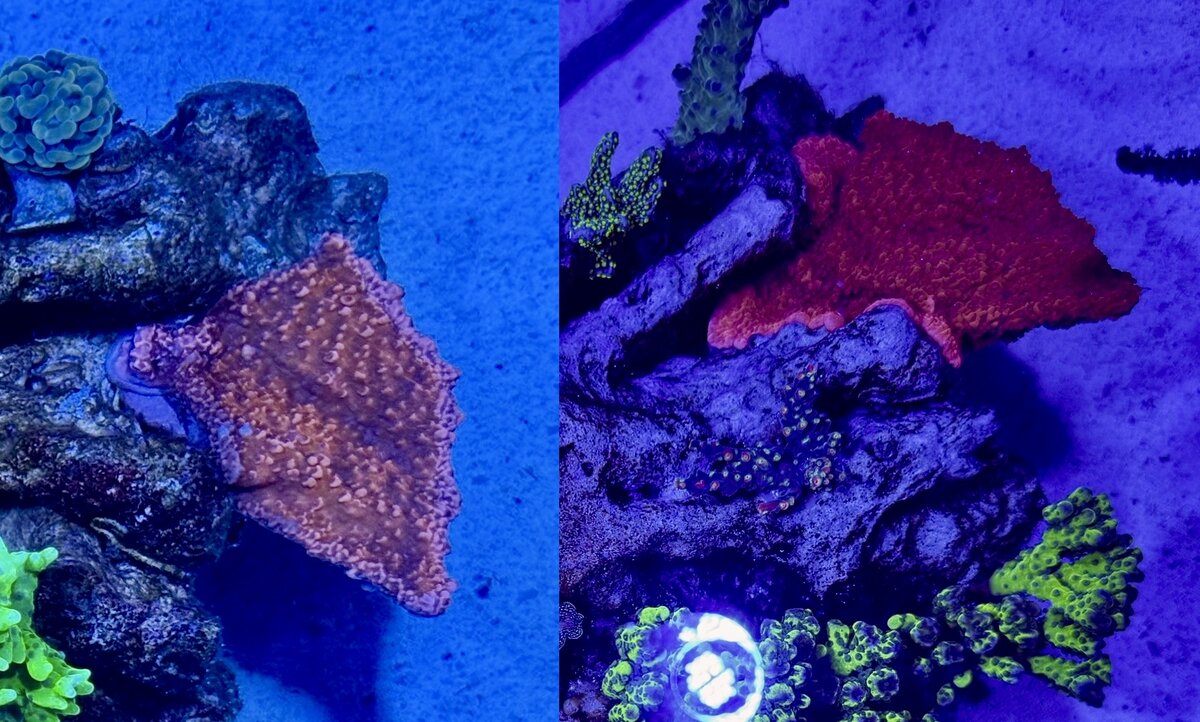
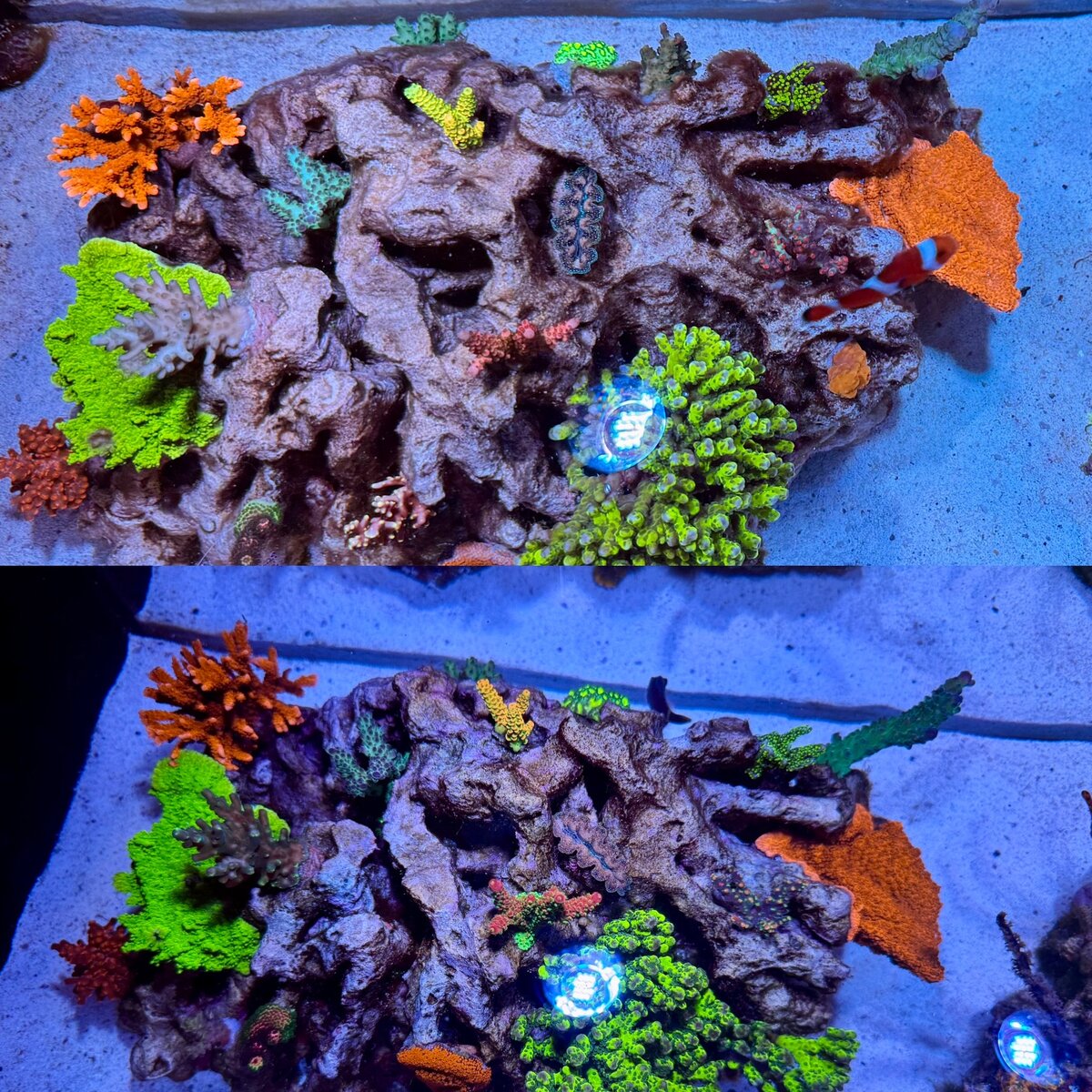
Here’s where it gets interesting: over the last 2 months, my red plating monti has had zero nudis on it and its growth has been explosive. It has added 1/2-3/4” all around and has a new mini-plate shooting off too. I check diligently but no nudis on it once in that time. There are affected frags nearby and definitely still nudis in the tank on these other frags. The coral is just… repelling them. AND in the last month, my green plating monti has started to follow suit; still a couple found here and there but again, growth has exploded and their numbers are dropping. And one of my two encrusting montis has also had zero nudis for several months and is growing like crazy.
My digitata and anacropora are now bearing the brunt of the infestation and really struggling. I am hopeful that they too will develop some sort of defense/resistance over time but we’ll see.
These pests exist on wild reefs although they weren’t really known until they became a major problem to hobbyists; this means they are not generally causing sufficient damage to wild colonies to be studied as a substantial coral pest/predator. Clearly some combination of natural predation by wrasses etc. and the coral’s own existing defenses (primarily mucus, I’m guessing) can prevent them from exploding in number and being a serious threat.
So, is it time to adjust our approach to dealing with these satanic creatures? I personally think that my (unintentionally cautious) approach of natural management has bought the corals the time needed to defend themselves. Would love to hear your thoughts! Some growth pics for reference
I have been battling monti-eating nudis for about 5 months now, and I have noticed something interesting happening to some of the affected corals. In short, they seem to be developing ’immunity’ to them. I assume what is actually happening is closer to a physical resistance or reaction that repels them, but let’s call it immunity for brevity.
As far as my treatment approaches, I did initially pull all my monti frags and dip them in Bayer Advanced, but as has been well-documented elsewhere, even the strongest dips generally don’t kill the eggs. After trying this for a few weeks I basically gave up and switched my approach to manual removal: every night with a flashlight and tweezers, although I eventually found out a wooden toothpick is better (they seem to stick to the toothpick). I did my best but they persisted. Some mornings I’d wake up to a 1/2” white patch on my plating and encrusting montis.
So I added some biological control (predators) to the mix. My possum wrasse definitely eats them, but often they are in nooks and crannies he can’t get to, so it wasn’t a true fix but just a little help to complement my manual removal. A month ago I added a peppermint shrimp, who is also definitely eating some, but there are still a few present most nights when I go to pluck them out.
Here’s where it gets interesting: over the last 2 months, my red plating monti has had zero nudis on it and its growth has been explosive. It has added 1/2-3/4” all around and has a new mini-plate shooting off too. I check diligently but no nudis on it once in that time. There are affected frags nearby and definitely still nudis in the tank on these other frags. The coral is just… repelling them. AND in the last month, my green plating monti has started to follow suit; still a couple found here and there but again, growth has exploded and their numbers are dropping. And one of my two encrusting montis has also had zero nudis for several months and is growing like crazy.
My digitata and anacropora are now bearing the brunt of the infestation and really struggling. I am hopeful that they too will develop some sort of defense/resistance over time but we’ll see.
These pests exist on wild reefs although they weren’t really known until they became a major problem to hobbyists; this means they are not generally causing sufficient damage to wild colonies to be studied as a substantial coral pest/predator. Clearly some combination of natural predation by wrasses etc. and the coral’s own existing defenses (primarily mucus, I’m guessing) can prevent them from exploding in number and being a serious threat.
So, is it time to adjust our approach to dealing with these satanic creatures? I personally think that my (unintentionally cautious) approach of natural management has bought the corals the time needed to defend themselves. Would love to hear your thoughts! Some growth pics for reference



 i would think though that natural predation is of a great benefit for the coral and manual removal as Well, as you Said helps the coral adjust to the predator and maybe have enough time to develope some kind of chemical reaction inside itself as a defence mechanism before being killed.







