


Cooking live rock - this is why

Damage12

Active Member
View Badges
Joined
Nov 24, 2019
Messages
285
Reaction score
271
Rating - 100%
1   0   0
A few months ago we took down our 180g to re-do our floors. It was a good time to start planning an upgrade to a much bigger tank since the 180 was about 20 years old. I’ve been cooking my live rock for a few months and finally did my first water change. I used to have mainly SPS but over the last few years I could not keep my phosphates and nitrates down so it was softies only. Also had an infestation of Vermetid snails. This has taken care of that too.

The following are photos of all the gunk and silt that came off this rock, not including the river of silt flowing down my street. This rock is deep water live rock from Tonga and it’s called Uaniva, which you obviously cannot get anymore. There was no way I was getting rid of this premium rock and starting with some other type. This is the second time in about 20 years that I have cooked this rock. I plan on cooking it for several more months as I plan a new build.

You must remember that over the years, live rock holds in a lot of bad stuff and makes it harder to keep your parameters in the appropriate range. I don’t recommend doing this all the time, but if you are having problems and have an opportunity to do a temporary tank breakdown, go for it.

I tested my water in the 2 brutes before I changed it. Nitrates were about 100 in each but phosphates have come down significantly to .06 and .04. Nitrates will come down too Just sharing this journey.
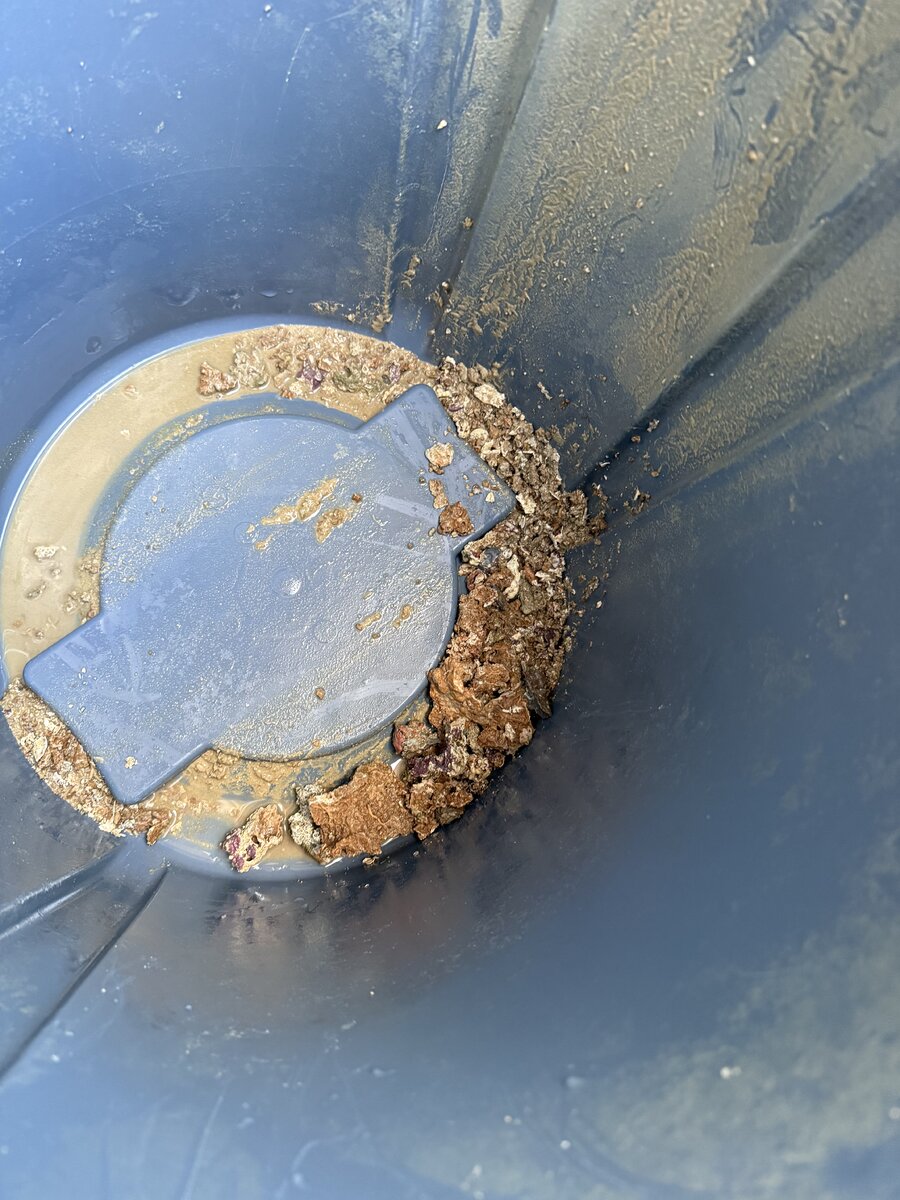
IMG_1059.jpeg
IMG_1058.jpeg
 

Baby Damsel 219

Well-Known Member
View Badges
Joined
Mar 18, 2024
Messages
585
Reaction score
239
Location
Los Angeles
Rating - 0%
0   0   0
do it as long as there no life on it like zoas use hot tap water since if there is the boling water will evaperate and go into the air
 

Dan_P

7500 Club Member
View Badges
Joined
Sep 21, 2018
Messages
9,785
Reaction score
9,639
Rating - 0%
0   0   0
A few months ago we took down our 180g to re-do our floors. It was a good time to start planning an upgrade to a much bigger tank since the 180 was about 20 years old. I’ve been cooking my live rock for a few months and finally did my first water change. I used to have mainly SPS but over the last few years I could not keep my phosphates and nitrates down so it was softies only. Also had an infestation of Vermetid snails. This has taken care of that too.

The following are photos of all the gunk and silt that came off this rock, not including the river of silt flowing down my street. This rock is deep water live rock from Tonga and it’s called Uaniva, which you obviously cannot get anymore. There was no way I was getting rid of this premium rock and starting with some other type. This is the second time in about 20 years that I have cooked this rock. I plan on cooking it for several more months as I plan a new build.

You must remember that over the years, live rock holds in a lot of bad stuff and makes it harder to keep your parameters in the appropriate range. I don’t recommend doing this all the time, but if you are having problems and have an opportunity to do a temporary tank breakdown, go for it.

I tested my water in the 2 brutes before I changed it. Nitrates were about 100 in each but phosphates have come down significantly to .06 and .04. Nitrates will come down too Just sharing this journey.

IMG_1059.jpeg
IMG_1058.jpeg

Another hypothesis is that the nitrate and phosphate came from the rich ecosystem that was killed off. Another type of experiment would have been necessary to le d support to your inferences.
 
OP
OP
Damage12

Damage12

Active Member
View Badges
Joined
Nov 24, 2019
Messages
285
Reaction score
271
Rating - 100%
1   0   0
Another hypothesis is that the nitrate and phosphate came from the rich ecosystem that was killed off. Another type of experiment would have been necessary to le d support to your inferences.
Yes, the nitrates definitely went up much higher after cooking the rock, but the phosphates were high before I broke the tank down as previously mentioned.
 

mcarroll

10K Club member
View Badges
Joined
Jan 8, 2012
Messages
15,213
Reaction score
8,968
Location
Virginia
Rating - 0%
0   0   0
Definitely a good move to save the rock vs ditching it!

What exactly was being done in the Brute trashcan?

"Cooking rock" refers to allowing die-off (from shipping) to happen in a way that least harms the remaining life on/in the rock.

The term is kind of archaic since we pretty much don't get rock in the hobby that needs cooking anymore.
 
OP
OP
Damage12

Damage12

Active Member
View Badges
Joined
Nov 24, 2019
Messages
285
Reaction score
271
Rating - 100%
1   0   0
Definitely a good move to save the rock vs ditching it!

What exactly was being done in the Brute trashcan?

"Cooking rock" refers to allowing die-off (from shipping) to happen in a way that least harms the remaining life on/in the rock.

The term is kind of archaic since we pretty much don't get rock in the hobby that needs cooking anymore.
Thanks. I still call it “cooking” but it’s just saltwater, pump for circulation and covered in the dark. Needed to get rid of the Vermetid snail infestation too.
 

mcarroll

10K Club member
View Badges
Joined
Jan 8, 2012
Messages
15,213
Reaction score
8,968
Location
Virginia
Rating - 0%
0   0   0
Forgot this first time around....did you do anything specific vs the vermitids?
 
OP
OP
Damage12

Damage12

Active Member
View Badges
Joined
Nov 24, 2019
Messages
285
Reaction score
271
Rating - 100%
1   0   0
Forgot this first time around....did you do anything specific vs the vermitids?
No, they died off with essentially no food source while the rock was “cooking”. I was told by another member who did this for Vermetid that it would work as well.
 
OP
OP
Damage12

Damage12

Active Member
View Badges
Joined
Nov 24, 2019
Messages
285
Reaction score
271
Rating - 100%
1   0   0
After a 100% water change of the live rock in the brutes, phosphates are 0 down from .04/.06 and nitrates are down from 100+ to 20-25. Seems like all of the phosphates have leached out of the rock, but will re-test in a week or two to see if phosphates are holding at zero.
 

TOP 10 Trending Threads

WHAT AMOUNT OF LIVE ROCK AND SAND SHOULD BE PRIORITIZED FOR OPTIMAL BIODIVERSITY/FILTRATION?

  • 100% live rock + bagged sand

    Votes: 38 27.1%
  • 100% dry rock + 100% live sand

    Votes: 47 33.6%
  • 50/50 live/dry rock, 50/50 live/bagged sand

    Votes: 31 22.1%
  • 75% live rock, 25% live sand

    Votes: 14 10.0%
  • 25% live rock, 75% live sand

    Votes: 10 7.1%
Back
Top







