Dosing Pumps & Check Valves

pelphrey

2500 Club Member
View Badges
Joined
Apr 22, 2015
Messages
4,110
Reaction score
5,929
Location
Kentucky
Rating - 0%
0   0   0
Ill check it out, I have an account there I rarely use because they are 30% more. But when you need it they have it.

Hey @pelphrey Hows your dosing pump working? Did you have problems keeping primed or were they draining.

No issues with my CoralBox doser. Calibrated it a couple weeks ago and one of the heads was slightly off, dosed probably 8.5ml during a 10ml calibration. Easily corrected!
 

vetteguy53081

Well known Member and monster tank lover
View Badges
Joined
Aug 11, 2013
Messages
108,096
Reaction score
242,657
Location
Wisconsin -
Rating - 100%
17   0   0
Thats what I have, Any tips or tricks with that unit? ..Just to be clear
I think the output side after the pump is draining resulting in a larger dose at times and a short dose at others. I have to think that the total volume would be Minimal unless dosing a small tank...so that leadsme to this question...Submerge the output lines in the sump or suspend? Fyi my containers will be on the floor under the pumps,
20180407_203836.jpg

Check valves???. Looks like a nice/organized setup and should work well.
 

PhreeByrd

Active Member
View Badges
Joined
Oct 7, 2017
Messages
476
Reaction score
423
Location
Indiana
Rating - 0%
0   0   0
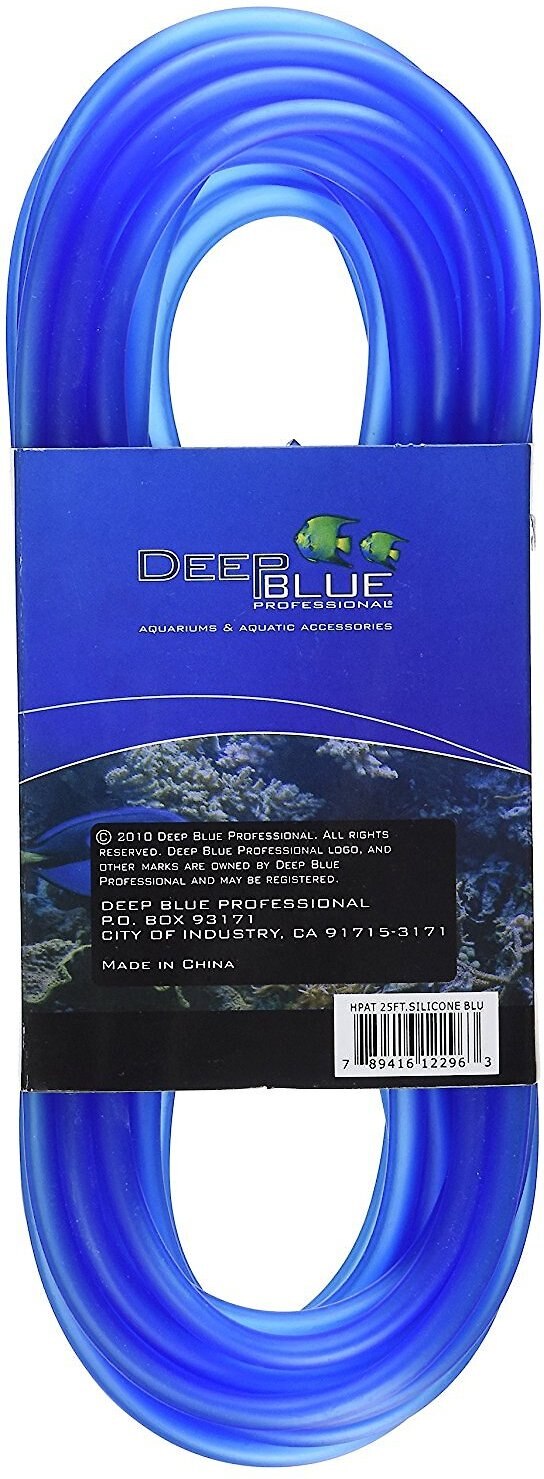
I use the same AquaMedic EVO4 doser as Josh Kraft and siggy, and my setup is almost identical to siggy's. I never have issues with leaking, backsiphoning, or air in the output lines. Make sure you are using high-quality silicone tubing of the same size supplied with the doser. I find that Deep Blue's Silicone Airline Tubing works great, and it's inexpensive. The vinyl tubing you find at hardware stores and home centers is not a good substitute and will definitely allow leakage.

Do not use check valves -- they will probably not work at the very low pressures and flow rates we're dealing with. They are completely unnecessary and will almost certainly cause more issues than they solve. The pump heads seal the lines by themselves. Just the same, do not submerge the ends of the output lines in the water. You definitely want what is commonly known as an 'air gap' to prevent any possibility of backsiphoning.

If you're getting air in the lines, the issue is a leaky connection. Zip ties will not help at all -- they are not made for this purpose. The plastic tubing clamps may indeed help if you use the right size. But using good quality tubing, I have never found them necessary.
 
OP
OP
siggy

siggy

My Aquariums Going Again
View Badges
Joined
Feb 16, 2017
Messages
7,123
Reaction score
20,938
Location
MI
Rating - 0%
0   0   0
Chewy came threw on Tuesday, Unique Corals deliverer a case of Core7 today....SO here is newb question 1321: How many use acrylic tube in the sump for dosing like those fancy sump makers or just run tubing ?
I have a 4 pack of these on the way amazon $25, I like the scale on them
71MwPECfHmL._SL1500_.jpg
 

PhreeByrd

Active Member
View Badges
Joined
Oct 7, 2017
Messages
476
Reaction score
423
Location
Indiana
Rating - 0%
0   0   0
I just run tubing to the sump. I do use a magnetic tubing & probe holder at the sump end. I've forgotten who makes it, but it works well for me. Since my acrylic sump has a braced top, most other tubing holders available would not work without extensive modifications, if at all. They're nearly all designed for rimless tanks or sumps.
At the supply end, I just use 1/2 gallon bottles with holes drilled through the caps; some rigid airline tubing about 2" longer than the height of the bottles inserted through the drilled holes in the caps; then run silicone tubing from the rigid tubing to the dosing pump heads. Simple, easy, and cheap.
I like those graduated Nalgene bottles. Those should work well.
 

Havasuviking

Active Member
View Badges
Joined
Apr 3, 2011
Messages
224
Reaction score
66
Location
Lake Havasu City, AZ
Rating - 0%
0   0   0
Chewy came threw on Tuesday, Unique Corals deliverer a case of Core7 today....SO here is newb question 1321: How many use acrylic tube in the sump for dosing like those fancy sump makers or just run tubing ?
I have a 4 pack of these on the way amazon $25, I like the scale on them
71MwPECfHmL._SL1500_.jpg
Could not find 4 pack on amazon. Could you send the link please?
 

lbacha

2500 Club Member
View Badges
Joined
Nov 16, 2017
Messages
2,572
Reaction score
3,597
Location
Cleveland
Rating - 0%
0   0   0
147f1ac6ceb73f32187332acec9ac2b7.jpg


I used these containers from The Container Store they were like $7 each and they are slightly less than 2 liters I liked that they are more square so they take up less space than round containers

I just drilled a hole in the side (I don't like running the hose through the top as it's harder to remove and refill when you do that) I then put some hard airline tubing with airline tubing attached to it through the hole.

I did notice the pic I added doesn't have the hard tubing as I added it later
 

Neo Jeo

Valuable Member
View Badges
Joined
Dec 6, 2017
Messages
2,475
Reaction score
2,858
Location
East Michigan
Rating - 0%
0   0   0
I have one of those cheap WIFI dosers. I've had no problems with it... BUT... I paid attention to how I set it up.

My dosing containers are (just) below water level on a shelf next to the sump, dosing tubes are firmly attached in the sump ABOVE water level. If it does siphon, it's going to flow back into the containers, and it's not going to take tank water with it. To the best of my knowledge, it's never happened, but even with a 'good' doser, I would set it up this way. What happens if your expensive doser breaks? Yes, indeed, it's possible for it to siphon, just as it is with a cheap one. If you set it up right, it won't really matter if it does siphon. Put those dosing reservoirs up on a shelf above your sump... if something goes wrong, you're going to dump ALL of whatever is in that reservoir into your tank.

Plan for failure... it'll happen eventually.

Afternoon,

I’m setting up my coral box doser now. I don’t understand why people use the check valves or why they come with them.

Do I need to use it? The doser is above my sump, my containers are next to my sump but the sump water is higher. I also will not have the output lines submerged. They will be connected to a clip on the side of the sump.

Some people out the check valves on the output and some do it on the input..

I’m confused lol
 
OP
OP
siggy

siggy

My Aquariums Going Again
View Badges
Joined
Feb 16, 2017
Messages
7,123
Reaction score
20,938
Location
MI
Rating - 0%
0   0   0
Hello, I forgot about this thread, A lot of folks are saying you dont need them yet others are adamant that you do. I can say that I have seen on mine that a line can drain some to were doses are incorrect but its so minimal.
@pelphrey ran a coral box and used checks...Any Help Big Guy?........IF I installed any it would be on the output, just my op. GL
 
OP
OP
siggy

siggy

My Aquariums Going Again
View Badges
Joined
Feb 16, 2017
Messages
7,123
Reaction score
20,938
Location
MI
Rating - 0%
0   0   0

PhreeByrd

Active Member
View Badges
Joined
Oct 7, 2017
Messages
476
Reaction score
423
Location
Indiana
Rating - 0%
0   0   0
I don’t understand why people use the check valves or why they come with them.
Do I need to use it? The doser is above my sump, my containers are next to my sump but the sump water is higher. I also will not have the output lines submerged. They will be connected to a clip on the side of the sump.
Some people out the check valves on the output and some do it on the input..

Check valves are absolutely not necessary unless you have one of the following conditions:
- The outlet end of your feed tubes are below the water line (in the sump, for example), which means backflow can occur. Keeping the tube ends out of the water creates what is known as an 'air gap', eliminating the possibility of backsiphonage. It's an approved method of eliminating cross-contamination in all plumbing codes.
- Your dosing pump heads are below the outlet level of the feed tubes and the heads do not provide a complete shutoff, which allows the liquid to drain back past the pump head and into the reservoir. This would result in inaccuracy, since every time the pump turns on it needs to refill the feed tubes. Quality peristaltic pump heads will not allow this draindown to happen. It's easy to check for this issue -- just look at your feed tubes between the pump heads and the outlets. There should be no air in the lines.

Really, both of the above conditions need to be verified and addressed to prevent issues. Some people (and maybe some manufacturers) choose to do this with check valves, which, IMO, is not a good solution, since check valves have their own issues and problems. The check valve is a band-aid solution to cover for something else that has not been corrected.
 

reefwiser

LMAS
View Badges
Joined
Nov 24, 2013
Messages
7,539
Reaction score
7,200
Location
Louisville,Kentucky
Rating - 0%
0   0   0
As someone who works with dosing pumps for a living.:) The reason for the siphon loss on a pump is do to how much the roller compresses the line in the pump. If it lightly compresses the line it will lose siphon.
 

Brad Miller

Valuable Member
View Badges
Joined
Apr 29, 2018
Messages
1,511
Reaction score
4,799
Location
Dover, Pennsylvania
Rating - 0%
0   0   0
As someone who works with dosing pumps for a living.:) The reason for the siphon loss on a pump is do to how much the roller compresses the line in the pump. If it lightly compresses the line it will lose siphon.

Good observation reefwiser...

I’ve seen the difference in pump heads (cost) nessitate the need for a check valve.
Cheaper units have 3 rollers while the best have 6...
On the ones with fewer rollers, they may actually stop turning and only leave one or two of the rollers in full contact squishing the tube, while ones with 6 would have several in full contact.

Edit...
Here’s the .22-.26 clamps y’all were looking for on amazon:

https://www.amazon.com/Speedy-Doubl...lamp&qid=1554771886&s=gateway&sr=8-3-fkmrnull
 
Last edited:

TOP 10 Trending Threads

WHAT AMOUNT OF LIVE ROCK AND SAND SHOULD BE PRIORITIZED FOR OPTIMAL BIODIVERSITY/FILTRATION?

  • 100% live rock + bagged sand

    Votes: 37 27.4%
  • 100% dry rock + 100% live sand

    Votes: 46 34.1%
  • 50/50 live/dry rock, 50/50 live/bagged sand

    Votes: 30 22.2%
  • 75% live rock, 25% live sand

    Votes: 12 8.9%
  • 25% live rock, 75% live sand

    Votes: 10 7.4%
Back
Top