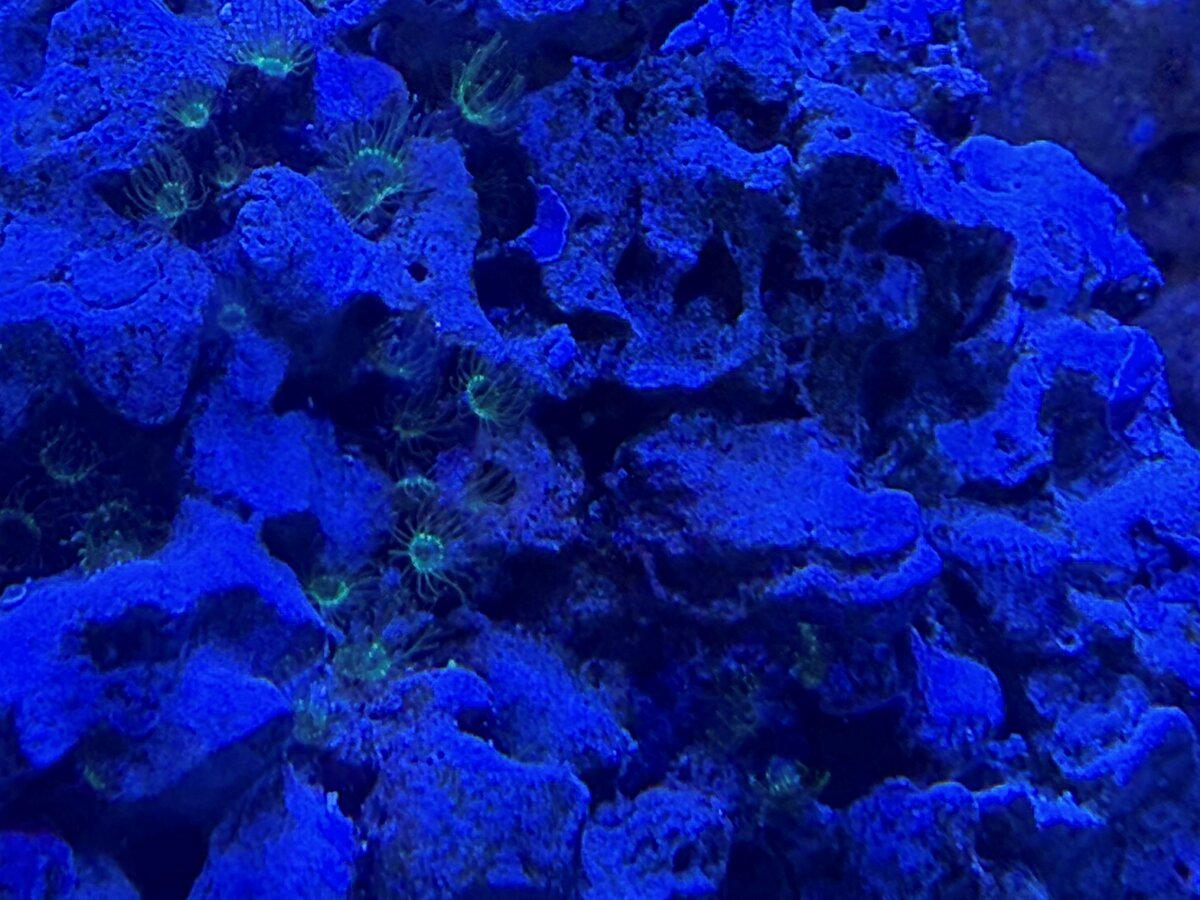
Hydroids or something else?

kennyry83

New Member
View Badges
Joined
Jan 7, 2024
Messages
6
Reaction score
2
Location
USA
Rating - 0%
0   0   0
I think these may be hydroids? If so should I get rid of them? They seem to have started spreading rather quickly. Recently recovered from dinos, got nutrients up from 0 and ran a UV for a couple weeks and beat it but now these dudes started popping up. (Nitrates 6.5 Phosphate .13 for reference.)

fishtank.jpg
 

Crabs McJones

Regional Reef Manager (AKA Revhtree's Boss)
View Badges
Joined
Jul 24, 2017
Messages
33,584
Reaction score
153,812
Location
Wisconsin
Rating - 100%
3   0   0
Do they have a solid stem or do they retract back into the rock? Either colonial hydroids or aiptasia
 

ISpeakForTheSeas

7500 Club Member
View Badges
Joined
Nov 22, 2021
Messages
9,362
Reaction score
10,745
Location
United States
Rating - 0%
0   0   0
Either Nausithoe jellyfish or hydroids:
Either colonial hydroids, or Nausithoe sp. jellyfish polyps; to my knowledge, they're not invasive (or at least not always), but they reportedly do have a nasty sting for some people:
Or jellyfish polyps, yeah - the clearest examples I know at the moment:
Edit: Just to add, these may not be tubes at all in a traditional sense - it may just be the hydroid's flesh.
 

TOP 10 Trending Threads

WHAT AMOUNT OF LIVE ROCK AND SAND SHOULD BE PRIORITIZED FOR OPTIMAL BIODIVERSITY/FILTRATION?

  • 100% live rock + bagged sand

    Votes: 34 27.9%
  • 100% dry rock + 100% live sand

    Votes: 42 34.4%
  • 50/50 live/dry rock, 50/50 live/bagged sand

    Votes: 27 22.1%
  • 75% live rock, 25% live sand

    Votes: 11 9.0%
  • 25% live rock, 75% live sand

    Votes: 8 6.6%
Back
Top