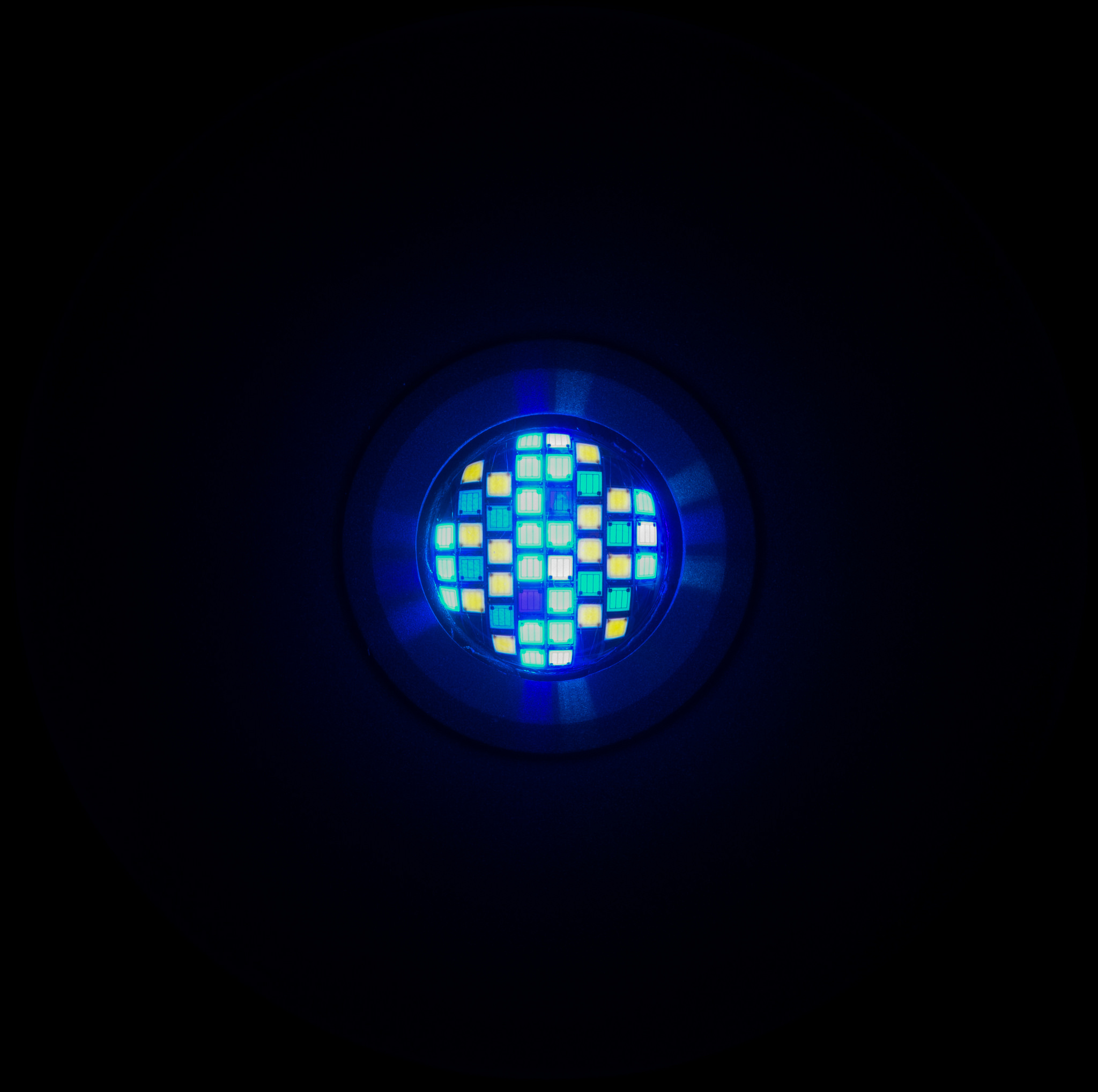
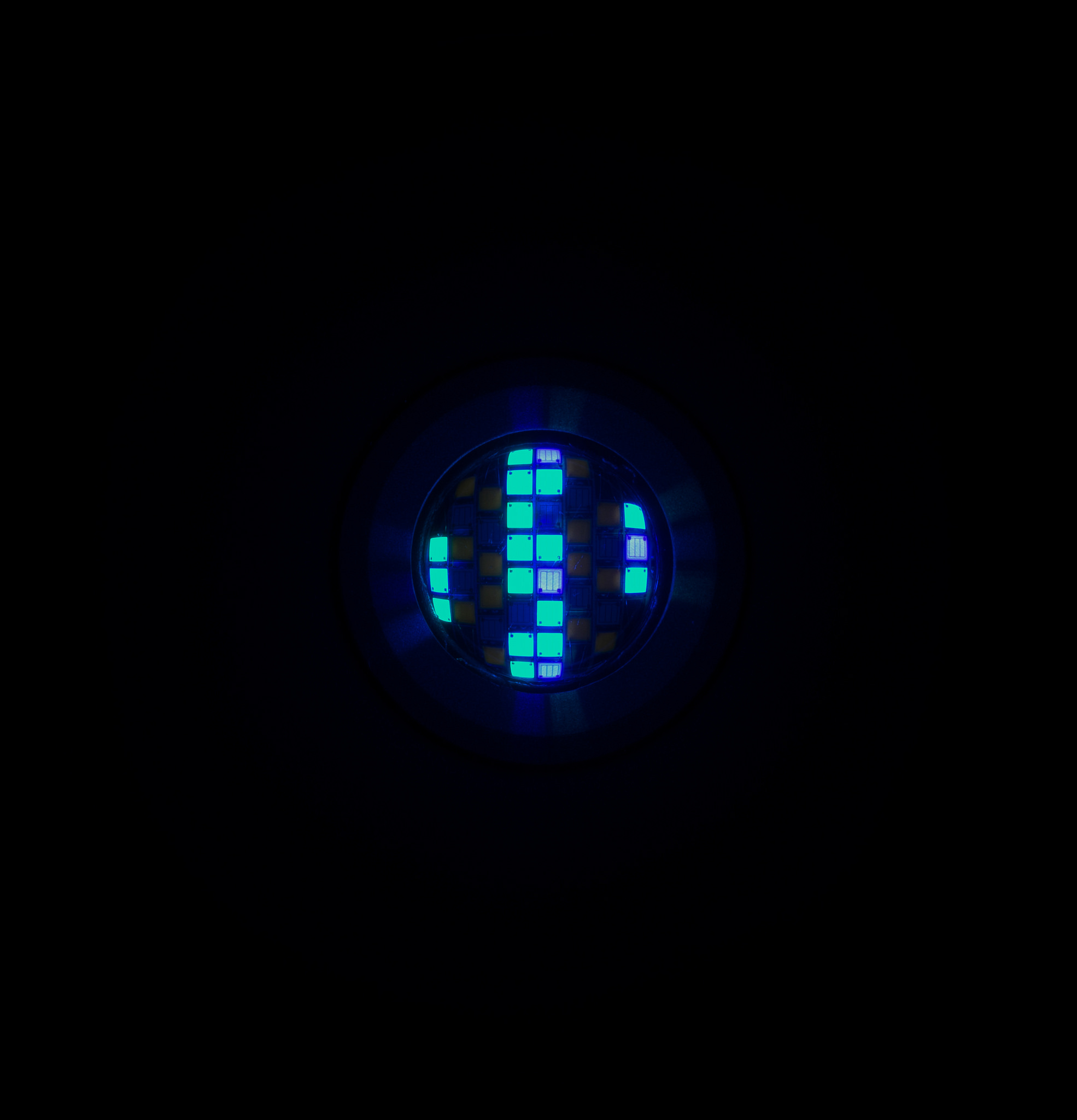
With the addition of more white spectrum, it's only "logic"-al that PAR will increase
no........... depends on drive current and driver efficiency..PAR can easily increase with less white if the blue diodes are more electrically efficient than the white.
With the Kessil logic, from what I've found, set the color you like and adjust intensity based on how your corals are growing. It's really a set it and forget it light.
Yes w/in reason.. As noted this isn't Perfect" .. what is..
50% color @ 50% intensity is not "perfectly" equal in PAr as 0% color 50% intensity..
both should be equal.. in a perfect world..
sorry, I know it "may" sound like I'm bashing Kessil in this regards but it is ONLY acknowledging a MINOR lack in "perfection"...
W/out a PAR "feedback loop" (closed system) no light will reach that goal. Kessil does FINE in this regard.. 10% variation is not normally a "big deal".. for most things..
I can tell you that the further away from 0% color you get, the less PUR you have.
not really. w/out knowing an organisms specific response to all wavelengths it is impossible to state what PUR it "likes"..
well you are more correct than incorrect .. since green/yellow is in general less effective than other wavelengths..
PUR is nothing more than an "assumed" subset of PAR..
You can also think of it this way.. Say your PUR "blues" emit 1/3 the photons of the whites at a particular current.. Shifting that current to "white" will increase PUR, even considering some of the wavelengths are less "efficient"...assuming the internal "wiring" of the organism is not strictly "blue dependent"..
Extreme case though and really not likely..