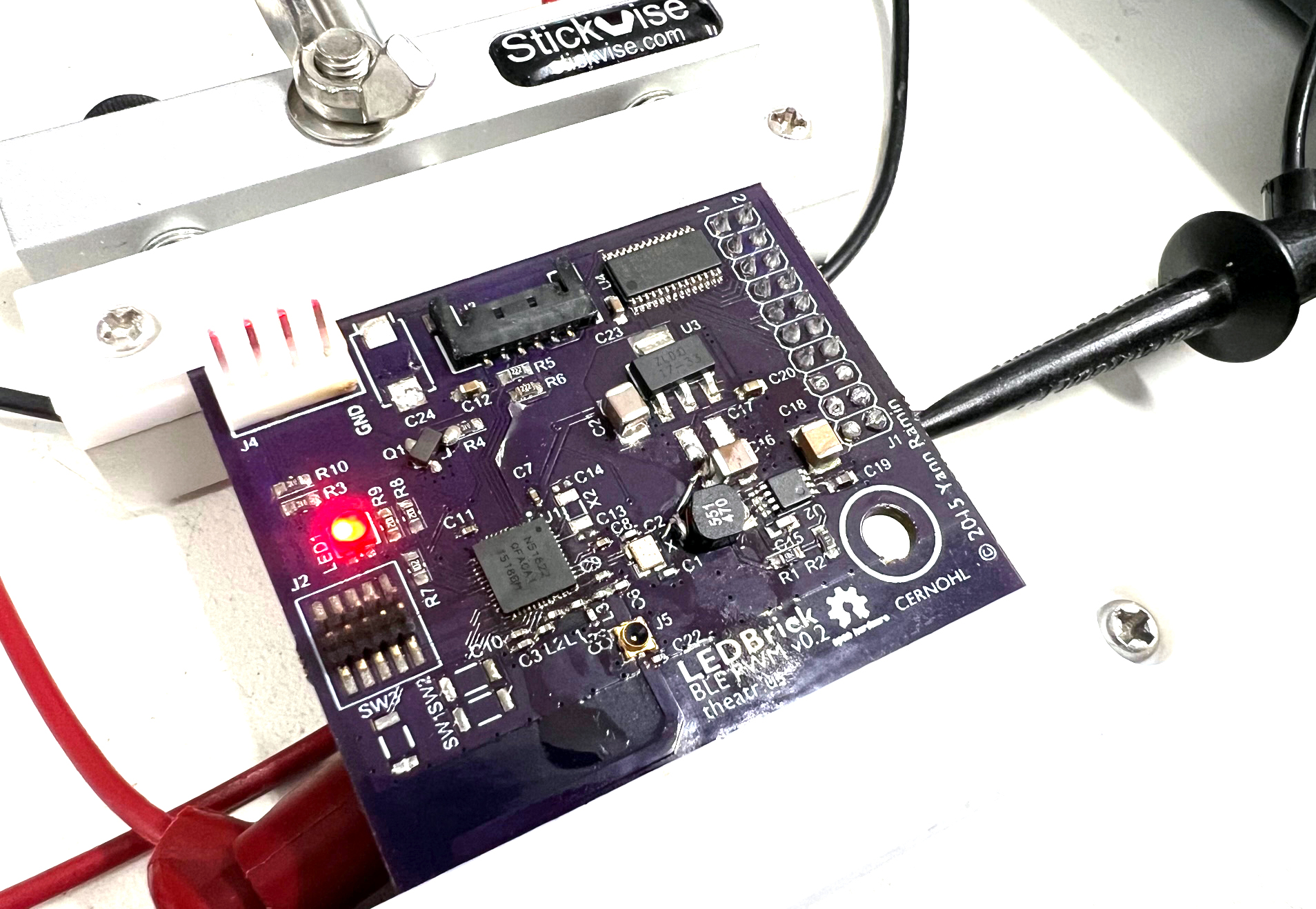
LEDBrick - DIY LED Pendant with Pucks

Ranjib

7500 Club Member
View Badges

Joined
Apr 16, 2016
Messages
9,876
Reaction score
16,680
Location
Pleasant Hill, Concord
Rating - 0%
0   0   0
Can correlate coloration upticks in euphyillia from fluorescence in my experiments. It’s worth dumping a lot of energy into this area of the spectrum even if it’s inefficient and costly. Ive had some interesting long term tweaks from even higher energies on some SPS corals as well, but it’s not an immediate effect.
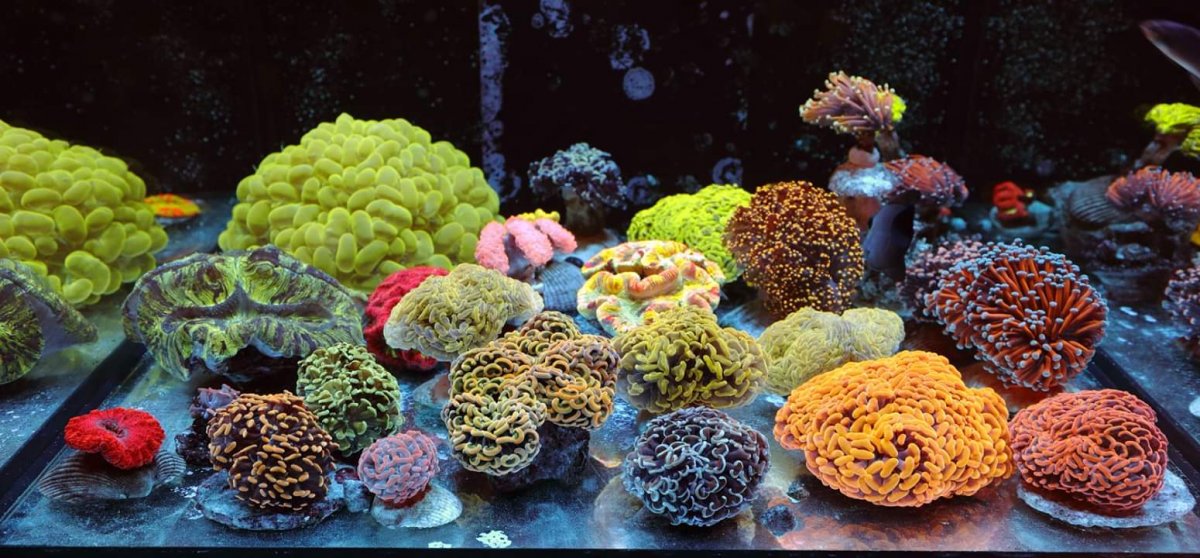
You will get most coral fluorescent color excitement with 450nm to ~400nm. Being able to fine tune as many spectrum between 450nm-400nm is key to a lot of unique coral coloration. With ReeFi Duo Extreme, you can fine tune control 470nm, 450nm, 435nm, 420nm, and 400nm, along with 4 other wide spectrums. I have yet to see other reef lighting that can bring out colors from these rare hammers, torches, and rainbow brain.

This picture taken without any color filters or saturation boost, fine tuned with ReeFi Duo Extreme:

FB_IMG_1572480894161.jpg
I'm curious if this also means the same spectrum is best for their growth and long term sustainability. I have head several folks optimize for different things at different phases of the tank. I definitely think there a huge benefit to know the species specific best coloration spectrum. How are these corals doing now? Any observations on their growth?
 

danlu_gt

Community Member
View Badges
Joined
Aug 22, 2014
Messages
82
Reaction score
170
Rating - 0%
0   0   0
I'm curious if this also means the same spectrum is best for their growth and long term sustainability. I have head several folks optimize for different things at different phases of the tank. I definitely think there a huge benefit to know the species specific best coloration spectrum. How are these corals doing now? Any observations on their growth?

I've had those hammers from 5-7months now. I can't tell exactly how much their skeletons have grown since they are wall hammers, but their flesh have grown so much that I had to relocate the large bubble, regular brain, 3 other hammers, and 2 torches to another tank. Personally, I rather have best color even if that means slower growth as I'm running out of spaces in my tanks.
 

AbjectMaelstroM

Valuable Member
View Badges
Joined
Jul 21, 2019
Messages
1,535
Reaction score
1,709
Location
RVA
Rating - 100%
1   0   0
Very cool! Hoping the best for you! Your work is top notch. Would these upcoming plans affect availability of the arrays for DIY? Just curious because I have the Pro arrays right now but I’d be interested in eventually snagging the Gleam arrays.

Patiently waiting for this as well. Current acro star pucks are fantastic.
 
OP
OP
theatrus

theatrus

Valuable Member
View Badges
Joined
Mar 26, 2016
Messages
2,253
Reaction score
3,603
Location
Sacramento, CA area
Rating - 0%
0   0   0
I've had those hammers from 5-7months now. I can't tell exactly how much their skeletons have grown since they are wall hammers, but their flesh have grown so much that I had to relocate the large bubble, regular brain, 3 other hammers, and 2 torches to another tank. Personally, I rather have best color even if that means slower growth as I'm running out of spaces in my tanks.

Glad you're having good luck with wall hammers. I've tried to nurse injured ones back from other tanks and never succeeded. Fantastic colors :)
 
OP
OP
theatrus

theatrus

Valuable Member
View Badges
Joined
Mar 26, 2016
Messages
2,253
Reaction score
3,603
Location
Sacramento, CA area
Rating - 0%
0   0   0
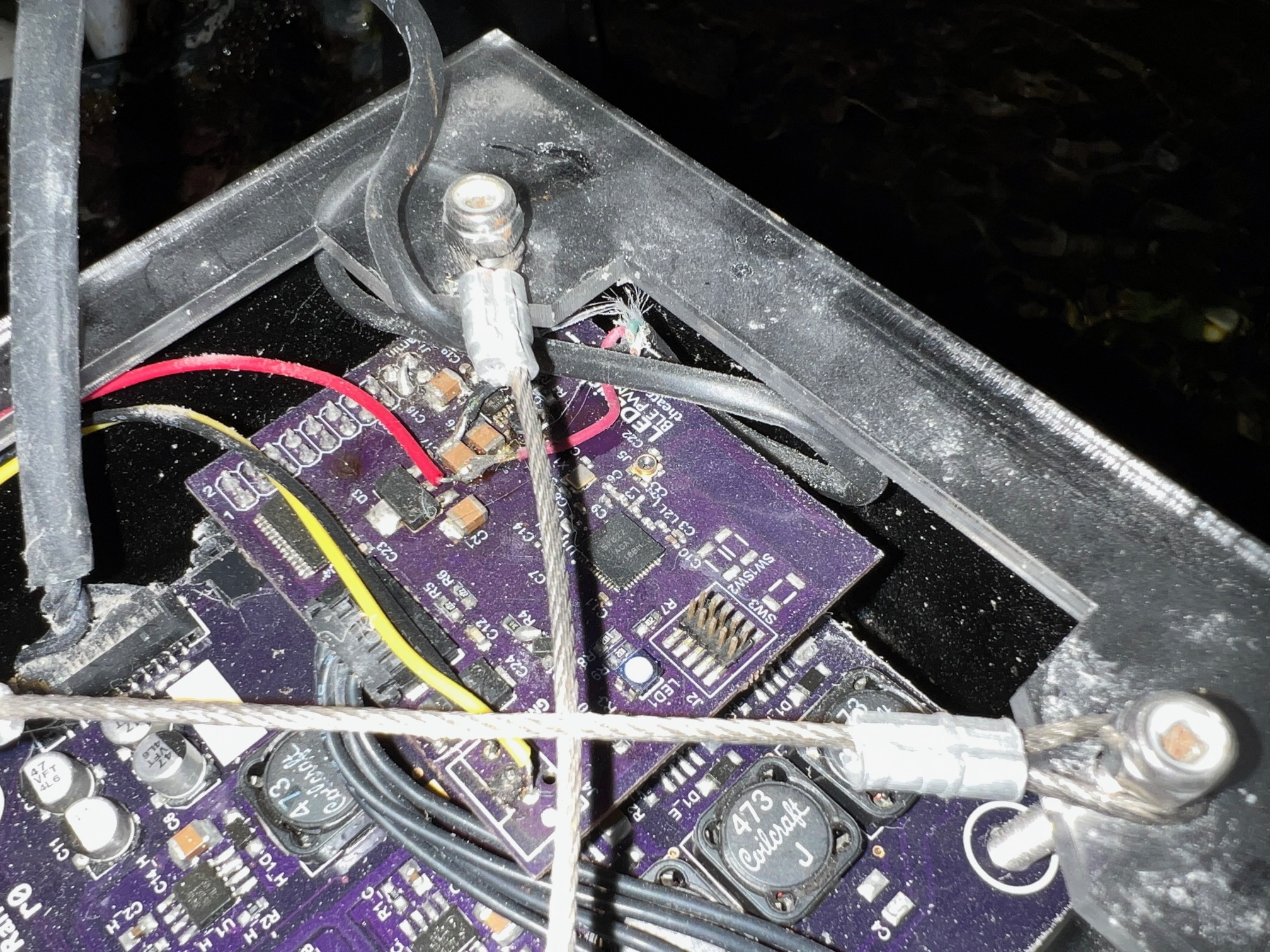
An 8 year update. I almost killed all of the LEDbrick units due to a dinoflagellate-induced-light outage. Upon firing up the lights three days later, I had neglected to consider that being fully powered down, no heat was being produced anywhere, and condensation combined with 8 years of salt spray had worked its way into everything. Firing up, I got a nice bout of zap zap flicker flicker nothing. Oh no!

(The main tank is in a period of half-teardown and cleanout and reboot- its had 15 years of continued operation and the sand bed had gotten to dire straits amongst other imbalances, so no tank pictures)

When I had first built them, I didn't do any real control for salt spray, air, condensation, etc. The PCBs sit right in the air flow, and the case fit was never really designed. Going forward, remember to conformally coat all the boards to avoid this very issue.

Anyway, one of the lights as fine, because its logic part remained powered up due to an earlier salt spray mishap which exploded the 24V->12V regulator sometime at the start of the pandemic, which I bodged fixed with a 12V wall-wart. How bad does the salt spray get? Well, bad...

IMG_1720.jpg


Yikes. Amazed anything works after all. And this is the working unit, since it never had water condense on it.

Other units didn't look _as bad_, but were non-functional due to numerous shorts across the board from salt. Amazingly not an amazing amount of corrosion.

IMG_1717.jpg


IMG_1721.jpg


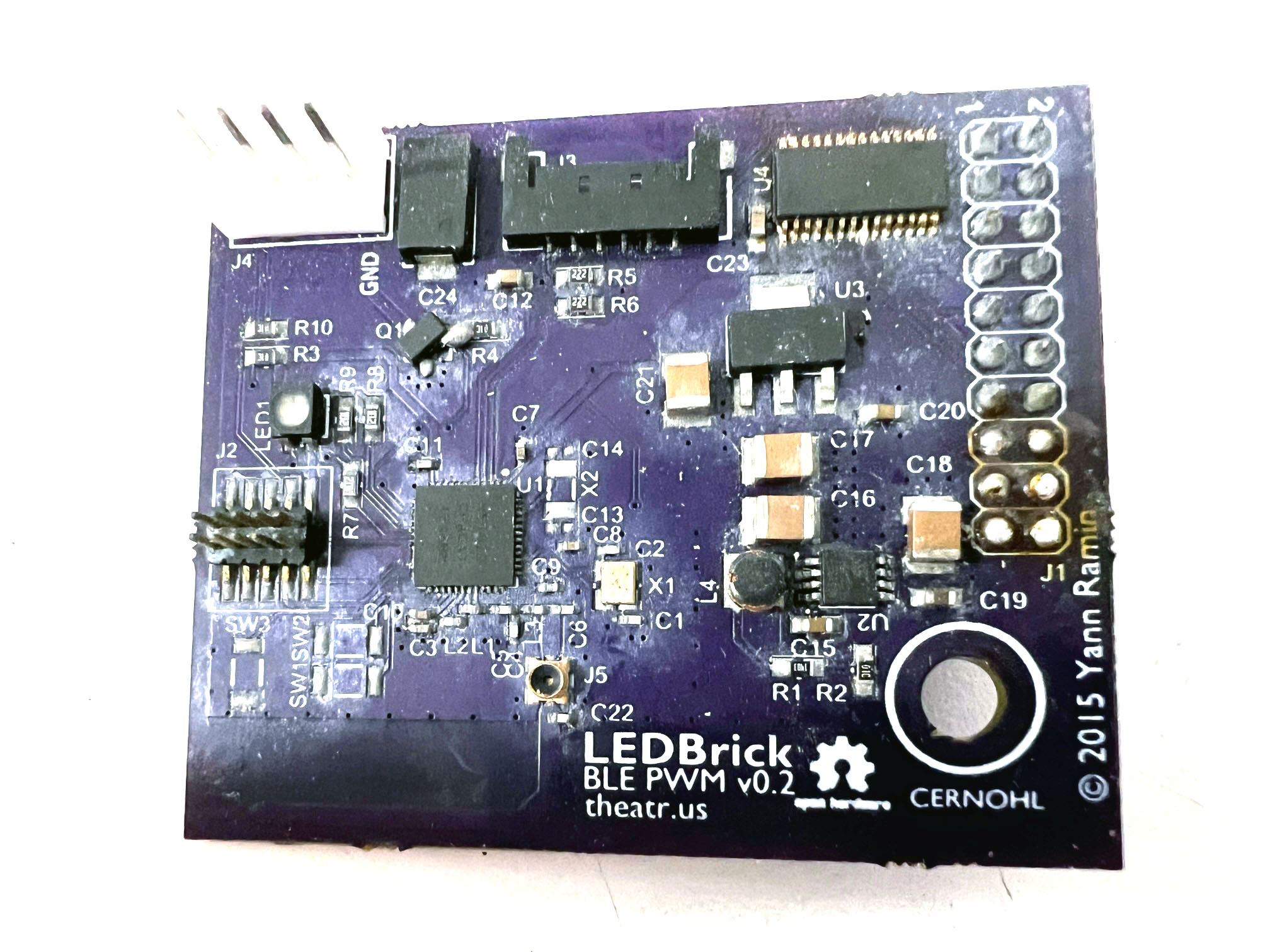
Well, I'm happy to report that I managed to save 2 of the 3 units by doing nothing but giving multiple passes in the ultrasonic cleaner, with an alternating routine of Branson EC and just RODI water - about 5 washes with changing the solution after each pass to not let salt concentrate, followed by a drying pass in an elevated temperature (about 60C).

And... success. And they look a whole lot better and almost like new.

IMG_1723.jpg


Unit #3 had a hard failure and the 12V regulator also wouldn't come up. Unlike the bodged unit still running, the board was salvageable, but the failure eventually came to a shorted ceramic capacitor and an inductor which also had shorted internally (so its basically a wire). A quick repair job later with a similar small but not exact set of components:

IMG_1730.jpg


So, whats next? I need to give the boards another clean and give them a quick coating of conformal coating before reinstalling, and then, actually think about replacing them sometime this year. I have some ideas, for the next post...
 
OP
OP
theatrus

theatrus

Valuable Member
View Badges
Joined
Mar 26, 2016
Messages
2,253
Reaction score
3,603
Location
Sacramento, CA area
Rating - 0%
0   0   0
Remember this project?

I've been running these LEDs for what feels like a decade now, with some replacements here and there and an LED board upgrade. I was supposed to do an aquarium upgrade in that time frame, but never really did. I also experimented using commercial LEDs on my nano tank... and I just don't like the color rendering. I got weirdly spoiled by this mix of LEDs, and when I do want to upgrade the tank I want to keep and grow it. It never got to eye watering PAR levels and could use some boosting.

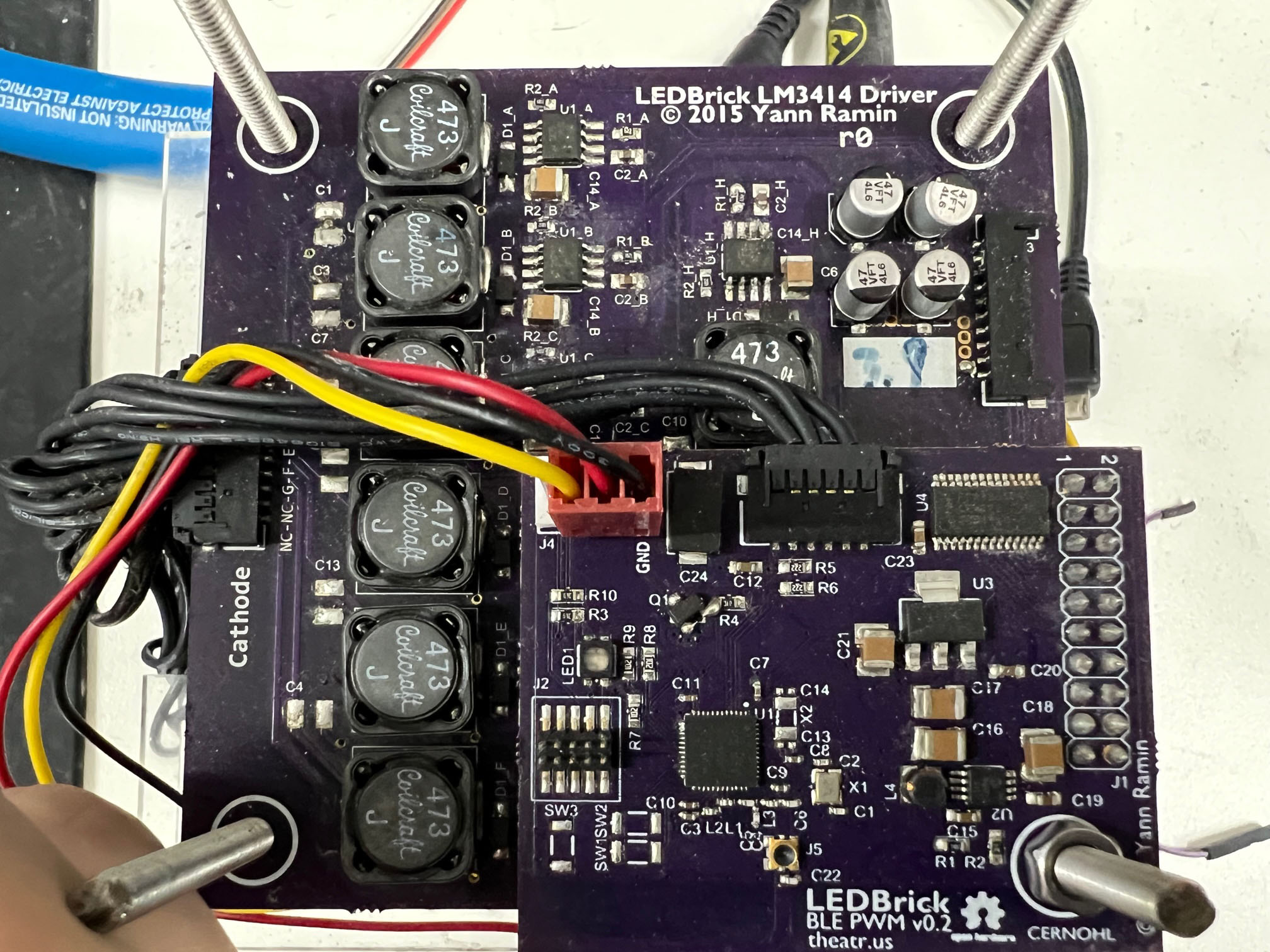
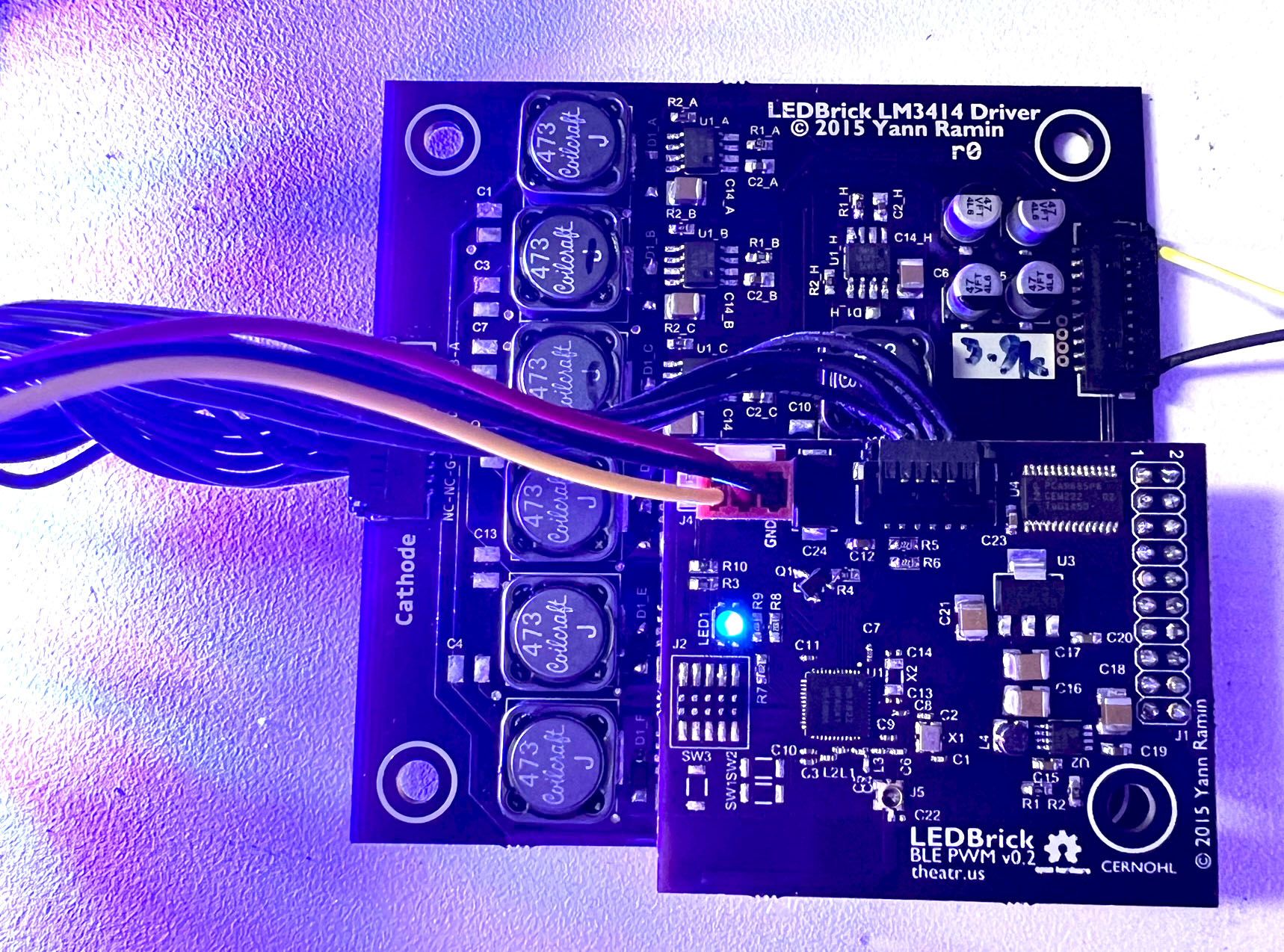
The original LED driver board and PWM controller is the original with a few small fixes and bodges (one is basically perma-powered by a 12V adapter as the DC/DC circuit for the fan suffered a salty-burn-the-board-apart fate). The original PWM board is Bluetooth LE, and manages both the fan and signals for the main board. The PWM controller relies on a Raspberry Pi to signal to pick set points - I never added programming or an RTC. It's also a decade old. And bad bodges :)

But it's time to modernize!

Introducing the LEDBrick+: 8 channel LED driver, using a new driver and an on-board ESP32-S3 (driving all 17 PWM channels, 8 from LEDC and 9 from MCPWM). The TPS922053 LED driver now is scalable to 2A on each channel. (with a 4A version out there), but features a neat mode where a second PWM input can regulate the current so you get a lot of dimming control (and can run 1A LEDs, 700mA LEDs, etc) fully programmable. The fan control is retained (with a 4 wire fan). The same "80mm fan" footprint is retained (the board is now 85x85mm, previously it was an odd fraction 84x86mm). Voltage is now up to 60V in for even bigger LEDs strings in the future (the original worked on 24V). The same PicoLock connectors are in play, and the I2C channel is still connectable to the LED carrier board (I used MCP9808 temp sensors on those). The power input is now monitored by an INA228 because cost was no barrier.

I'm waiting for a few components to land at JLC in order to click build on an assembly, but it's almost ready to go :)

1725419275233.png


I also never got around to finishing the GleamRail build - that said, I should just convert that BOM into something I can get built turn-key so I can finish it...

This took a few design cycles away from the DCBuddy builds, but I really needed to get this done as the existing boards, especially the PWM control, feels like its on borrowed time.
 

bobanh

New Member
View Badges
Joined
Apr 9, 2020
Messages
7
Reaction score
1
Rating - 0%
0   0   0
that's one great looking board.. totally following all your projects! Any progress on this controller?
I was looking to build one of my own but wouldn't mind buy couple from you.
 
OP
OP
theatrus

theatrus

Valuable Member
View Badges
Joined
Mar 26, 2016
Messages
2,253
Reaction score
3,603
Location
Sacramento, CA area
Rating - 0%
0   0   0
personal_project_stack.pop()

Did some further hardware validation:

IMG_9498.jpeg

IMG_9500.jpeg


One channel validated. I built a new ESPHome component to handle all 16+1 (fan) PWM channels on an EPS32 (S3).


A quick esphome configuration:


Sashimi Poke

New Member
View Badges
Joined
Mar 30, 2024
Messages
21
Reaction score
21
Location
San Diego
Rating - 0%
0   0   0
That's cool, I am using LDD-1000H drivers and a Raspberry Pi to control the PWM. I wrote a web interface and a script to control the lighting ramp up and down. It sounds like yours is similar but all on one board instead of drivers and pi separately. Very nice!
 
OP
OP
theatrus

theatrus

Valuable Member
View Badges
Joined
Mar 26, 2016
Messages
2,253
Reaction score
3,603
Location
Sacramento, CA area
Rating - 0%
0   0   0
That's cool, I am using LDD-1000H drivers and a Raspberry Pi to control the PWM. I wrote a web interface and a script to control the lighting ramp up and down. It sounds like yours is similar but all on one board instead of drivers and pi separately. Very nice!

Its a refinement of the existing LEDBrick, just now with an EPS32 instead of an off board Bluetooth LE setup.

Also uses the https://www.ti.com/product/TPS922053 drivers - 2A, 65V, and analog dimming capability to give per channel current control.
 
OP
OP
theatrus

theatrus

Valuable Member
View Badges
Joined
Mar 26, 2016
Messages
2,253
Reaction score
3,603
Location
Sacramento, CA area
Rating - 0%
0   0   0
Going to wire up all 8 channels and run it on my DCBuddy 8-load test bench tomorrow.

In the interim, fan control (PWM), monitoring (tach) and current monitoring apparently work fine.

1757227801252.png
 
OP
OP
theatrus

theatrus

Valuable Member
View Badges
Joined
Mar 26, 2016
Messages
2,253
Reaction score
3,603
Location
Sacramento, CA area
Rating - 0%
0   0   0
Some more updates: was able to test all 8 channels. Current control and PWM control dimming work well.

While I started with ESPHome, and still using it. I'm writing a number of custom components, including a custom LED scheduler and React web frontend. It's embedded on the ESP32, and allows for astronomical schedules with offsets, moon phases, etc. A quick preview of a functional version:

1757472746215.png

1757472819492.png

1757472859787.png


I need to pull together multi-unit syncing after a few more key features (such as temperature safety and fan control)
 
OP
OP
theatrus

theatrus

Valuable Member
View Badges
Joined
Mar 26, 2016
Messages
2,253
Reaction score
3,603
Location
Sacramento, CA area
Rating - 0%
0   0   0
Some mechanical work. This "gnome school" prints of leftover PLA is just for proving the design fits. I'm going to evaluate PC-CF or ASA-CF/GF for the shell. Obviously the heatsink would also not be printed plastic ;)

IMG_9590.jpeg
IMG_9591.jpeg
IMG_9592.jpeg
Screenshot 2025-09-20 214959.png
 
OP
OP
theatrus

theatrus

Valuable Member
View Badges
Joined
Mar 26, 2016
Messages
2,253
Reaction score
3,603
Location
Sacramento, CA area
Rating - 0%
0   0   0
Some mechanical work. This "gnome school" prints of leftover PLA is just for proving the design fits. I'm going to evaluate PC-CF or ASA-CF/GF for the shell. Obviously the heatsink would also not be printed plastic ;)

IMG_9590.jpeg
IMG_9591.jpeg
IMG_9592.jpeg
Screenshot 2025-09-20 214959.png

Made a decision to remove the center brace on the bottom - there is no need and there are a ton of points keeping the center piece constrained (both ends have interlocking features, and the bottom shroud and acrylic cover keeps those tied together as well). This simplifies the LED board and avoids need to make two smaller ones.
 
OP
OP
theatrus

theatrus

Valuable Member
View Badges
Joined
Mar 26, 2016
Messages
2,253
Reaction score
3,603
Location
Sacramento, CA area
Rating - 0%
0   0   0
Some shots of progress

- Heatsink drilled and chamfered in the Carvera.
- Hand tapping 14x M3. I did the CAM code to treadmill this on the Carvera because that sucked for the next series of heatsinks.
- Ordered the PCBs from JLCPCB on copper core. Expensive but why not.
- Small power test
- New enclosure printed from PC-CF. Very nice feeling. No lids yet and I need to make a shorter wiring harness setup
- Some power testing.

Pushing all the channels at max is over 200W, but that's silly and not what I'd do. Lots of power on hand and I haven't even pushed the L1RX emitters to 1.6A (1A max on all channels so far).

IMG_9879.jpeg IMG_9883.jpeg IMG_9904.jpeg IMG_9908.jpeg IMG_9912.jpeg IMG_9915.jpeg
 

TOP 10 Trending Threads

WHAT AMOUNT OF LIVE ROCK AND SAND SHOULD BE PRIORITIZED FOR OPTIMAL BIODIVERSITY/FILTRATION?

  • 100% live rock + bagged sand

    Votes: 34 27.9%
  • 100% dry rock + 100% live sand

    Votes: 42 34.4%
  • 50/50 live/dry rock, 50/50 live/bagged sand

    Votes: 27 22.1%
  • 75% live rock, 25% live sand

    Votes: 11 9.0%
  • 25% live rock, 75% live sand

    Votes: 8 6.6%
Back
Top