



Let’s talk stability

MnFish1

10K Club member
View Badges
Joined
Dec 28, 2016
Messages
26,916
Reaction score
24,617
Location
Midwest
Rating - 100%
2   0   0
I think that fully healthy corals can withstand quite a bit of swings... not endless, but a lot. I think that a lot of it has to do with new trends in husbandry with some using too many chemicals, some adding poison to the tanks, some under lighting or using a narrow spectrum.

People scoff at my posts about "how do you know this or that" but I was around and do remember when nobody complained about high alk or a swing killing a coral. Things have changed. I can remember when the only thing that was talked about with stability was your number of gallons where larger tanks tended to be more stable.... that is all.

Do I strive for stability? Yes. Do I sweat if I don't have it 100%? Not really.

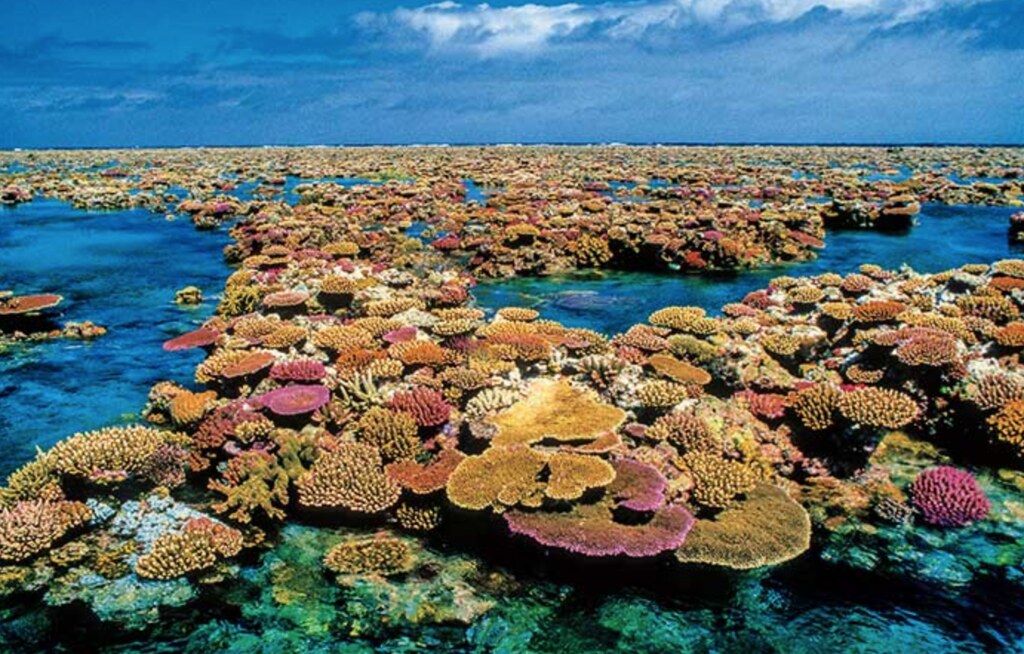
Keep in mind that these are out of the water for 7-8 hours a day and still thrive, yet people seem to think that a .5 alk swing is an issue. These, however, have the best possible food available... sunlight.
I think you and the OP have hit the proverbial nail on the head.

How much of the problems we have relate not to 'stability' but weakness due to the conditions we keep coral in. For example in the ocean the alkalinity is around 7.5-8.5 depending (from what I remember) - but people say 'higher growth at 11' etc. There may be higher growth at 11 - but when it goes down to 9 suddenly - maybe its a problem because the coral is not in a natural seawater state. Flow rates - in the ocean are higher than the highest of our power heads - yet we say its 'stability' when maybe we're just keeping coral in a weakened state that when 'anything changes' there are problems. I won't even touch on lighting (LED vs MH, vs custom spectrums, vs the spectrums to keep the coral fluorescing - which I have never seen 'underwater' (i.e. in the wild).

how much of coral 'death' is because in a 'coral farm' the coral are kept at the same flow, the same light day after day after day - then are transferred to our tanks - where (as we see posted here) - they either quickly - or more slowly wither away?

IMO - aquarium controllers, etc are excellent monitoring equipment and with the trident I'm sure there will be (like with triton) lots of anecdotal comments that 'once I kept my alk at 9 by testing 12 times/day my coral growth doubled) - my guess is that once there is a problem - those coral will be less likely to withstand them. (not a slam against trident - I would use it to monitor alk - just not keep it steady 24/7).

@iiluisii - excellent post:)

 

MnFish1

10K Club member
View Badges
Joined
Dec 28, 2016
Messages
26,916
Reaction score
24,617
Location
Midwest
Rating - 100%
2   0   0
PS - My 'ATO' is when the pump is about to run dry - I dump 5 gallons of RODI into my 140 gallon tank. I just posted an article on another thread -the salinity can vary considerably during the monsoon season - during which - based on soil /waste etc going onto the reef - alkalinity would fluctuate considerably as well. Scientists measuring alkalinity on the reef are not likely doing it during typhoon season:)
 

BeejReef

2500 Club Member
View Badges
Joined
Jan 29, 2019
Messages
4,269
Reaction score
24,539
Location
Oxford, Pennsylvania
Rating - 0%
0   0   0
Makes sense in a way, and in a way, it doesn't. By and large, our corals are clones. I don't think there is any sexual or selective breeding in the hobby, and no genetic engineering... as yet.

So, basically, Darwinism is out the window. The species that can withstand aquaculture and tank life have already been selected for. They can't "evolve" any further bc each is a clone of the other.
Can each individual specimen be toughened up? Maybe.. who knows.

I also think it's at least a two-pronged argument. It's pretty well proven that stability generally leads to better growth rates. Maybe fluctuations within an acceptable range for hardiness and growth?
It's a great question.
 

MnFish1

10K Club member
View Badges
Joined
Dec 28, 2016
Messages
26,916
Reaction score
24,617
Location
Midwest
Rating - 100%
2   0   0
So, basically, Darwinism is out the window. The species that can withstand aquaculture and tank life have already been selected for. They can't "evolve" any further bc each is a clone of the other.
Can each individual specimen be toughened up? Maybe.. who knows.

I think its the opposite. A coral raised in a tank of parameters xxxxxxx on a farm (in a tank)- may not be as hardy as a coral raised in the ocean with many variables - especially when moved to another tank with 'different' parameters - or shipped overnight or whatever the change. By the way - I take a bit of issue that its pretty well proven that stability generally leads to better growth rates - do you have a reference for this. Not trying to argue - but doesn't it come down to 'what stability means?' In other words do coral need alkalinity to be 8 +- .01 dKH per day - or is it 8 +- .5 per day. This will be the big interest I have with the trident - whether this 'close monitoring' besides making sure there is not a problem - will actually make any difference in our tanks.
 

jda

10K Club member
View Badges
Joined
Jun 25, 2013
Messages
14,342
Reaction score
21,756
Location
Boulder, CO
Rating - 0%
0   0   0
Ocean has a carbonate hardness of around 7.0, or so, with lows around 6.0 and highs around 7.5. It is rock solid stable. Anyway...

I think that most of the issues are with small tanks with lower water volumes, cut-spectrum and low power lighting and non-mature tanks (exasperated by dry and dead rock). Others disagree, but nearly everybody that I know that excels at this hobby had converged to about the same place with Mercury-based bulbs doing the heavy lifting and larger tanks for the super tricky stuff and being around for a long time.

Most of the large coral farms use sunlight... I am talking about large, not a guy like Jason Fox or Battlecorals who are really small even compared to ORA or the places in the south Pacific which dwarf both. The wholesalers used to use sunlight too, but the move stuff out so fast, this might not matter. This is a pretty easy transition where they can use some screens to cut the output a bit if they just collected from depth.

I also think that people cannot wait long enough before trying hard stuff. Mature tanks are important too. This is all just me, but I feel that I feed my corals with the best possible light... lots of MH. I don't even care where my parameters are as long as they are in a competent range... have not tested calcium or magnesium in months, probably should check my salinity soon since I do skim a lot. When I do all of this, I will find one or two parameters on the outside of "normal" and correct it, but these same values cause some peoples tanks to crash. Twice last year, had a co2 bottle run out (embarrassing) and lowered my alk to 4.0 in a day and I raised it back up to 6.x instantly with just some baking soda. Nothing misses a beat, including corals that most find incredibly difficult and easy to kill like Purple Monster, Pink Panther and the like. This kind of drop and rise would not stress out any of my friends who mostly reef the same way, but would crash a lot of "modern" tanks - I used to tell people that they were not on the same level as we were, but that just ticked people off, so I try and avoid this now even if it is probably true I attribute nearly all of this health to providing the best food, but also some to a larger volume of water and to a mature tank... but not so much to perfect water because I don't even really try for this.

I fully believe in the Emerson Effect and that corals need red and IR. This might sound stupid right now, but people used to say this about UV a few years ago and look how much that helped. High amounts of red and far-red can help corals process more energy. More energy leads to better health and better growth. Orphek Atlantik and Mercury-Based lighting sources provide this. I think five years from now, it will be as well received as necessary as UV. This will change the paradigm since if LED companies add in IR, then they will produce the same heat as a MH does (give or take) - yes, by removing the heat, you remove a spectrum that is probably very beneficial to most corals.

In the end, I don't believe that the coral has changed. I also don't believe that millions of years of evolution can be outdone by some hobbyists who think that they know it all by honing in on only one spectrum (blue), or adding poison to a tank or trying to keep too small of an ecosystem for the difficulty level. It is not easy to out-do nature. If you give the corals what they experienced in the ocean, then you will have good success. NWS parameters including low, but barely detectable N and P, lower alk some larger water volume as a buffer and full-range light from 350-850nm in large quantities has always worked and still does. Unless somebody thinks that millions of years of survival of the fittest is going to change in 30 years of captivity (about when the first "named" corals with lineage came up), then go with nature. I think that Pandas will eat more than bamboo before corals change.

If you think that even harder acropora are fragile, explain to me how the healthy ones can survive out of the water for 1/3 of the day in their natural conditions. Clams and nems sit out in the sunlight and get quite hot when the tide gets low - they thrive in the wild.
 
U

User1

Guest
View Badges
I think that fully healthy corals can withstand quite a bit of swings... not endless, but a lot. I think that a lot of it has to do with new trends in husbandry with some using too many chemicals, some adding poison to the tanks, some under lighting or using a narrow spectrum.

People scoff at my posts about "how do you know this or that" but I was around and do remember when nobody complained about high alk or a swing killing a coral. Things have changed. I can remember when the only thing that was talked about with stability was your number of gallons where larger tanks tended to be more stable.... that is all.

Do I strive for stability? Yes. Do I sweat if I don't have it 100%? Not really.

Keep in mind that these are out of the water for 7-8 hours a day and still thrive, yet people seem to think that a .5 alk swing is an issue. These, however, have the best possible food available... sunlight.

Your post is disqualified. I do not see a Homewrecker anywhere in this reef!!!!!

Just kidding. Seriously I am. I always found this image interesting though.
 
U

User1

Guest
View Badges
Ocean has a carbonate hardness of around 7.0, or so, with lows around 6.0 and highs around 7.5. It is rock solid stable. Anyway...

I think that most of the issues are with small tanks with lower water volumes, cut-spectrum and low power lighting and non-mature tanks (exasperated by dry and dead rock). Others disagree, but nearly everybody that I know that excels at this hobby had converged to about the same place with Mercury-based bulbs doing the heavy lifting and larger tanks for the super tricky stuff and being around for a long time.

Most of the large coral farms use sunlight... I am talking about large, not a guy like Jason Fox or Battlecorals who are really small even compared to ORA or the places in the south Pacific which dwarf both. The wholesalers used to use sunlight too, but the move stuff out so fast, this might not matter. This is a pretty easy transition where they can use some screens to cut the output a bit if they just collected from depth.

I also think that people cannot wait long enough before trying hard stuff. Mature tanks are important too. This is all just me, but I feel that I feed my corals with the best possible light... lots of MH. I don't even care where my parameters are as long as they are in a competent range... have not tested calcium or magnesium in months, probably should check my salinity soon since I do skim a lot. When I do all of this, I will find one or two parameters on the outside of "normal" and correct it, but these same values cause some peoples tanks to crash. Twice last year, had a co2 bottle run out (embarrassing) and lowered my alk to 4.0 in a day and I raised it back up to 6.x instantly with just some baking soda. Nothing misses a beat, including corals that most find incredibly difficult and easy to kill like Purple Monster, Pink Panther and the like. This kind of drop and rise would not stress out any of my friends who mostly reef the same way, but would crash a lot of "modern" tanks - I used to tell people that they were not on the same level as we were, but that just ****** people off, so I try and avoid this now even if it is probably true I attribute nearly all of this health to providing the best food, but also some to a larger volume of water and to a mature tank... but not so much to perfect water because I don't even really try for this.

I fully believe in the Emerson Effect and that corals need red and IR. This might sound stupid right now, but people used to say this about UV a few years ago and look how much that helped. High amounts of red and far-red can help corals process more energy. More energy leads to better health and better growth. Orphek Atlantik and Mercury-Based lighting sources provide this. I think five years from now, it will be as well received as necessary as UV. This will change the paradigm since if LED companies add in IR, then they will produce the same heat as a MH does (give or take) - yes, by removing the heat, you remove a spectrum that is probably very beneficial to most corals.

In the end, I don't believe that the coral has changed. I also don't believe that millions of years of evolution can be outdone by some hobbyists who think that they know it all by honing in on only one spectrum (blue), or adding poison to a tank or trying to keep too small of an ecosystem for the difficulty level. It is not easy to out-do nature. If you give the corals what they experienced in the ocean, then you will have good success. NWS parameters including low, but barely detectable N and P, lower alk some larger water volume as a buffer and full-range light from 350-850nm in large quantities has always worked and still does. Unless somebody thinks that millions of years of survival of the fittest is going to change in 30 years of captivity (about when the first "named" corals with lineage came up), then go with nature. I think that Pandas will eat more than bamboo before corals change.

If you think that even harder acropora are fragile, explain to me how the healthy ones can survive out of the water for 1/3 of the day in their natural conditions. Clams and nems sit out in the sunlight and get quite hot when the tide gets low - they thrive in the wild.

You hit the nail on the head with this one. Rock is the foundation and that has been changing over the years also. Previously we could buy live rock from Fiji but that is no more. Now a lot of people are buying man made or dry rock of some form - Pukani for example - and it takes a long time to mature. And by mature I mean everything from surface to sub surface and every nook and cranny. Which gets to that waiting or patience piece.

This is the first time I'm using dry rock, Pukani to be exact, and my tank after the cycle with skimmer and lights on is now 13 months old. I look at the rock and on the surface it looks nice but there is no way it is ready for any difficult to keep coral. I merged a 40 breeder into the upgrade at the time. It was 8+ year old rock if not more so everything was thriving. Corals, fish, etc. The upgrade with Pukani was cycled, ran an extra month, processing ammonia fine, etc. Moved the old into the new and when it was mixed with that new 170 lbs of Pukani, well, never looked the same since. It is just now starting to come around with corals coloring up, rose bubble tips becoming back to normal, etc.

Hind sight I should have went with something like TBS since I was merging tanks. I really feel your point about maturing, time, and what not are spot on. That is having used dry this time vs my previous use of Fiji rock and how it was right out of the ocean. I'd give my tank about another year before it works itself out. Just my opinion though.
 

sghera64

Valuable Member
View Badges
Joined
Sep 20, 2013
Messages
1,075
Reaction score
1,135
Location
Fishers, IN, USA - 3rd rock from the sun
Rating - 0%
0   0   0
Makes sense in a way, and in a way, it doesn't. By and large, our corals are clones. I don't think there is any sexual or selective breeding in the hobby, and no genetic engineering... as yet.

I get what you mean by basically clones. But I’m wondering how we ended up with more than one species then. There has to be some source of variation I would suspect. If so, then the door would be open for stratification and selectivity. I’m not a marine biologist but I am interested in learning what you can share.

Maybe your point is in the “basically” part. And that the variation does happen, but at a glacier’s pace which makes it irrelevant for this conversation.
 

BeejReef

2500 Club Member
View Badges
Joined
Jan 29, 2019
Messages
4,269
Reaction score
24,539
Location
Oxford, Pennsylvania
Rating - 0%
0   0   0
I get what you mean by basically clones. But I’m wondering how we ended up with more than one species then. There has to be some source of variation I would suspect. If so, then the door would be open for stratification and selectivity. I’m not a marine biologist but I am interested in learning what you can share.

Maybe your point is in the “basically” part. And that the variation does happen, but at a glacier’s pace which makes it irrelevant for this conversation.

I think the variation comes from continued wild harvest. Some must succesfully breed, but so much of the indy is fragging.

Have you ever read about epigenetics? That's some fascinating stuff!! Perhaps that is where some of the aquacultured variations come from?
 

TOP 10 Trending Threads

WHAT AMOUNT OF LIVE ROCK AND SAND SHOULD BE PRIORITIZED FOR OPTIMAL BIODIVERSITY/FILTRATION?

  • 100% live rock + bagged sand

    Votes: 37 27.2%
  • 100% dry rock + 100% live sand

    Votes: 46 33.8%
  • 50/50 live/dry rock, 50/50 live/bagged sand

    Votes: 30 22.1%
  • 75% live rock, 25% live sand

    Votes: 13 9.6%
  • 25% live rock, 75% live sand

    Votes: 10 7.4%
Back
Top






