Let’s talk stability

6272862829

2500 Club Member
View Badges
Joined
Mar 12, 2012
Messages
4,119
Reaction score
778
Location
Clarksville
Rating - 0%
0   0   0
Let’s talk stability.

Do we really want stability in our reef tanks?

With this new trend of reef stability and the hobby switching to stability geared products like the trident are we making our corals and animals weaker and more sensitive??


Looking at our old school Acros like Oregon tort, pink lemonade, PC rainbow ect they were exposed to temp, ph, cal, alk and mag swings all day long and those acros became the hardiest acros around the hobby till this day.


I feel that we are making our reef tanks ticking time bombs by provide pristine water conditions and little to no swing at all making corals adapt to only that environment and not able to deal with human error and swings.

 

jda

10K Club member
View Badges
Joined
Jun 25, 2013
Messages
14,342
Reaction score
21,756
Location
Boulder, CO
Rating - 0%
0   0   0
I think that fully healthy corals can withstand quite a bit of swings... not endless, but a lot. I think that a lot of it has to do with new trends in husbandry with some using too many chemicals, some adding poison to the tanks, some under lighting or using a narrow spectrum.

People scoff at my posts about "how do you know this or that" but I was around and do remember when nobody complained about high alk or a swing killing a coral. Things have changed. I can remember when the only thing that was talked about with stability was your number of gallons where larger tanks tended to be more stable.... that is all.

Do I strive for stability? Yes. Do I sweat if I don't have it 100%? Not really.

Keep in mind that these are out of the water for 7-8 hours a day and still thrive, yet people seem to think that a .5 alk swing is an issue. These, however, have the best possible food available... sunlight.
 

Montiman

Valuable Member
View Badges
Joined
Sep 20, 2017
Messages
1,375
Reaction score
1,647
Location
Pheonix
Rating - 0%
0   0   0
One of the basics of evolutionary biology is that there is no perfect competitor. For an organism to be able to live under a variety of conditions that organism needs to express a wide variety of traits. This can be things like different protein production or the ability to process various sugars in the micro level.

However, producing such a wide variety of traits inherently has a cost. If the organism produces proteins it doesn't need under current circumstances this has a metabolic cost. Some other organism that only produces the traits that are needed in the given environment will out compete the generalist simply because this other organism doesn't have the cost associated with producing the traits that are inferior in the given environment.

What this means for us is that generalist typically aren't very good at living in any specific environment. With the constant desire to speed up coral growth rates falling back on generalist corals will likely mean slower growing corals. For the corals to survive in such a varied environment they will need to produce proteins and other Biological Molecules that they don't need to in a stable consistent environment resulting in slower growth.

Ultimately we can culture fast growing corals that do very very well in a specific environment or slower growing corals that do well in a variety of conditions. Unfortunately there is no such thing as a free lunch.
 

jda

10K Club member
View Badges
Joined
Jun 25, 2013
Messages
14,342
Reaction score
21,756
Location
Boulder, CO
Rating - 0%
0   0   0
I will add that I have been selling some of these Old School Classics for a long time. The death rate is higher now than ever. Think that anybody can keep an ORA Cali Tort alive... used to kinda be true with perhaps one loss in twenty, but now that loss rates is 4-6 in twenty. I have had the same person buy corals from me 3 times with some excuse like a swing, or being out of town, or bad test kit before I told him that I could not sell him anymore until he learned what he is doing.

I do agree that time does weed out the harder corals and tend to push the hardy ones to the forefront, but it seems that more and more people are figuring out how to kill the hardy ones. I personally think that this is us, as reefers, more than the coral.
 

Auquanut

5000 Club Member
View Badges
Joined
Mar 11, 2018
Messages
5,279
Reaction score
24,056
Location
Mexico, Mo
Rating - 0%
0   0   0
Do we really want stability in our reef tanks?

With this new trend of reef stability and the hobby switching to stability geared products like the trident are we making our corals and animals weaker and more sensitive??

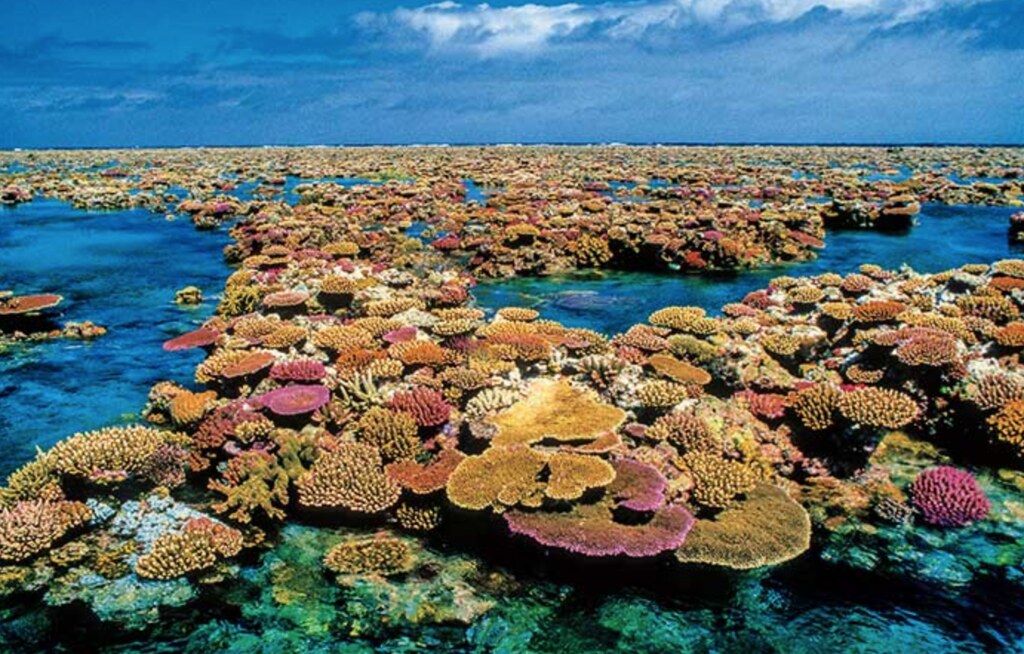
You make a good point but. As a long time diver, I've seen seen vertical thermoclines coming on a pristine reef and thought "I'm about to get cold." Despite the extreme temperature change the reef thrives. After a typhoon, it can be days before all of the silt and muck settles enough for a decent dive. Despite all of the excess nutrients, the reef thrives.
It seem to me that the difference is that the natural reef has a bzillion gallons of relatively "stable" water to bring conditions back to something approaching normal in a relatively short time. In my tanks, if I let my parameters get too far from normal, it can cause changes in water quality and thus the whole ecosystem that can take much longer to correct.
So while I agree that corals are able to withstand even drastic swings in many parameters, I feel that my best chance a a successful reef is to strive for a certain level of stability. That being said, I do agree we tend to work too hard for a pristine tank. I tend to run fairly "dirty" tanks, and don't sweat minor fluctuations. Seems to be working so far.
 

road_runner

Valuable Member
View Badges
Joined
Jan 6, 2017
Messages
2,325
Reaction score
2,292
Rating - 0%
0   0   0
Isnot coral reef declining for simple temp elevation and alk changing in the sea water?
I think stability is still a key for coral health..
 
OP
OP
6272862829

6272862829

2500 Club Member
View Badges
Joined
Mar 12, 2012
Messages
4,119
Reaction score
778
Location
Clarksville
Rating - 0%
0   0   0
You make a good point but. As a long time diver, I've seen seen vertical thermoclines coming on a pristine reef and thought "I'm about to get cold." Despite the extreme temperature change the reef thrives. After a typhoon, it can be days before all of the silt and muck settles enough for a decent dive. Despite all of the excess nutrients, the reef thrives.
It seem to me that the difference is that the natural reef has a bzillion gallons of relatively "stable" water to bring conditions back to something approaching normal in a relatively short time. In my tanks, if I let my parameters get too far from normal, it can cause changes in water quality and thus the whole ecosystem that can take much longer to correct.
So while I agree that corals are able to withstand even drastic swings in many parameters, I feel that my best chance a a successful reef is to strive for a certain level of stability. That being said, I do agree we tend to work too hard for a pristine tank. I tend to run fairly "dirty" tanks, and don't sweat minor fluctuations. Seems to be working so far.
Would you think a water change would mimic that bazillion amount of stable water flowing back into the reef to bring conditions back to normal?
 
OP
OP
6272862829

6272862829

2500 Club Member
View Badges
Joined
Mar 12, 2012
Messages
4,119
Reaction score
778
Location
Clarksville
Rating - 0%
0   0   0
Isnot coral reef are declining for simple temp elevation and alk changing in the sea water?
I think stability is still a key for coral health..
No it’s due to the long term ocean temperature getting hotter and hotter. How hot you think the top of an Acropora gets when exposed to direct sun light out of the water during low tide?
 

Auquanut

5000 Club Member
View Badges
Joined
Mar 11, 2018
Messages
5,279
Reaction score
24,056
Location
Mexico, Mo
Rating - 0%
0   0   0
Would you think a water change would mimic that bazillion amount of stable water flowing back into the reef to bring conditions back to normal?

Depends on the amount of difference and the amount of water changed. Seems to me, that water changes are best used to keep our tanks on an even keel. If we consistently use water changes to bring our systems back to "normal", it could be a loosing battle.
 

JPergamo

Active Member
View Badges
Joined
Mar 7, 2016
Messages
434
Reaction score
476
Location
Babylon
Rating - 0%
0   0   0
I will add that I have been selling some of these Old School Classics for a long time. The death rate is higher now than ever. Think that anybody can keep an ORA Cali Tort alive... used to kinda be true with perhaps one loss in twenty, but now that loss rates is 4-6 in twenty. I have had the same person buy corals from me 3 times with some excuse like a swing, or being out of town, or bad test kit before I told him that I could not sell him anymore until he learned what he is doing.

I do agree that time does weed out the harder corals and tend to push the hardy ones to the forefront, but it seems that more and more people are figuring out how to kill the hardy ones. I personally think that this is us, as reefers, more than the coral.
I agree with this a lot. I think a lot of it has to do with the desire for instant gratification and people who's interest in the hobby peak and wane. Everyone's does to a degree but I feel like it's more now for some reason. Or maybe I'm just getting older and grouchier.
 

sghera64

Valuable Member
View Badges
Joined
Sep 20, 2013
Messages
1,075
Reaction score
1,135
Location
Fishers, IN, USA - 3rd rock from the sun
Rating - 0%
0   0   0
Let’s talk stability.

Do we really want stability in our reef tanks?

With this new trend of reef stability and the hobby switching to stability geared products like the trident are we making our corals and animals weaker and more sensitive??


Looking at our old school Acros like Oregon tort, pink lemonade, PC rainbow ect they were exposed to temp, ph, cal, alk and mag swings all day long and those acros became the hardiest acros around the hobby till this day.


I feel that we are making our reef tanks ticking time bombs by provide pristine water conditions and little to no swing at all making corals adapt to only that environment and not able to deal with human error and swings.

Yes we want stability. The evidence is overwhelming: stability is great for an individual specimen based on color and growth rates.

On the flip side: stress, challenges and change are great for the species in that the weak will be pruned from the gene pool and promotes survival of the fittest. This point is valid for those who are keeping lots of specimens of the same species and don’t mind losing a portion of them in order to tease out a more robust stock. Perhaps those who do this can claim a more “durable” brood of aquaculture.

So I’m saying the real answer to your question is “it depends” on your objective.
 
OP
OP
6272862829

6272862829

2500 Club Member
View Badges
Joined
Mar 12, 2012
Messages
4,119
Reaction score
778
Location
Clarksville
Rating - 0%
0   0   0
Depends on the amount of difference and the amount of water changed. Seems to me, that water changes are best used to keep our tanks on an even keel. If we consistently use water changes to bring our systems back to "normal", it could be a loosing battle.
I see. From what I seen most people that allow their tanks to swing their sps are a lot hardier. Most time those same reefers keep really simple tanks too.
 
OP
OP
6272862829

6272862829

2500 Club Member
View Badges
Joined
Mar 12, 2012
Messages
4,119
Reaction score
778
Location
Clarksville
Rating - 0%
0   0   0
Yes we want stability. The evidence is overwhelming: stability is great for an individual specimen based on color and growth rates.

On the flip side: stress, challenges and change are great for the species in that the weak will be pruned from the gene pool and promotes survival of the fittest. This point is valid for those who are keeping lots of specimens of the same species and don’t mind losing a portion of them in order to tease out a more robust stock. Perhaps those who do this can claim a more “durable” brood of aquaculture.

So I’m saying the real answer to your question is “it depends” on your objective.
So what happens when you get a swing of over 1 dkh in a stable tank?
 

sghera64

Valuable Member
View Badges
Joined
Sep 20, 2013
Messages
1,075
Reaction score
1,135
Location
Fishers, IN, USA - 3rd rock from the sun
Rating - 0%
0   0   0
So what happens when you get a swing of over 1 dkh in a stable tank?

Depends on what you have in that tank and it’s current “health”.

I would say in my system, nothing would happen. I have “cheap” SPS (very hardy), euphyllia (wall hammers, torches), trumpets, goniopora, zoas and a giant clam. I’ve had such swings, but they’ve happened over days not hours. Same with raising magnesium 100 ppm: done that in about 6 hours. I’ve raised calcium by about 30 ppm in minutes: no issues. I’ve dropped my system temperature by 1-2 degrees (big water changes) in minutes and no problems with fish or coral. My system has gone “dark” for 4 days (cyano treatment), but I brought the lights back up over a week

Now, I’ve not done more than 2 or 3 three of these changes in a short period of time. I “think” (o don’t know), that the longer my system is stable, the better it tolerates a swing or two.

My system lost power once (GFCI) for over 24 hours. I lost every fish except my very old percula clowns. My coral were just fine for the first week. Then I had a big rise in NO3 and PO4 and algae during the recovery.
 
Last edited:

Sarah24!

2500 Club Member
View Badges
Joined
Feb 6, 2017
Messages
3,280
Reaction score
11,610
Location
Idaho
Rating - 0%
0   0   0
Hello,

It has been shown that the more stable systems are, corals immune systems weaken. Some fluctuations are not a bad thing and they adapt to it much like any organism does. To extreme one way or the other any organism will perish. But if the organism is able to adapt and sustain it will do just fine. It may not be as colorful, or grow as fast but it will be alive. When the coral finds its habit more suitable it will then change to that as well.

Example I use the api test kit, are they dead on (probably not) but it’s not a bad thing. I have a very simple system and it does just fine. I have a few issues now and then again but welcome to life. It’s not suppose to be perfect, if it was there would be no interest in it. At the same time some have done some pretty serious mistakes and the corals couldn’t manage. But my alk and calcium swing within a safe range meaning alk is no lower than 6.5 (was lowest ever, and highest was 9). But I try an stay at 8 and the same with calcium it ranges from 390 to 550 at times but I average for 420. My nitrates I try to keep between 2-5 but I have gone higher and don’t think I have been lower or much lower. Magnesium has been from 1260-1400 at times. About the only thing constant is salinity at 1.025, and temp is normally 79-80 even though heaters are at 75.

But I have lost some corals from sps to lps to soft. There was a time I couldn’t kill a soft or an lps now I have to watch them because my water is cleaner for sps. But I still have some softies and lps that thrive. People forget that even though we have the same hobby, same corals etc, and some have great success and some don’t. Yet no two systems are the same, based on that alone means corals can tolerate change. (Yes it’s a different question of the same corals can accept the some one else’s conditions in the same tank suddenly, honestly I would say depends on how far something changes).
 

Janci

Staghorns will prevail
View Badges
Joined
Mar 14, 2016
Messages
3,021
Reaction score
9,225
Location
Belgium
Rating - 0%
0   0   0
Stability is a very relative term.
For many advanced reefers with great tanks, their parameters have been "stable" for a long time, but they have learned to see their animals and to understand them. They know how to react to a slight change in colour of one coral, or a sign of less growth for another coral.
It is only then that a check of parameters is coming in handy to find out what is going on and to take the correct action.

There are too many people seeing those amazingly looking tanks, read about them, write down the parameters and copy just that, thinking this will give them the best results for their setup.
Some swear at dKH 6.5, other at 8, 9, or even higher. It all depends on your tank and the conditions you run it.

I encourage the advances and new technology in the hobby. Measuring parameters is just not my favourite thing to do so I "forget" to do it on weekly or even monthly basis.
So if there is a way to let a machine do the testing for me, I will be more than happy.
Still, I will keep it my option to do something with these results or not.

Reefing used to be relaxed. Now everybody wants that perfect looking tank, that bank-breaker/jaw-dropping coral.
I still have to see a tank that has a colony of that same bank-breaker/jaw-dropping coral...
 

Montiman

Valuable Member
View Badges
Joined
Sep 20, 2017
Messages
1,375
Reaction score
1,647
Location
Pheonix
Rating - 0%
0   0   0
One of the most difficult things with corals is understanding which events are stressful for them. You can chop a coral in half and the polyps come out within a few hours but when you overdose Alk it can take months for corals to recover.

Some things I think about are identifying which parameters are consistent and which are varied in nature. For the most part element levels are remarkably consistent in nature you would be hard pressed to test the Calcium Alkalinity and Magnesium at the same place on a coral reef every day for a year and see more than a 1DKH or 20-50ppm change. However as others in this thread have stated lighting and flow can vary wildly. Storms and the low tide expose corals to an incredible variety of flow and lighting conditions.

Nutrient levels can very as well I have read studies about reefs under sea bird nests having accelerated growth rates because of increased Nitrogen levels, but on the other hand agricultural run off has caused some of the worst damage to coral reefs we have seen.

Temperature often changes with thermoclines and exposure to sunlight but these changes are often not prolonged as water motion will soon bring in cooler more (Normal) temperature water.

When we speak of stability I personally prioritize elemental stability. Most of my biggest tank crashes have come from elemental issues such as a kalk overdose, or something rusty in the tank. When it comes to Nutrients, Temperature, Water movement, and Lighting often drastic changes can be made as long as they are not prolonged and the system is quickly restored to a more normal level.

In fact there is some evidence that changing many of the above mentioned parameters can be a good thing. Certainly changing water flow is good. Changing lighting can be beneficial. We now see many people pulsing their lighting schedule with short periods of intensity in an effort to speed up growth, Pulsing nutrients is also considered good. I know many who flood their system with food and nutrients only to clean it all out with a water change shortly after.
 

sghera64

Valuable Member
View Badges
Joined
Sep 20, 2013
Messages
1,075
Reaction score
1,135
Location
Fishers, IN, USA - 3rd rock from the sun
Rating - 0%
0   0   0
Hello,

It has been shown that the more stable systems are, corals immune systems weaken. Some fluctuations are not a bad thing and . . . . ).

Great post and we see analogies in mammals too.

See: https://thenewyorkernews.com/featured/native-tribe-with-the-healthiest-hearts-in-the-world/

Near the end, Dr. Gupta points out that nearly everyone in that population is infected with a parasite. Parasites keep the immune system rev’d up, even to the point of keeping the heart very healthy. But, the same “rugged or unstable” environment possess many extremes (snake bites, infections, etc.) whichalso keeps the lifespan of these people lower than other regions of the world.

I imagine for coral, a small amount of “stress” can keep their immune system up. We also see kids that go to day care are out of primary school less than those that don’t (natural immunization, I guess). BUT!! Those day care goers (and their parents) are a lot sicker during those initial years.

I would imagine we lack the capability to keep our systems “too stable”. Given all the junk in the air of our homes, on those hands that enter the tank, etc. I feed raw sea food to my tank to introduce and replenish bacteria. I imagine this keeps the corals (and fish?) on their toes (okay, fins and polyps).
 

Jon Fishman

Cleveland Ohio, buy/sell local!
View Badges
Joined
Feb 18, 2019
Messages
5,105
Reaction score
8,515
Rating - 0%
0   0   0
My reefing strategy is like David Hasselhoff during last-call...... I've been surprising successful albeit early-on, with some decent sized temp swings, random moves, etc.
 

TOP 10 Trending Threads

WHAT AMOUNT OF LIVE ROCK AND SAND SHOULD BE PRIORITIZED FOR OPTIMAL BIODIVERSITY/FILTRATION?

  • 100% live rock + bagged sand

    Votes: 34 28.1%
  • 100% dry rock + 100% live sand

    Votes: 41 33.9%
  • 50/50 live/dry rock, 50/50 live/bagged sand

    Votes: 27 22.3%
  • 75% live rock, 25% live sand

    Votes: 11 9.1%
  • 25% live rock, 75% live sand

    Votes: 8 6.6%
Back
Top