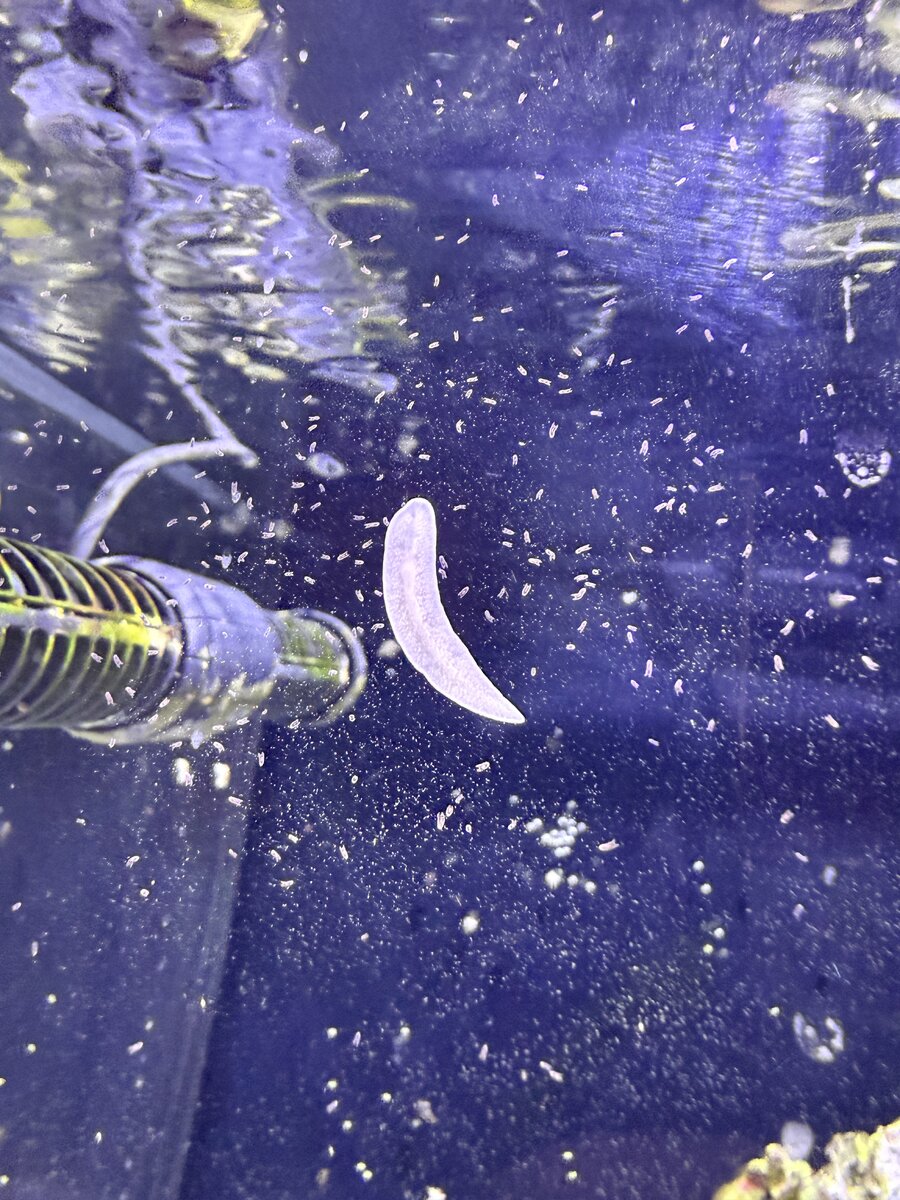
The branching lines radiating from the center towards the sides are probably "anastomosing intestinal branches", which is literally the origin of the name "
Polycladida" meaning "many branches". So it's most likely a Polyclad.
This fits ISpeakForTheSea's suggestion of a
Prosthiostomid, which belong to the
Prosthiostomidae family. These are known as Acropora-eating flatworms (AEFW) in the reef tank community (not all might eat acropora but the family includes AEFWs).
Polyclads mostly reproduce sexually but some can reproduce asexually through fission (splitting their body similar to Asterina starfish). If there is more than one flatworm, chances are there are eggs somewhere and you will need a repeated (or prolonged) treatment to ensure all flatworms will be treated after hatching if a treatment of eggs is not possible.
The issue is, that I see is the large amount of smaller flatworms (probably Amphiscolops sp. or Heterochaerus sp.), and I don't know if a treatment like Salifert's flatworm eXit would cause a huge amount of toxins to be released if you cannot manage to reduce their numbers through manual removal beforehand.
Maybe
@ISpeakForTheSeas knows if treating ghost flatworms or Acoel flatworms releases toxins, a question that will become important to me as well soon. I might send in a Oceamo Organo-MS test to check, but I would like to know before I poison my own tank
 If
If we are really dealing with something different (another Polyclad), I was only able to find these three that have at least some similarities, but I doubt that they are a match:
Either way: Most likely a bad guy, it should be removed