Micro or Macro algae???

TbyZ

Well-Known Member
View Badges
Joined
Jan 9, 2017
Messages
944
Reaction score
728
Location
34.5782° S, 150.8697° E
Rating - 0%
0   0   0
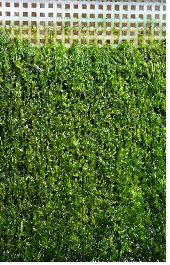
Is the emerald green hair algae, that typically grows on the screen of a downflow algae scrubber, micro (unicellular) or macro (multicellular) algae.

I seem to have misplaced my microscope & am hoping Randy Holmes-Farley will help me out here :D
Untitled.png
 

jason2459

Not a paid scientist
View Badges
Joined
Jul 28, 2015
Messages
4,695
Reaction score
3,144
Rating - 0%
0   0   0
OP
OP
TbyZ

TbyZ

Well-Known Member
View Badges
Joined
Jan 9, 2017
Messages
944
Reaction score
728
Location
34.5782° S, 150.8697° E
Rating - 0%
0   0   0
Well, I have seen mostly unicellular micro algaes singularly, flagellated, and chains of them. I have also seen multi cellular macros as well like ulva and chaeto.

In this thread I have a few samples from my ATS presented
http://reef2reef.com/threads/our-tanks-biology-up-close.239838/
I've run out of internet & gone back to dial up speed, so I can't look at that thread right now.

Are you saying that you have identified the typical algae scrubber green hair algae, as is in my picture in the OP, as micro?
 

jason2459

Not a paid scientist
View Badges
Joined
Jul 28, 2015
Messages
4,695
Reaction score
3,144
Rating - 0%
0   0   0
I can commit to what I've seen on my scrubber. ;)

If I were to guess what is on yours it would be Micro algae and I could be wrong.

Personally, any kind of growth like that is good growth regardless of what kind of algae it is.
 
OP
OP
TbyZ

TbyZ

Well-Known Member
View Badges
Joined
Jan 9, 2017
Messages
944
Reaction score
728
Location
34.5782° S, 150.8697° E
Rating - 0%
0   0   0
I can commit to what I've seen on my scrubber. ;)

If I were to guess what is on yours it would be Micro algae and I could be wrong.

Personally, any kind of growth like that is good growth regardless of what kind of algae it is.

Thanks jason.
I need someone who has used their microscope on lots of other people's algae scrubber screens, to determin
1, if the green hair algae, that naturally evolves on a mature, properly tuned scrubber, is actually typical (or are there several kinds that look identical)
& 2, is it (or are they) micro or macro.
 
OP
OP
TbyZ

TbyZ

Well-Known Member
View Badges
Joined
Jan 9, 2017
Messages
944
Reaction score
728
Location
34.5782° S, 150.8697° E
Rating - 0%
0   0   0
It is an interesting question, but is there any functional benefit to knowing the answer?

I guess the fact that nobody seems to be able to give a definitive answer is a good enough reason for me to ask the question, especially since I use algae scrubbers.

There could be differences between the two that could be important to consider when utilising algae as a filtering mechanism?
Not so much what they take out of the water, although how fast they do it is important, & speed of growth is a determining factor , but what they put, or potentially put into the water.

Example; I've read comments from people that suggest macro algae literally produce toxic substances & this is why algae scrubbers (& I take it refugiums also) should not be used in an aquaria. If true, what type of alge?

Another example; some people swear that a continuous photo-period, rather than a day night cycle, improved the growth on their screens. In a discussion with another hobbiest, I quoted your article 'Photosynthesis and the Reef Aquarium' Continuous Light vs. Light/Dark Cycles, &, Rost, Bjoern; Riebesell, Ulf; Sueltemeyer, Dieter. Besides pointing out that microalgaes were used in their anaylsis (this hobbiest believes that scrubber algae is macro & results could differ for this reason) , he also, quite rightly, suggested that growing algae in a test tube does not mimmic algae growing in agitated water (flashing) like in a scrubber. It was suggested that a day/night cycle is probably no more benificial in comparison to this flashing effect (rapid on/off cycle).
I don't know?

The only source of knowledge is experience. Albert Einstein
 

TOP 10 Trending Threads

WHAT AMOUNT OF LIVE ROCK AND SAND SHOULD BE PRIORITIZED FOR OPTIMAL BIODIVERSITY/FILTRATION?

  • 100% live rock + bagged sand

    Votes: 34 27.9%
  • 100% dry rock + 100% live sand

    Votes: 42 34.4%
  • 50/50 live/dry rock, 50/50 live/bagged sand

    Votes: 27 22.1%
  • 75% live rock, 25% live sand

    Votes: 11 9.0%
  • 25% live rock, 75% live sand

    Votes: 8 6.6%
Back
Top