- Joined
- Apr 29, 2025
- Messages
- 4
- Reaction score
- 0
- Location
- Belgium
- What state or country do you live in
- Other International
Hello,
Odontanthias borbonius in the aquarium is the focus of this discussion. I would also appreciate some advice from anyone who has experience with these fish.
Two months ago, I acquired a group of five juvenile/sub-adult Bourbonius anthias. Although this will be challenging, I plan to establish a breeding group in the future.
For some quick background information, these five anthias were purchased in good health. Three appear slightly older than the two smaller ones. They were quarantined for more than a month, which included a brief observation period.
They have been in my aquarium for 2.5 weeks now. The aquarium is only for them, and one Swissguard basslet, also doing well. I feed them a frozen diet, sometimes supplemented with pellets, but mostly frozen Arctic Plankton and brine. I work from home, so I can feed a lot (divided portions 5-6 times a day), as I know this is healthy for these fish.
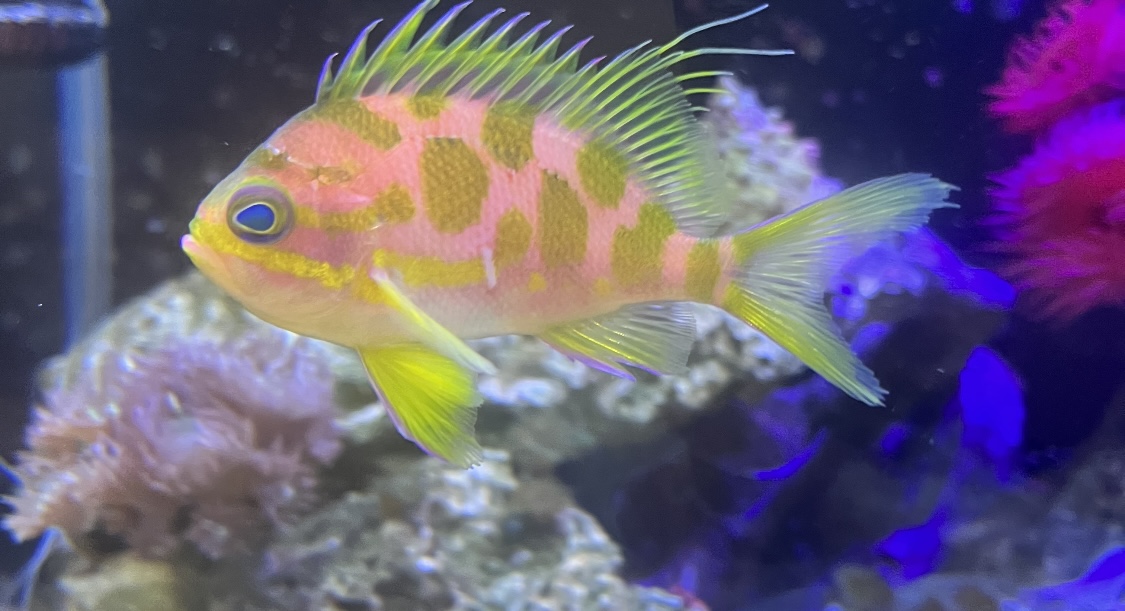
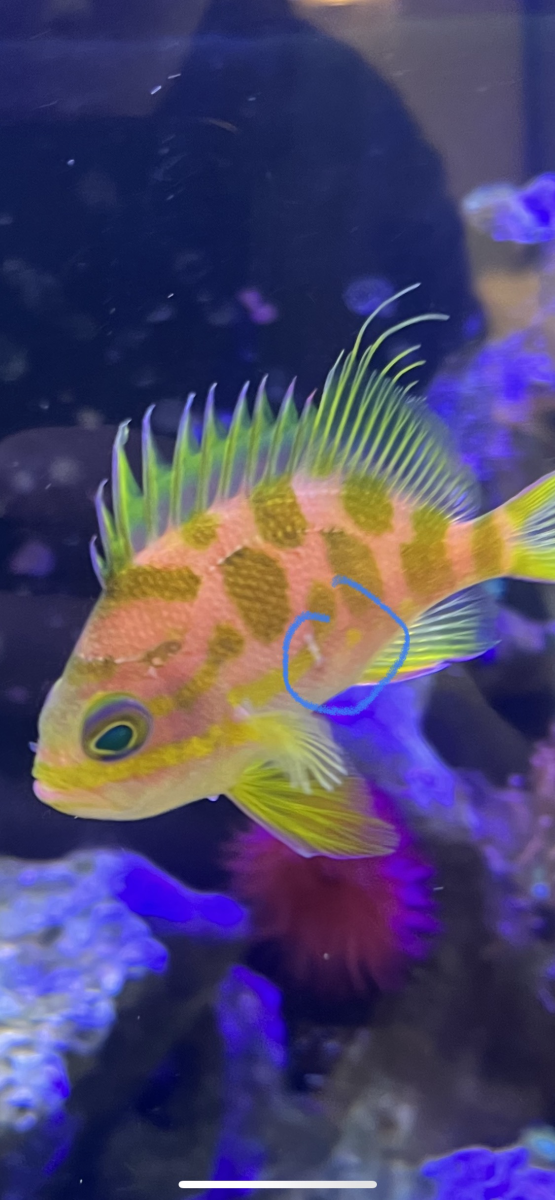
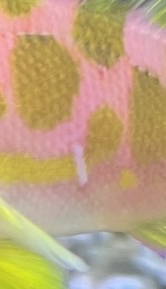
Three days ago, I noticed a small cut on one of the anthias, and it looked to be covered in a white scab. I decided to wait it out because these anthias often fight, especially when food enters the aquarium, and sometimes they cause injuries. Most of them are a bit scruffy and have some minor body damage, as they are very competitive for food, regardless of the quantity I feed. Never had cuts appear. (images are attached). I am. I'm not too worried yet, as I must admit that these fish have proved to be pretty tough. Also, does not look like Uronema or like a severe bacterial infection to me. However, I would appreciate any opinions. Notably, in addition to internal group aggression that may have caused it, I also have a reef lobster that sometimes likes to pick fights, particularly when food is present.
Lastly, I want to add that this morning the injured one did not eat; however, and this is connected to my second concern of what is an appropriate size of food... as I know these fish are more adapted to eating small crustaceans and plankton, which I also feed. Yesterday, however, I switched it up and fed decently large chunks of squid and shrimp; they loved it, but at some point, I noticed they all got so fat and almost concerningly full. Four of them refused food for the rest of the day and today three were eating, and I could see their stomachs had finally gone back to normal. Fast forward to now, and the injured one is also eating again now. So I don't think it was related to his injury. Could feeding larger foods be damaging?
Thank you for reading.
Odontanthias borbonius in the aquarium is the focus of this discussion. I would also appreciate some advice from anyone who has experience with these fish.
Two months ago, I acquired a group of five juvenile/sub-adult Bourbonius anthias. Although this will be challenging, I plan to establish a breeding group in the future.
For some quick background information, these five anthias were purchased in good health. Three appear slightly older than the two smaller ones. They were quarantined for more than a month, which included a brief observation period.
They have been in my aquarium for 2.5 weeks now. The aquarium is only for them, and one Swissguard basslet, also doing well. I feed them a frozen diet, sometimes supplemented with pellets, but mostly frozen Arctic Plankton and brine. I work from home, so I can feed a lot (divided portions 5-6 times a day), as I know this is healthy for these fish.
Three days ago, I noticed a small cut on one of the anthias, and it looked to be covered in a white scab. I decided to wait it out because these anthias often fight, especially when food enters the aquarium, and sometimes they cause injuries. Most of them are a bit scruffy and have some minor body damage, as they are very competitive for food, regardless of the quantity I feed. Never had cuts appear. (images are attached). I am. I'm not too worried yet, as I must admit that these fish have proved to be pretty tough. Also, does not look like Uronema or like a severe bacterial infection to me. However, I would appreciate any opinions. Notably, in addition to internal group aggression that may have caused it, I also have a reef lobster that sometimes likes to pick fights, particularly when food is present.
Lastly, I want to add that this morning the injured one did not eat; however, and this is connected to my second concern of what is an appropriate size of food... as I know these fish are more adapted to eating small crustaceans and plankton, which I also feed. Yesterday, however, I switched it up and fed decently large chunks of squid and shrimp; they loved it, but at some point, I noticed they all got so fat and almost concerningly full. Four of them refused food for the rest of the day and today three were eating, and I could see their stomachs had finally gone back to normal. Fast forward to now, and the injured one is also eating again now. So I don't think it was related to his injury. Could feeding larger foods be damaging?
Thank you for reading.