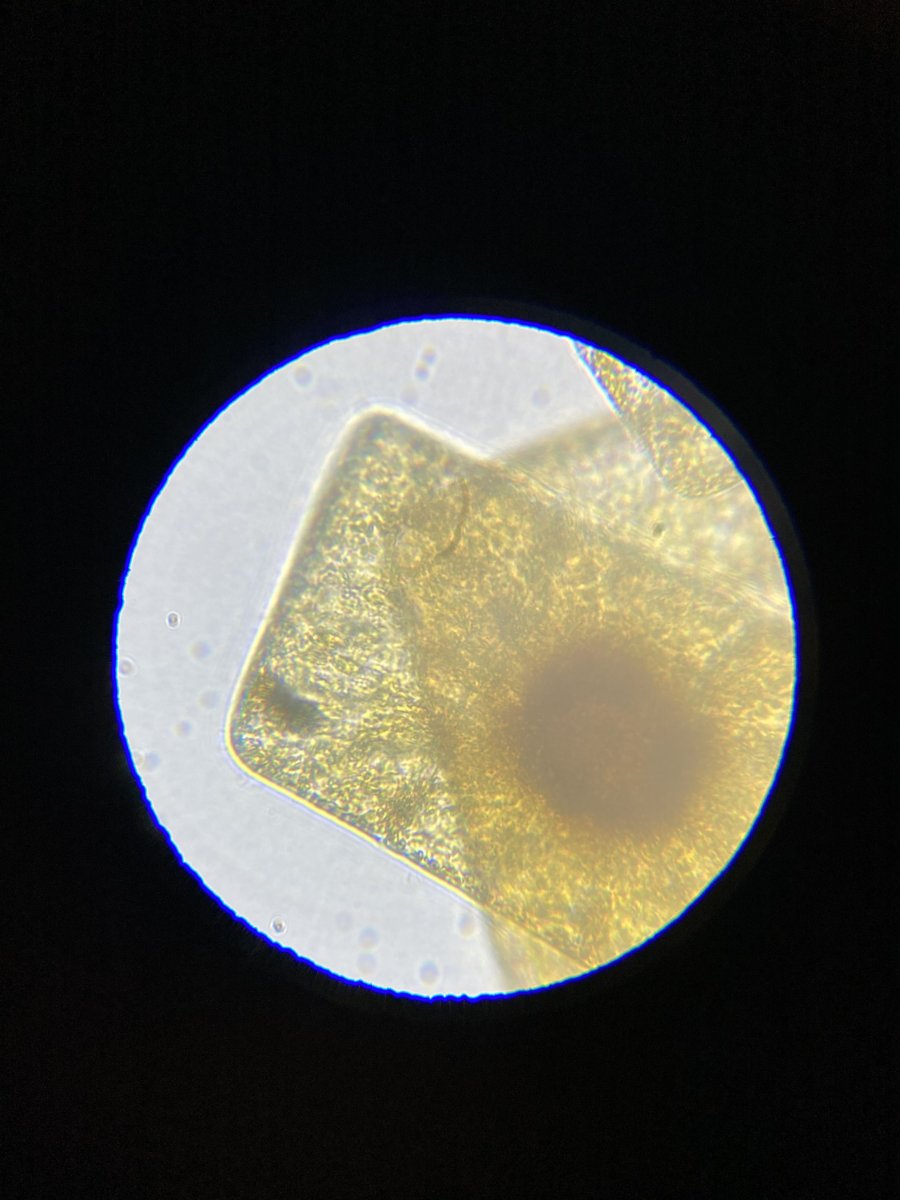
Please ID this algae (microscope pics and video)

  • Thread starter Thread starter Idech
  • Start date Start date
  • Tagged users Tagged users None

Idech

2500 Club Member
View Badges
Joined
Feb 21, 2021
Messages
4,809
Reaction score
4,031
Location
Canada
Rating - 0%
0   0   0
This happened after treating the tank for prorocentrum dinos with sodium silicate for 4 weeks (dinos were spilled in the tank when removing my in-tank UV hose). Dinos are gone but this appeared about 2 weeks ago. I tried Phosguard to remove silicate but it didn’t help.
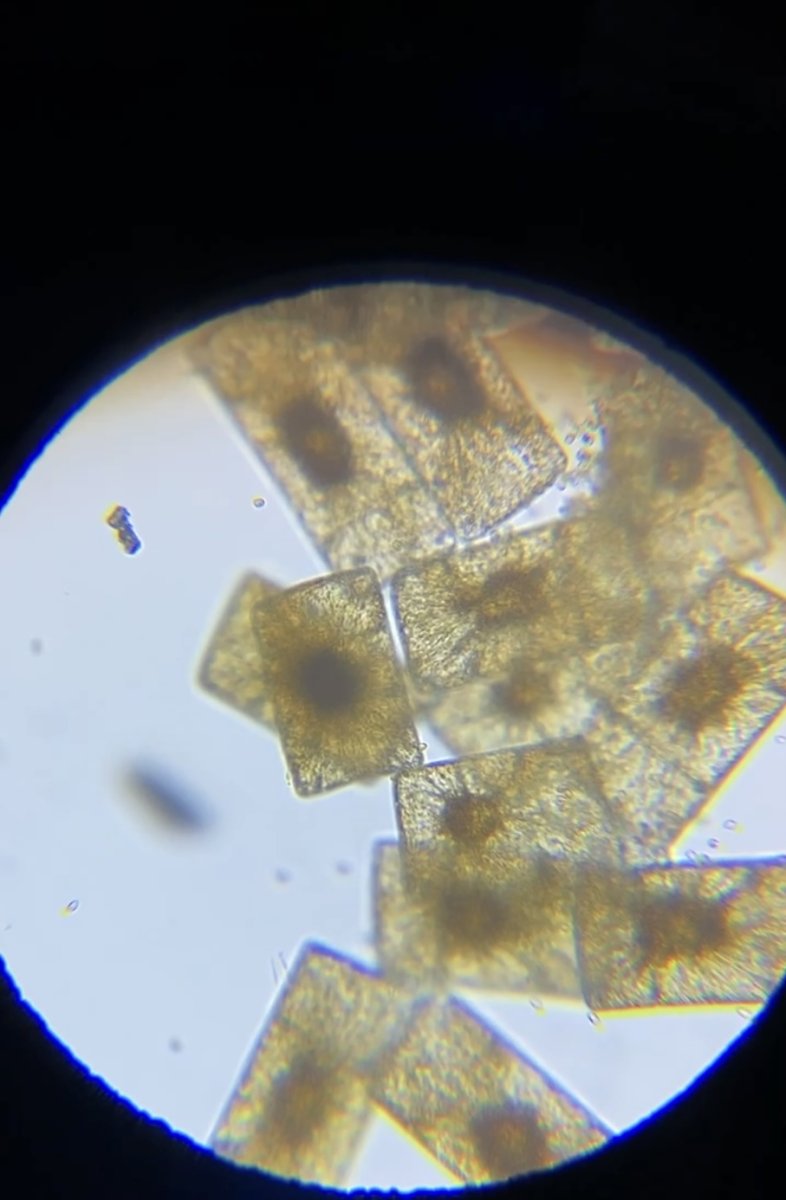
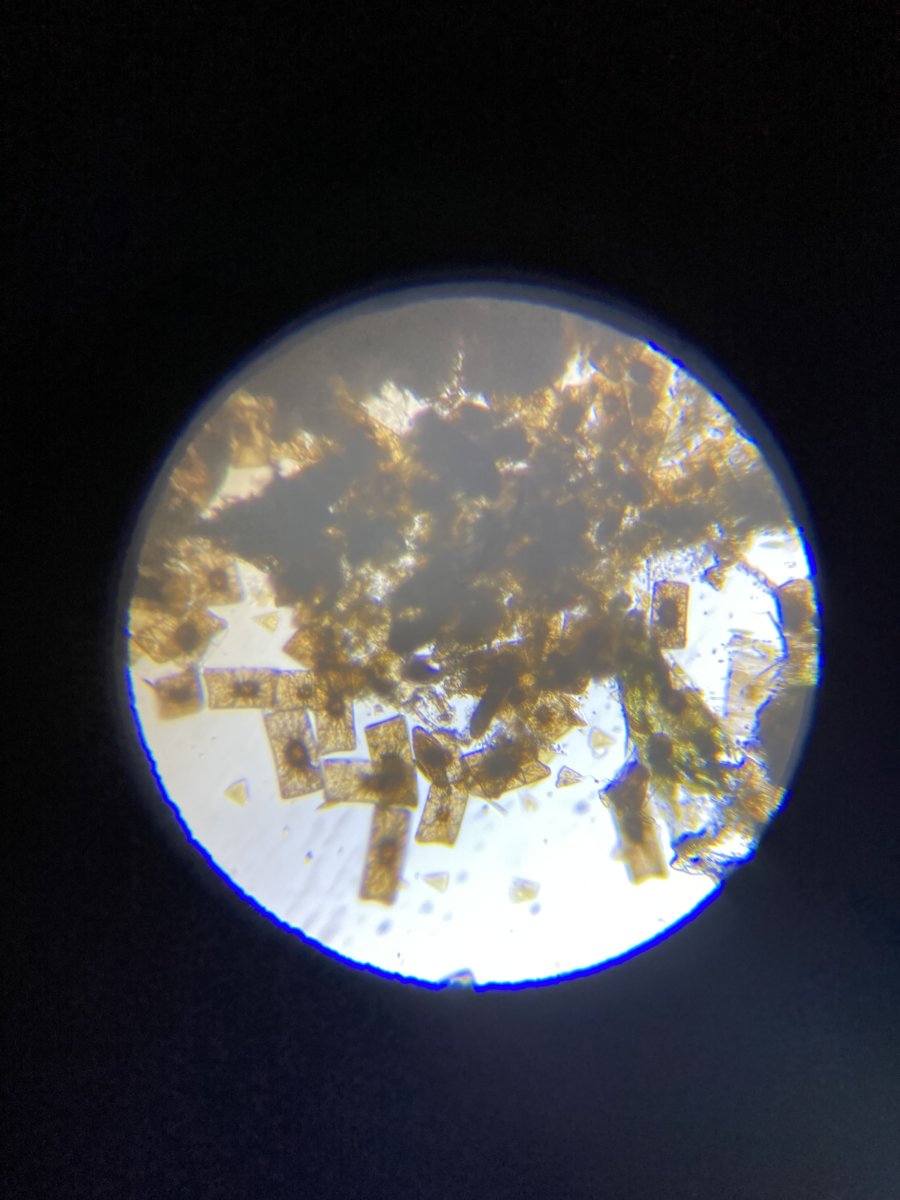
IMG_4976.jpeg
IMG_1995.jpeg


IMG_1986.jpeg


Also, what is this micro organism that seems to be eating algae?


Thanks !
 
Hi.

I’m going to guess those cubed block things are diatoms. I can clearly see other diatoms mixed in as well.

Diatoms aren’t going to magically disappear if the silica source was removed. They will eventually die on their own, but it will take a while.

In my opinion, using any phosphate/silicate absorber is completely unnecessary if you just want to remove the silica. You might find that phosphates bottom out before you are able to strip the silica to 0.

Besides, diatoms rapidly deplete silica anyway. Like, within a week.

Just don’t dose it and wait for them to go away on their own.
 
Hi.

I’m going to guess those cubed block things are diatoms. I can clearly see other diatoms mixed in as well.

Diatoms aren’t going to magically disappear if the silica source was removed. They will eventually die on their own, but it will take a while.

In my opinion, using any phosphate/silicate absorber is completely unnecessary if you just want to remove the silica. You might find that phosphates bottom out before you are able to strip the silica to 0.

Besides, diatoms rapidly deplete silica anyway. Like, within a week.

Just don’t dose it and wait for them to go away on their own.
Thanks. If they’re diatoms I really don’t mind them at all. I like to decrease silicate levels because they are incredibly high, like around 3000% the normal level and it will take forever to get it to a normal reading.

I’m going to check if silicate levels are back to normal and stop dosing Phosguard.
 
What do you use to test for silica?
 
What do you use to test for silica?
I think I have an API test (not reliable) but I’m not going to use that.

I will use my Hanna ULR Phosphate tester and if the test result makes sense, that means the silicate levels are normal (Hanna ULR gives false results (too high) when silicate levels are high).
 
I’ve tested phosphates with my Hanna ULR phosphate tester and the result is 0.55 and there is no way it is that high. It’s usually around 0.03.

So that means my silicate levels are still very high. I changed the phosguard and will try to do a larger WC than usual tomorrow.
 
I’ve tested phosphates with my Hanna ULR phosphate tester and the result is 0.55 and there is no way it is that high. It’s usually around 0.03.

So that means my silicate levels are still very high. I changed the phosguard and will try to do a larger WC than usual tomorrow.
Sounds good.

For future: there is no need to go that high with silica. 1ppm won’t grow diatoms any slower than 50ppm, but phosphates won’t be affected, and it’s much easier to remove lower levels of silica if you ever change your mind about the diatom growth.
 
I tested GFO with silica and phosphate, and phosphates went from 0.10ppm to 0.01ppm before silica went from >2.00ppm to 1.8ppm.

Basically, it’s possible that you’ll bottom out your phosphates if you try to remove that much silica with phosphate adsorbers (at least with BRS HC GFO). Just something to keep in mind, especially if you believe that low phosphate caused the dino issue in the first place.
 
For future: there is no need to go that high with silica. 1ppm won’t grow diatoms any slower than 50ppm, but phosphates won’t be affected, and it’s much easier to remove lower levels of silica if you ever change your mind about the diatom growth.
This was my fourth time fighting dinos, third time with prorocentrum so I used my usual recipe. I guess my system is now more sensitive to silicate and it needs less for diatoms to bloom.

Next time I’ll definitely use less. Or rather, I hope there is no next time, lol !

Basically, it’s possible that you’ll bottom out your phosphates if you try to remove that much silica with phosphate adsorbers (at least with BRS HC GFO). Just something to keep in mind, especially if you believe that low phosphate caused the dino issue in the first place.

I’m feeding three times a day so hopefully it’s enough. The cause of dinos is my own mistake.

I accidentally spilled the water from my UV hose into the tank when removing it from the display after running it for months. The water in the hose was brown, filled with dinos.
 

TOP 10 Trending Threads

WHICH AREA OF REEFKEEPING MOST NEEDS A GENUINE BREAKTHROUGH?

  • Lighting

    Votes: 3 4.4%
  • Pumps and water flow

    Votes: 2 2.9%
  • Water testing and monitoring

    Votes: 22 32.4%
  • Controllers, apps, and device compatibility

    Votes: 8 11.8%
  • Filtration and nutrient export

    Votes: 1 1.5%
  • Automatic feeding

    Votes: 6 8.8%
  • Leak prevention and tank safety

    Votes: 7 10.3%
  • Equipment reliability and repairability

    Votes: 15 22.1%
  • Other (leave a comment in the thread)

    Votes: 4 5.9%
Back
Top
Home
Post thread…
Market
What's new