Really, really super-basic noob questions

dreamsr

Community Member
View Badges
Joined
Jun 24, 2016
Messages
71
Reaction score
40
Rating - 0%
0   0   0
I am starting to plan out a tank that probably won't be built for another year. I'd like to be ready to go so that when it's time, I'll be able to assemble it quickly. These are the sorts of things I'm wondering about right now:

-Lots of guides to building reef tanks say that bigger is easier, because less maintenance and cleaning are required, but then I also see lots of references to micro and nano tanks as "beginner" or "starter" kits. Why? I have a lot to learn, and prefer to kill as few things as possible, so if bigger is easier, that sounds like the way I should start out.

-I love jellyfish! The Orbit tanks are sleek and attractive, but they are small, so no room for anything but the jellies and maybe a snail. Is there any way to set up a Kreisel current in part of a larger tank, so jellies could be happy there?

--Speaking of sleek and attractive, I really don't like the clunky look of aquarium stands/cabinets. I'd like to build a tank that's half a doughnut, with a filter and cords hidden in the center/core. In other words, there would be two semicircular walls, one of them about 4 feet in diameter, the other one inside of it, and maybe 2 or 3 feet in diameter. The side/end walls would be flat against the apartment wall, and the inside circle would be reflective, hiding all the business parts in the core. To plan this, I need to know more about ideal dimensions. What should I think of as a minimum water depth? What becomes possible as a tank gets deeper? Also, how far apart should the front and back walls be in order to have happy coral and anemones and fish? When I know more about making the flora and fauna happy, I'll talk to my engineer friends about building materials and how to support it.

-There are so many online resources for saltwater tanks! I just got lost in the endless looping and interlinks of about.com's pages on saltwater tanks. What are your favorite resources for beginners? I'd like something complete and succinct.

--I want to set up a complete bio system that meets its own needs as much as possible. Is it possible to have the right balance of plants and animals for food so that I wouldn't have to add fish food every day (and wouldn't have to worry about excess food to filter out)? Where can I learn more about that?

Thanks for pointing me in the right directions! I will try to ask good questions, and to look at answers to other people's questions instead of repeating them.
 
Last edited:

Sabellafella

7500 Club Member
View Badges
Joined
Jul 8, 2015
Messages
7,630
Reaction score
11,493
Rating - 100%
5   0   0
I am starting to plan out a tank that probably won't be built for another year. I'd like to be ready to go so that when it's time, I'll be able to assemble it quickly. These are the sorts of things I'm wondering about right now:

-Lots of guides to building reef tanks say that bigger is easier, because less maintenance and cleaning are required, but then I also see lots of references to micro and mini tanks as "beginner" or "starter" kits. Why? I have a lot to learn, and prefer to kill as few things as possible, so if bigger is easier, that sounds like the way I should start out.

-I love jellyfish! The Orbit tanks are sleek and attractive, but they are small, so no room for anything but the jellies and maybe a snail. Is there any way to set up a Kreisel current in just part of a larger tank, so jellies could be happy there?

--Speaking of sleek and attractive, I really don't like the clunky look of aquarium stands/cabinets. I'd like to build a tank that's half a doughnut, with a filter and cords hidden in the center/core. In other words, there would be two semicircular walls, one of them about 4 feet in diameter, the other one inside of it, and maybe 2 or 3 feet in diameter. The side/end walls would be flat against the apartment wall, and the inside circle would be reflective, hiding all the business parts in the core. To plan this, I need to know more about ideal dimensions. What should I think of as a minimum water depth? What becomes possible as a tank gets deeper? Also, how far apart should the front and back walls be in order to have happy coral and anemones and fish? When I know more about making the flora and fauna happy, I'll talk to my engineer friends about building materials and how to support it.

-There are so many online resources for saltwater tanks! I just got lost in the endless looping and interlinks of about.com's pages on saltwater tanks. What are your favorite resources for beginners? I'd like something complete and succinct.

--I want to set up a complete bio system that meets its own needs as much as possible. Is it possible to have the right balance of plants and animals for food so that I wouldn't have to add fish food every day (and wouldn't have to worry about excess food to filter out)? Where can I learn more about that?

Thanks for pointing me in the right directions! I will try to ask good questions, and to look at answers to other people's questions instead of repeating them.
Well let me start of by saying welcome! Youve came to the right(and best) place for advice, they say larger is better because theres more room to work with if you were to make a mistake. But lets be honest, this hobby is full of just learning from experience! The tank size is up to you, its up to good practices, maintenance, husbandry and patients. Starting off could be a little ruff, but sooner youll understand the in and outs of how everything works. Now back to the topic, you want jellys? Or you want to house some jellys in a monster half circle tank with others !
 

Untamedrose

Well-Known Member
View Badges
Joined
May 8, 2016
Messages
794
Reaction score
599
Rating - 0%
0   0   0
Stability .....you mixed that last water change to low, OOPs added to much additive, Oh stuck hands in tank with lotion on.... Larger the tank the easier it is to keep it all from messing up. Not to say you need 200 gals.....at least 30-50 gals seems a good starting point.

Skip the jellys....seriously. Like a fad..not an actual stable proven system at this point...more free for all lets kill fish! Maybe in a few years but ATM...no
 

Diesel

ME=1, CANCER=0.
View Badges
Joined
Apr 14, 2012
Messages
13,611
Reaction score
15,160
Location
Texas Republic Grand Ranch.
Rating - 0%
0   0   0
image.jpg


Nice game plan!
 

redfishbluefish

Stay Positive, Stay Productive
View Badges
Joined
Mar 22, 2012
Messages
12,306
Reaction score
25,426
Location
Sayreville, NJ
Rating - 0%
0   0   0
The analogy that first came to mind when you mentioned small versus large tanks was when I learned to sail. I learned in a little O'day and if you weren't just right with sails, you ended up in the water. If it was a larger boat, I could have the sails totally wrong and wouldn't know it. What I'm saying is that large tanks allow "mistakes" that won't be noticed, while with a smaller tank, it could be disastrous.

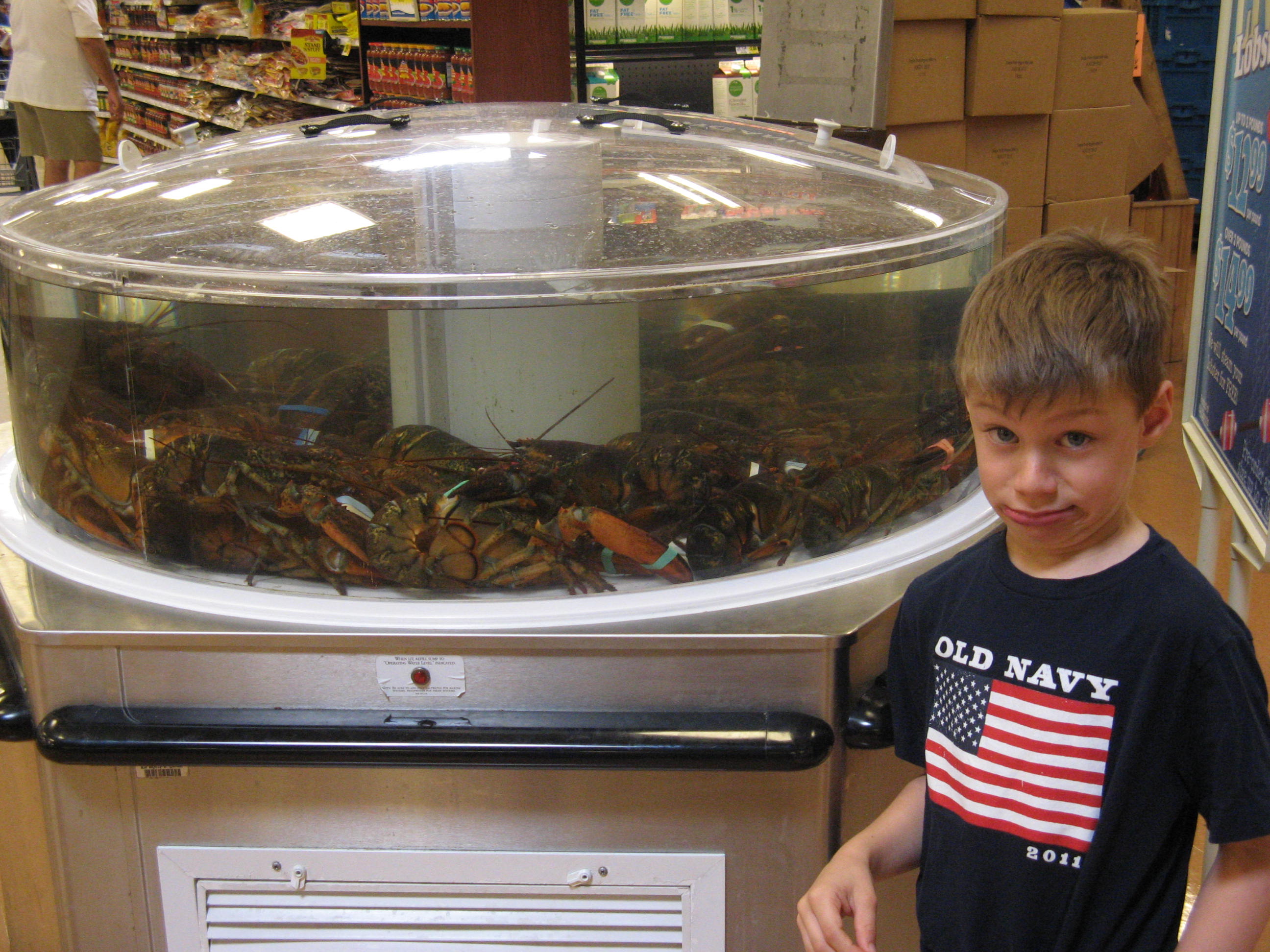
Your circular tank concept reminds me of lobster tanks that use to be common at some stores. I don't see them as frequently as in the past. But it was similar to what you explained. I'm willing to bet if you search around you could find one of these antiques at a good deal. Would have to pull out the refrigeration, but after that, good to go.
 
OP
OP
dreamsr

dreamsr

Community Member
View Badges
Joined
Jun 24, 2016
Messages
71
Reaction score
40
Rating - 0%
0   0   0
Well let me start of by saying welcome! Youve came to the right(and best) place for advice, they say larger is better because theres more room to work with if you were to make a mistake. But lets be honest, this hobby is full of experience! The tank size is up to you, its up to good practices, maintenance, husbandry and patients. Starting off could be a little ruff, but sooner youll understand the in and outs of how everything works. Now back to the topic, you want jellys? Or you want to house some jellys in a monster half circle tank with others !
Thanks for the warm welcome! If big isn't harder, then sure, why not go big and beautiful? Am I crazy to want to keep jellies with other things?
 
OP
OP
dreamsr

dreamsr

Community Member
View Badges
Joined
Jun 24, 2016
Messages
71
Reaction score
40
Rating - 0%
0   0   0
The analogy that first came to mind when you mentioned small versus large tanks was when I learned to sail. I learned in a little O'day and if you weren't just right with sails, you ended up in the water. If it was a larger boat, I could have the sails totally wrong and wouldn't know it. What I'm saying is that large tanks allow "mistakes" that won't be noticed, while with a smaller tank, it could be disastrous.

Your circular tank concept reminds me of lobster tanks that use to be common at some stores. I don't see them as frequently as in the past. But it was similar to what you explained. I'm willing to bet if you search around you could find one of these antiques at a good deal. Would have to pull out the refrigeration, but after that, good to go.
Very cool! I never saw one like that in the grocery store, but I will certainly look around for one.
I hear what you're saying about big allowing sloppy. I'll have to think about it, because the idea of big is appealing.
 
OP
OP
dreamsr

dreamsr

Community Member
View Badges
Joined
Jun 24, 2016
Messages
71
Reaction score
40
Rating - 0%
0   0   0
Stability .....you mixed that last water change to low, OOPs added to much additive, Oh stuck hands in tank with lotion on.... Larger the tank the easier it is to keep it all from messing up. Not to say you need 200 gals.....at least 30-50 gals seems a good starting point.

Skip the jellys....seriously. Like a fad..not an actual stable proven system at this point...more free for all lets kill fish! Maybe in a few years but ATM...no
If I want to be able to do the jellies eventually, is there anything I need to keep in mind as I build this tank?
 

Untamedrose

Well-Known Member
View Badges
Joined
May 8, 2016
Messages
794
Reaction score
599
Rating - 0%
0   0   0
If I want to be able to do the jellies eventually, is there anything I need to keep in mind as I build this tank?

Most professional state aquariums run by marine biologist.... Do not have jelly fish tanks...

and no Jellies will never be reef safe only a species only type.
 

redfishbluefish

Stay Positive, Stay Productive
View Badges
Joined
Mar 22, 2012
Messages
12,306
Reaction score
25,426
Location
Sayreville, NJ
Rating - 0%
0   0   0
Very cool! I never saw one like that in the grocery store, but I will certainly look around for one.
I hear what you're saying about big allowing sloppy. I'll have to think about it, because the idea of big is appealing.


img_07191.jpg
 

Sabellafella

7500 Club Member
View Badges
Joined
Jul 8, 2015
Messages
7,630
Reaction score
11,493
Rating - 100%
5   0   0
Thanks for the warm welcome! If big isn't harder, then sure, why not go big and beautiful? Am I crazy to want to keep jellies with other things?
I mean im not really sure if you can house jellys with other animals, but ive seen a half circle tank, separated by a cube with jellys in it. Utilizing 1 side for jellys, and the half circle side for gorgonians and non photosynthetic specimens. Its acually pretty neat
 

Seppdelaney

New Member
View Badges
Joined
Jun 23, 2016
Messages
3
Reaction score
0
Rating - 0%
0   0   0
There are jellys that are non-stinging. I know this because I've swam with them on the reef off Playa, but I've got no idea what they eat.
I'm very new as well- just in learning stages and I don't really want to begin a reef while I'm renting as I'm fairly transient at the moment- but I do in the future, and have lots of time to learn, plan, and save before determining where we're settling down to begin a large tank just like you.
 

mcarroll

10K Club member
View Badges
Joined
Jan 8, 2012
Messages
15,213
Reaction score
8,968
Location
Virginia
Rating - 0%
0   0   0
I also see lots of references to micro and nano tanks as "beginner" or "starter" kits. Why?

Smaller is cheaper. More people can afford cheaper. That equals more customers and more references. Nowhere in that is "better".

"Better" comes from going slowly and watching the tank and critters and learning from them.

Doing it this way, you still make your mistakes, but you make them early - before the tank is fully stocked - and learn from them.

I'd like to build a tank that's half a doughnut

Half-moon tanks exist. Your view is permanently distorted from every angle. Boo.

-There are so many online resources for saltwater tanks! I just got lost in the endless looping and interlinks of about.com's pages on saltwater tanks. What are your favorite resources for beginners? I'd like something complete and succinct.

I hate to be contrary, but here I have to say: Get a book.

It's definitely possible to learn to reef from online, but it's difficult.
  • First, you have to have a pretty good idea what you want to do with your tank.
  • Second, you have to ID some people who are also doing that.
  • Third, you have to figure out which of those people are successful.
  • Fourth, you have to figure out which of those people that are successful actually explain what they are doing so you can understand it and know if it can apply to you.
  • Fifth, you take a lot of time and read through old posts and articles. Which leads to...
  • Sixth, you have to be able to filter the outdated info and B.S. from the current, good information.
A good book (or series) will go along way all by itself, but it will help back up your online research tremendously.

Check out:
  • The New Marine Aquarium by Paletta. Short but sweet.
  • The Reef Aquarium series by Delbeek and Sprung. It's getting old and hard to come by, but still excellent. Volume 3 sells for about the same price used as when it was new for good reason.
  • The Modern Coral Reef Aquarium by Fossa and Nilsen. Like the previous, this one is getting old and hard to find, but still excellent.
  • Marine Aqurium Handbook by Moe. The main classic of the hobby.
  • The Conscientious Marine Aquarist by Fenner. May be the modern bible of the hobby.
There are lots of other great books too - including picture-oriented books....don't take the lack of a mention as a sleight. ;)

Another resource that's difficult, but worth using is http://scholar.google.com. If you want hard science, it seems like every aspect of saltwater is a hot topic of research. (I attached three PDF's just as a sample of some of the interesting stuff you can dig up on the Scholar search engine.)

--I want to set up a complete bio system that meets its own needs as much as possible.

That's pretty much what a modern "Berlin style" reef is....overstocking is what keeps most people from enjoying the "meets its own needs" part of the experience. If you can discipline yourself to keep the bio-load low relative to the volume of the system, reefs can be VERY low-care.

Going slow will let you see when you reach this level - or when you pass it, allowing you to later take that step back. Make sense?

Folks who stock their systems in just a few major purchases (which seems like almost everyone) never get to see this and have no idea where to "step back" to in order to not be overstocked.
 

Attachments

  • Long-term effects of nutrient and CO2 enrichment on coral.pdf
    217.3 KB · Views: 151
  • Shallow water wave lensing in coral reefs.4304.full.pdf
    835.4 KB · Views: 115
  • Is the coral-algae symbiosis really‘mutually beneficial’ for the partners?.pdf
    749.9 KB · Views: 74
Last edited:

Kungpaoshizi

Valuable Member
View Badges
Joined
Jan 22, 2014
Messages
1,309
Reaction score
511
Location
Earf
Rating - 0%
0   0   0
The problem with reading? It's like riding a bike, or a programming language, or even basic physics. Until you see it in action, all the material you can read might not fully make sense. To a certain extent sure, but I would suggest you get a 10 gallon tank, set it up, let it cycle, take care of some crabs/snails and maybe a few nano fish, and then after a year, work on the upgrade.
One of the mistakes I think a lot of people make, that drive even more out of the hobby, or properly caring for a tank, is getting a large tank. The sheer amount of water can be so annoying until you "know the majority" of what you're doing.
And personally, I would stay away from jellyfish for various reasons. If you really have to have them, take care of some lesser-critters for awhile and then give them away after a year has passed.

Good luck! And welcome!
 
OP
OP
dreamsr

dreamsr

Community Member
View Badges
Joined
Jun 24, 2016
Messages
71
Reaction score
40
Rating - 0%
0   0   0
There are jellys that are non-stinging. I know this because I've swam with them on the reef off Playa, but I've got no idea what they eat.
I'm very new as well- just in learning stages and I don't really want to begin a reef while I'm renting as I'm fairly transient at the moment- but I do in the future, and have lots of time to learn, plan, and save before determining where we're settling down to begin a large tank just like you.
That's exactly why I'm saying about a year from now. I'm looking for a job in a different location, and want to move and get basically settled before starting the tank. There is also the question of financial priorities. I should probably get beds and a desk for my kid before spending $$$ on coral. Lol
 
OP
OP
dreamsr

dreamsr

Community Member
View Badges
Joined
Jun 24, 2016
Messages
71
Reaction score
40
Rating - 0%
0   0   0
Smaller is cheaper. More people can afford cheaper. That equals more customers and more references. Nowhere in that is "better".

"Better" comes from going slowly and watching the tank and critters and learning from them.

Doing it this way, you still make your mistakes, but you make them early - before the tank is fully stocked - and learn from them.


Half-moon tanks exist. Your view is permanently distorted from every angle. Boo.


I hate to be contrary, but here I have to say: Get a book.
It's definitely possible to learn to reef from online, but it's difficult.
  • First, you have to have a pretty good idea what you want to do with your tank.
  • Second, you have to ID some people who are also doing that.
  • Third, you have to figure out which of those people are successful.
  • Fourth, you have to figure out which of those people that are successful actually explain what they are doing so you can understand it and know if it can apply to you.
  • Fifth, you take a lot of time and read through old posts and articles. Which leads to...
  • Sixth, you have to be able to filter the outdated info and B.S. from the current, good information.
A good book (or series) will go along way all by itself, but it will help back up your online research tremendously.

Check out:
  • The New Marine Aquarium by Paletta. Short but sweet.
  • The Reef Aquarium series by Delbeek and Sprung. It's getting old and hard to come by, but still excellent. Volume 3 sells for about the same price used as when it was new for good reason.
  • The Modern Coral Reef Aquarium by Fossa and Nilsen. Like the previous, this one is getting old and hard to find, but still excellent.
  • Marine Aqurium Handbook by Moe. The main classic of the hobby.
  • The Conscientious Marine Aquarist by Fenner. May be the modern bible of the hobby.
There are lots of other great books too - including picture-oriented books....don't take the lack of a mention as a sleight. ;)

Another resource that's difficult, but worth using is http://scholar.google.com. If you want hard science, it seems like every aspect of saltwater is a hot topic of research. (I attached three PDF's just as a sample of some of the interesting stuff you can dig up on the Scholar search engine.)


That's pretty much what a modern "Berlin style" reef is....overstocking is what keeps most people from enjoying the "meets its own needs" part of the experience. If you can discipline yourself to keep the bio-load low relative to the volume of the system, reefs can be VERY low-care.

Going slow will let you see when you reach this level - or when you pass it, allowing you to later take that step back. Make sense?

Folks who stock their systems in just a few major purchases (which seems like almost everyone) never get to see this and have no idea where to "step back" to in order to not be overstocked.
Wonderful answer, tons of info that looks like just what I need. Thank you so much! In gardening and parenting, I enjoy watching and assisting processes of growth and development more than having the final flowers. I expect to be the same with a reef. That activity that people here refer to as the task of fragging, as a necessary chore to produce something pretty for the display tank is what I plan to spend most of my time on, and to get the most enjoyment from. For that reason, I don't think I will be going out and making huge purchases.
 
OP
OP
dreamsr

dreamsr

Community Member
View Badges
Joined
Jun 24, 2016
Messages
71
Reaction score
40
Rating - 0%
0   0   0
So what about tank dimensions? What is minimum depth? How far should the front and back be from eachother for good visibility and for things to have enough room to grow?
 
OP
OP
dreamsr

dreamsr

Community Member
View Badges
Joined
Jun 24, 2016
Messages
71
Reaction score
40
Rating - 0%
0   0   0
Smaller is cheaper. More people can afford cheaper. That equals more customers and more references. Nowhere in that is "better".

"Better" comes from going slowly and watching the tank and critters and learning from them.

Doing it this way, you still make your mistakes, but you make them early - before the tank is fully stocked - and learn from them.


Half-moon tanks exist. Your view is permanently distorted from every angle. Boo.


I hate to be contrary, but here I have to say: Get a book.

It's definitely possible to learn to reef from online, but it's difficult.
  • First, you have to have a pretty good idea what you want to do with your tank.
  • Second, you have to ID some people who are also doing that.
  • Third, you have to figure out which of those people are successful.
  • Fourth, you have to figure out which of those people that are successful actually explain what they are doing so you can understand it and know if it can apply to you.
  • Fifth, you take a lot of time and read through old posts and articles. Which leads to...
  • Sixth, you have to be able to filter the outdated info and B.S. from the current, good information.
A good book (or series) will go along way all by itself, but it will help back up your online research tremendously.

Check out:
  • The New Marine Aquarium by Paletta. Short but sweet.
  • The Reef Aquarium series by Delbeek and Sprung. It's getting old and hard to come by, but still excellent. Volume 3 sells for about the same price used as when it was new for good reason.
  • The Modern Coral Reef Aquarium by Fossa and Nilsen. Like the previous, this one is getting old and hard to find, but still excellent.
  • Marine Aqurium Handbook by Moe. The main classic of the hobby.
  • The Conscientious Marine Aquarist by Fenner. May be the modern bible of the hobby.
There are lots of other great books too - including picture-oriented books....don't take the lack of a mention as a sleight. ;)

Another resource that's difficult, but worth using is http://scholar.google.com. If you want hard science, it seems like every aspect of saltwater is a hot topic of research. (I attached three PDF's just as a sample of some of the interesting stuff you can dig up on the Scholar search engine.)


That's pretty much what a modern "Berlin style" reef is....overstocking is what keeps most people from enjoying the "meets its own needs" part of the experience. If you can discipline yourself to keep the bio-load low relative to the volume of the system, reefs can be VERY low-care.

Going slow will let you see when you reach this level - or when you pass it, allowing you to later take that step back. Make sense?

Folks who stock their systems in just a few major purchases (which seems like almost everyone) never get to see this and have no idea where to "step back" to in order to not be overstocked.
Does "Berlin style" have anything to do with the German capital?
 
OP
OP
dreamsr

dreamsr

Community Member
View Badges
Joined
Jun 24, 2016
Messages
71
Reaction score
40
Rating - 0%
0   0   0
Smaller is cheaper. More people can afford cheaper. That equals more customers and more references. Nowhere in that is "better".

"Better" comes from going slowly and watching the tank and critters and learning from them.

Doing it this way, you still make your mistakes, but you make them early - before the tank is fully stocked - and learn from them.


Half-moon tanks exist. Your view is permanently distorted from every angle. Boo.


I hate to be contrary, but here I have to say: Get a book.

It's definitely possible to learn to reef from online, but it's difficult.
  • First, you have to have a pretty good idea what you want to do with your tank.
  • Second, you have to ID some people who are also doing that.
  • Third, you have to figure out which of those people are successful.
  • Fourth, you have to figure out which of those people that are successful actually explain what they are doing so you can understand it and know if it can apply to you.
  • Fifth, you take a lot of time and read through old posts and articles. Which leads to...
  • Sixth, you have to be able to filter the outdated info and B.S. from the current, good information.
A good book (or series) will go along way all by itself, but it will help back up your online research tremendously.

Check out:
  • The New Marine Aquarium by Paletta. Short but sweet.
  • The Reef Aquarium series by Delbeek and Sprung. It's getting old and hard to come by, but still excellent. Volume 3 sells for about the same price used as when it was new for good reason.
  • The Modern Coral Reef Aquarium by Fossa and Nilsen. Like the previous, this one is getting old and hard to find, but still excellent.
  • Marine Aqurium Handbook by Moe. The main classic of the hobby.
  • The Conscientious Marine Aquarist by Fenner. May be the modern bible of the hobby.
There are lots of other great books too - including picture-oriented books....don't take the lack of a mention as a sleight. ;)

Another resource that's difficult, but worth using is http://scholar.google.com. If you want hard science, it seems like every aspect of saltwater is a hot topic of research. (I attached three PDF's just as a sample of some of the interesting stuff you can dig up on the Scholar search engine.)


That's pretty much what a modern "Berlin style" reef is....overstocking is what keeps most people from enjoying the "meets its own needs" part of the experience. If you can discipline yourself to keep the bio-load low relative to the volume of the system, reefs can be VERY low-care.

Going slow will let you see when you reach this level - or when you pass it, allowing you to later take that step back. Make sense?

Folks who stock their systems in just a few major purchases (which seems like almost everyone) never get to see this and have no idea where to "step back" to in order to not be overstocked.
BTW, I just checked one of your recomendations--Moe's book--and found that it is available as an ebook. :). That's great for me, because I'm expecting to move once or twice in the year before I set up a tank.
 

mcarroll

10K Club member
View Badges
Joined
Jan 8, 2012
Messages
15,213
Reaction score
8,968
Location
Virginia
Rating - 0%
0   0   0
So what about tank dimensions? What is minimum depth? How far should the front and back be from eachother for good visibility and for things to have enough room to grow?

It really depends what livestock you are talking about.

There's nothing wrong with a properly stocked coffee cup. :)

If you don't have any specific critters in mind, then don't worry (yet) about tank size and all that.

If you rule out nano tanks, then arguably you'll want a tank with a minimum of 18" of front-to-back space. Everything else is still fungible, depending on the critters you want.

I'm definitely generalizing, but most people spend all their research time on equipment at the beginning, when all they should be reading about is critters and husbandry. Spend ALL THE TIME YOU CAN thinking about critters. Find out what you really want to keep.

By the time you know that for sure, the question of equipment will virtually be answered for you.

Does "Berlin style" have anything to do with the German capital?

Yes. Arguably Germany is/was the world capital of reefing. The method (basically live rock + skimmer) evolved there, so the legend goes. :)
 

TOP 10 Trending Threads

WHAT AMOUNT OF LIVE ROCK AND SAND SHOULD BE PRIORITIZED FOR OPTIMAL BIODIVERSITY/FILTRATION?

  • 100% live rock + bagged sand

    Votes: 34 27.6%
  • 100% dry rock + 100% live sand

    Votes: 43 35.0%
  • 50/50 live/dry rock, 50/50 live/bagged sand

    Votes: 27 22.0%
  • 75% live rock, 25% live sand

    Votes: 11 8.9%
  • 25% live rock, 75% live sand

    Votes: 8 6.5%
Back
Top