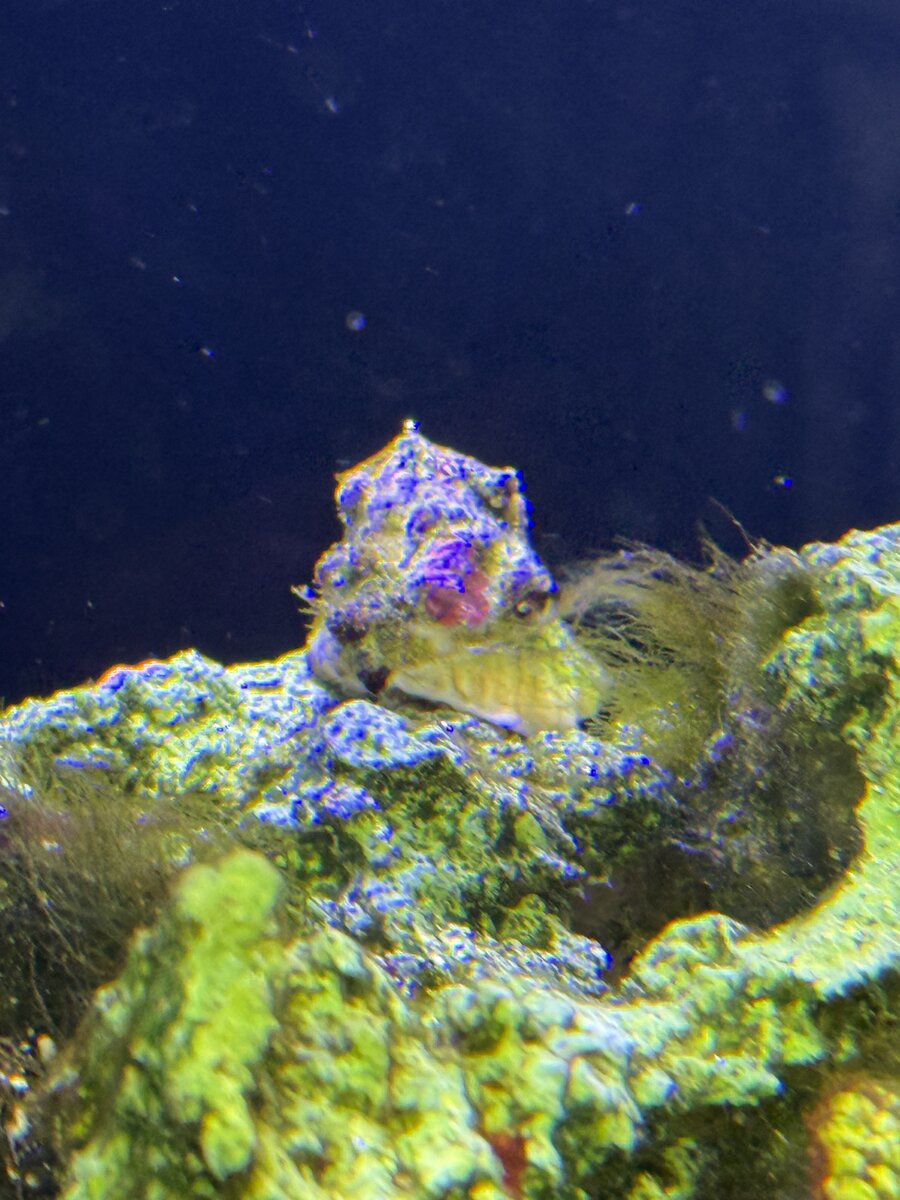
A lot of the Trochus snails at my LFS come with these weird bumps on their shells. When they grow out the shell looks normal. What could they be?
Follow along with the video below to see how to install our site as a web app on your home screen.
Note: This feature may not be available in some browsers.
I thought so too. But after the close up photo, I'm not so sure.Vermatids is my guess
Definitely not vermetids. They are big soft lumps with holes in them, no shell or tube.Vermatids is my guess
Sorry, extra crazy busy these days, haha - yeah, those are tunicates; neat and harmless. You could try relocating them off of the snail if you want, but it could potentially kill some of them.I got it! It’s some kind of tunicate, not a sponge!
Knew I forgot something in my post:Each lump has two openings, like in this diagram. I’ll probably never know what kind but sweet to narrow it down to the particular animal! Now to check out tunicate care.
If you want to try and help the tunicates do well, offering some phytoplankton would probably be wise. Isochrysis and Rhodomonas or a blend containing at least one of these would be my first choice. For a more intensive diet that would likely show better results, see "Table 3" in the link below:
Coupling feeding activity, growth rates and molecular data shows dietetic needs of Ciona robusta (Ascidiacea, Phlebobranchia) in automatic culture plants - PMC
The sea squirt Ciona robusta is a model organism characterized by a transparent body, exhibiting peculiar physiologic and evolutionary characters. In vitro fertilization and breeding of sea squirts is possible, in order to preserve consistent ...www.ncbi.nlm.nih.gov
Based on this article it looks like my silicate dosing is providing enough diatoms for the tunicates to grow! Crazy how we can sometimes accidentally succeed at something unexpected. I wonder if they’ll will ever make it off the snail shell onto the rock structure (or if that could become a problem somehow).Knew I forgot something in my post:
Yours appear to be a bunch of solitary tunicates, so I would assume they won't be invasive like sone colonial tunicates may be.Based on this article it looks like my silicate dosing is providing enough diatoms for the tunicates to grow! Crazy how we can sometimes accidentally succeed at something unexpected. I wonder if they’ll will ever make it off the snail shell onto the rock structure (or if that could become a problem somehow).