

Washing test vials with tap water

I rinse my cuvettes in tap water then store them filled with RODI water. I picked up one of these on Amazon. It’s nice to have small quantities of RODI for this purpose.
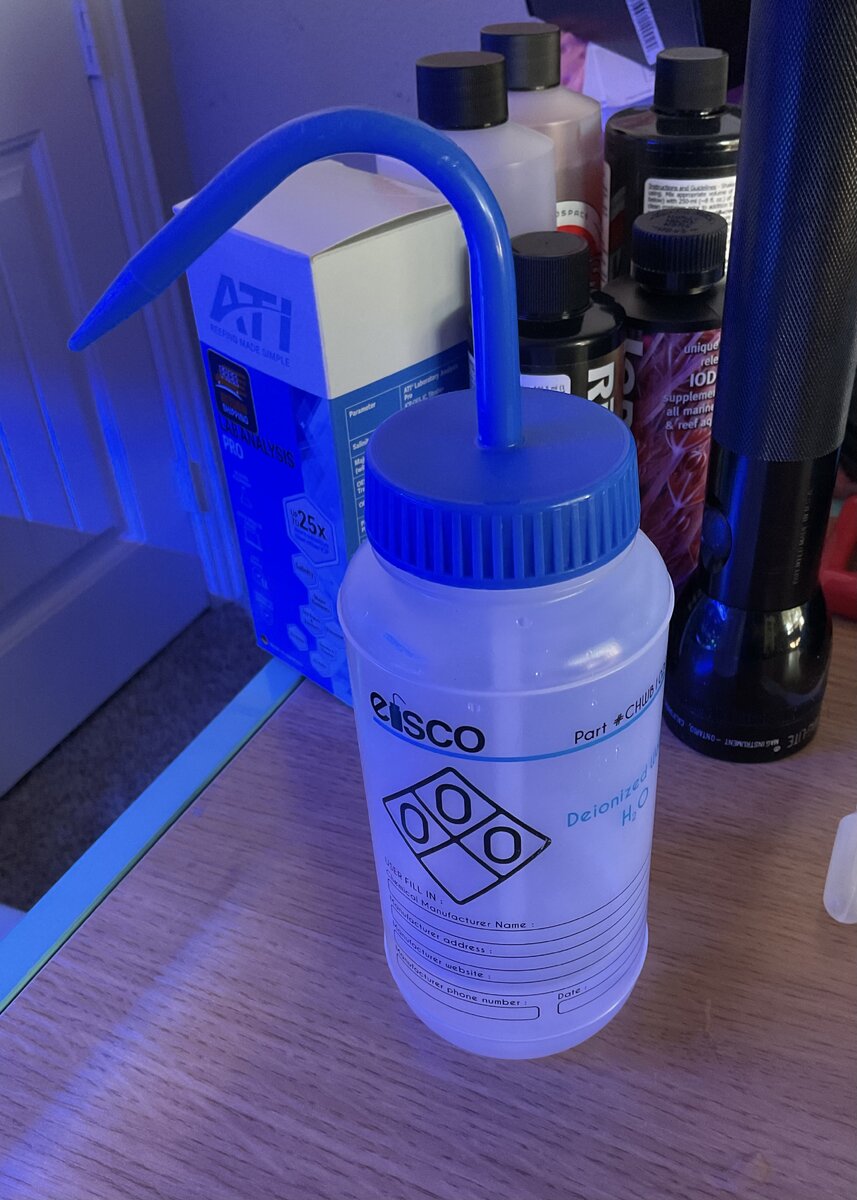
IMG_1101.jpeg
 
I use just RO drinking water from the spigot near the utility sink and try to get out as much excess water as possible. I will then put them in a glass dish and microwave for ~2 mins to dry and completely eradicate anything leftover.
 
I also vote RO/DI rinsing with squeeze bottles.

I'm sure it doesn't make much of a difference, but the glass stays clearer for longer and it's just "good protocol".
I mainly use the Phosphorus ULR HannaChecker and target really low phosphate levels, so I want to prevent any interference whatsoever and think RO/DI is the right way to do it.
 
I always rinse and store the vials with rodi water so not to get build up or water spots.
 
I use RO/DI at work because it's just a different faucet at the same sinks. I use tap water at home. I don't notice a difference when I test the same sample with the tubes/cuvettes at the other place.

I've seen cuvettes get mineral buildup over time from washing with tap water though. Back at that job we just acid-washed our glassware every year or two. It'll make them sparkle like new. So if you're ever concerned about residues contaminating your tests, you can always acid wash the cuvettes. It's the closest thing to a factory reset for your glassware.
 
I rinse once with tap/well water and then rinse/shake with RODI and air dry on 3D printed rack. At least if my test is off it should be consistently off
I have a 3D printer and was looking for drying racks a while back. Could you share info on the file?
 
3 rinses in RO water then shake and dry with a microfiber towel. I do it the same each time for constancy. I have a tee before my di resin going to a faucet at the kitchen sink so we have RO water there.
I first read this as you had tea as part of your routine :)
 
I rinse with tap water, fill once with RO/DI, give it a good shake, let them dry in their box, and then rinse them in tank water a few times before filling with the water sample. Also keep a microfiber towel handy to wipe down the outside of the vial for my Hanna checkers.
I mostly follow this by rinsing dirty vials three times in tap water. However, I don’t bother with the RODI rinse. I definitely rinse out a test vial before testing in tank water three times. Three rinses are generally what one does in a lab.
Using a dry towel or microfiber cloth to clean the outside is good too.
 
Has anyone tested to see if using just tap water, or tap water followed by RO/DI water or tap water followed by paper towel followed by RO/DI followed by tank water , etc has any impact on the test results? Hang on now, I am not volunteering...unless someone wants to send me like 50 Hanna phosphate or nitrate reagent envelopes, those things are expensive. I promise I will run the test...really, I mean it. I am trustworthy.
 
I rinse my tubes with RODI water that’s been run through a UV sterilizer. I then transfer them to a negative pressure ventilator I made at home until completely dry. I then transfer them to a centrifuge I got from a used hospital equipment sale, run this for 15min then place them into a vaccu-sealed bag until next use.😁
 
I rinse my tubes with RODI water that’s been run through a UV sterilizer. I then transfer them to a negative pressure ventilator I made at home until completely dry. I then transfer them to a centrifuge I got from a used hospital equipment sale, run this for 15min then place them into a vaccu-sealed bag until next use.😁
No other way to do it 🤪
 
I rinse my cuvettes in tap water then store them filled with RODI water. I picked up one of these on Amazon. It’s nice to have small quantities of RODI for this purpose.
IMG_1101.jpeg
This is a good idea to have! I can think of many uses for this. Especially rinsing pumps off after a scrub, don’t have to get a whole bucket to do it. Thanks for sharing, you know where I’m about to spend money lol
 
If you're using treated water RO/DI or distilled water like most of us do, why not rinse the vials out to keep them clean ???
 
Interesting, I'll have to read my instructions. I went by the pictures
I rinse in tap then rinse them in tank water a few times, dry them a bit and shake them out and then add the tank water to be tested. Thought process is that the tank rinse will get rid of any minor things that could be added by the tap and at that point it is essentially neutral with the tank water that will be tested.
 
At work i use squeeze bottles with DI water to clean equipment. You could just fill up an extra containers with clean water when you use your RODI.
 
I rinse my tubes with RODI water that’s been run through a UV sterilizer. I then transfer them to a negative pressure ventilator I made at home until completely dry. I then transfer them to a centrifuge I got from a used hospital equipment sale, run this for 15min then place them into a vaccu-sealed bag until next use.😁
I prefer to autoclave the vials... Make sure everything is happening in a laminar flow hood or all that UV sterilization will have been for nothing!
 

TOP 10 Trending Threads

WHICH PART OF YOUR SETUP IS HARDEST TO REACH OR REMOVE FOR ROUTINE MAINTENANCE?

  • Glass behind or beside the tank

    Votes: 11 22.0%
  • Powerheads or wavemakers

    Votes: 4 8.0%
  • Sump or rear filtration chambers

    Votes: 7 14.0%
  • Skimmer or other filtration equipment

    Votes: 6 12.0%
  • Overflow or plumbing

    Votes: 10 20.0%
  • Lights or lids

    Votes: 0 0.0%
  • Mine is pretty easy to access!

    Votes: 11 22.0%
  • Other—tell us what I missed

    Votes: 1 2.0%
Back
Top
Home
Post thread…
Market
What's new








